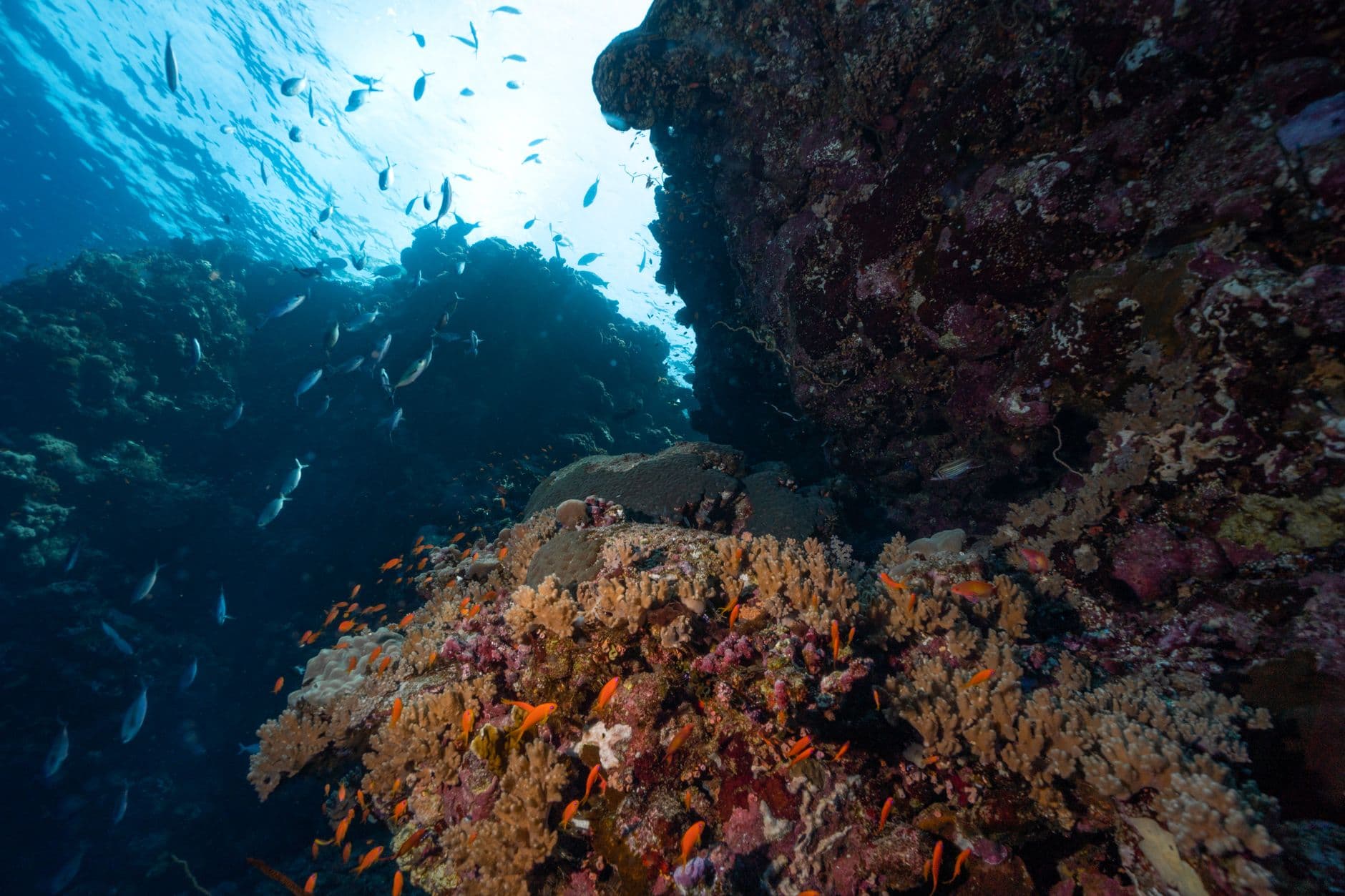
Top 7 Dive Sites in the Socorro Islands
The Socorro Islands spread across 400 kilometers of open Pacific, but the diving is concentrated around a handful of sites so reliable — so consistently dramatic — that liveaboard itineraries orbit them like planets around a star. Every operator runs roughly the same circuit: The Boiler for mantas, Roca Partida for sharks, Cabo Pearce for dolphins, El Cañón for the full symphony. The variation comes from season, current, and luck.
This guide ranks the top sites so you can understand what each one delivers, what skill level it demands, and what species you are most likely to encounter. All depths assume the dive profile follows the reef contour; deep drop-offs beyond recreational limits exist at most sites.
1. The Boiler (El Horno)
Type: Submerged seamount | Depth: 8–45 m | Island: San Benedicto | Difficulty: Intermediate–Advanced | Best season: November–May
The Boiler is Socorro's cathedral — a submerged volcanic pinnacle rising from 60 meters to within 10 meters of the surface, its flat top forming a natural amphitheater where giant Pacific manta rays gather to be cleaned. This is the most famous manta cleaning station in the Eastern Pacific, and it delivers encounters that feel scripted.
The seamount's topography creates a predictable current pattern that holds plankton and positions mantas perfectly over the reef. Divers descend to 20–25 meters and hover around the cleaning station while barberfish and angelfish swarm incoming mantas. The mantas circle, queue, and return repeatedly — a four-manta ballet with divers as the audience is a standard Boiler dive.
The mantas: Giant mantas with wingspans of 5–7 meters are virtually guaranteed year-round, with peak abundance November through May. These are the interactive mantas Socorro is famous for — individuals that make eye contact, roll to show their belly markings, and circle within arm's reach. The resident population includes known individuals documented for over 20 years.
Beyond mantas: Galapagos sharks patrol the deeper water around the seamount's base. Silky sharks stream through the blue in large numbers during summer. Scalloped hammerheads pass through on the seamount's edges, particularly in the morning. Yellowfin tuna and bigeye trevally hunt baitfish at the surface. Dolphins frequently pass through, and humpback whales are visible from the site during winter.
Skill and prep: Currents are strong (1–3 knots), and the reef top sits at 10 meters — you're diving a submerged structure with no shoreline reference. The bottom drops past 45 meters on all sides. Advanced Open Water with drift and deep experience is recommended. Stay well above the reef to avoid contact with the cleaning station.
Why it's number one: Nowhere else on Earth offers giant manta encounters of this quality, reliability, and intimacy. The Boiler is the single best manta dive in the world.
2. Roca Partida
Type: Volcanic pinnacle | Depth: 5–35+ m (walls drop >3,000 m) | Island: Roca Partida | Difficulty: Advanced | Best season: Year-round
Roca Partida is a geological anomaly — a sheer rock spine barely 25 meters across and 100 meters long, jutting from water that drops over 3,000 meters to the seafloor. Above water, it is a guano-covered rock. Below water, it is arguably the finest shark dive in the Eastern Pacific.
The pinnacle's extreme depth gradient is the key to its productivity. Large pelagic predators can move straight up from the abyss without traversing a continental shelf. Currents wrap around the rock, concentrating plankton, baitfish, and the predators that follow them. The result is a site where you can see Galapagos sharks, silky sharks, scalloped hammerheads, whitetip reef sharks, and tiger sharks on a single dive — with mantas, dolphins, and tuna in the mix.
The sharks: Galapagos sharks are abundant — dozens patrol the walls on every dive. Silky sharks stream through the blue, particularly in summer. Scalloped hammerheads school on the southeast wall in the morning, with schools of 50–200 common from November through May. Tiger sharks cruise the deeper sections from July to December. Whitetip reef sharks rest in crevices at all depths.
Beyond sharks: Giant mantas visit the cleaning stations on the northwest face. Bottlenose dolphins and spinner dolphins pass through regularly. Yellowfin tuna, wahoo, and sailfish hunt baitfish near the surface. Green turtles and hawksbill turtles are present year-round. Humpback whales are frequently visible from the site during winter.
Skill and prep: This is an advanced dive. Currents are strong and unpredictable, wrapping around the rock from multiple directions. Visibility can change rapidly as currents shift. The reef depth requires careful buoyancy control — the bottom is over 3,000 meters below. No protected areas or easy exits. Advanced Open Water with 50+ logged dives and significant drift-diving experience is the realistic minimum.
Why it's special: The combination of shark density, species diversity, and the sheer drama of diving a vertical rock in the middle of the open ocean makes Roca Partida a bucket-list site for serious divers.
3. El Cañón (The Canyon)
Type: Deep canyon and wall | Depth: 10–40 m | Island: San Benedicto | Difficulty: Advanced | Best season: December–May
El Cañón sits on San Benedicto's southwest coast with the dramatic backdrop of Volcán Bárcena — the cinder cone created by the 1952–53 eruption — dominating the skyline. Underwater, a deep canyon cuts into the volcanic slope, creating a current funnel that concentrates nutrients and marine life with extraordinary efficiency.
The canyon itself is a natural amphitheater: divers position along its edges while the current pushes plankton and baitfish through the channel, followed by mantas, sharks, and tuna. The topography channels animals into predictable paths, making El Cañón one of the archipelago's most reliable sites for seeing multiple megafauna species on a single dive.
The mantas: El Cañón's cleaning station rivals The Boiler's, with slightly more current-driven action. Mantas use the canyon's walls to position themselves in the current while being cleaned — they hover with their wingtips nearly touching the rock, barberfish working their gills. Multiple mantas queue in the current line.
The sharks: Scalloped hammerheads patrol the canyon's outer edge, particularly during their morning procession. Galapagos sharks and silky sharks are common inside the canyon. The strong current makes this a drift dive — divers ride the flow through the canyon and regroup in the lee of the island.
Beyond megafauna: Massive schools of creolefish cover the canyon walls. Yellowfin tuna hunt in the current. The canyon's rock formations create overhangs where whitetip reef sharks rest. Dolphins occasionally enter the canyon to play in the current.
Skill and prep: Advanced only. Currents of 2–3 knots are typical — this is the strongest-current site in the archipelago along with Roca Partida. Buoyancy control in moving water is essential. Surface marker buoy mandatory; the liveaboard dinghy shadows divers from the surface.
Why it's special: El Cañón combines the manta reliability of The Boiler with the shark action of Roca Partida, in one of the most dramatic volcanic settings in the archipelago.
4. Cabo Pearce
Type: Volcanic wall with lava tubes | Depth: 8–40 m | Island: Socorro Island | Difficulty: Intermediate–Advanced | Best season: Year-round (Dec–Jun preferred)
Cabo Pearce is Socorro Island's premier dive site — a long volcanic wall on the island's southeast coast where lava tubes, crevices, and overhangs form a complex underwater landscape. The site stretches over 500 meters, offering varied topography that supports different species at different depths.
The wall itself is a geological showcase: ancient lava flows frozen mid-cascade, tubes where water surges through like a natural jacuzzi, and ledges where reef fish school in dense aggregations. Multiple manta cleaning stations operate along the wall at different depths, giving divers options for positioning.
The mantas: Cabo Pearce's cleaning stations are active year-round, with peak encounters December through June. Mantas use the wall's ledges as resting platforms between cleaning passes. The site's length means multiple mantas can be active simultaneously without competing for the same cleaning station.
The dolphins: This is Socorro's best site for dolphin encounters. Bottlenose dolphins patrol the wall regularly, and spinner dolphins pass through during summer. Dolphin-manta interactions — pods following mantas along the wall — occur frequently enough that veteran Socorro guides call Cabo Pearce "the social site."
Beyond megafauna: Galapagos sharks patrol deeper water. Whitetip reef sharks rest in lava tubes. Large schools of creolefish, king angelfish, and Cortez rainbow wrasse cover the wall. Octopus, lobster, moray eels, and scorpionfish occupy the crevices. The lava tube formations make this the archipelago's best site for underwater photography.
Skill and prep: Intermediate with drift experience. Currents are moderate (1–2 knots) and more predictable than Roca Partida or El Cañón. Good buoyancy is essential for navigating lava tube formations without contact.
Why it's special: Cabo Pearce offers the archipelago's most varied diving on a single wall — mantas, dolphins, sharks, and macro life in one dive profile.
5. Punta Tosca
Type: Volcanic slope with boulders | Depth: 5–30 m | Island: Socorro Island | Difficulty: Intermediate | Best season: Year-round
Punta Tosca is the gentlest of Socorro's major sites — a sloping volcanic reef on Socorro Island's southwest coast where boulder fields, sand patches, and scattered coral heads create a more relaxed dive environment. It is the site operators choose when conditions at exposed sites are too rough, but it is far more than a backup plan.
The boulder field creates a complex 3D environment: overhangs where whitetip reef sharks sleep during the day, crevices where octopus and moray eels hunt at night, and sand patches where stingrays bury themselves. The slope's gradual descent makes buoyancy control easier than the wall dives, and the relaxed current (0.5–1.5 knots) allows for slower, more observational diving.
The sharks: Whitetip reef sharks are the signature species — multiple individuals rest in crevices and under overhangs, their distinctive white-tipped dorsal fins protruding from shadow. Galapagos sharks and silky sharks pass through in the blue. Hammerheads occasionally sweep across the deeper edge of the slope.
The mantas: Mantas pass through Punta Tosca regularly, often at cleaning stations on the deeper sections of the slope (20–30 m). Encounters here tend to be shorter but can be more intimate — with fewer divers and gentler current, mantas may linger.
The macro: Punta Tosca is Socorro's best macro site. Octopus, lobsters, moray eels, scorpionfish, juvenile puffers, and porcupinefish occupy the boulder crevices. The sand patches hold garden eels. Cortez rainbow wrasse and king angelfish are abundant on the reef.
Skill and prep: Intermediate. The gentlest conditions of the archipelago's major sites. Good buoyancy for navigating boulder fields. Excellent night dive site.
Why it's special: Punta Tosca offers a different kind of Socorro diving — slower, closer, macro-focused — and complements the high-adrenaline sites with genuine reef-diving quality.
6. La Machina (The Machine)
Type: Deep wall and boulder slope | Depth: 8–35 m | Island: San Benedicto | Difficulty: Intermediate–Advanced | Best season: December–June
La Machina sits on San Benedicto's southern shore, where a deep wall transitions to a volcanic boulder slope that creates eddies and current breaks. The topography earns its name: when the current is running, the site hums with activity as plankton and baitfish funnel through the boulder gaps, pursued by mantas, sharks, and tuna.
The wall section drops beyond recreational depths, while the boulder slope provides a more moderate profile at 15–25 meters where most of the action concentrates. Cleaning stations operate on the deeper boulders, and mantas use the eddy behind the boulder field to hold position in the current.
The sharks: Silky sharks and Galapagos sharks patrol the wall in large numbers. Scalloped hammerheads sweep the deeper edge. Wahoo (Acanthocybium solandri) make high-speed passes through the baitfish schools — a flash of iridescent blue and silver that is gone before you can raise your camera.
The mantas: Giant mantas use the boulder-field eddy to rest between current-driven feeding runs. Peak encounters December through June. The site sees fewer divers than The Boiler or El Cañón, offering more private manta interactions.
Skill and prep: Intermediate–Advanced. Currents are strong (1–2.5 knots) and can shift direction as they wrap around San Benedicto's southern point. Drift diving proficiency required.
Why it's special: La Machina delivers the San Benedicto manta-and-shark package with fewer other boats in the water, making it a favorite of repeat Socorro divers who know the circuit.
7. Acuario (Aquarium)
Type: Protected cove | Depth: 3–20 m | Island: Socorro Island | Difficulty: Beginner–Intermediate | Best season: Year-round
Acuario is Socorro's outlier — the only site in the archipelago suitable for beginners and the only one offering genuinely protected conditions. Located in a sheltered cove on Socorro Island's north coast, Acuario has a sandy bottom with scattered boulders, gentle current (0–1 knot), and maximum depth of 20 meters.
The site's protection means marine life here is different from the exposed sites. Juvenile fish shelter in the shallows. Octopus hunt in the boulder field. Porcupinefish and puffers hover near the sand. Trumpetfish drift vertically among the rocks. King angelfish and Cortez rainbow wrasse are abundant. Mantas occasionally enter the cove, particularly during plankton-rich summer months, when they feed near the surface in protected water.
Night dives: Acuario is Socorro's primary night dive site. After dark, the cove transforms: octopus emerge to hunt, lobsters march across the sand, moray eels patrol the boulders, and sleeping turtles tuck into crevices. The shallow depth (3–15 meters) and protected conditions make it an ideal first night dive for divers who have never tried one.
Skill and prep: All levels. The only Socorro site accessible to divers with fewer than 25 logged dives. Good buoyancy required to avoid stirring sand in the shallows.
Why it's special: Acuario proves that Socorro is not only about adrenaline. It is a gentle, beautiful dive that shows the other side of the archipelago — and every liveaboard itinerary needs a site where you can decompress between the current-swept walls.
Site Comparison
| Site | Depth | Current | Level | Best Season | Signature Species |
|---|---|---|---|---|---|
| The Boiler | 8–45m | Strong | Int–Adv | Nov–May | Giant manta, Galapagos shark |
| Roca Partida | 5–35m+ | Strong | Advanced | Year-round | Hammerhead, silky, tiger sharks |
| El Cañón | 10–40m | Strong | Advanced | Dec–May | Manta, hammerhead, tuna |
| Cabo Pearce | 8–40m | Moderate | Int–Adv | Dec–Jun | Manta, dolphin, reef fish |
| Punta Tosca | 5–30m | Gentle | Int | Year-round | Whitetip reef shark, octopus |
| La Machina | 8–35m | Strong | Int–Adv | Dec–Jun | Manta, silky shark, wahoo |
| Acuario | 3–20m | None–Gentle | Beginner+ | Year-round | Octopus, juveniles, night dives |
How to Choose
If you want guaranteed manta encounters: The Boiler first, El Cañón second. Both deliver world-class manta interactions. Book a trip between November and May for peak abundance.
If you are a shark diver: Roca Partida is non-negotiable. Add El Cañón and La Machina for variety. July through December adds tiger sharks to the Galapagos, silky, and hammerhead mix.
If you want the full Socorro experience: A standard liveaboard itinerary will hit The Boiler, Roca Partida, and Cabo Pearce multiple times, plus El Cañón, La Machina, and Punta Tosca for variety. Acuario rounds out the week with a night dive or a gentle afternoon dive between current-swept sites.
If you are an underwater photographer: Cabo Pearce for the lava tube formations and schooling reef fish. Punta Tosca for macro. The Boiler for wide-angle manta portraits. Bring a wide-angle lens (16–35mm) for mantas and sharks, and a macro lens (60–100mm) for Punta Tosca and Acuario.
If conditions are rough: Punta Tosca and Acuario are the archipelago's sheltered sites. A good liveaboard operator will adjust the itinerary around swell and wind, routing exposed sites for calm mornings and protected sites for afternoons.
No single site defines Socorro. The archipelago rewards divers who experience its full range — from The Boiler's manta ballet to Roca Partida's shark procession to Acuario's gentle night dive. This is a destination where the variety is as compelling as the spectacle.