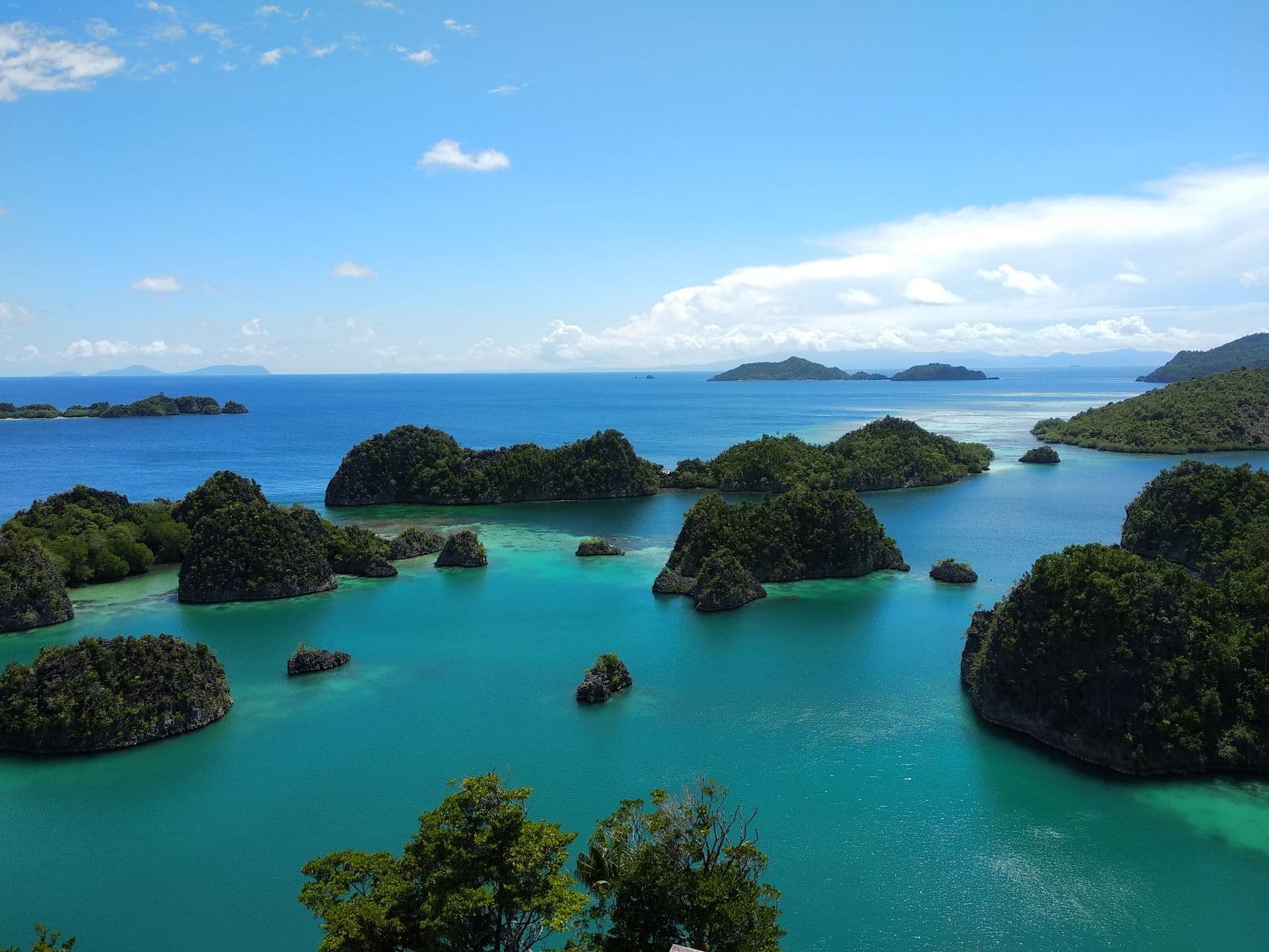
Raja Ampat Dive Conditions: Seasons, Visibility, Water Temp & Currents
Raja Ampat sits at 0.23°S latitude, straddling the equator just south of the equator in eastern Indonesia. That equatorial position gives it a tropical monsoon climate with two distinct seasons — a dry season (October–April) driven by the northwest monsoon and a wet season (June–September) driven by the southeast monsoon. But the "dry" and "wet" labels hide a lot of nuance: transition months, microclimates between the northern and southern islands, and the plankton blooms that drive the best pelagic encounters during the rainiest months. This guide breaks it down by the numbers, area by area.
The Big Picture: Raja Ampat by the Numbers
Raja Ampat spans a massive 62,000 km² of ocean across five main dive areas: Misool in the south, Dampier Strait in the center, Arborek and Waisai along northeastern Waigeo, Wayag in the far north, and remote outposts like Batanta, Salawati, and Kofiau. Conditions vary noticeably between these areas.
Visibility range: 10–35 m (33–115 ft) — 20–35 m during the dry season, 10–20 m during the wet season. January and February occasionally drop to 15–20 m when strong tidal mixing stirs up suspended particles. November and December regularly hit 30–35 m — the clearest water of the year.
Water temperature: 26–30°C (79–86°F). Northern areas (Waigeo, Dampier Strait) run 28–30°C year-round. Southern Misool runs 26–28°C year-round, cooled by deeper water and stronger upwelling. Thermoclines drop 2–3°C in channel passages like Pitt Strait and the Dampier Strait channels.
Current: Mild to strong (0.5–3 knots), entirely tide-dependent. Dampier Strait is the current epicenter — moderate to strong tidal flows create the nutrient-rich upwellings that drive the region's extraordinary biodiversity. Misool is generally mild, with the exception of channel mouths. Wayag and northern Waigeo are moderate.
Depth range: Shallow reefs 1–15 m, typical dive depths 10–35 m, wall dives at Cape Kri and Blue Magic drop to 50 m+, deep seamounts like Magic Mountain and Boo Rock go to 45 m.
Month by Month Breakdown
January — Peak Dry Season
Temperature: 28–30°C (North), 27–28°C (Misool) Visibility: 20–30 m Current: Moderate
January delivers excellent diving. The northwest monsoon is fully established, bringing calm seas and settled weather across the archipelago. This is peak tourist season — liveaboards book out months in advance. Mantas are reliably at Manta Sandy and Manta Ridge. Reef sharks patrol the walls of Cape Kri and Blue Magic. The water is warm enough that a 3 mm full suit is comfortable for most divers, though photographers doing extended bottom time on deeper sites appreciate a hood.
Downside: January can see occasional squalls rolling through, and visibility in the northern Dampier Strait occasionally drops to 15–20 m after strong tidal mixing. But these are exceptions, not the rule.
February — Dry Season, Similar to January
Temperature: 28–30°C (North), 27–28°C (Misool) Visibility: 20–30 m Current: Moderate
Equivalent to January in most respects. Water remains warm, seas stay calm, and marine life activity is high. Bumphead parrotfish aggregations are active on the reefs — you'll hear them crunching coral before you see them. Grey reef sharks are at their most abundant on outer reef slopes. This is an excellent month for wide-angle reef photography because surface conditions allow for easy safety stops.
March — Late Dry Season, Peak Visibility
Temperature: 28–30°C (North), 27–28°C (Misool) Visibility: 25–35 m Current: Mild to moderate
March marks the transition toward the end of the dry season, and it's one of the two best months for visibility (alongside November). The water column is well stratified, surface conditions are calm, and the plankton load is low — 25–35 m visibility is the norm, with 35 m+ days on the southern Misool reefs. Currents are mild across most sites, making this an ideal month for photographers and less experienced divers tackling intermediate sites like Sardine Reef and Mioskon.
Whale sightings begin to pick up as migrating species pass through the Bird's Head Seascape.
April — End of Dry Season
Temperature: 28–29°C (North), 26–27°C (Misool) Visibility: 20–30 m Current: Mild
The last fully dry month. Conditions remain excellent, with visibility still in the 20–30 m range. April is less crowded than the December–February peak — fewer holiday travelers, still spectacular diving. Water starts warming in the north, and manta cleaning station activity is reliable at both Manta Sandy and Manta Ridge. The first hints of plankton appear toward the end of the month in the Dampier Strait.
May — Transition Month
Temperature: 28–29°C (North), 26–27°C (Misool) Visibility: 15–25 m Current: Moderate
May is the shoulder between seasons. Conditions are still very good, but the southeast monsoon is beginning to build. Visibility drops slightly — 15–25 m — as plankton blooms start. The upside: this plankton draws filter feeders. Mantas become highly active, feeding in the water column rather than just visiting cleaning stations. First whale sharks of the season occasionally appear in the Dampier Strait.
This is a good month for divers who want strong mantas encounters and don't mind trading some visibility for big animal action.
June — Wet Season Begins
Temperature: 27–29°C (North), 26–27°C (Misool) Visibility: 10–20 m Current: Moderate to strong
The wet season proper starts in June. Winds pick up from the southeast, bringing more cloud cover and rainfall. Visibility drops to 10–20 m across most sites. This sounds worse than it is — 10–20 m is still perfectly diveable, and the reduced visibility is offset by the thickest plankton blooms of the year.
This is prime manta and whale shark season. The plankton concentration in the Dampier Strait draws oceanic manta rays in numbers that rival any other time of year. Whale sharks — juveniles 3–6 m — are regulars on the surface in the strait and around Wayag. If big animals are your priority, June through August is the window.
Currents run stronger across the board. Advanced divers will enjoy the faster drift dives at sites like Blue Magic and Mike's Point. Beginners should stick to sheltered bays and jetty dives.
July — Peak Plankton, Peak Megafauna
Temperature: 27–28°C (North), 26–27°C (Misool) Visibility: 10–20 m Current: Moderate to strong
July is the heart of the wet season and the peak of the plankton bloom. Visibility sits at 10–20 m — the lowest of the year — but the marine life activity is off the charts. Oceanic mantas are at maximum abundance, often seen in feeding chains at the surface. Whale shark sightings peak in July and August.
Dampier Strait sites are productive but can run strong. Manta Sandy sees heavy traffic from both mantas and divers. Early morning dives give the best conditions before the wind picks up.
The trade-off is real — plan your trip for July-August if you want the guaranteed big-animal encounters, but accept that macro photography and wide-angle reef shots will be compromised by the reduced vis.
August — Similar to July
Temperature: 27–28°C (North), 26–27°C (Misool) Visibility: 10–18 m Current: Moderate to strong
Essentially a continuation of July. Plankton remains thick, mantas and whale sharks are active, and visibility is at the annual low. This is the quietest month for tourism — few divers visit Raja Ampat in August because of the rain — which means you'll have sites to yourself. If you're comfortable with strong currents and modest visibility, August delivers some of the most private, productive diving of the year.
The Misool area, with its naturally clearer water (25–35 m baseline), offers a reprieve — visibility here stays higher than in the Dampier Strait during the wet months.
September — Transition Month (Improving)
Temperature: 27–29°C (North), 26–27°C (Misool) Visibility: 15–25 m Current: Moderate
Conditions improve noticeably in September. The monsoon is weakening, winds are dropping, and visibility climbs back to 15–25 m. Mantas are still abundant — it's the tail end of their peak season. Whale sharks become less reliable as the plankton thins.
September is an underrated month. The weather is better than the wet season core months, marine life is still exceptional, and crowds are thin. It's the sweet spot for divers who want both good conditions and solitude.
October — Peak Season Begins
Temperature: 28–30°C (North), 27–28°C (Misool) Visibility: 20–30 m Current: Moderate
October marks the start of the dry season proper. The northwest monsoon brings calm, settled weather. Visibility jumps to 20–30 m and climbing. Water temperatures warm back up across the board. This is when the liveaboard season kicks into high gear.
Reef manta rays are at their peak aggregation at cleaning stations — now is the time for those extended manta encounters at close quarters. Scalloped hammerheads become more reliable at Cape Kri and Blue Magic as the current moderates and the water clears.
November — Best Visibility of the Year
Temperature: 29–30°C (North), 27–28°C (Misool) Visibility: 25–35 m Current: Mild
November competes with March for the title of best overall conditions. Visibility is at its annual peak: 25–35 m across the archipelago, with 35 m+ days on the Misool reefs. Currents are at their mildest. Water temperature is near its maximum. This is the month for photographers — the water is clear, the light is excellent, and the reefs look their best.
All marine life is present. Mantas are still active at cleaning stations. Reef sharks are abundant. The coral is at its most photogenic. If you can only do one Raja Ampat trip, November is the month to target.
December — High Season
Temperature: 29–30°C (North), 27–28°C (Misool) Visibility: 25–35 m Current: Mild
December is similar to November — arguably the best diving of the year, coupled with the highest tourism demand and prices. The Christmas-New Year holiday period sees liveaboards fully booked and resorts at capacity. Visibility holds at 25–35 m. Water is warm. Conditions are calm.
The one catch: December is busy. Book 6–12 months ahead if you want a specific liveaboat or resort. Dive groups are larger, and popular sites like Manta Sandy and Cape Kri see multiple boats at the same time. Early morning dives help avoid the crowds.
Area-by-Area Conditions
Misool (South)
Cooler water (26–28°C year-round), generally clearer visibility (25–35 m), and milder currents than the north. Protected from the worst of the monsoon winds by its southern position. Best diving: October–May. Misool's sites like Magic Mountain, Boo Windows, and Nudi Rock are less affected by the plankton blooms that reduce visibility in the Dampier Strait during June–September.
Dampier Strait (Central)
The heart of Raja Ampat diving — Cape Kri, Blue Magic, Manta Sandy, Sardine Reef. Moderate to strong currents, 28–30°C water, and the widest visibility swing (10–35 m depending on season). Strong tidal flows make this a drift-diving zone. Best period: October–May for clear water, June–September for mantas and whale sharks.
Wayag and Northern Waigeo
Moderate conditions with stunning karst scenery. Visibility 15–35 m. Eagle Rock and Wayag Wall are the highlight dives. The north gets more exposure to monsoon winds — calmer October–April. Best months: October–May.
Batanta and Salawati
Strong currents, advanced dives, and pristine (less-visited) reefs. Pitt Strait can run 2–3 knots. Conditions mirror the Dampier Strait but with significantly fewer divers. Best visited October–May.
Kofiau
Remote western sites, seldom visited. Moderate to strong currents. Best conditions October–May. Only accessible via liveaboard.
What to Pack for Raja Ampat Conditions
| Item | Recommendation |
|---|---|
| Wetsuit | 3 mm full suit year-round; 5 mm if you're cold-sensitive or plan deep dives in Misool |
| Hood | Recommended for deep dives below 25 m — thermoclines can drop 3°C |
| SMB + Reel | Mandatory for drift dives — every dive is a potential drift dive |
| Dive computer | Non-negotiable — drift profiles are multilevel |
| Dive torch | Essential for night dives and macro photography in crevices |
| Reef-safe sunscreen | Required by marine park regulations |
| Antimalarials | Raja Ampat is a malaria zone — consult your doctor |
| Cash (IDR) | Bring enough from Sorong; ATMs on Waisai often run out |
| Camera with macro lens | Nudi Rock and Kabui Bay demand one |
| Download offline maps | Mobile coverage is limited outside Waisai |
The Bottom Line
Raja Ampat's conditions are consistent in their variation. October–May delivers 20–35 m visibility, calm seas, and warm water — the classic picture-postcard Raja Ampat. June–September delivers lower visibility but the planet's best manta and whale shark encounters, fewer crowds, and lower prices. There is no bad month to dive here — only different priorities. Know what you want, match your timing accordingly, and the "Four Kings" will deliver.