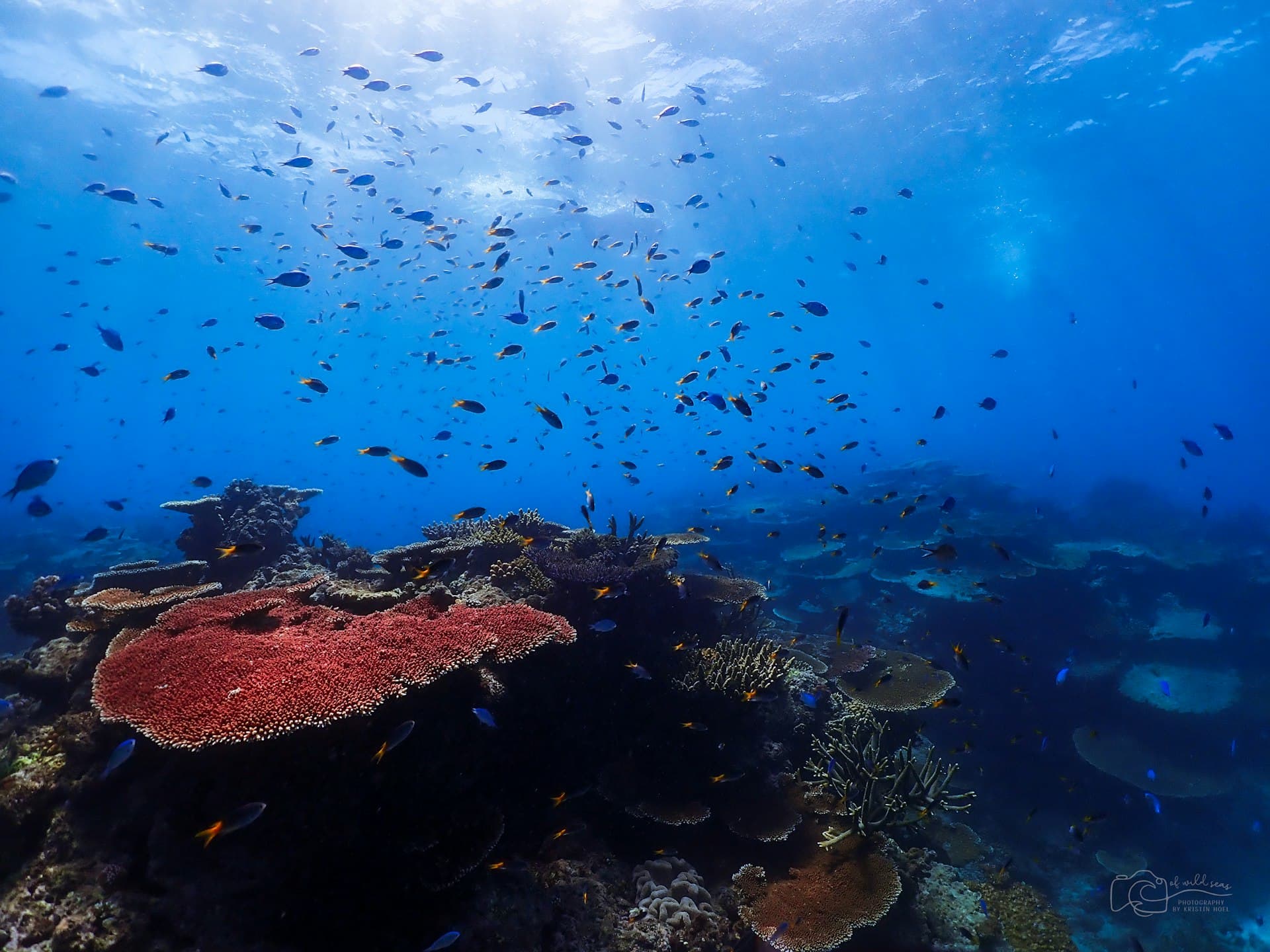
Top 8 Dive Sites in the Poor Knights Islands
The Poor Knights Islands are not a one-site destination. Operators around Tutukaka have more than twenty named dives to choose from, spread across Tawhiti Rahi, Aorangi, the channel, and offshore rocks. The best site on any given day depends on wind, swell, tide, and the experience of the group. Still, a few names define the reserve: Northern Arch, Blue Maomao Arch, Rikoriko Cave, Southern Arch, The Gardens, Magic Wall, Tie Dye, and Nursery Cove.
Use this guide as a practical ranking, not a fixed itinerary. If the skipper changes the plan, trust the conditions call. A protected second-choice site with good light and relaxed divers is better than a famous arch in bad surge.
1. Northern Arch
Type: Volcanic arch / wall | Depth: 10-30+ m | Access: Boat from Tutukaka | Difficulty: Intermediate-Advanced | Best season: Dec-Apr
Northern Arch is the Poor Knights at full volume: a volcanic opening, blue water beyond, walls covered in invertebrate life, and fish streaming through the gap. On a good day, blue maomao (Scorpis violacea) fill the arch like moving smoke. Kingfish (Seriola lalandi) and trevally patrol the edges, while snapper and red moki hold closer to the rock.
The dive can be straightforward in calm conditions, but surge and current change the difficulty quickly. Divers should be comfortable controlling buoyancy near rock, following a guide through swim-through terrain, and managing a boat pickup. Photographers love the site because silhouettes, arch geometry, and schooling fish all line up in one frame.
2. Blue Maomao Arch
Type: Shallow arch / fish school | Depth: 8-18 m | Access: Boat | Difficulty: Beginner-Intermediate in calm seas | Best season: Year-round, best light in summer
Blue Maomao Arch is exactly what the name promises. When conditions line up, the arch is packed with blue maomao, sometimes so dense that divers can lose sight of the far wall. It is one of New Zealand's signature fish-school dives and a perfect introduction to why Poor Knights is not just another temperate reef.
Because much of the action is shallow, this site can suit newer divers when surge is mild. It is also excellent for snorkelers near the entrance zones. Stay patient, move slowly, and let the school reform around you instead of chasing it.
3. Rikoriko Cave
Type: Giant sea cave / light dive | Depth: Entrance and nearby reef typically shallow to mid-depth | Access: Boat | Difficulty: Intermediate | Best season: Calm summer and shoulder-season days
Rikoriko Cave is one of the world's largest sea caves by volume, with a ceiling around 30 meters and a chamber extending roughly 200 meters into the island. Not every visit is a full cave-style dive; many trips use the entrance, light zone, acoustics, and nearby reef as the experience. Even from the boat, the scale is impressive.
Underwater, the attraction is atmosphere: blue light at the entrance, darker rock overhead, fish sheltering along the margins, and the sense of diving inside the skeleton of an old volcano. Divers should stay within the guide's plan and avoid treating it like an overhead-training exercise. The site is best when swell is low and boat traffic can be managed calmly.
4. Southern Arch
Type: Arch / ray aggregation site | Depth: 10-30 m | Access: Boat | Difficulty: Intermediate-Advanced | Best season: Summer for rays
Southern Arch is famous for summer ray encounters. Short-tail stingrays (Dasyatis brevicaudata) and New Zealand eagle rays (Myliobatis tenuicaudatus) may gather in numbers, creating one of the reserve's most distinctive wildlife scenes. The arch itself adds drama, with fish movement, changing light, and surge around the structure.
This is not a site to rush. Keep distance from rays, stay low and calm when appropriate, and avoid blocking their path. The best encounters happen when divers behave predictably and let the animals choose the distance.
5. The Gardens
Type: Sponge garden / wall | Depth: 10-30 m | Access: Boat | Difficulty: Intermediate | Best season: Year-round; beautiful in winter
The Gardens is the place to slow down. Instead of one huge feature, the site offers color and texture: sponges, jewel anemones, encrusting life, nudibranchs, and reef fish layered across the wall. It is a strong choice when conditions favor Aorangi or when the group wants marine life detail over adrenaline.
Macro photographers should watch for nudibranchs, morays, scorpionfish, and small crustaceans. Wide-angle shooters can still work the sponge-covered contours, especially when visibility is good and fish schools pass above the reef.
6. Magic Wall
Type: Wall / fish life | Depth: 12-35+ m | Access: Boat | Difficulty: Intermediate-Advanced | Best season: Dec-May
Magic Wall is a classic Tawhiti Rahi wall dive, with vertical relief, blue-water edges, and a strong sense of exposure. It is the kind of site where divers often split attention between the wall and the open water. Reef detail sits close to the rock; larger fish and possible pelagics pass farther out.
Good buoyancy is important because the wall can tempt divers deeper than planned. Stay aware of depth and gas, especially if visibility is excellent. The site rewards divers who can hold position and look both small and large: nudibranchs near the wall, kingfish and bronze whalers in the blue.
7. Tie Dye
Type: Sponge and color site | Depth: 10-28 m | Access: Boat | Difficulty: Intermediate | Best season: Year-round
Tie Dye is named for color. The wall and boulder faces can show orange, yellow, purple, and pink life in dense patches, making it one of the reserve's most photogenic sponge-garden dives. It pairs well with The Gardens in a two-dive day focused on color, macro, and relaxed exploration.
This is also a good site for divers who want the Poor Knights experience without committing to the most surge-prone arches. Conditions still matter, but the appeal is less dependent on a single swim-through.
8. Nursery Cove
Type: Sheltered cove / beginner site | Depth: 5-18 m | Access: Boat | Difficulty: Beginner | Best season: Year-round in suitable weather
Nursery Cove is the safety valve and training-friendly option of the Poor Knights menu. When exposed sites are too much for newer divers, a sheltered cove can still deliver fish life, rocky reef, kelp, and a taste of the reserve's protected ecosystem. It is a good first Poor Knights dive, a snorkel option, or a second dive after a more demanding arch.
Beginners should not view it as a consolation prize. The reserve's no-take protection means even sheltered sites can hold more life than comparable coastal reefs. Move slowly and look closely at the rock: juvenile fish, small invertebrates, and reef textures are part of the point.
Comparison Table
| Site | Depth | Level | Main Draw | Best Conditions |
|---|---|---|---|---|
| Northern Arch | 10-30+ m | Int-Adv | Iconic arch, fish schools | Calm summer, good visibility |
| Blue Maomao Arch | 8-18 m | Beg-Int | Dense blue maomao schools | Mild surge, bright light |
| Rikoriko Cave | shallow-mid | Int | Giant sea cave atmosphere | Low swell |
| Southern Arch | 10-30 m | Int-Adv | Summer rays, arch topography | Summer, manageable current |
| The Gardens | 10-30 m | Int | Sponges, macro, color | Any stable window |
| Magic Wall | 12-35+ m | Int-Adv | Wall, fish, blue-water edge | Good buoyancy conditions |
| Tie Dye | 10-28 m | Int | Sponge color and photography | Stable sea state |
| Nursery Cove | 5-18 m | Beginner | Sheltered reserve life | When exposed sites are rough |
How to Choose
If this is your first Poor Knights trip, hope for Northern Arch or Blue Maomao Arch on day one. They deliver the classic volcanic-arch identity of the reserve. If you want wildlife behavior, ask about Southern Arch during summer ray season. If you are a macro photographer or traveling outside summer, prioritize The Gardens, Tie Dye, and Nudibranch Rock. If you are newer to boat diving, Nursery Cove or a sheltered arch entrance may be the right first step.
The best plan is to book two dive days. One day might give you arches and blue water; the other might give you sponge gardens and macro. Together they show the real Poor Knights: not a single bucket-list site, but a protected volcanic system with multiple moods.