Best Playa del Carmen Dive Sites: Top 10
Playa del Carmen’s best local dives cover much more than one reef style. Within a normal 6–40 m depth range, you can move from beginner-friendly coral gardens to turtle drifts, arches, walls, a coral-covered wreck, and a regulated seasonal bull shark observation area. All of these local marine sites are boat dives.
This ranking weighs underwater character, practical value, range of marine life, and how well each site represents Playa. It does not rank Cozumel reefs or inland cenotes; those are separate day trips with different logistics. Nor does a high rank mean a site is right for every diver. Current and weather can transform the difficulty, and the operator’s day-of-dive judgment should decide the final match.
Wildlife remains wild throughout the list. Turtles, rays, sharks, tarpon, and large fish are possible or seasonally more likely, never guaranteed.
1. Tortugas
Type: Reef plateau and slope | Depth: 10–40 m; many dives at 15–30 m | Typical fit: Intermediate, with deeper or stronger-current profiles for experienced divers | Current: Moderate to strong
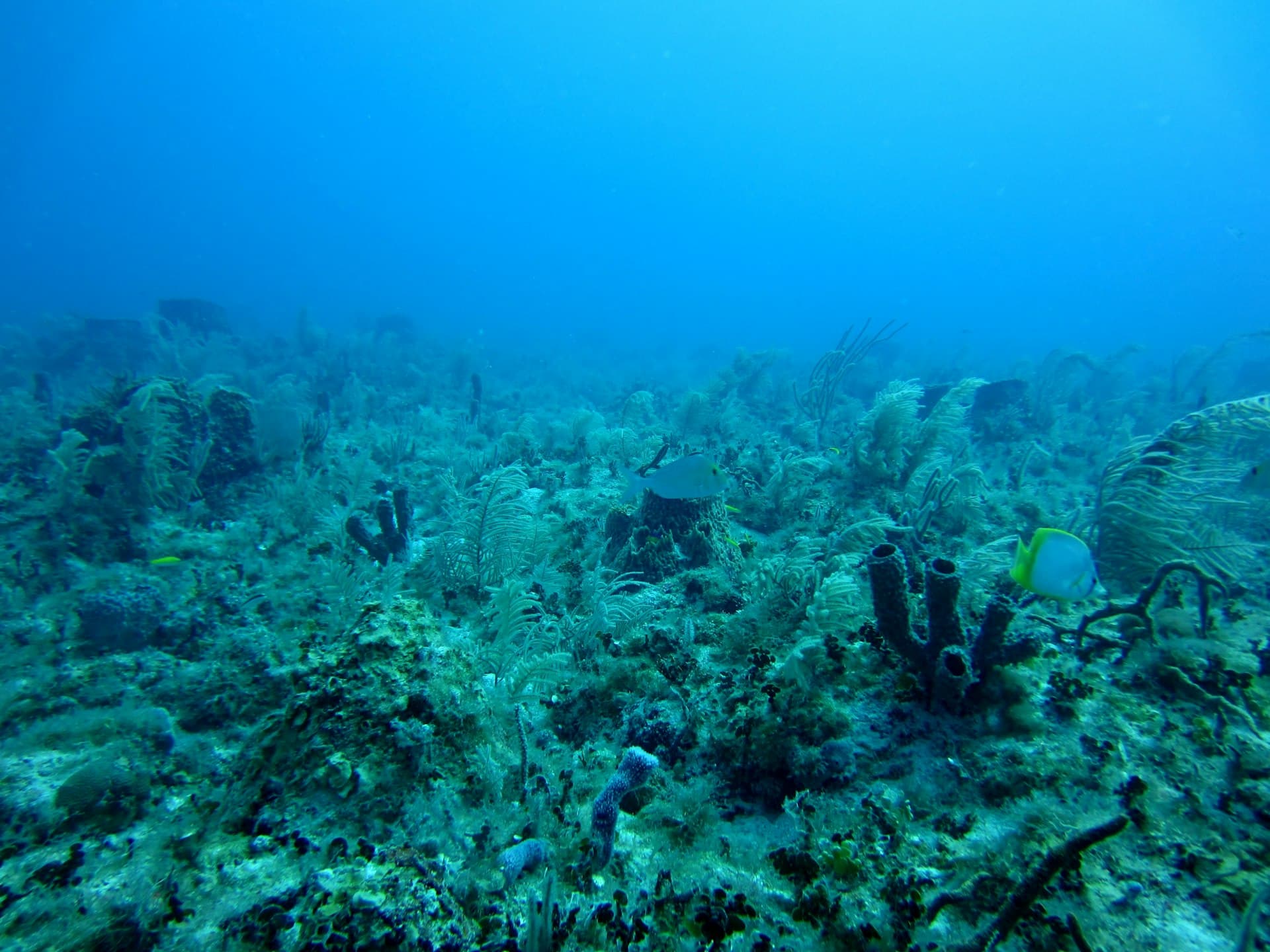
Tortugas is Playa’s most complete all-around reef dive. A broad plateau and sloping reef covered with barrel sponges gives the guide room to choose a profile for the group and the day. Green turtles and hawksbill turtles are the signature animals, while barracuda, groupers, tarpon, and rays may also pass through.
Its strength is flexibility. One route may stay in the mid-depth range and drift over sponge-covered structure; another may run deeper toward 30 m. The site name reflects frequent turtle encounters, but no individual dive comes with a sighting guarantee.
Why it ranks first: It combines classic Caribbean scenery, a good chance of larger reef life, and a drift that expresses Playa’s local diving character.
Practical note: Ask which Tortugas profile is planned. The published envelope is broad, and “Tortugas” alone does not tell you the maximum depth or current. Keep distance from resting or feeding turtles and never block their path to the surface.
2. Mama Viña
Type: Artificial-reef wreck and drift | Depth: 18–30.5 m; wreck commonly around 28–30 m | Typical fit: Advanced or experienced | Current: Medium to strong
Mama Viña began as a shrimp and crab boat and was intentionally sunk in 1995. Coral now covers sections of the structure, while spadefish, jacks, barracuda, morays, and groupers patrol the wreck. The descent may be through blue water, and current can turn the second part of the dive into a fast drift.
This is a visually strong site even without entering the wreck. The combination of depth, flow, and limited bottom time makes planning more important than collecting close-up views. The guide should brief descent order, target depth, gas limits, separation procedure, and ascent method before anyone enters.
Why it ranks second: It is Playa’s defining wreck and a rare local change from coral ridges and walls.
Practical note: Any penetration must stay within training, site conditions, and the operator’s plan. Do not assume a wreck booking includes penetration. Good buoyancy lets you view the exterior without contacting coral or the structure.
3. Los Arcos
Type: Deep reef, wall, arches, and swim-through formations | Depth: 21–35 m | Typical fit: Advanced or experienced | Current: Often moderate to strong
Two arches give Los Arcos its name, but the broader attraction is the mix of wall, caverns, and deep reef structure. Turtles, stingrays, morays, lobster, groupers, and schooling fish may appear along the formations.
Depth concentrates the task load. Buoyancy changes matter more, gas disappears faster, and time inside the most scenic zone may be short. Current can also change how the arches are approached. This is a site where following the guide’s exact route is more useful than arriving with a fixed image of the dive.
Why it ranks third: It offers one of Playa’s strongest combinations of architecture and marine life.
Practical note: Discuss whether the planned route includes any overhead section and stay within your training. If the flow, visibility, or group comfort does not support the original line, accept an exterior route or a different site.
4. Shark Point
Type: Open sand-and-stone observation area | Depth: 20–25 m | Typical fit: Experienced certified divers; operator requirements vary | Current: Moderate to strong is possible | Season: Regulated tourism window November 1–March 31
Shark Point differs from every reef on this list. Adult female bull sharks seasonally aggregate on an open plateau near the Mamitas sector, and local tourism operates under a regulated winter framework. This is a controlled observation profile, not a normal reef drift.
The official window runs from November 1 to March 31, while many operators treat December through March as the core season. Those dates regulate activity; they do not force wild animals to appear. Arrivals, departures, current, and visibility vary.
Why it ranks fourth: When the aggregation is present, it is Playa’s signature seasonal wildlife dive and one of the most distinctive marine experiences in the Mexican Caribbean.
Practical note: Use an authorized, experienced operator and follow its current protocol. Hold the assigned position, stay calm, and never chase, touch, feed, crowd, or block a shark. Requirements differ, so confirm experience expectations before booking rather than assuming.
5. Pared Verde
Type: Near-vertical wall | Depth: 20–30.5 m | Typical fit: Advanced or experienced | Current: Medium to strong
Pared Verde presents a near-vertical face broken by ledges, overhangs, sand channels, sea fans, and sponges. Morays, turtles, stingrays, lobster, king crabs, and occasional pelagic animals may move along the wall.
The site rewards divers who can hold a stable position without gripping the reef. Current may carry the group along the face, while the depth makes accidental descents expensive in gas and no-decompression time. Stay aware of the guide, your computer, and your distance from the wall.
Why it ranks fifth: It is one of Playa’s clearest wall-diving experiences and delivers strong wide-angle scenery.
Practical note: Check depth frequently instead of relying on the wall as a reference. Do not tuck under an overhang or enter a recess unless it is part of the briefed route and within your training.
6. Sábalos
Type: Shallow coral walls, ridges, sand pockets, and caves | Depth: 6–15 m | Typical fit: Intermediate or comfortable drift diver | Current: Medium to strong; can be fast | Seasonal note: Tarpon reported July–October, strongest signal in late summer
Sábalos proves that depth is not the only measure of difficulty. The reef stays shallow, but the drift can move quickly over coral walls, ridges, sand, and caves. Barracuda, large snapper, groupers, morays, lobster, rays, and the site’s namesake Atlantic tarpon may appear.
Tarpon schools receive the most attention in August and September, with a broader reported window from July through October. Their presence varies. Even without them, the site is an energetic ride with enough structure and fish life to justify the dive.
Why it ranks sixth: It pairs long shallow bottom time with one of Playa’s liveliest drifts and a compelling late-summer wildlife possibility.
Practical note: Streamline equipment and maintain group spacing. Do not kick hard against the flow to hold a camera position; let the reef come to you. Agree on the ascent procedure because the group can cover substantial distance.
7. Cueva del Pargo
Type: Shallow reef, overhang, ledges, sand, and seagrass | Depth: 6–13 m | Typical fit: Beginner and above | Current: Usually weak or gentle
Cueva del Pargo packs an unusual amount of variety into a shallow profile. A circular overhang, coral garden, sand and seagrass create habitat for snapper, morays, lobster, crabs, shrimp, seahorses, turtles, stingrays, squid, and barracuda. The Virgen de Caracol statue and La Isla section add recognizable points along the route.
The site is frequently used for training and introductory dives, but experienced photographers also benefit from its bottom time and habitat changes. Slow down near the ledges and seagrass edge; many of the best subjects are small or camouflaged.
Why it ranks seventh: It is the best shallow sampler of Playa’s small reef life and mixed habitat.
Practical note: The word cueva does not remove training limits. Follow the guide around any overhead formation. Boat traffic makes ascent discipline and surface signaling especially important.
8. Jardines
Type: Shallow coral platform, small wall, overhangs, and sand pockets | Depth: 6–13 m | Typical fit: Beginner, check dive, or relaxed reef dive | Current: Usually weaker than deeper reefs
Jardines is the practical first dive that still gives experienced divers plenty to see. Morays, angelfish, lobster, crabs, trumpetfish, and flamingo tongue snails live around the ledges, while schools of jacks or barracuda may pass above.
Its shallower depth makes it suitable for checking weighting, breathing, and trim after a break from diving. It also gives photographers time to settle into the local reef palette before moving to a faster drift.
Why it ranks eighth: It is dependable, accessible, and a useful introduction to local conditions without feeling like a compromise.
Practical note: Use the sand only when the guide designates it for skill work; careless finning can cloud the area. “Usually weaker current” is not “no current,” so listen to the morning assessment.
9. Moc-Che Deep
Type: Deep reef and long wall | Depth: 20–30 m | Typical fit: Advanced or experienced | Current: Changing, medium to strong
Moc-Che Deep drops well below its shallow counterpart. Overhangs, coral formations, and sea fans line the wall, with lobster, jacks, reef fish, and passing pelagic animals using the face. Bull sharks may cross the broader area in winter, but this is not the dedicated observation site and no shark encounter should be expected.
The site’s appeal comes from the wall and changing current. A guide can adjust the route to use the day’s flow, but divers still need stable buoyancy and regular depth checks.
Why it ranks ninth: It delivers a quieter, scenery-led deep dive with the possibility of open-water visitors.
Practical note: Choose it for the wall, not a shark promise. Ask whether conditions favor Moc-Che Deep or its shallow counterpart; the names are similar, but the profiles differ substantially.
10. Punta Venado
Type: Remote southern reef, wall, plateau, and drop-off | Depth: 18–35 m | Typical fit: Advanced or experienced | Current: Moderate to very strong | Exposure: Swell-sensitive
Punta Venado is a lightly visited southern site with a coral plateau, wall, large sponges, and a drop-off. Eagle rays, nurse sharks, large turtles, morays, and schooling fish are possible along the edge.
Distance and exposure make it itinerary-dependent. Swell and current can take it off the schedule even when central reefs remain available. That uncertainty is part of its appeal: when the operator judges conditions suitable, it offers a less familiar side of Playa.
Why it ranks tenth: It adds a remote, open-water feel and a strong list of possible larger animals.
Practical note: Treat the site as a request, not a fixed promise. Confirm boat time, conditions, and the planned depth before departure. If the operator substitutes a central reef, the decision is based on safety and sea state.
Honorable Mentions
Barracuda
Playa’s Barracuda is a 6–15 m mainland reef with five finger-like outcrops, sand channels, caverns, and overhangs. Current can be moderate to strong, and barracuda, grunts, snapper, morays, seahorses, turtles, stingrays, and lobster may be found around the ridge. It is not Cozumel’s advanced Barracuda Reef across the channel.
Cerebros
Cerebros is a less-visited northern reef at 6–15 m, built from brain-coral blocks, arches, and a zigzag edge. Current is often calm, though the boat ride is longer than to central sites. Lobster, king crabs, shrimp, morays, grunts, and occasional eagle rays make it a good choice for patient observers.
Chun Zumbul
The shallow Chun Zumbul runs 6–13 m through coral ridges, sand channels, gorgonians, overhangs, and coral caverns. It is usually dived south to north. Published site information puts visibility around 15–20 m, lower than Playa’s clearest general range, but schooling fish, flounders, rays, morays, arrow crabs, lobster, pufferfish, and grunts reward a slow drift.
Moc-Che Shallow
Moc-Che Shallow covers 6–15 m and ends around a small tunnel and arch. Green morays, grunts, and small reef life occupy the coral ridges and sand channels. It offers a gentle counterpart to Moc-Che Deep and can be a good first local drift.
Choosing Sites by Experience and Conditions
| Diver profile | Good starting points | Ask about next |
|---|---|---|
| New or returning | Jardines, Cueva del Pargo, Shangri-La, Moc-Che Shallow | Cerebros, Chun Zumbul |
| Comfortable in drift | Tortugas, Sábalos, Barracuda | Chun Zumbul Deep |
| Experienced at depth and in current | Mama Viña, Los Arcos, Pared Verde, Moc-Che Deep | Punta Venado, Shark Point in season |
These are planning categories, not fixed permissions. Operators may apply their own participation requirements and will match the site to certification, recent experience, comfort, and the day’s water. Do not overstate your ability to secure a preferred site. A candid conversation produces a better—and usually more enjoyable—dive.
Plan the Dive Day, Not Just the Site Name
Before boarding, ask for the expected depth, current, route, ascent method, and pickup plan. Playa’s local dives are boat-based, and several are drifts. The group may surface far from the entry, so staying together and following surface-marker procedures matters.
Dry-season visibility is often 20–40 m from November through April. The wet and hurricane season runs June through October, when warm water comes with greater weather sensitivity. Port closures override every site plan. If a captain changes the destination or cancels, accept the decision.
The best Playa itinerary usually mixes profiles: a shallow reef to settle in, Tortugas for the signature drift, then a deep wall or Mama Viña if experience and conditions support it. Add Shark Point only within the regulated winter window and with an authorized operator. Keep Cozumel and cenotes on separate days. That structure lets Playa’s local reefs stand on their own instead of treating them as filler between better-known excursions.