Top 7 Dive Sites in Palau: A Complete Guide
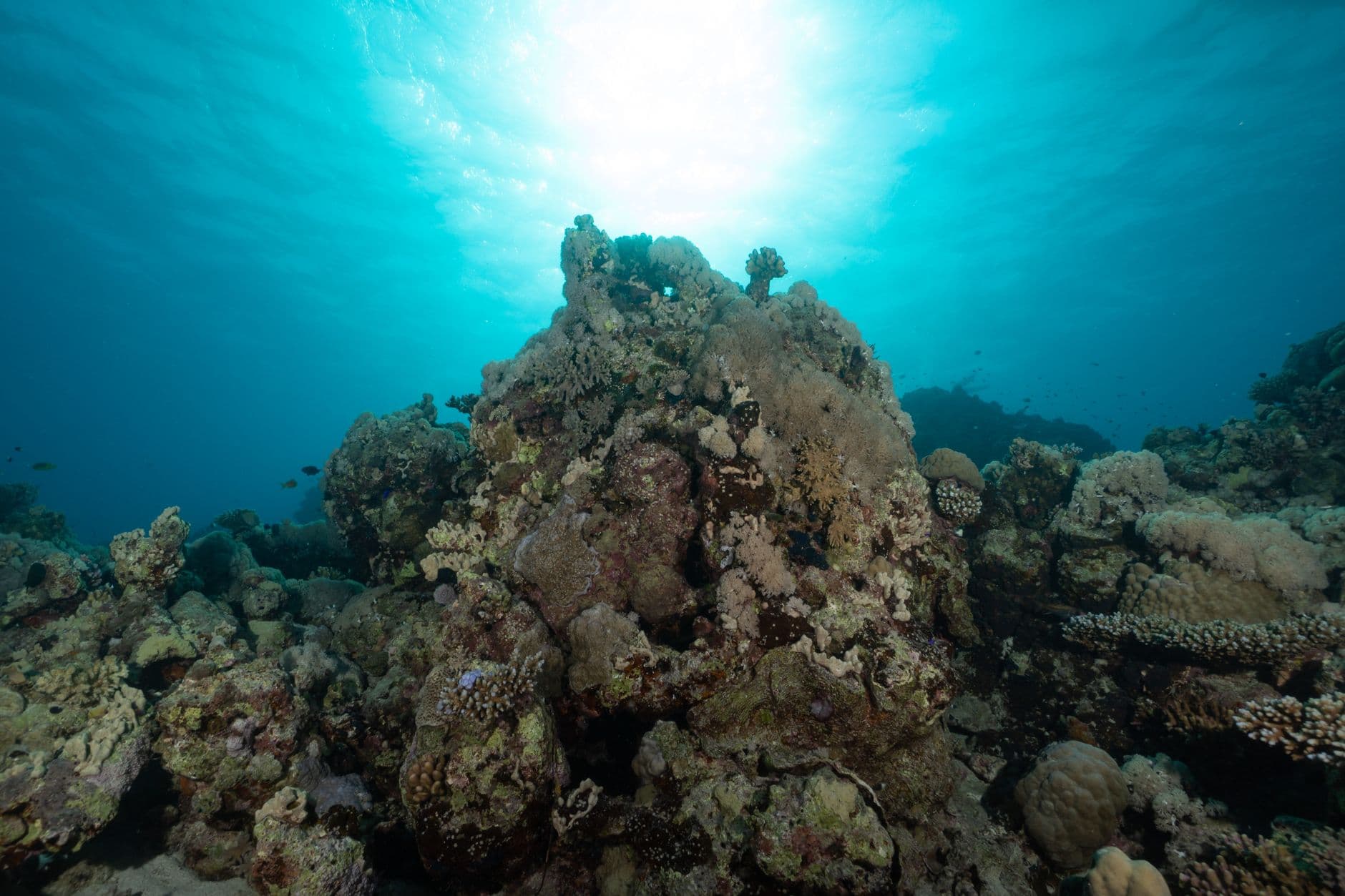
Palau's dive sites span an extraordinary range — from gentle coral gardens where beginners can float in 5 meters of gin-clear water to current-swept shark walls where advanced divers hook into the reef and watch the Pacific's apex predators cruise past at arm's length. There are WWII wrecks still carrying their wartime cargo, a marine lake filled with non-stinging jellyfish, and a channel where manta rays queue up at cleaning stations like passengers at a gate.
This guide ranks the top dive sites across Palau so you can build your week around what matters most to you. Every site listed here is actively dived by multiple Koror-based operators.
1. Blue Corner
Type: Coral plateau wall dive | Depth range: 15–40 m | Distance from Koror: 45–60 min | Difficulty: Advanced | Best season: November–April
Blue Corner is not a dive site — it is the reason Palau is on every diver's bucket list. A triangular coral shelf jutting into the open Pacific at the northwest tip of Ngemelis Island, it drops vertically on three sides into water that deepens to hundreds of meters. The current sweeps across the plateau top at 2–3 knots during spring tides, carrying nutrient-rich water that concentrates pelagic life like nowhere else in Micronesia.
The drill is unique among recreational dives: descend to 20–25 meters, find a crevice in the coral shelf, and attach your reef hook. Once secured, you hang suspended while the current flows past — and the sharks arrive. Grey reef sharks are the main attraction, often numbering 40–60 individuals cruising the drop-off in loose formations. Barracuda hover in dense cylinders overhead. Bigeye trevally sweep through in coordinated walls of silver. Napoleon wrasse, green turtles, and eagle rays add variety. Mantas and whale sharks appear as bonus encounters when conditions align.
The hook-in technique keeps you stationary. You do not swim against the current here — you let it work for you. DMs brief the entry, position, and exit drill before the dive, and the boat crew monitors every diver from the surface throughout the hang time.
Access: Boat from Koror only. Most operators schedule Blue Corner on days with favorable tide and current. Operators typically run two tanks: Blue Corner first, then a second dive at nearby Blue Holes or New Drop-Off.
Target species: Grey reef sharks (40–60), whitetip reef sharks, barracuda, bigeye trevally, Napoleon wrasse, eagle rays, turtles, occasional mantas and whale sharks.
Skill requirements: Advanced Open Water with drift-diving experience. Reef hook proficiency is essential — practice on a moderate-current site like Big Drop-Off before attempting Blue Corner. No gloves (banned in Palau).
Pro tip: Book Blue Corner for a spring tide window — the strongest current brings the densest shark activity. Communicate with your DM about your comfort level; they will position you at the edge of the action rather than in the center if needed.
Why it's the best: The combination of current, topography, shark density, and the hook-in experience makes this the most iconic single dive site in the Pacific.
2. German Channel
Type: Man-made channel with manta cleaning station | Depth range: 6–30 m | Distance from Koror: 45 min | Difficulty: Open Water+ | Best season: January–April (manta peak); good year-round
German Channel was blasted through the fringing reef by German phosphate miners in the early 1900s, creating a deep cut through the reef that now serves as Palau's most reliable manta ray encounter. The sandy channel floor at 10–18 meters is dotted with coral bommies that function as cleaning stations — and during incoming tide, manta rays arrive in numbers to hover over them while cleaner wrasse pick parasites from their skin.
On a good day in peak season (January–April), you can see 5 to 8 mantas at a single bommie, each with a wingspan ranging from 3 to 5 meters. The largest individuals can reach 7 meters — among the biggest manta wingspans recorded anywhere in the world. Divers kneel on the sand, stay perfectly still, and watch the mantas circle, return, and hover for the entire dive.
Outside manta season, the channel still delivers: eagle rays, grey reef sharks, jacks, barracuda, garden eels on the sandy patches, and cuttlefish in the seagrass beds at the channel entrance.
Access: Boat from Koror. Often paired with a nearby site or combined with a second Ngemelis dive. Incoming tide is preferred for mantas.
Skill requirements: Open Water is sufficient on calm days. Stronger currents require intermediate experience. Good buoyancy is essential — kneeling on sand without kicking up silt is the key to manta encounters.
Pro tip: Arrive early. The first boat on-site gets the best manta interaction before the channel gets busy.
3. Big Drop-Off (Ngemelis Wall)
Type: Vertical wall dive | Depth range: 3–285 m+ | Distance from Koror: 45 min | Difficulty: Open Water+ | Best season: Year-round
Jacques Cousteau ranked Big Drop-Off among his top 10 dives in the world, and 50 years later it still delivers. This is the western wall of Ngemelis Island, a sheer limestone face dropping from 3 meters at the reef flat to over 285 meters at the base — a vertical descent that creates continuous wall. The coral cover is exceptional: massive gorgonian sea fans, soft coral gardens, and barrel sponges cling to every ledge and crevice.
The marine life is layered by depth. The shallow reef flat at 3–12 meters is dense with anthias, fusiliers, and damselfish. The wall face at 15–30 meters is where you find whitetip and grey reef sharks patrolling the edge, turtles resting on ledges, and the occasional eagle ray gliding past. Below 30 meters the wall becomes more exposed, with larger pelagic species passing through.
The current at Big Drop-Off is mild to moderate — significantly easier than Blue Corner — making it the best introduction to Palau's wall diving for less experienced divers. There is no hook-in required; the wall provides enough shelter to dive as a standard drift profile.
Access: Boat from Koror. Often paired with Blue Corner or German Channel as a second dive.
Skill requirements: Open Water is sufficient for the upper wall (15–25 m). Advanced Open Water recommended for deeper exploration.
Pro tip: The wall changes character with the sun angle. An afternoon dive lights up the gorgonian fans and wall face with golden light.
4. Peleliu Express
Type: High-current drift dive | Depth range: 15–35 m | Distance from Koror: 90 min | Difficulty: Advanced | Best season: November–April
Peleliu Express is Palau's most adrenaline-pumping dive — a full-throttle drift down the western wall of Peleliu Island where the current can hit 3 knots and the ride lasts 45 minutes. Divers descend to 15–20 meters, tuck their arms in, and let the current sweep them along the wall at high speed while sharks, jacks, and barracuda move alongside. The sheer volume of marine life passing within touching distance is the payoff: grey reef sharks in double-digit numbers, eagle rays, Napoleon wrasse, schools of chevron barracuda, dogtooth tuna, and the occasional bull shark or tiger shark.
The boat deploys at the northern end and picks you up at the southern exit point — a straight-line drift of roughly 3 kilometers. SMB deployment is mandatory, and the surface interval must account for the distance the boat travels to reposition.
Access: Full-day trip from Koror (90 minutes each way). Requires spring tide window for the strongest current. Typically scheduled as two dives on Peleliu.
Skill requirements: Advanced Open Water with drift-diving and strong-current experience. Excellent situational awareness is required — divers must be comfortable maintaining depth without reference points at speed.
Pro tip: Pick your entry position. Dropping in slightly behind the lead group gives you a cleaner view of the pelagic action without bubbles blocking your sightline.
5. Siaes Tunnel
Type: Cavern swim-through and drift | Depth range: 10–53 m | Distance from Koror: 45 min | Difficulty: Advanced | Best season: November–April
Siaes Tunnel is a cathedral-like swim-through on the western side of Siaes Island. A large cavern entrance at 18 meters opens into a tunnel that rises to 10 meters at its ceiling, with shafts of sunlight piercing through openings in the karst rock above. The tunnel opens onto the outer wall, where the reef drops vertically into deep blue and the current accelerates.
The combination of cavern and wall makes this one of the most visually dramatic dives in Palau. Inside the tunnel: soft coral-covered walls, glassfish, and fusiliers. Outside: grey reef sharks, barracuda, and jacks in the blue water. The drift section along the outer wall is moderate to strong current, not as extreme as Peleliu Express but requiring good buoyancy to navigate the tunnel exit.
Access: Boat from Koror. Often combined with Siaes Corner or Ulong Channel.
Skill requirements: Advanced Open Water. Comfort with swim-throughs and overhead environments. Good buoyancy inside the tunnel is essential to avoid damaging the coral.
Pro tip: Enter the tunnel before the rest of the group to get the clear view of the exit light. Second position still works — the tunnel is large enough for multiple divers.
6. Iro Maru Wreck
Type: WWII freighter wreck | Depth range: 15–30 m | Distance from Koror: 30 min | Difficulty: Advanced Open Water | Best season: Year-round
The Iro Maru was a 143-meter Japanese supply ship sunk by US carrier aircraft on March 30, 1944 — the opening day of Operation Desecrate One. It sits upright and intact on the sandy bottom of Palau's lagoon at 30 meters depth, with its superstructure rising to 15 meters. The wreck is heavily encrusted with soft corals, sea fans, and — on the deeper sections — black coral.
The holds are the main attraction. Cargo hold No. 1 contains depth charges and small-arms ammunition, still visible through the open hatch. Hold No. 2 carries a Type 95 Ha-Go light tank, recognizable by its turret and tracks. The engine room is accessible but requires advanced penetration training and a light — do not enter without a wreck-diving specialty. The upper decks are open to recreational divers and offer multiple swim-throughs through the bridge and galley sections.
Visibility at the wreck site ranges from 10–20 meters depending on tidal flow and recent rainfall. Current is mild to moderate — the sheltered lagoon position keeps the wreck accessible even on strong-current days elsewhere.
Access: Short boat ride from Koror. Often paired with a second wreck (Chuyo Maru or the Zero fighter) for a full wreck morning.
Skill requirements: Advanced Open Water recommended. Good buoyancy is critical to avoid silting the interior or damaging the encrusting coral. Penetration requires wreck-diving certification and a dedicated light.
Pro tip: Dive the Iro in the morning before boat traffic stirs up the lagoon silt. The Zero fighter plane (10–15 meters) is a 5-minute boat ride away as a shallow second dive.
7. Ulong Channel
Type: Drift channel dive | Depth range: 5–30 m | Distance from Koror: 40 min | Difficulty: Intermediate | Best season: Year-round
Ulong Island was the filming location for Survivor: Palau (Season 10), but divers come for the channel cut through the barrier reef at the island's southern end. The channel acts as a natural funnel — incoming tide pushes water through the cut at 1.5–2.5 knots, creating a controlled drift dive that deposits divers at the exit in about 30 minutes.
The dive profile is simple: drop into the channel entrance, drift with the current along the coral wall, and enjoy the marine life that gathers at the funnel. Grey reef sharks wait at the channel entrance for the current to bring prey. Eagle rays cruise the sandy patches. Napoleon wrasse patrol the coral bommies. The shallow sections (5–12 meters) are dense with reef fish and soft corals.
The exit is a shallow coral garden at 3–5 meters where divers deploy SMBs and the boat picks them up. This is one of Palau's most beginner-accessible drift dives — the current is strong but predictable, and the exit is gradual.
Access: Boat from Koror. Often paired with Siaes Tunnel or Siaes Corner.
Skill requirements: Open Water with some drift experience. Good buoyancy is helpful but the channel forgiving — the sandy bottom below the coral wall means minor buoyancy errors have limited consequences.
Pro tip: Dive Ulong Channel on an incoming tide for the strongest drift. An outgoing tide produces a gentler ride that may feel too slow for experienced drift divers.
Choosing Your Sites
Palau's dive sites are best experienced as a curated week rather than a checklist. A typical 7-day itinerary from a Koror-based operator covers: Blue Corner (2–3 times), German Channel (2 times), a wreck morning, Peleliu Express (if spring tide aligns), Ulong Channel or Siaes Tunnel, a calm wall day (Big Drop-Off, New Drop-Off), and a marine lake afternoon. Most operators include Jellyfish Lake as a half-day surface excursion. Build your week around the tide tables, and let your DM's experience guide the current-condition decisions.