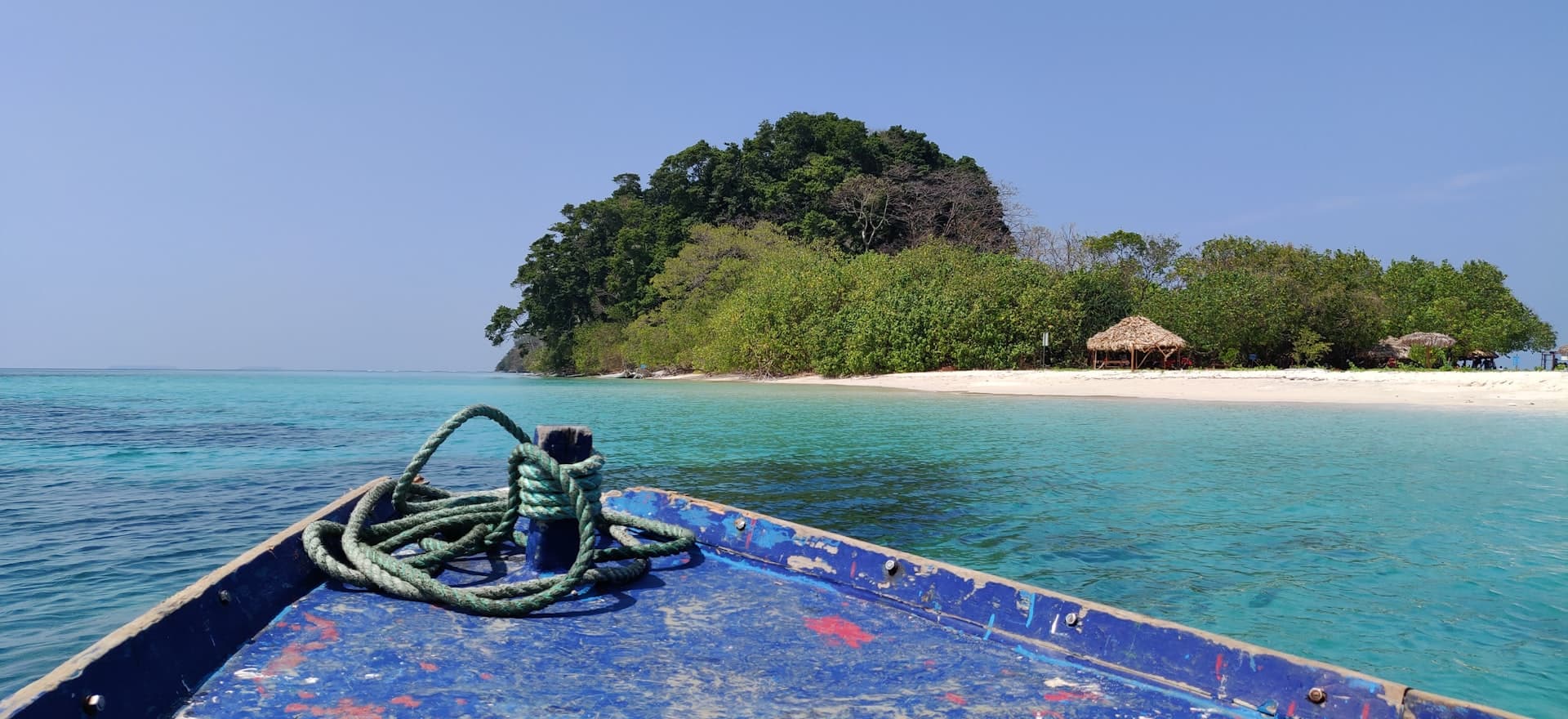
Diving the Nicobar Islands: India's Last Reef Frontier
The Nicobar Islands don't look like a dive destination on paper. There are no dive shops across all 22 islands — zero compressors, no tank fills, no rental gear, no liveaboards. The closest recompression chamber is 380 km north in Port Blair, a 36-hour ship ride. Foreign nationals cannot visit. Even Indian citizens need special permits from the district administration that are rarely granted for tourism.
And that is exactly the point.
This archipelago at the southern end of India, where the Bay of Bengal meets the Andaman Sea, remains one of the most restricted, least-explored, and most biodiverse marine ecosystems on the planet. Fringing coral reefs encircle islands that have seen fewer divers in a decade than a single Caribbean resort sees in a week. Seamounts rise from 40 m nearly to the surface, funneling nutrient-rich upwellings that attract reef sharks, manta rays, and schooling pelagics. Seagrass meadows shelter one of India's last viable dugong populations. Galathea Bay hosts one of the most important leatherback turtle nesting sites in the Indian Ocean — females weighing up to 700 kg haul ashore between December and April.
This guide covers what you need to know: the geography, the sites, the permits, the risks, and who this destination is actually for.
Geography and Access
The Nicobar chain spans roughly 3.5 degrees of latitude, from Car Nicobar (9°10′N) in the north to Indira Point (6°45′N) — India's southernmost landmass — in the south. Great Nicobar, the largest island at 921 km², anchors the southern end and contains both of the archipelago's national parks: Campbell Bay to the north and Galathea Bay to the south. Together they form the core of the Great Nicobar Biosphere Reserve, a UNESCO-designated protected area covering 103,870 hectares.
Getting here is the first obstacle. The only practical access is by government ferry from Port Blair in the Andaman Islands — a 36- to 48-hour crossing that operates on a bi-weekly schedule, weather permitting. INS Baaz, a naval airstrip on Great Nicobar, exists but has no commercial flights. A proposed Great Nicobar mega-development includes a new airport, but that project remains controversial and years from completion.
All visitors require a Restricted Area Permit from the Nicobar District Administration. Foreign nationals are not permitted in the Nicobar Islands under any circumstances — this is a Protected Aboriginal Tribe Reserve, and the restriction is absolute. Indian citizens face a multi-week application process that requires a legitimate purpose (research, official duty, or authorized expedition). Tourism permits are not issued.
Marine Life and Biodiversity
The Nicobar Islands sit within the Coral Triangle's western edge, where three major water bodies converge. The result is exceptional biodiversity: an estimated 200+ hard and soft coral species and over 1,200 species of fish across the Andaman and Nicobar archipelago.
Highlights include:
-
Campbell Shoal's seamount ecosystem: This nutrient pump attracts reef sharks (grey reef, whitetip), schooling jacks and barracuda, large grouper, and seasonal manta rays. The seamount rises from 40 m nearly to the surface, and the upwelling effect concentrates marine life in a way that rivals better-known seamounts in the Indian Ocean.
-
Leatherback turtle nesting at Galathea Bay: One of the most significant nesting sites in the Indian Ocean for the critically endangered leatherback. Hawksbill and green turtles also nest and forage in the area year-round.
-
Dugong habitat at Car Nicobar and Katchal: The seagrass meadows around these islands support one of India's last remaining dugong populations. Sightings are rare but documented — these gentle "sea cows" graze the shallow grass beds year-round.
-
Indira Point convergence zone: Where the Six Degree Channel mixes Bay of Bengal and Andaman Sea waters, creating a unique mixing-zone ecology. The 2004 tsunami caused 4.25 m of subsidence here, permanently altering the reef and creating a living laboratory of coral recovery.
-
Pelagic migration corridor: The deep channels between islands — particularly the Ten Degree Channel and Great Channel — serve as major migration routes for tuna, marlin, and shark species moving between the Indian Ocean and the Andaman Sea.
Who This Destination Is For
The Nicobar Islands are not a recreational dive destination. They are not even an expedition dive destination in the conventional sense, because there is no established expedition infrastructure to book into.
This destination is for:
- Scientific researchers with permits from Indian institutions
- Documentary filmmakers with government-approved projects
- Experienced expedition divers who are part of an organized, fully self-sufficient team with their own compressor, tanks, weights, medical kit, and emergency evacuation plan
- Divers who understand that there is no hyperbaric chamber, no recompression capability, and no dive professional within 380 km
This destination is NOT for:
- Recreational divers looking for a resort-based holiday
- Beginners or divers with fewer than 50 logged dives
- Anyone without DAN insurance with evacuation coverage
- Liveaboard trips (no infrastructure exists)
- Solo travelers (self-sufficient expedition teams only)
Practical Summary
| Aspect | Detail |
|---|---|
| Access | Government ferry from Port Blair (36-48 hours, bi-weekly) |
| Permits | Restricted Area Permit (Indian citizens only; foreigners not permitted) |
| Best season | December – April (calm seas, 20-30 m visibility, 27-29 °C) |
| Monsoon | June – September (diving not recommended) |
| Dive shops | Zero (bring your own everything) |
| Hyperbaric chamber | Nearest at Port Blair, 380 km north (36+ hours) |
| DAN insurance | Absolutely mandatory |
| Recommended trip length | Minimum 14 days (including 4-8 days transit) |
| Dive sites | 3 named sites + 6 generalized reef zones in published sources |
The Nicobar Islands demand more from a diver than any other destination in the DivePass pipeline. They also offer something no other destination can: the chance to dive a reef that has never been commercialized, where the only footprints on the beach belong to sea turtles, and where the underwater world exists exactly as it has for millennia. That is worth the paperwork, the transit time, and the risk planning.
If that sounds like your kind of diving, start the permit process now. Plan 12 months ahead. Bring everything yourself. And respect the restrictions — they exist to protect the Nicobarese and Shompen people who have called these islands home for thousands of years.