Malta Diving: Wrecks, Caves, Gozo, and Clear Mediterranean Water
Malta is Europe’s most convenient serious wreck-diving destination. The islands sit in the central Mediterranean between Sicily and North Africa, but for divers the geography is even more specific: compact limestone islands, short transfers, English-speaking dive centres, and more than 80 known wrecks in a country only 316 square kilometres in area. In a single trip you can shore dive a Second World War destroyer, swim through Gozo’s Blue Hole, tour modern artificial reefs at Ċirkewwa, and plan technical dives on deep heritage wrecks that require permits.
The diving is not tropical in the Red Sea sense. Malta’s reefs are rocky rather than coral-dense, and marine life is Mediterranean: damselfish clouds, rainbow wrasse, two-banded seabream, dusky grouper, octopus, barracuda, amberjack, catsharks, rays, and seasonal loggerhead turtles. What Malta offers instead is underwater architecture. Limestone caves, arches, fissures, tunnels, collapsed caverns, and wreck structures create some of the most varied underwater terrain in Europe.
Why Malta Works So Well for Divers
Malta’s biggest advantage is concentration. The main island, Gozo, and Comino are close enough that weather rarely cancels diving outright; if the north coast is exposed, operators can often move south, and if Malta is busy, Gozo gives you a quieter base. Water clarity is helped by the absence of permanent rivers, so runoff is limited and visibility commonly sits around 20–30 m in summer and 10–20 m after winter storms.
The islands are also logistically simple. Malta International Airport receives direct flights from London, Manchester, Dublin, Paris, Rome, Frankfurt, Amsterdam, Brussels, Madrid, Barcelona, Warsaw, Prague, Copenhagen, Istanbul, and Dubai. The Euro is the currency, English is official and widely spoken, and dive briefings are normally in English. Fun dives commonly run €35–50 per tank before equipment rental, while full rental adds about €30–45 per day.
The Main Diving Zones
Ċirkewwa and the North Coast
Ċirkewwa is Malta’s everyday workhorse dive area: easy road access, shore entries, training sites, reefs, swim-throughs, and three signature wrecks nearby. The Rozi tugboat, P29 patrol boat, and Ċirkewwa Arch make this zone a natural first stop for advanced open water divers. Expect depths from shallow reef training water to the 30–40 m range on wreck profiles. Schools of damselfish (Chromis chromis), Mediterranean barracuda (Sphyraena viridensis), amberjack (Seriola dumerili), octopus (Octopus vulgaris), and moray eels (Muraena helena) are realistic targets.
Gozo: Blue Hole, Inland Sea, and Ferry Wrecks
Gozo is the scenic side of Malta diving. Dwejra’s Blue Hole is the headline: a natural sinkhole entry that opens through arches and wall terrain into deep blue water. The collapsed Azure Window remains have become a dramatic boulder field, while the Inland Sea sends divers through a long tunnel from a quiet lagoon to the open sea. Gozo also has the MV Karwela, MV Xlendi, and MV Cominoland wrecks, giving the island a strong artificial-reef portfolio.
The safety trade-off is important: Gozo has no hyperbaric chamber. Serious diving emergencies must be evacuated to Mater Dei Hospital on Malta, involving road transfer, ferry or helicopter logistics, and potentially 90+ minutes of travel. Conservative profiles and DAN-style dive insurance matter here.
Grand Harbour and Wartime Wrecks
Valletta’s harbour history is underwater. HMS Maori, X-127 Carolita, HMS St Angelo, and other wrecks sit in or near one of the Mediterranean’s most historically dense naval areas. Some wrecks are shallow enough for recreational profiles, while deeper and more sensitive wrecks require heritage permits arranged through operators. Harbour sites can involve boat traffic and reduced visibility compared with open-coast sites, so local guidance is essential.
Comino and the Caves
Comino is best known above water for the Blue Lagoon, but divers come for sea caves, clear water, and day-trip logistics between Malta and Gozo. Santa Maria Caves, Comino tunnels, and the South Comino Channel offer limestone swim-throughs, bright shafts of light, and fish life concentrated around rocky edges. It is an excellent choice when conditions are settled and you want scenic rather than wreck-heavy diving.
Marine Life You Can Expect
Malta’s most reliable reef fish are Mediterranean rainbow wrasse (Coris julis), ornate wrasse (Thalassoma pavo), damselfish, two-banded seabream (Diplodus vulgaris), painted comber (Serranus scriba), and red mullet (Mullus surmuletus). Around wrecks and exposed reefs, watch for Mediterranean barracuda, greater amberjack, dusky grouper (Epinephelus marginatus), and the occasional Atlantic bonito (Sarda sarda) or bluefin tuna (Thunnus thynnus).
On sandy areas and seagrass patches, common stingray (Dasyatis pastinaca), common eagle ray (Myliobatis aquila), marbled electric ray (Torpedo marmorata), and smallspotted catshark (Scyliorhinus canicula) are possible. Loggerhead turtles (Caretta caretta) are regular from late spring through autumn, especially around Comino and Gozo, while bottlenose dolphins (Tursiops truncatus) may be seen from boats in the Comino Channel.
When to Go
| Season | Water | Visibility | Best For |
|---|---|---|---|
| Jan–Mar | 14–16°C | 10–20 m | Quiet trips, hardy drysuit or 7 mm divers |
| Apr–May | 16–21°C | 15–25 m | Shoulder-season value and improving weather |
| Jun–Sep | 22–28°C | 20–30 m | Warm water, wrecks, caves, boat diving, Comino |
| Oct–Nov | 20–24°C | 15–25 m | Fewer crowds with still-comfortable water |
| Dec | 17–19°C | 10–20 m | Winter wreck diving with conservative planning |
June through September is the easiest window for most visitors: warm water, calmer seas, regular boat schedules, and full dive-centre availability. April, May, October, and November are the best balance for experienced divers who want fewer crowds and lower costs. Winter is diveable, but exposure protection, swell flexibility, and operator availability become more important.
Training, Certification, and Safety
Malta is excellent for continuing education. Open-water courses use protected bays; advanced courses naturally progress to deeper wrecks, night dives, navigation, and cavern-style overhead awareness without requiring technical diving. Recreational diving is capped at 40 m, and several historical wrecks require permits. Never assume a famous wreck is freely accessible just because it appears in a guidebook.
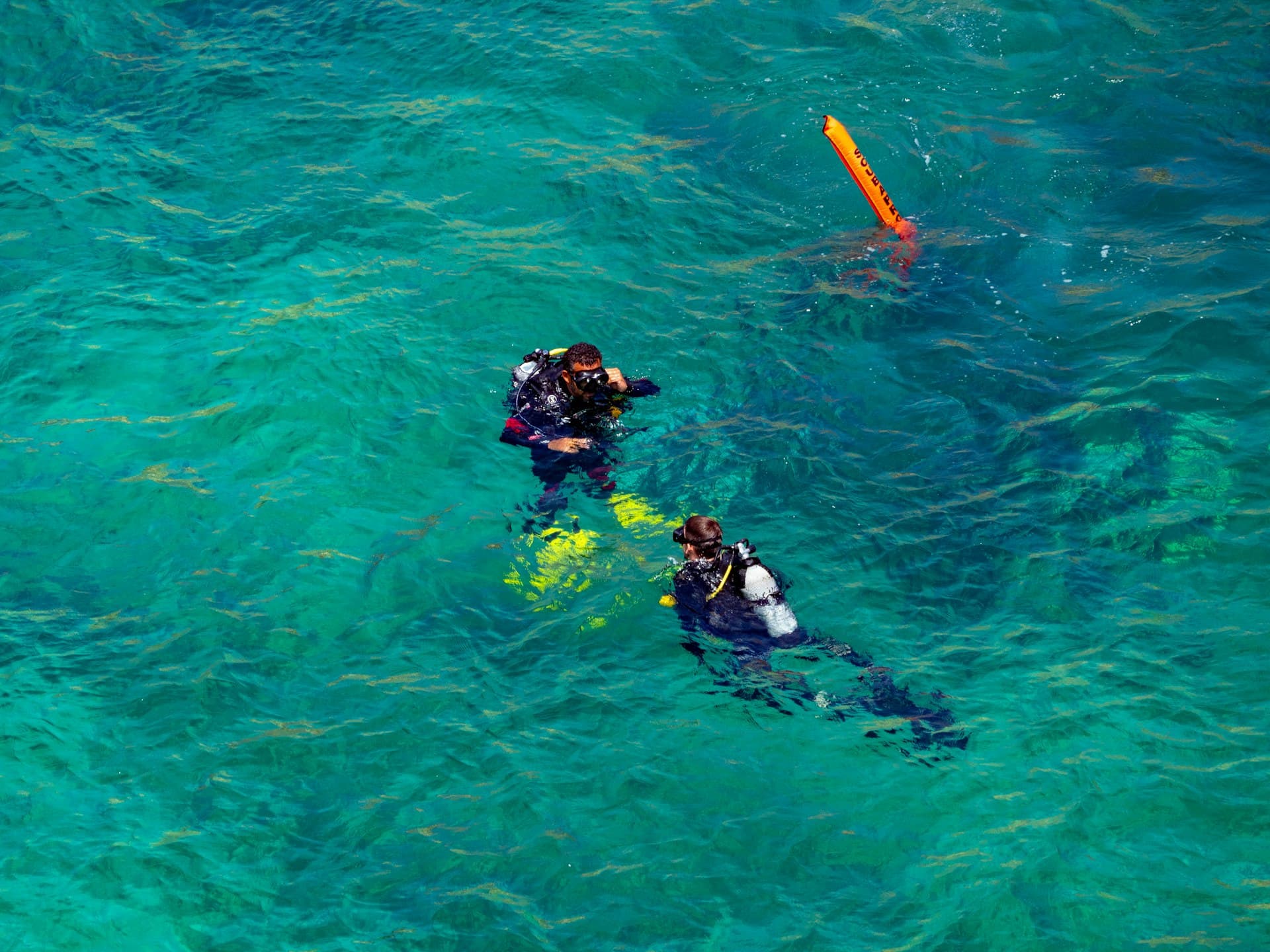
Carry and deploy an SMB, especially at boat sites and anywhere near traffic. Use a local guide for harbour dives, Gozo tunnel sites, Dwejra in swell, and any wreck involving penetration or complex navigation. Mater Dei Hospital on Malta is the national hyperbaric facility; Gozo divers should understand the evacuation path before they get in the water.
Bottom Line
Choose Malta if you want Mediterranean history, shore-accessible wrecks, limestone caves, and straightforward European travel. It is not a destination for coral gardens in tropical colour, but it is one of the best places in the world to combine training, wreck progression, scenic geology, and real underwater heritage in one compact trip.