Malta Diving Conditions: Temperature, Visibility, Currents, and Seasons
Malta is diveable all year, but the experience changes dramatically between February’s 14–15°C water and August’s 26–28°C summer sea. The best trip is not simply the warmest trip; it depends on whether you care most about wreck access, cave visibility, crowd levels, training comfort, or Gozo day logistics.
The islands have two major advantages for condition planning. First, there are no permanent rivers, so visibility is usually good once storm surge settles. Second, Malta, Gozo, and Comino have dive sites facing different directions. When one coast is wind-exposed, another may remain workable. Local operators use this flexibility constantly.
Key Numbers
Water temperature: 14–28°C. February is coldest; August and early September are warmest.
Visibility: 20–30 m in settled summer conditions, 15–25 m in shoulder months, and 10–20 m after winter storms.
Currents: generally mild and wind-driven, with exceptions around exposed points, harbour entrances, the Gozo west coast, and boat channels.
Depth range: 5–12 m for shallow cave and training dives; 12–40 m for most recreational wrecks; 40–115 m for technical wrecks requiring specialist training and permits.
Wetsuits: 7 mm or drysuit from December to March; 5 mm in April, May, October, and November; 3 mm to 5 mm from June to September depending on repetitive-diving tolerance.
Month-by-Month Guide
January
Water sits around 15–16°C and winter weather controls the schedule. Visibility can be excellent between storms but may drop after northwest swell stirs the limestone coast. This is a month for experienced cold-water Mediterranean divers, not casual holiday divers. Shore diving remains possible at sheltered sites, while boat trips run only when the forecast cooperates.
February
February is usually the coldest water of the year at 14–15°C. A drysuit or thick semi-dry suit makes a huge difference, especially for repetitive wreck dives. The upside is quiet sites, lower accommodation costs, and minimal boat traffic. Marine life is more subdued, but octopus, moray eels, wrasse, damselfish, and seabream remain visible year-round.
March
March begins the transition. Water remains cool at 15–16°C, but daylight increases and operators start preparing for the main season. Conditions are variable: some weeks feel like winter, others offer calm spring diving. This is a good time for training or budget wreck trips if you are comfortable in a 7 mm suit.
April
April brings 16–18°C water and better sea-state reliability. Visibility improves toward 15–25 m, dive centres ramp up schedules, and Gozo becomes more practical. It is still cool underwater, but air temperatures are pleasant and sites are far less crowded than summer. Advanced divers often find April one of the best value months.
May
May is one of Malta’s sweet spots. Water rises to 19–21°C, visibility is often good, and the tourist crush has not peaked. Boat dives to Comino, Gozo, and north-coast wrecks become more consistent. A 5 mm suit is still wise for two dives a day, but many warm-running divers can switch to lighter exposure protection late in the month.
June
June is the start of classic summer diving. Water reaches 22–25°C, visibility often sits between 20 and 30 m, and most operators run full schedules. Caves, arches, and wrecks photograph beautifully in the high sun. Comino day trips become especially attractive, though popular sites start to get busier.
July
July is warm, clear, and crowded. Water is 25–27°C, sea state is generally friendly, and nearly every site is available. This is excellent for mixed groups, families, training, and divers who want comfort over solitude. Book dive packages and accommodation ahead, especially near Sliema, St Julian’s, Mellieħa, and Gozo’s main dive villages.
August
August is the warmest month, with water 26–28°C and heavy tourism pressure. Visibility can be outstanding, but popular shore entries and boat moorings get busy. Early starts help. This is a good month for photographers, cave-light dives, and relaxed profiles, but not the best month if you want empty wrecks.
September
September keeps summer water temperatures at 25–27°C while crowds begin to ease. It is arguably the best warm-water month for divers who can travel outside school-holiday peaks. Barracuda and amberjack activity around wrecks can be excellent, and Gozo remains fully viable.
October
October is another standout month. Water stays around 23–24°C, air temperatures are more comfortable, and visibility remains strong unless autumn weather systems arrive early. A 5 mm suit is recommended for repetitive dives. For many experienced divers, October is the best balance of comfort, site access, and lower crowds.
November
November is cooler and less predictable but still worthwhile. Water runs 20–22°C, visibility can be 15–25 m, and dive shops continue operating though schedules may thin. This is a strong month for wreck-focused divers who want quieter boats and do not mind watching the forecast.
December
December returns Malta to winter mode: 17–19°C water, shorter days, and more storm-driven planning. The diving can be beautiful on calm days, with clear blue water and empty sites, but it rewards flexibility. Avoid overcommitting to fixed Gozo or Comino plans without a weather window.
Seasonal Comparison
| Period | Water | Visibility | Crowds | Best For | Suit |
|---|---|---|---|---|---|
| Jan–Mar | 14–16°C | 10–20 m | Very low | Quiet wrecks, training, hardy divers | Drysuit / 7 mm |
| Apr–May | 16–21°C | 15–25 m | Low–moderate | Value, improving access, Gozo | 5–7 mm |
| Jun–Aug | 22–28°C | 20–30 m | High | Warm water, caves, Comino, training | 3–5 mm |
| Sep–Oct | 23–27°C | 15–30 m | Moderate | Best overall balance | 3–5 mm |
| Nov–Dec | 17–22°C | 10–25 m | Low | Flexible wreck trips | 5–7 mm |
Wind, Surge, and Site Choice
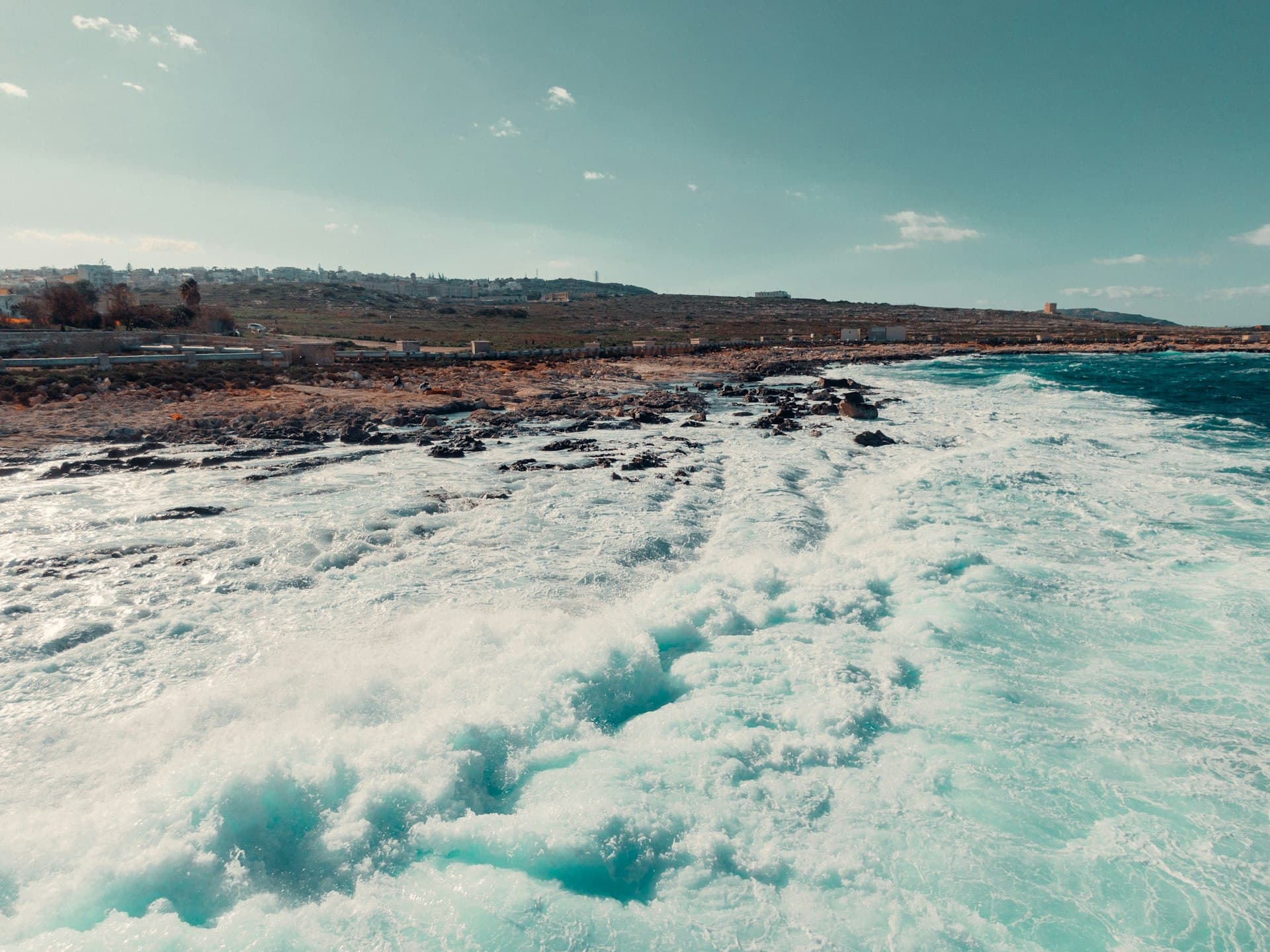
Malta’s currents are usually not tidal in the way divers experience in Indonesia or the Maldives. The tidal range is small, and most current is wind-driven or caused by local geography. The practical question is exposure. Northwest swell can make Dwejra, the Blue Hole, and the Inland Sea unsafe or unpleasant. South-coast sites can be affected by different wind patterns. Harbour dives add another variable: boat traffic and harbour flow.
This is why a local operator matters. A good Maltese dive centre does not ask “Is Malta diveable today?” It asks “Which coast is best today?” That flexibility is one of the destination’s strengths.
Marine Life Calendar
Most reef species are present year-round: Mediterranean rainbow wrasse (Coris julis), damselfish (Chromis chromis), two-banded seabream (Diplodus vulgaris), painted comber (Serranus scriba), moray eels (Muraena helena), octopus (Octopus vulgaris), and cuttlefish (Sepia officinalis). Warm months increase activity around wrecks, especially Mediterranean barracuda (Sphyraena viridensis) and greater amberjack (Seriola dumerili). Loggerhead turtles (Caretta caretta) are most likely from late spring through autumn.
Safety Planning
The main hyperbaric chamber is at Mater Dei Hospital on Malta. That is straightforward from Sliema, St Julian’s, Bugibba, Qawra, and much of the main island. Gozo is different: there is no chamber on the island, so evacuation can involve road transfer, the ferry, and another road transfer, or emergency helicopter coordination. Keep profiles conservative on Gozo, especially for deeper wrecks and long repetitive days.
Equipment and Planning Notes
For warm-season trips, do not underestimate repetitive-dive cooling. A single 3 mm shorty may feel fine on a shallow Comino cave dive in August, but two deeper wreck dives with long surface intervals can make a 5 mm full suit the more comfortable choice. Gloves are not normally encouraged for reef contact reasons, but a hooded vest is useful in shoulder months because many Malta dives involve slow tours around wreck structure rather than constant finning.
Bring an SMB and know how to deploy it from depth. This is standard good practice everywhere, but in Malta it is especially relevant at boat dives, harbour-adjacent sites, and north-coast wrecks where ascent may not end exactly at the entry point. A compact torch is useful even on non-night dives because limestone swim-throughs, wreck shadows, and tunnel sections are part of the normal itinerary. For photographers, wide-angle lenses suit the wrecks, caves, Blue Hole, and Comino light beams better than macro-only setups, though octopus, nudibranchs, cardinalfish, and small crustaceans reward patient close work.
For Gozo, plan the day as a separate island operation rather than a casual add-on. Ferry timing, road transfers, weather at Dwejra, and the lack of a local chamber all affect the day. If you want Blue Hole and Inland Sea specifically, build at least two possible Gozo days into the itinerary so a west-coast swell does not erase your only chance.
Best Time Overall
For most divers, the best Malta window is May, June, September, and October. These months combine good visibility, comfortable water, workable crowds, and broad site access. July and August are best for warm-water comfort. Winter is best only if you are deliberately choosing quiet, cold-water Mediterranean wreck diving.