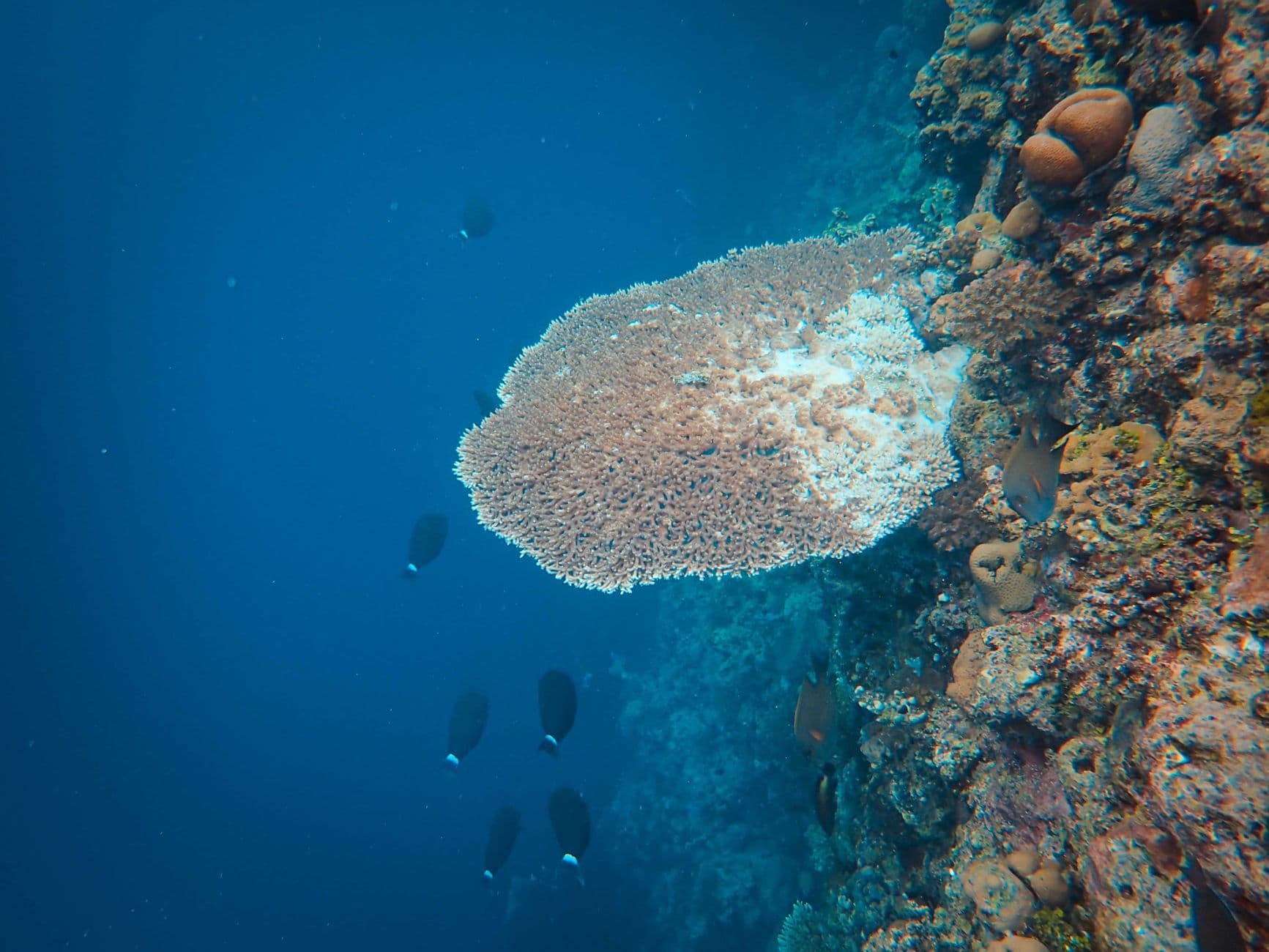
Top 10 Dive Sites in Layang Layang: Walls, Sharks, and Gorgonian Forests
Layang Layang's 13 documented dive sites ring the atoll's outer perimeter, each one a wall dive starting in shallow water and plunging into the open ocean. The atoll's small size (~7 km × 2 km) means sites are close together — a 5- to 15-minute boat ride separates them — but conditions vary dramatically between the exposed northeast points and the sheltered southeast quadrant.
This guide ranks Layang Layang's top dive sites by overall experience, marine life density, and the quality of the wall diving. Every site listed here is verified by local dive operator reports and field guides.
1. Gorgonian Forest
Type: Wall / Drift | Depth: 5–40 m | Access: Boat (southeast perimeter) | Difficulty: Intermediate | Best season: March–August (hammerheads: April–May)
This is the signature dive site of Layang Layang and arguably the finest gorgonian sea fan dive anywhere in Southeast Asia. The dive starts on a gentle slope with bottlebrush corals, warty corals, and giant clams. At 12 metres, the main wall begins with massive barrel sponges and dense yellow and orange gorgonian sea fans stretching from 22 metres to beyond 40 metres — an actual "forest" effect that gives the site its name.
The marine life is extraordinary. Scalloped hammerheads are the main attraction, with peak aggregations in April and May where groups of 20–50 individuals are common. Thousands of horse-eye jacks, giant fusiliers, dogtooth tuna, and giant trevally patrol the wall. When visibility exceeds 50 metres and the sea fans are in full bloom, this site rivals anything in the Coral Triangle.
Marine life: Scalloped hammerheads (peak: April–May), grey reef sharks, horse-eye jacks, giant fusiliers, dogtooth tuna, giant trevally, redtooth triggerfish, pyramid butterflyfish, midnight snapper, harlequin sweetlips, round batfish, barracuda, devil rays (June–August).
Why it's the best: The combination of world-class gorgonian forest, reliable hammerhead aggregations, and astonishing visibility makes this the one site you cannot miss at Layang Layang. It is the single best representation of what makes this atoll special.
Practical tips: Currents can be strong — this is a drift dive, not a hover. Stay above 30 metres to maximize bottom time and keep the hammerheads in the blue water column above you. Dawn dives offer the highest probability of large hammerhead schools.
2. D'Wall
Type: Wall / Drop-off | Depth: 1–40 m | Access: Boat (southwest side) | Difficulty: Advanced | Best season: March–August
One of the most dramatic wall dives anywhere on Earth. The reef flat starts in just 1 metre of water and the wall drops vertically to 2,000 metres — you can see the surface and the abyss from the same position. A broad shelf at 40 metres marks the recreational limit.
The wall is covered in life: giant barrel sponges, brilliant red and purple sea fans, and black coral bushes from 25 metres. Massive schools of surgeonfish and jacks cascade down the wall. Overhanging sections require a dive torch to fully appreciate the alcoves and crevices.
Marine life: Grey reef sharks (year-round, patrolling the wall), massive jacks and surgeonfish schools, manta rays (June–August), scalloped hammerheads (March–May), giant frogfish resident at the 25-metre shelf, pygmy seahorses in black coral, giant clams.
Why it's the best: The sheer scale of the drop-off — from 1 metre to 2,000 metres — is something you have to see to believe. It is the most dramatic wall dive in Malaysia and one of the most spectacular in the world.
Practical tips: Buoyancy discipline is critical — the 40-metre shelf is easy to overshoot and the depth limit is absolute with no recompression chamber. Bring a torch for the overhangs. This is an advanced dive; intermediate divers should confirm comfort with strong wall currents before booking.
3. Sharks' Cave
Type: Cave / Overhang / Wall | Depth: 3–40 m | Access: Boat (southwest quarter) | Difficulty: Intermediate–Advanced | Best season: March–August
This is Layang Layang's most unique dive site. The dive begins at the edge of a drop-off in just 3 metres of water. Descending along the wall, you reach a sandy ledge where leopard (zebra) sharks rest on the bottom. The main attraction is a tranquil cavern where whitetip reef sharks huddle together in small groups — one of the few places in the world where divers can reliably observe them at close range in a cave setting.
The site has a second ledge at 25–30 metres where giant trevally and dogtooth tuna patrol the entrance. The first deep ledge (overhang) at 30–40 metres holds schooling jacks.
Marine life: Whitetip reef sharks (year-round inside the cave), leopard/zebra sharks (resting on the sand ledge, year-round), grey reef sharks, scalloped hammerheads (March–May, outside the cave), giant trevally, dogtooth tuna, giant frogfish, painted spiny lobsters, purple sea fans, giant barrel sponges.
Why it's the best: The cave experience with resting sharks is unique to this site. It is one of the few dive sites in the world where you can consistently see multiple shark species — whitetips inside the cave, leopard sharks on the sand, and hammerheads outside on the wall.
Practical tips: The cave interior is dark — bring a primary and backup torch. Do not block the cave entrance with your bubbles. Go early to avoid any surge inside the cavern. Respect the resting sharks — do not touch, chase, or crowd them.
4. Dogtooth Lair
Type: Reef / Pinnacle / Wall | Depth: 5–40 m | Access: Boat (south side) | Difficulty: Intermediate–Advanced | Best season: March–August (tuna: April–August, hammerheads: April–May)
Named for the impressive schools of dogtooth tuna that hunt here — commonly exceeding 1 metre in length. Ledges, overhangs, and a sloping sand bank transition to acropora coral fields before the wall drops into the abyss. Yellow gorgonians dominate from 20 metres.
Multiple cleaning stations attract a parade of pelagic visitors. Stingrays sleep on the sand patches, whitetip reef sharks rest on ledges, and scalloped hammerheads cruise the drop-off seasonally. The combination of resident tuna action and seasonal hammerhead encounters makes this a standout site.
Marine life: Dogtooth tuna (April–August, often in hunting schools), scalloped hammerheads (March–May, peak April–May), pickhandle barracuda, big-eyed jacks, blue-masked angelfish, round batfish, colourful parrotfish, bluefin trevally, fusiliers, surgeonfish, nudibranchs, flatworms. Mola mola sighted occasionally at the drop-off (July–August).
Practical tips: Position yourself near the cleaning stations — they attract the most marine life activity. The sand bank is good for a mid-dive pause at 5–8 metres to manage air consumption and watch the pelagic action above the wall.
5. The Point
Type: Drift / Pelagic | Depth: 5–40 m | Access: Boat (north or northeast point) | Difficulty: Advanced | Best season: April–May (hammerhead peak)
A thrilling drift dive into open blue water. The atoll tip catches the full force of the South China Sea current, creating a pelagic highway. The dive profile is unique: swim into the blue at roughly 30–35 metres for 5–10 minutes specifically to encounter pelagics, then return to the wall for the drift back.
This is one of the top two sites (alongside Gorgonian Forest) for scalloped hammerhead sightings. The exposed location means currents run moderate to strong — buoyancy is tested.
Marine life: Scalloped hammerheads (April–May, this is their top spot alongside Gorgonian Forest), grey reef sharks, dogtooth tuna, eagle rays, manta rays, occasional silky sharks and oceanic whitetips.
Why it's the best: The pelagic drift experience is unique — you are not diving along a wall so much as entering the blue to meet the pelagics on their terms. For experienced divers chasing hammerheads, this is the payoff.
Practical tips: Advanced buoyancy and current management are essential. Do not attempt this site as your first dive of the trip — build comfort with Layang Layang conditions first. Deploy a delayed SMB at 5–6 metres — the boat has to track you against a 2,000-metre drop-off.
6. Crack Reef
Type: Reef / Drift | Depth: 5–40 m | Access: Boat (northeast side) | Difficulty: Intermediate | Best season: March–August
A dramatic drift dive centred on a large vertical crack in the northeast perimeter. The crack splits the reef wall from the surface to 40 metres. Drift along a nearly vertical wall covered in gravity-defying corals, sponges, sea whips, and sea fans, with fish cascading down the walls and racing back up in the current.
The site is also known for pygmy seahorses nestled in gorgonian sea fans at 21–27 metres — a macro highlight that balances the site's bigger pelagic action. Turtles cruise the wall year-round.
Marine life: Pygmy seahorses (year-round at 21–27 m in gorgonians), green and hawksbill turtles, whitetip reef sharks, schooling fusiliers, surgeonfish, foxface rabbitfish, tangs, nudibranchs, flatworms. Occasional hammerheads in March–May.
Practical tips: The crack itself creates unique lighting — watch for the contrast between the dark fissure and the bright reef face. The exposed northeast position means stronger currents than most sites; this is a classic drift profile.
7. The Runway
Type: Wall / Drop-off | Depth: 5–40 m | Access: Boat (east side, near airstrip) | Difficulty: Advanced | Best season: March–August
An advanced wall dive with deep vertical walls, gullies, and crevasses. The site sits near the airstrip and features one of the steepest drop-off profiles on the atoll. The visual is unusual: reef fish swim vertically along the wall, adjusting their orientation to the current direction. Schools of jacks cascade down the wall in dense formations.
Marine life: Schooling jacks (cascading down the wall year-round), large tunas, baitfish forming swirling schools, fusiliers, surgeonfish sparkling in clear water, grey reef sharks, manta rays, occasional hammerheads.
Why it's the best: The vertical fish behaviour and the cascading jack formations create a visual spectacle that differs from other wall dives. It is one of the more challenging dives due to the ease of accidentally exceeding 40 metres.
Practical tips: Monitor your depth constantly — the wall drops straight past 40 metres with no shelf to catch you. Set a hard limit at 35 metres and start your ascent from there. The steep profile means your computer will show multi-level deco obligation faster than expected.
8. The Tunnel
Type: Reef / Wall / Night dive | Depth: 5–40 m | Access: Boat (south side, sheltered) | Difficulty: Beginner–Intermediate | Best season: March–August
A hard coral-lover's dream and one of the best night dives on the atoll. The south side is sheltered from the strongest currents, making this a consistently accessible site. Staghorn, plate, table, mushroom, and brain corals cover the slope in dense, colourful formations. Vertical fissures — "chimneys" — cut through the reef.
At 10 metres the slope transitions to a vertical drop-off with soft corals and sponges. Amber-jacks form large barrel formations. Night dives here are particularly productive: mantis shrimp, crayfish, crinoids, starfish, hermit crabs, sea urchins, scorpionfish, and boxfish emerge after dark.
Marine life: Anthias, moray eels (in crevices), amber-jacks (barrel formations), butterflyfish, angelfish. Night diving: mantis shrimp, crayfish, crinoids, starfish, hermit crabs, sea urchins, pufferfish, parrotfish (sleeping), scorpionfish, boxfish.
Practical tips: The sheltered position makes this an excellent second dive of the day or a check-out dive at the start of the trip. Bring a torch even for daytime dives — the chimneys and fissures are dark. For night dives, enter before sunset and let the transition happen underwater.
9. Navigator Lane
Type: Channel / Reef | Depth: 5–30 m | Access: Boat (north side, east of Crack Reef) | Difficulty: Beginner–Intermediate | Best season: March–August
An underwater corridor along the atoll's northern edge. The coral density here is exceptional — "corals so dense that you cannot put your hands down without damaging the corals," as one operator describes it. The open-water channel functions as a blue-water crossroads, where the current funnels pelagics past scattered hard coral formations.
Marine life: Scalloped hammerheads (regular, great numbers), grey reef sharks, manta rays (June–August), eagle rays (year-round), barracuda, nudibranchs, commensal shrimps, butterflyfish, angelfish, hard corals of exceptional density.
Practical tips: The channel creates a natural funnel — drift with the flow rather than fighting it. The 30-metre maximum depth is shallower than most Layang Layang sites, making this a good option for divers who want the pelagic action without the 40-metre profile.
10. Snapper Ledge
Type: Reef / Drift | Depth: 5–25 m | Access: Boat (inner, protected side) | Difficulty: Beginner | Best season: March–August
Safe, easy drift diving on a shallow, protected reef. Magnificent hard corals with colourful reef fish, good gorgonians, black corals, and an exceptional density of nudibranchs. The shallow profile (maximum 25 metres) and mild current make this the most beginner-friendly site on the atoll. Local operators call it the "relax-lah" dive.
Marine life: Parrotfish (many species), fusiliers, pufferfish, snappers, colourful nudibranchs, angelfish, butterflyfish, triggerfish. Resident reef life is consistent year-round.
Practical tips: Best when the sun is high and directly on the reef — the colours pop in the mid-water column. This is the ideal site for a third dive of the day or for photographers wanting to focus on reef fish rather than pelagics. Combine with The Tunnel or The Valley for a full day of relaxed diving.
Honorable Mentions
The Valley — A gentle slope from 10–15 metres with large hard coral formations, transitioning to wall. Beginner–Intermediate. Good for turtles, sweetlips, barracuda, and triggerfish. Sheltered, mild current.
Wrasse Strip (Wrasse Point) — Shallow reef strip (5–20 metres) with flowing gardens of soft coral and active cleaning stations visited by larger pelagics. Beginner-friendly drift. Manta rays common June–August. Napoleon wrasse at cleaning stations year-round.
Wreck Point — A historical WWII wreck that originally sat at 33 metres has since fallen to 2,000 metres — beyond recreational limits. Coral-covered remnants and debris field remain on the reef slope, and the site still functions as a pelagic highway. Intermediate, moderate current.
Pier Diving (Shore Dive) — Inside the sheltered lagoon, the resort pier offers a muck dive (depth 2–5 metres, visibility 2–4 metres). Night dives good for moray eels, baby lionfish, mantis shrimp, crabs, cuttlefish, and juvenile reef fish.
Bottom Line
Layang Layang's 13 sites cover a surprising amount of variety for such a small atoll. The northeast side (Crack Reef, The Point, The Runway) delivers the high-current, high-adrenaline pelagic action. The southeast quadrant (Gorgonian Forest, The Tunnel, Snapper Ledge) offers sheltered, beginner-friendly dives with exceptional coral health. Sharks' Cave provides a unique experience you will not find anywhere else in Malaysia.
The peak season is narrow — April and May for the full hammerhead experience — but every site on this list delivers world-class wall diving from March through August. Plan your trip around the marine life you most want to see, and book with the single annual liveaboard expedition well in advance.