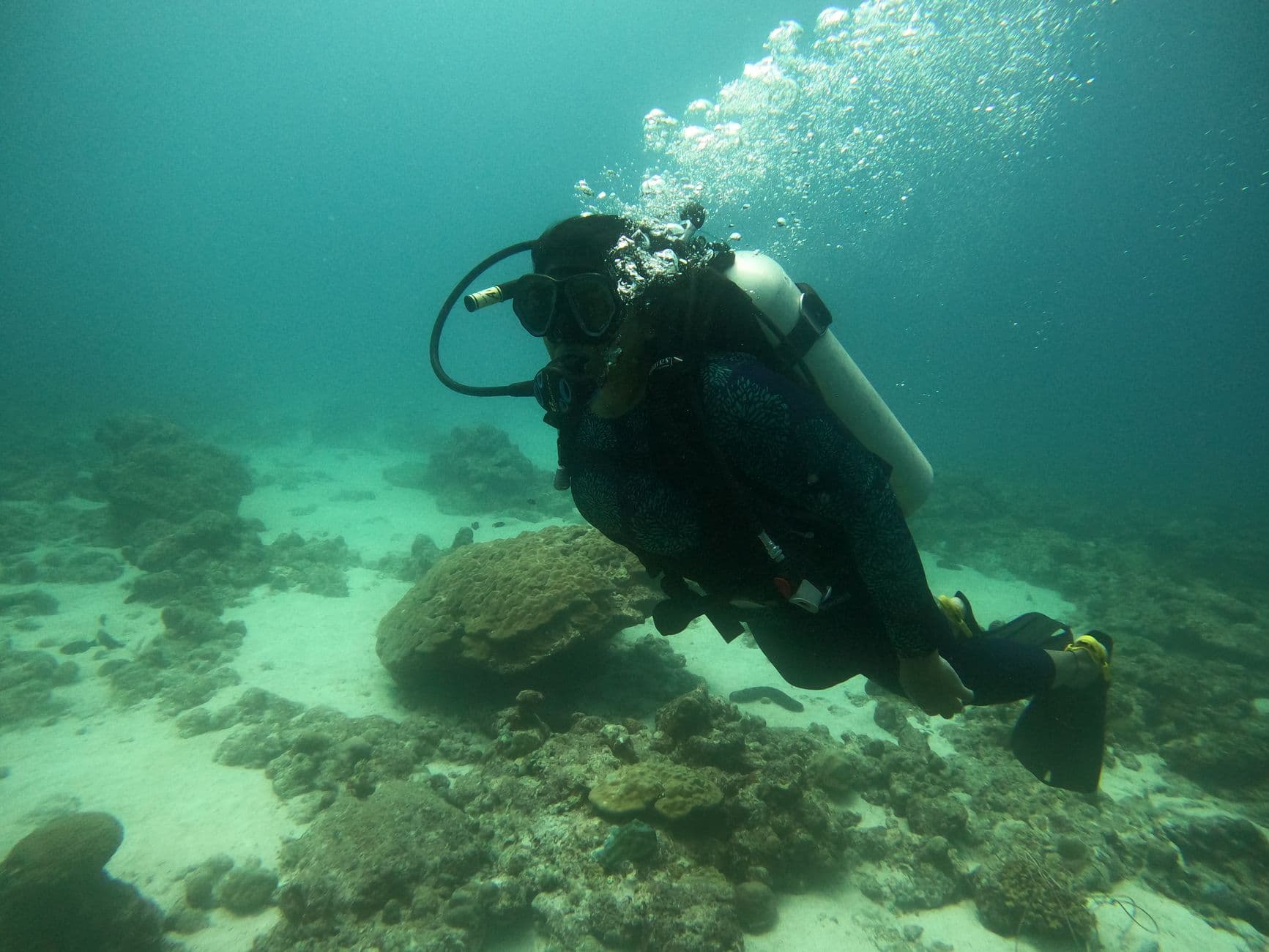
Komodo National Park Dive Guide: Indonesia's Ultimate Drift Diving Destination
Komodo National Park is not a single dive experience. It's three distinct underwater worlds compressed into a single UNESCO World Heritage site spanning 1,733 km² across the Indonesian archipelago.
In the north: adrenaline-charged seamount drifts where grey reef sharks patrol pinnacles rising from 40 meters. In the center: gentle encounters with green turtles in Siaba Besar's protected bay and the unforgettable spectacle of 50 manta rays being cleaned at Karang Makassar. In the south: cold upwelling from the Indian Ocean that nourishes the richest invertebrate gardens on Earth — a macro photographer's dream at Cannibal Rock and Yellow Wall.
And when you surface, prehistoric Komodo dragons patrol the beaches. There is no place on the planet that combines this kind of above-water and below-water experience.
What Makes Komodo Unique
The Convergence Zone
Komodo sits at the meeting point of the Indian Ocean and the Pacific/Flores Sea. This collision of warm and cold currents creates some of the most nutrient-rich waters in Southeast Asia, driving the extraordinary biodiversity that makes every dive here unpredictable. Over 1,000 fish species and 260+ reef-building coral species have been documented in the park.
The same convergence creates the famous tidal currents. North Komodo experiences some of the strongest drift dives in the world — negative entries at Castle Rock, the pulse-racing slingshot drift of The Cauldron, and the dynamic channel dives at Golden Passage. These currents and the nutrients they bring are not obstacles to the reef; they are what built it.
Three Diving Regions
North Komodo (high-energy, big pelagic, expert): Castle Rock, Crystal Rock, The Cauldron, Golden Passage, GPS Point, and Tatawa Besar. These sites are exposed to the open Flores Sea, with clear water, strong currents, and big pelagic fish. Minimum certification: Advanced Open Water with recent drift experience. Best April through October.
Central Komodo (mixed, beginner to expert): Batu Bolong, Manta Point (Karang Makassar), Siaba Besar, Tatawa Kecil, Pengah Kecil, Wainilu, Pink Beach, and Mawan. This is the park's most accessible region — a mix of calm bays for Open Water divers and world-class drift dives for the experienced. Best year-round, with peak visibility April through October.
South Komodo (macro paradise, cold water, remote): Cannibal Rock, Manta Alley, Yellow Wall, Pillarsteen, Three Sisters. Influenced by Indian Ocean upwelling, these sites have cooler water (21-24°C in dry season) and produce extraordinary invertebrate life. Best October through April, the wet season, when conditions are calmest in the south.
Marine Life You'll Actually See
The species list here is staggering, but what makes Komodo special is the reliability. You don't hope to see manta rays at Manta Point — you plan your dive around when the cleaning station is busiest.
- Reef manta rays (Mobula alfredi): Up to 50 individuals per dive at Manta Point. Peak December through March, though sightings are year-round.
- Oceanic manta rays (Mobula birostris): The giants — up to 7 meters wingspan. Seen at Manta Alley and Manta Point, especially during plankton blooms.
- Grey reef sharks: Resident year-round at Castle Rock, Crystal Rock, and Batu Bolong. Reliable.
- Green and hawksbill turtles: Guaranteed at Siaba Besar (Turtle Town). Resident population.
- Macro life: Frogfish, nudibranchs, ghost pipefish, blue-ringed octopus, flamboyant cuttlefish, pygmy seahorses. Cannibal Rock is world-famous for invertebrates covering every inch of the reef.
- Endangered species: Dugongs resident in the park, Napoleon wrasse, whale sharks (seasonal).
Who Komodo Is For
Komodo is a destination that rewards preparation. It is not a single-skill-level park.
Open Water divers (12+ dives): Stick to the central and local sites — Siaba Besar (turtle guarantee), Pink Beach (shore dive), Sebayur Kecil, Mini Wall, and Wainilu. These sites have mild currents and max depths of 18-25 m. You'll have spectacular diving without the adrenaline.
Advanced Open Water / Rescue divers (25-50+ dives): This is your playground. Batu Bolong, Tatawa Besar, Crystal Rock, and Golden Passage are all accessible with AOW certification and basic drift experience. Manta Point requires no difficult currents and is one of the most rewarding dives in the park.
Expert divers (50-100+ dives): Castle Rock (negative entry, strong currents, deep seamount), The Cauldron (extreme slingshot drift, expert-only), and Manta Alley (strong currents, remote south location). These require dive-computer proficiency, good buoyancy, and comfort with guided drift dives.
What It Costs
| Item | Price |
|---|---|
| Day diving trip (3 dives) | $125-220 USD |
| 2-day package | $220-345 USD |
| Liveaboard (per day) | $209-405 USD |
| Park fees (per day, diving) | ~$22.50 |
| Snorkel day trip | ~$56 |
| Dragon trek (ranger fee) | ~$12/group |
Most operators include equipment, lunch, and water. Park fees are usually extra — confirm when booking.
Getting There
Fly to Komodo Airport (LBJ) in Labuan Bajo, Flores — 1.5 hours from Bali, 2.5 hours from Jakarta. Most dive centers are within a 10-minute ride from the airport. Day trips reach most sites within 20 minutes to 2 hours by boat.
Visa: Free 30-day visa on arrival for most nationalities. A paid $35 visa on arrival is extendable for another 30 days.
Safety: The Hyperbaric Reality
Komodo used to be a high-risk destination for DCS — the nearest hyperbaric chamber was in Bali, a full flight away. That changed in 2018 when Siloam Hospital Labuan Bajo opened a multi-person hyperbaric chamber, staffed by trained hyperbaric doctors, 10-15 minutes from the harbor by road.
This is a genuine safety transformation. Still: DAN insurance with evacuation coverage is mandatory. Every reputable operator will check before they take you out.
2026 Permits
A daily visitor cap of 1,000 people is now in effect across the park. All visitors must register through the SiORA portal (siora.menlhk.go.id) and pay entry fees online. Permits are non-refundable and non-transferable. Book at least 2-3 days in advance during peak season (April-October). Most dive operators handle this on your behalf.
The Bottom Line
Komodo National Park is the most complete dive destination in Southeast Asia for divers who want variety — big animals, strong currents, macro life, and above-water adventure all in one trip. The same currents that made it intimidating 20 years ago are now understood and managed by operators who have been diving these waters for decades. Park regulations are tighter than ever, the visitor cap protects the ecosystem, and the hyperbaric chamber in Labuan Bajo means you're not taking an unreasonable risk to dive here.
Plan for at least 5-7 days, split your time across north and central routes, and budget for a dragon trek on your surface interval. It will be the best diving decision you make this year.