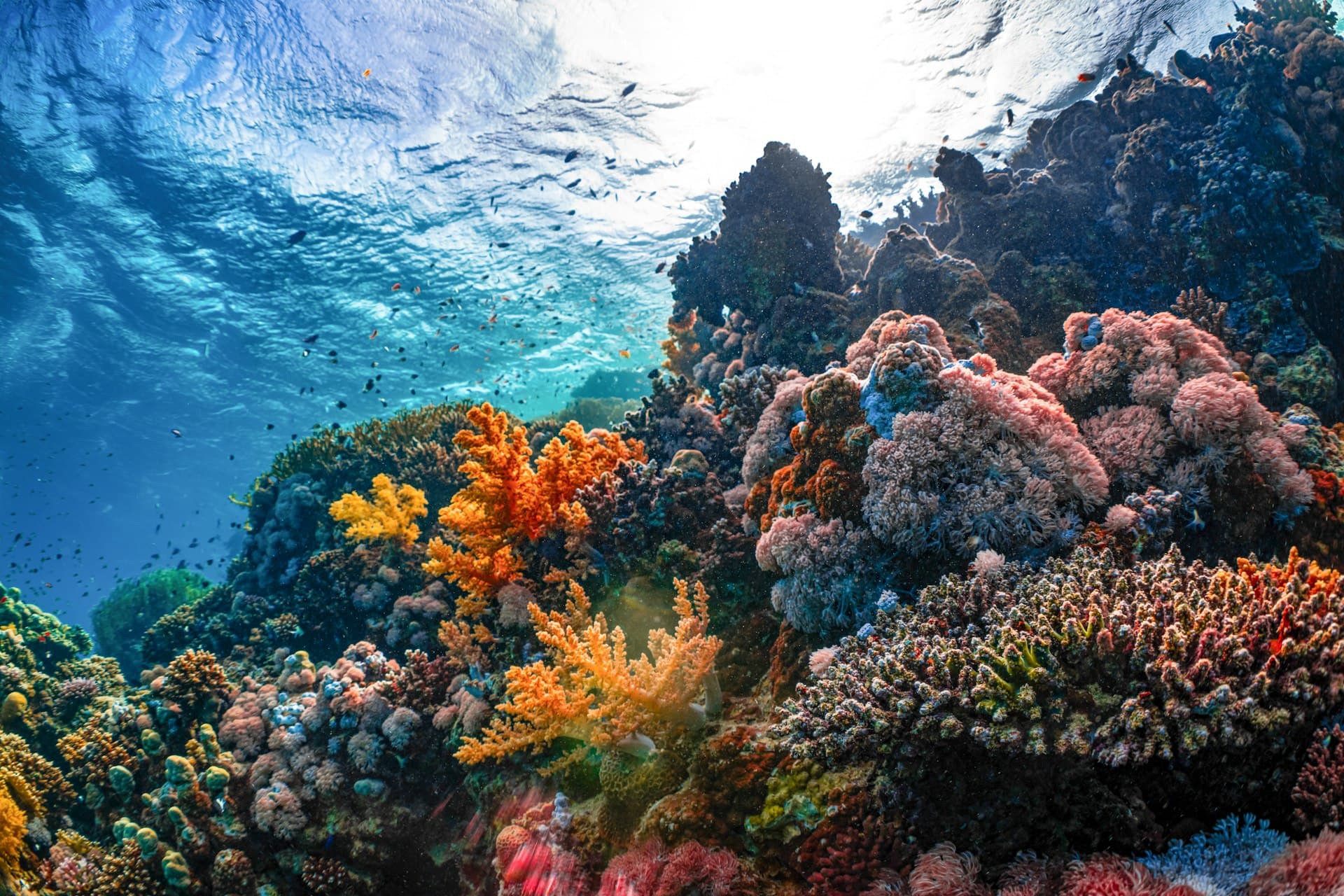
Great Barrier Reef Top Dive Sites: The Ultimate Guide
The Great Barrier Reef is the world's largest coral reef system, stretching over 2,300 km along Australia's northeast coast with more than 2,900 individual reef systems. For divers, it's not just a single destination — it's a vast archipelago of dive environments, from shallow snorkel lagoons to walls dropping 2,000 metres into the Coral Sea.
This guide covers the 10 most iconic dive sites, each offering something unique. Whether you're a first-time visitor to Cairns or a seasoned liveaboard diver, these sites represent the very best the GBR has to offer.
#1 Cod Hole — Ribbon Reef #4
Type: Open reef on a plateau | Depth: 8–40m | Distance: ~100 km NE of Cairns | Difficulty: Intermediate–Advanced | Best season: Year-round (peak June–October)
Cod Hole is arguably the most famous dive site on the entire Great Barrier Reef. Located on Ribbon Reef #4, it sits on a shallow plateau at around 8 metres where giant potato cod (up to 200 kg) gather and interact with divers.
Access: Liveaboard only — typically 4–7 day trips from Cairns or Port Douglas aboard vessels like the Ocean Voyager or Sea Spirit. Ribbon Reefs are accessed via the Silversonic day boat from Port Douglas for some operators, but liveaboard is the standard.
Target species: Giant potato cod (up to 200 kg), giant trevally, white tip reef sharks, Napoleon wrasse, green and hawksbill turtles, moray eels, fusiliers, snapper, and during minke whale season (June–August), dwarf minke whales are often spotted on surface intervals.
Dive profile: The site is a shallow plateau (8–12m) with a sandy bottom scattered with coral bommies. The cod are habituated to divers and will approach for cleaning interactions. Below the plateau, the reef drops off dramatically. Currents can be moderate to strong, especially on the return leg through the channels between Ribbon Reefs.
Why it's the best: No other site on the GBR offers the same intimate, up-close encounters with giant potato cod. These fish are among the largest in the family Lutjanidae and their size and curiosity make Cod Hole a once-in-a-lifetime dive. The surrounding Ribbon Reefs add further value with Steve's Bommie (giant trevally), Pixie Pinnacle, and Lighthouse Bommie all within the same trip.
Practical tips: Book a liveaboard at least 6–12 months in advance — these trips sell out. June–August offers the best chance to see dwarf minke whales on the surface. Bring a macro lens — the cod's facial expressions and skin textures are mesmerizing at close range. Currents can be strong; ensure you're comfortable with drift diving.
#2 SS Yongala — Townsville
Type: Shipwreck | Depth: 15–30m | Distance: 29 km east of Townsville | Difficulty: Intermediate | Best season: Year-round (best June–November)
The SS Yongala is Australia's largest intact historic shipwreck and one of the most spectacular wreck dives in the world. Sunk in 1911 after surviving a cyclone, the 94-metre steamship lies upright on a sandy bottom at 20–30 metres, completely encrusted with vibrant coral.
Access: Day trips from Townsville (approximately 1.5–2 hours each way). Operators include Dive Townsville, Sea Quest, and Pro Dive. The wreck is a designated protected zone — no artefacts may be removed.
Target species: Humphead wrasse (up to 2m), Napoleon wrasse, giant trevally, Spanish mackerel, white tip reef sharks, grey reef sharks, green turtles, jacks, trevally, moray eels, and an extraordinary diversity of reef fish living within the wreck structure.
Dive profile: The ship lies in two main sections — the bow and stern — separated by a gap. The hull is remarkably intact, with the engine room, boiler room, and deck all accessible. Visibility ranges from 12–25m depending on conditions. The wreck is surrounded by a sandy bottom with coral bommies nearby. Currents are generally mild to moderate.
Why it's the best: The SS Yongala combines wreck penetration potential (exterior only, for safety) with extraordinary marine life density. The coral-encrusted steel creates a unique habitat that attracts larger species than most natural reef sites. It's one of the few wrecks where you can see giant trevally, sharks, and massive wrasse on the same dive.
Practical tips: Book early during peak season (June–November). The site can get busy with multiple boats diving simultaneously — arrive early for the best position. The wreck is classified as a war grave under the Commonwealth War Graves Act. Decompression chambers are available in Townsville; ensure your dive insurance covers depths to 30m.
#3 Osprey Reef — North Horn
Type: Deep wall | Depth: 5–60m+ | Distance: ~200 km east of Cairns (Coral Sea) | Difficulty: Advanced | Best season: June–November
North Horn at Osprey Reef is one of the most dramatic dive sites in the Indo-Pacific. The reef is a solitary pinnacle rising from 2,000 metres of open ocean, with near-vertical walls on all sides. The shallowest point is 5 metres, but the wall drops away instantly.
Access: Liveaboard only — 4–11 day liveaboard trips from Cairns. Vessels include the Ocean Voyager, Sea Dragon, and Coral Quest. Osprey is typically included in extended Coral Sea itineraries.
Target species: Grey reef sharks, black tip reef sharks, whitetip reef sharks, hammerhead sharks (both scalloped and great), giant trevally, Napoleon wrasse, manta rays, whale sharks (occasional), tuna, barracuda, and during breeding season (April–May), Osprey Reef hosts one of the world's largest manta ray cleaning stations.
Dive profile: The North Horn wall is a sheer vertical drop from 5m to 2,000m+. Divers descend along the wall, encountering a succession of marine life zones. At 15–20m, reef sharks patrol. Deeper, giant trevally and Napoleon wrasse appear. The current at North Horn can be extremely strong — divers often drift along the wall, held by handrails installed by liveaboards.
Why it's the best: Few places on Earth offer the combination of dramatic topography, shark encounters, and pelagic grandeur found at North Horn. The chance to see hammerhead sharks in their natural habitat, drifting along a wall that drops into the abyss, is unmatched.
Practical tips: This is an advanced site — you need strong buoyancy control and comfort with strong currents. Most operators require proof of logged dives (typically 100+) and recent drift diving experience. The liveaboard itinerary is usually 7–11 days; book well in advance. October–November offers the best visibility (30–50m).
#4 Marine World Wall — Moore Reef
Type: Horseshoe-shaped wall | Depth: 5–28m | Distance: 47 km east of Cairns | Difficulty: Novice–Intermediate | Best season: June–November
Marine World Wall is a horseshoe-shaped reef that recovered spectacularly from Cyclone Yasi in 2011, now boasting 80%+ coral cover — one of the most impressive recovery stories on the GBR. The wall dive starts at "Pressure Point" and drifts along a near-vertical coral face.
Access: Day trips from Cairns via Sunlover Cruises (which operates 3 pontoons on Moore Reef), Great Adventures, Reef Magic, and Passions of Paradise. Moore Reef is one of the most accessible outer reef sites.
Target species: 18 resident turtles (16 green, 2 hawksbill), white tip reef sharks, tawny nurse sharks, giant gorgonian fans, drummers, rainbow runners, snub-nose dartfish, fusiliers, sweetlips, and seasonal manta rays at the Manta Ray Bay cleaning station.
Dive profile: The dive begins at Pressure Point with a drift along the horseshoe wall. The wall is covered in massive gorgonian fans and soft corals. Swim-throughs and caverns add variety. The reef is shallow (5–15m) in the lagoon sections, deepening to 28m at the outer wall. Currents are mild to moderate.
Why it's the best: Marine World Wall offers an incredible combination of coral recovery, turtle encounters, and accessible diving. The 18 resident turtles are among the most reliable turtle encounters on the entire GBR. The reef's recovery from Cyclone Yasi makes it a living case study in coral resilience.
Practical tips: This is one of the most popular Cairns outer reef sites — book with Sunlover Cruises for the best pontoon experience. The Manta Ray Bay cleaning station is seasonal; visit May–October for manta encounters. The semi-submersible viewing area above water makes this a good option for non-diving companions.
#5 Flynn Reef — Ski Slope & Tracy's Bommie
Type: Shallow coral gardens + wall | Depth: 5–25m | Distance: 57 km east of Cairns | Difficulty: Novice–Intermediate | Best season: June–November
Flynn Reef is a classic Cairns outer reef with a diverse range of sites within a single reef system. The shallow coral gardens at Ski Slope are ideal for beginners, while Tracy's Bommie offers a pinnacle dive with resident turtles and abundant marine life.
Access: Day trips from Cairns via Silverswift, Passions of Paradise, and Pro Dive Cairns (which also offers liveaboard access). Flynn is approximately 1 hour 18 minutes from Cairns.
Target species: Green turtles, white tip reef sharks, giant clams, glassfish, cardinal fish, sweetlips, fusiliers, moray eels, and on occasion, whale sharks or dwarf minke whales near Nolan's Site.
Dive profile: The reef offers a variety of sites: shallow coral gardens (Ski Slope, The Flats) at 5–10m for beginners, bommie dives (Tracy's Bommie, Little Tracy's) at 10–20m with resident turtles, and outer wall dives (Point Break) at 15–25m with drift potential. Currents are generally mild, making this suitable for all levels.
Why it's the best: Flynn Reef offers the most diverse range of dive experiences within a single reef system — from shallow coral gardens perfect for first-time divers to wall dives with drift potential for experienced divers. The variety of named sites (9 documented) means even repeat visitors find something new.
Practical tips: This is one of the most popular Cairns outer reef sites. Book early during peak season. The coral gardens at Ski Slope are excellent for underwater photography — bring a wide-angle lens. For the best turtle encounters, ask your guide to visit Tracy's Bommie first in the morning when turtles are most active.
#6 Agincourt Reef — Agincourt #3
Type: Ribbon reef on continental shelf edge | Depth: 5–40m | Distance: ~65 km ENE of Port Douglas | Difficulty: Novice–Advanced | Best season: June–November
Agincourt Reef is the largest and most diverse of the Agincourt ribbon reef system, located on the edge of the continental shelf. Agincourt #3 is the deepest and most dramatic of the three mooring sites, with visibility up to 50m on the outer wall.
Access: Day trips from Port Douglas via Quicksilver Cruises or the Silversonic (Great Adventures). Quicksilver operates a large pontoon with underwater observatories and semi-submersible tours.
Target species: White tip reef sharks, grey reef sharks, Napoleon wrasse, giant trevally, manta rays (seasonal cleaning station), green turtles, hawksbill turtles, fusiliers, sweetlips, and during coral spawning season (October–November), mass spawning events.
Dive profile: Agincourt #3 offers the deepest and most dramatic diving of the three sites. The outer wall drops from 15m to 40m+ with visibility up to 50m. The reef features bommies, swim-throughs, and a seasonal manta ray cleaning station. Currents can be moderate at the outer wall.
Why it's the best: Agincourt #3 combines exceptional visibility (up to 50m) with dramatic wall diving and the chance to see manta rays at their cleaning station. The ribbon reef location on the continental shelf edge provides the clearest water of the Cairns/Port Douglas outer reefs.
Practical tips: This is the most popular Port Douglas outer reef site — book with Quicksilver for the best pontoon facilities. The manta ray cleaning station is seasonal (May–October). For the clearest water, dive during the dry season (June–September). The underwater observatory is great for non-diving companions.
#7 Thetford Reef — Cathedral & Blue Lagoon
Type: Coral bommies + wall | Depth: 5–30m | Distance: 45 km SE of Cairns | Difficulty: Novice–Intermediate | Best season: June–November
Thetford Reef is known for its impressive coral archways at the Cathedral site and the sheltered Blue Lagoon with its abundance of marine life. The reef features giant clams, bommies, and wall dives with drift potential.
Access: Day trips from Cairns via Silverswift, Passions of Paradise, and Pro Dive Cairns. Thetford is approximately 1 hour 22 minutes from Cairns.
Target species: Giant clams, green turtles, white tip reef sharks, Napoleon wrasse, grey reef sharks, fusiliers, sweetlips, and occasionally dwarf minke whales or whale sharks near Nolan's Site.
Dive profile: The Cathedral site features impressive coral archways and caverns at 10–20m. The Blue Lagoon is a sheltered sandy lagoon with abundant marine life at 5–10m. The Wall site offers a vertical drop at 15–30m. Currents are moderate — typical for outer reef sites.
Why it's the best: Thetford Reef offers a compelling combination of architectural coral formations (the Cathedral archways are among the most photogenic on the GBR) and sheltered lagoon diving. The variety of sites within the reef means there's something for every skill level.
Practical tips: This is one of the most popular Cairns outer reef sites. Book early during peak season. The Cathedral is best dived on incoming tides when the archways are illuminated. The Blue Lagoon is excellent for macro photography — bring a macro lens for nudibranchs and small critters.
#8 Heron Island — One Tree Reef
Type: Coral cay resort reef | Depth: 3–40m | Distance: ~60 km NE of Bundaberg (Southern GBR) | Difficulty: Novice–Advanced | Best season: May–October (manta season), June–September (whale season)
Heron Island is a coral cay in the Capricorn-Bunker Group, one of the most important marine research stations in the Southern GBR. The island hosts a resort with an on-site dive centre, making it accessible for both resort guests and independent divers.
Access: Flights from Bundaberg or Gladstone (approximately 45 minutes) via Qantaslink or regional airlines. The island is also accessible by boat from Gladstone (4–6 hours).
Target species: Manta rays (one of the best manta ray sites on the entire GBR, May–October), humpback whales (June–September), green turtles, hawksbill turtles, grey reef sharks, Napoleon wrasse, giant trevally, and during coral spawning (November), mass spawning events.
Dive profile: The reef surrounding Heron Island offers a variety of sites: shallow coral gardens (3–10m) for snorkeling and beginners, bommie dives (10–20m) with resident turtles and sharks, and deeper wall dives (20–40m) with drift potential. The manta ray cleaning station at "Manta Ray Bay" is one of the most reliable on the GBR.
Why it's the best: Heron Island offers the best manta ray encounters in the Southern GBR and is one of the most reliable manta ray sites on the entire Great Barrier Reef. The combination of resort accessibility, research station facilities, and world-class diving makes it unique. The coral spawning events in November are among the most spectacular on the GBR.
Practical tips: Book the Heron Island Resort well in advance (6–12 months for peak season). The manta ray season runs May–October, with peak encounters in August–September. Whale season is June–September. The on-site dive centre is operated by Heron Island Resort Dive Centre — book dives before arrival. The coral spawning in November is a once-in-a-lifetime experience; book specifically for this event.
#9 Norman Reef — Plates & Turtle Bay
Type: Coral cliffs + caves + bommies | Depth: 5–28m | Distance: 58 km NE of Cairns | Difficulty: Novice–Intermediate | Best season: June–November
Norman Reef is known for its coral cliffs, caves, swim-throughs, and gentle sloping eastern walls. The reef is notable for epaulette sharks that appear on low tide at the shallow bommies.
Access: Day trips from Port Douglas via Silversonic (Great Adventures) or Quicksilver. Norman Reef is approximately 1 hour 22 minutes from Port Douglas.
Target species: Epaulette sharks (low tide only), green turtles at Turtle Bay cleaning station, white tip reef sharks, Napoleon wrasse, giant trevally, fusiliers, sweetlips, and reef crabs.
Dive profile: The Plates site features distinctive plate coral formations at 10–15m and is the favourite dive site for many operators. Turtle Bay is a sheltered cleaning station at 5–10m with resident turtles. The reef features caves, swim-throughs, and wall dives. Currents are mild to moderate.
Why it's the best: Norman Reef offers something unique on the GBR — the chance to see epaulette sharks, one of the world's smallest shark species, at shallow bommies during low tide. The combination of caves, swim-throughs, and the Turtle Bay cleaning station makes it one of the most diverse reef systems near Port Douglas.
Practical tips: The epaulette shark encounter is tide-dependent — dive during low tide for the best chance. The Plates site is best dived on incoming tides when the plate formations are most visible. Book with Silversonic for the most experienced Port Douglas guide service.
#10 Lighthouse Bommie — Lizard Island
Type: Bommie (isolated pinnacle) | Depth: 10–40m | Distance: ~110 km NNE of Cairns | Difficulty: Intermediate–Advanced | Best season: June–November
Lighthouse Bommie is a dramatic isolated pinnacle located near Lizard Island at the northern end of the GBR. Rising from 40m to 10m, the bommie is surrounded by strong currents that concentrate marine life.
Access: Liveaboard trips to the northern GBR or stays at Lizard Island Research Station (limited visitor numbers). Lizard Island is accessible by small aircraft from Cairns (approximately 45 minutes).
Target species: Grey reef sharks, black tip reef sharks, giant trevally, Napoleon wrasse, manta rays, whale sharks (occasional), tuna, barracuda, and during minke whale season (June–August), dwarf minke whales.
Dive profile: The bommie rises from 40m to 10m, with strong currents on all sides. The top is shallow (10m) with abundant coral, while the sides feature dramatic wall drops. Currents can be extremely strong — drift diving skills are essential. The bommie concentrates pelagics that pass through the channels between Ribbon Reefs.
Why it's the best: Lighthouse Bommie offers some of the most dramatic wall diving on the GBR, with strong currents concentrating sharks, trevally, and Napoleon wrasse. The northern location means fewer divers and more pristine conditions than the Cairns/Port Douglas sites. The chance to see dwarf minke whales on the surface during June–August adds further value.
Practical tips: This is an advanced site — strong currents demand excellent buoyancy control and drift diving experience. Lizard Island has limited visitor capacity — book the research station or a liveaboard well in advance. The northern GBR is best dived June–November. Bring a strong wide-angle lens for the dramatic wall shots.
Summary: Which Site Should You Choose?
| Site | Best For | Skill Level | Access |
|---|---|---|---|
| Cod Hole | Giant potato cod encounters | Intermediate–Advanced | Liveaboard only |
| SS Yongala | Wreck diving + marine life | Intermediate | Day trip from Townsville |
| Osprey North Horn | Shark encounters + wall diving | Advanced | Liveaboard only |
| Marine World Wall | Turtle encounters + coral recovery | Novice–Intermediate | Day trip from Cairns |
| Flynn Reef | Diverse reef experiences | Novice–Intermediate | Day trip from Cairns |
| Agincourt #3 | Visibility + manta rays | Novice–Advanced | Day trip from Port Douglas |
| Thetford Reef | Coral architecture + lagoon diving | Novice–Intermediate | Day trip from Cairns |
| Heron Island | Manta rays + coral spawning | Novice–Advanced | Flight + resort |
| Norman Reef | Epaulette sharks + caves | Novice–Intermediate | Day trip from Port Douglas |
| Lighthouse Bommie | Wall diving + minke whales | Intermediate–Advanced | Liveaboard or Lizard Island |
The Great Barrier Reef is vast — no single trip can cover all its sites. Most visitors focus on the Cairns or Port Douglas outer reefs (Marine World Wall, Flynn Reef, Agincourt, Thetford, Norman Reef), while advanced divers extend to the Ribbon Reefs (Cod Hole) and Coral Sea (Osprey, Lighthouse). For the ultimate GBR experience, combine a Cairns/Port Douglas trip with a liveaboard to the Ribbon Reefs or Coral Sea.