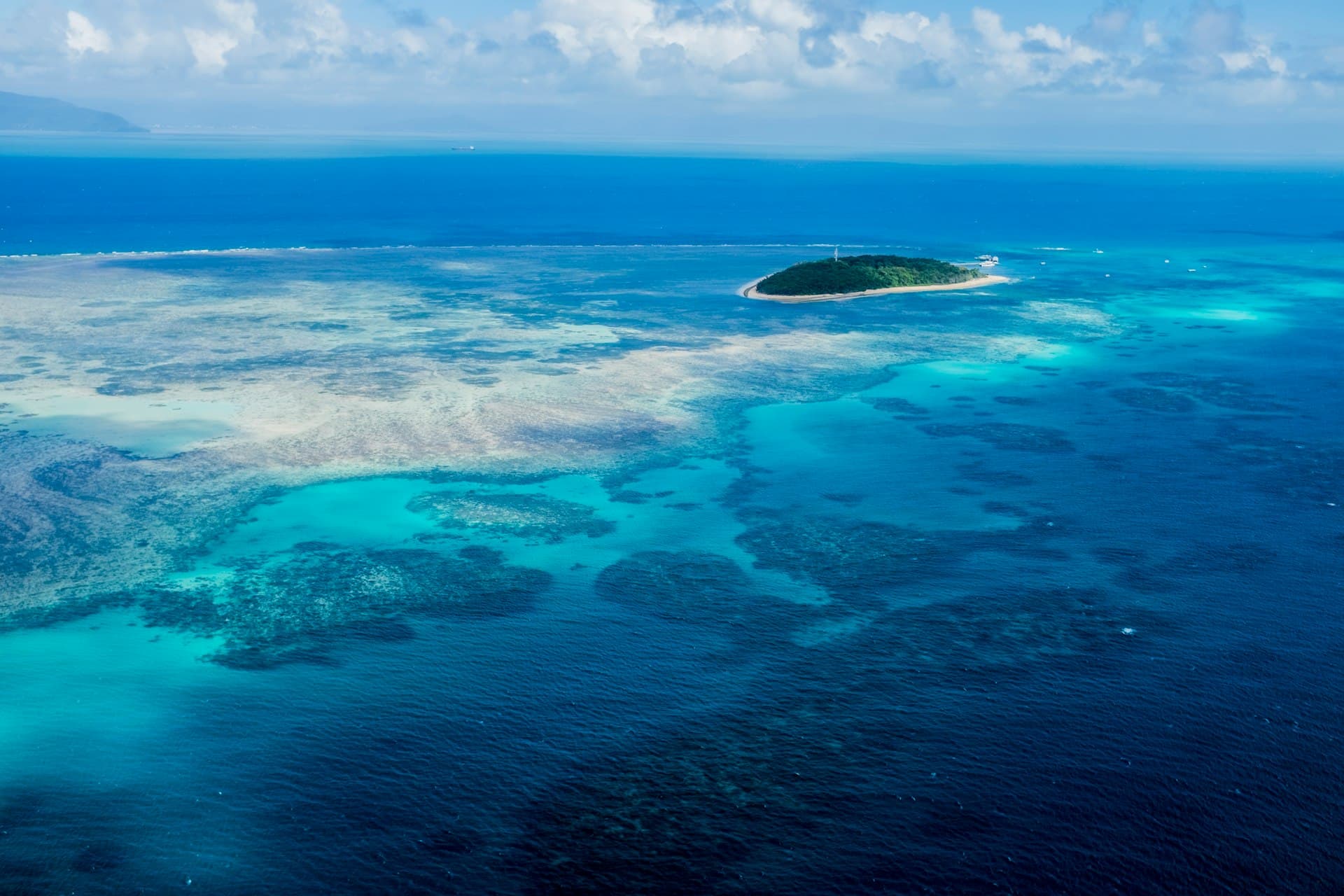
Great Barrier Reef Diving Conditions: Visibility, Temperature, Currents, and Seasons
Before you plan your Great Barrier Reef dive trip — and before you book your expedition to Cod Hole, Osprey Reef, or the SS Yongala — you need to understand the conditions. The GBR is not a single destination with uniform conditions. It stretches 2,300 km along Australia's tropical coast, from the warm far northern Ribbon Reefs at 9°S to the cooler southern cays at Lady Elliot Island at 24.5°S. This is the world's largest reef system, and its sheer scale means conditions vary dramatically by region, by season, and even by reef system. The diving is world-class year-round, but some months are clearly better for specific types of diving.
This guide gives you the real numbers — temperature by region and season, visibility ranges, current patterns, and what each month actually feels like underwater — so you can plan your trip around the conditions you want.
The Numbers That Matter Most
Water temperature: 22–30 °C (72–86 °F) across the year. The southern GBR (Lady Elliot, Heron, Keppel) runs 2–3 °C cooler in winter (July–September: 20–22 °C minimum). Northern Ribbon Reefs remain warmer at 26–28 °C year-round. Summer (January–February) peaks at 28–30 °C (82–86 °F), particularly in the northern and central sectors. Winter (June–August) drops to 22–25 °C (72–77 °F) in the south and 23–26 °C (73–79 °F) in the north. A 3 mm full suit is comfortable for most of the year in the north and central GBR; a 5 mm suit is recommended for winter dives in the south, liveaboard trips to the Coral Sea, and early-morning dives. Many divers do year-round dives in a 3 mm, but thermal protection becomes important during the dry season in the south and on multi-dive liveaboards.
Visibility: 15–50 m (50–165 ft). Outer reefs and Coral Sea platforms (Osprey, Bougainville, Flinders) typically see 30–50 m when conditions are stable — the clearest water on the reef. Dry season (April–October) average across the main reef is 15–30 m. Wet season (December–March) drops to 8–20 m due to runoff and rainfall, particularly on inshore and central reefs. The SS Yongala wreck runs 12–25 m and can be murky after heavy rain. Visibility is at its best during August–November when the dry season is established and trade winds keep the water column stable.
Current: Mild on sheltered inner reefs and lagoons (0.5–1 knot). Moderate to strong at outer reef walls and channels (1–2 knots typical; up to 3 knots during trade wind season). Drift dives are common at outer wall sites such as Osprey Reef's North Horn, Agincourt Reef's The Point, and Norman Reef's Plates. The southeast trade winds drive current patterns from May through October, producing the strongest and most consistent currents during the dry season. Current is what makes the GBR's outer wall dives so dramatic — nutrient-rich water rising from 2,000 m+ walls attracts sharks, mantas, and massive pelagic aggregations.
Thermoclines: The GBR has minimal thermoclines compared to temperate destinations. Water temperature changes gradually with depth, typically dropping 1–3 °C between the surface and 20–25 m during summer months. The warm tropical surface layer is consistent across most of the reef system, meaning a single wetsuit thickness usually works throughout your profile. The exception is during winter in the southern GBR, where surface water of 20–22 °C can feel noticeably cool on extended dives, and on deep Coral Sea wall dives where you'll descend through cooler intermediate layers before reaching the warm reef wall at 15–30 m.
Depth range by site type: Inshore and lagoon reefs 3–15 m (10–50 ft). Outer reef bommies and wall dives 10–40 m (33–130 ft). SS Yongala wreck 15–30 m (50–100 ft). Coral Sea remote reefs (Osprey, Bougainville) — near-vertical walls dropping from 20 m to 2,000+ m; diveable wall sections typically 12–40 m. Ribbon Reefs bommies rise from 35 m to within 5 m of the surface, offering dramatic vertical profiles.
Best season overall: June–November (dry season) for warm to cool water, peak visibility (15–30 m average, 30–50 m on outer reefs), mild seas, and the highest concentration of pelagic events — dwarf minke whales (June–August at Ribbon Reefs), humpback whale migration (June–September), coral spawning (October–November), and peak manta ray activity (May–October at Lady Elliot). Shoulder months May and November offer solid conditions with fewer divers. Wet season (December–March) has reduced visibility, higher rainfall, cyclone risk, and marine stinger season, but lower prices and fewer crowds.
Month by Month
January – March: Wet Season, Warm Water
Summer in the GBR means water temperatures of 27–30 °C (81–86 °F) — the warmest of the year. This is wet season, with high rainfall, reduced visibility (8–20 m on most inshore and central reefs), and the risk of cyclones, particularly in January and February. The southern GBR is also in stinger season (marine stingers including box jellyfish and Irukandji), and operators provide stinger suits for all water activities.
Despite the conditions, the GBR remains diveable. Outer reefs still see 15–25 m visibility even when inshore reefs drop to 8–12 m. Northern Ribbon Reefs and the Coral Sea platforms are less affected by runoff and maintain better conditions. The warm water supports exceptional marine life activity — coral spawning begins building toward October, and turtle nesting season runs strongly through these months at southern cays like Lady Elliot and Heron Island (up to 60,000 green turtles nesting at Raine Island).
Dwarf minke whale season has ended, but humpback whales pass through in June–September. January–March is the quietest diving period, which means fewer divers in the water and lower prices. Some operators run wet-season deals, and the reef is never truly "dead" — it's about choosing the right region and the right reef for the conditions.
Wetsuit: 3 mm full suit is comfortable for most dives. A 2 mm shorty works in the north during the warmest months. Stinger suits (full-length lycra with hood) are mandatory Nov–May in northern and central waters — operators provide these, but bring your own if fit matters.
Target species: Green and hawksbill sea turtles (nesting season), reef sharks, pelagic fish, bumphead parrotfish, giant potato cod at Cod Hole, manta rays at cleaning stations, occasional whale sharks (Nov–Feb).
Best sites: Outer reefs (Agincourt, Norman, Thetford) maintain better visibility than inshore sites. Northern Ribbon Reefs and Lizard Island area are less affected by runoff. Southern GBR remains accessible but stinger suits required.
April – May: Conditions Improving, Dry Season Begins
April is the transition month. Rainfall decreases significantly, visibility begins building from wet-season lows toward dry-season averages, and water temperatures settle to comfortable 26–28 °C (79–82 °F) in the north and 25–27 °C (77–81 °F) in the south. By May, the dry season is well established, seas are generally calm, and visibility climbs to 15–30 m across most reef systems.
May marks the beginning of peak pelagic season. Manta rays start gathering at Lady Elliot Island (May–October), and humpback whales begin their northward migration through GBR waters (June–September). The dwarf minke whale season at Ribbon Reefs begins in late June, but May is already a strong month for general pelagic activity.
Shoulder season pricing applies in April and May — dive packages and accommodation are noticeably cheaper than the June–October peak, and the number of divers in the water is far lower. This is one of the best value windows on the reef.
Wetsuit: 3 mm full suit comfortable year-round for central and northern GBR. Southern GBR in May may feel cooler (25–27 °C), and a 3 mm or 5 mm is preferred by sensitive divers. Hood optional but useful on liveaboard trips.
Target species: Manta rays (beginning at Lady Elliot), humpback whales (starting migration), reef sharks, green turtles, giant trevally, Napoleon wrasse, all reef fish species.
Best sites: All sectors become increasingly accessible. Outer Cairns and Port Douglas reefs see improving visibility. Ribbon Reefs liveaboards start running with better conditions. Southern GBR island resorts are comfortable.
June – July: Dwarf Minke Whale Season, Peak Dry Season Kickoff
June and July are the heart of the GBR's most distinctive season. Water temperatures drop to 23–26 °C (73–79 °F) in the north and 22–25 °C (72–77 °F) in the south. Visibility climbs to 20–30 m across the main reef, with outer reefs and Coral Sea platforms reaching 30–50 m. Seas are generally calm, and the dry season delivers the clearest water of the year.
This is the only place on Earth where you can reliably encounter dwarf minke whales (25 feet) in the water — and only at the Ribbon Reefs, and only for six weeks (mid-June to mid-August). The Ribbon Reefs' narrow linear structure, hugging the edge of the continental shelf, creates a concentrated feeding ground. Encounters at Lighthouse Bommie and Pixie Pinnacle are legendary, with whales often approaching within a few meters of divers. This is the most exclusive wildlife encounter on the entire reef system.
Humpback whale migration is in full swing — breaching, tail-slapping, and song are common sightings during surface intervals and drift dives. Manta rays continue to visit Lady Elliot Island, and the combination of minke whales, humpbacks, and mantas on the same trip is a real possibility on a well-planned liveaboard.
Current conditions during the trade wind season are moderate to strong at outer wall sites (1–2 knots typical, up to 3 knots during active trade wind events). Drift dives at Osprey Reef's North Horn, Agincourt's The Point, and Norman Reef's Plates are standard — requiring good fitness and buoyancy control.
Wetsuit: 3 mm full suit comfortable for northern and central GBR. Southern GBR and Coral Sea liveaboards benefit from a 5 mm suit, especially for early-morning dives and multi-dive days. Hood and gloves recommended for Coral Sea expeditions.
Target species: Dwarf minke whales (June–August, Ribbon Reefs only), humpback whales (June–September), manta rays, mobula rays, grey reef sharks, silky sharks, giant trevally, Napoleon wrasse, all reef species.
Best sites: Ribbon Reefs #1–#10 for minke whales (Cod Hole, Lighthouse Bommie, Pixie Pinnacle, Steve's Bommie). Osprey Reef for shark feeds. Lady Elliot Island for manta rays. SS Yongala for wreck diving. Cairns outer reefs for general reef dives.
August – September: Peak Conditions
August and September are the absolute peak of GBR diving. Water temperatures hold at 23–26 °C (73–79 °F) in the north and 22–25 °C (72–77 °F) in the south. Visibility reaches its annual maximum of 20–30 m across the main reef, with outer reefs and Coral Sea platforms consistently delivering 30–50 m. Seas are calm, UV is strong (but manageable with reef-safe sunscreen), and the combination of warm water, excellent visibility, and extraordinary animal abundance makes this the best two-month window on the reef.
The dwarf minke whale season extends through August at Ribbon Reefs. Humpback whales are still present in September as their migration continues. Manta ray activity at Lady Elliot is at its peak, and the southern cays are active with turtle nesting. The Coral Sea liveaboard season delivers its best diving — Osprey Reef's North Horn shark feed, Bougainville's Dungeons and Dragons, and Holmes Reef's The Abyss are all running at full capacity.
Current conditions during these peak months are generally moderate: 1–2 knots on most coastal and reef wall sites, and 2–3 knots on offshore seamount dives — manageable for divers with good fitness and proper briefing. The southeast trade winds produce the most consistent current patterns of the year.
Wetsuit: 3 mm full suit is comfortable for most August and September dives in the north and central GBR. A 5 mm suit is useful for early-morning dives, Coral Sea expeditions, and southern GBR dives. Many divers find a 3 mm sufficient year-round in the north.
Target species: Peak dwarf minke whales, humpback whales (late season), manta rays, mobula rays, grey reef sharks, silky sharks, giant trevally, potato cod, Queensland grouper, Napoleon wrasse, sea turtles, all reef species.
Best sites: Every site is in full operation. Ribbon Reefs (Cod Hole, Lighthouse Bommie, Steve's Bommie), Osprey Reef (North Horn, Around the Bend), SS Yongala, Lady Elliot Island, Cairns outer reefs (Flynn, Milln, Norman, Thetford), Port Douglas outer reefs (Agincourt, Opal).
October: Coral Spawning Season, Final Peak Month
October is the closing window for peak dry-season diving, and it brings something no other month offers: the Great Barrier Reef's mass coral spawning event. Triggered by the full moon, hundreds of coral species release eggs and sperm simultaneously — one of nature's greatest synchronized underwater spectacles. The spawning typically occurs in late October for inner reefs and extends into November for outer reefs.
Water temperatures stay warm at 25–28 °C (77–82 °F) in the north and 24–27 °C (75–81 °F) in the south. Visibility remains excellent at 20–30 m across the main reef, with outer reefs reaching 30–50 m. The combination of peak conditions, coral spawning, and shoulder-season pricing makes October a financially smart choice if you want the best of the reef without peak-season rates.
Dwarf minke whale season wraps up in mid-August, but humpback whale activity continues through the first half of October. Manta rays are still abundant at Lady Elliot, and turtle nesting season builds toward its peak in November–February.
Wetsuit: 3 mm full suit comfortable for most October dives. A 5 mm suit for early October or southern GBR/Coral Sea dives. Hood recommended for liveaboard trips.
Target species: Coral spawning (late October, full moon), humpback whales (early month), manta rays, sea turtles, reef sharks, giant trevally, all reef species.
Best sites: All sectors productive. Ribbon Reefs for general reef diving. Outer Cairns and Port Douglas reefs for excellent visibility. Coral Sea liveaboards for remote wall diving. Southern GBR for manta rays and turtle encounters.
November – December: Build-up to Wet Season
November brings the transition to wet season. Water temperatures climb to 26–29 °C (79–84 °F) in the north and 25–27 °C (77–81 °F) in the south. Visibility generally stays decent at 15–25 m, but increasing rainfall and humidity begin to affect conditions, particularly on inshore and central reefs. By December, wet season is fully established with high rainfall, reduced visibility (8–20 m), and cyclone risk.
November is a mixed month. Coral spawning runs strongly — the full moon typically falls in late October or early November, triggering the most spectacular spawning events. This is the month when marine biologists and photographers flock to the reef to document this extraordinary natural phenomenon. Humpback whale migration continues, and manta ray activity at Lady Elliot remains strong through November.
By December, wet season conditions dominate. Visibility drops, seas become rougher, and cyclone season (November–April) means operators may cancel trips with little notice. Stinger season (November–May) is in full effect — marine stingers including box jellyfish and Irukandji are present in inshore waters. Operators provide stinger suits, but divers should be aware of the risk.
Despite the challenges, December diving has its rewards. The warm water (27–30 °C) is comfortable without thermal protection. Outer reefs still see 15–25 m visibility even when inshore reefs drop to 8–12 m. Fewer divers, lower prices, and the reef is never truly "dead" — it's about choosing the right region.
Wetsuit: 3 mm full suit comfortable for most November–December dives. A 2 mm shorty works in the north. Stinger suits mandatory Nov–May in northern and central waters. Hood optional for sensitive divers.
Target species: Coral spawning (November, full moon), humpback whales, manta rays, green turtles (nesting season), reef sharks, pelagic fish, all reef species.
Best sites: Outer reefs (Agincourt, Norman, Osprey) maintain better visibility than inshore sites. Southern GBR island resorts are comfortable and less affected by northern runoff. Coral Sea liveaboards run year-round in suitable conditions.
Reading GBR Currents
Current is the single most variable element of GBR diving. Unlike a simple tidal flow, GBR currents are driven by the interaction of southeast trade winds, tidal exchange through reef channels, and the dramatic topography of walls dropping from 20 m to 2,000+ m.
Inshore and lagoon reefs: Sites like Upolu Reef, Green Island, and the Whitsundays fringing reefs experience mild currents (0.5–1 knot). These are comfortable for Open Water and Advanced Open Water divers. Protected lagoons are essentially calm, making them ideal for beginners and first-time divers.
Outer reef walls and bommies: Most Cairns and Port Douglas outer reef sites experience moderate currents (1–2 knots). Sites like Agincourt Reef's The Point, Norman Reef's Plates, and Flynn Reef's Point Break can produce drift dives requiring good fitness and proper briefing. Current strength increases during trade wind season (June–September).
Coral Sea remote reefs: Osprey Reef's North Horn, Bougainville's Dungeons and Dragons, and Holmes Reef's The Abyss produce the strongest currents on the GBR — 2–3 knots typical, sometimes stronger during active upwelling. Divers descend along the boat's anchor or descent line, monitor position relative to the boat, and abort if current exceeds comfortable swim speed. The current is what makes these dives technically demanding — and it's also what drives the nutrient concentration that attracts 1,000+ pelagic encounters.
Seasonal shifts: Current patterns shift seasonally. Summer months (December–March) produce more variable conditions as tropical systems and monsoonal flows disrupt the trade wind pattern. Winter months (June–September) produce the most stable and consistent current patterns, driven by the southeast trades.
Geographic Variation
The GBR spans nearly 1,500 km from north to south, and conditions can vary significantly across its 10 major dive regions:
-
Southern GBR (Lady Elliot to Great Keppel): 24.5°S–21°S. Coolest waters (2–3 °C cooler than the north in winter), best for manta rays, turtles, and seasonal whales. Island resorts on Lady Elliot, Heron, Wilson, and Great Keppel. Water temps 20–22 °C minimum in winter (July–September).
-
Swain Reefs: Remote complex of 120+ reefs at the south-eastern edge. Only reached by liveaboard. Pristine condition, heavy current, advanced diving only. Water temps 22–28 °C.
-
Capricorn-Bunker Group: 22 major reef platforms including Heron, One Tree, and Fitzroy Reefs. Extensive coral cay ecosystems. Gateway from Gladstone/Mackay.
-
Whitsundays (Hardy Reef, Bait Reef, Knuckle Reef): 74 continental islands with fringing reefs and protected lagoons. Sailing and diving combo. Access via Airlie Beach and Hamilton Island.
-
Townsville region: SS Yongala wreck (Australia's largest intact historic shipwreck), Museum of Underwater Art (MOUA) at John Brewer Reef. Gateway from Townsville. Wreck diving is the star attraction.
-
Central GBR (Cairns outer reefs): Most-visited section. Flynn, Milln, Moore, Thetford, Norman, Hastings, Saxon, Upolu reefs. Day trips from Cairns and Port Douglas. Beginner-friendly outer reef bommies and wall dives.
-
Port Douglas outer reefs: Agincourt Reef (#1–#4, rated among the best on the GBR), Opal Reef, St. Crispin Reef, Tongue Reef. Access via day trips or liveaboard. Agincourt #3 delivers 20–40 m visibility and 5–40 m depth.
-
Ribbon Reefs (#1–#10): 80 km chain of narrow ribbon reefs on the edge of the continental shelf. World-class: Cod Hole (giant potato cod), Lighthouse Bommie (dwarf minke whales), Steve's Bommie, Pixie Pinnacle. Liveaboard access only. Water temps 26–28 °C year-round.
-
Lizard Island / Escape Reef: Northern GBR hub. Escape Reef is one of the most pristine, least-visited sites on the entire GBR. Snake Pit (olive sea snakes). Access via Lizard Island Resort or liveaboard.
-
Coral Sea Remote Reefs (Osprey, Bougainville, Flinders, Holmes, Diane): 60–200 km east of the outer barrier. Near-vertical walls dropping 2,000 m+. Shark dives, drift dives, pelagic action. Liveaboard only (4–11 day trips). Water temps 26–28 °C year-round.
Gear Recommendations for GBR Conditions
Wetsuit: 3 mm full suit is the standard recommendation for most of the GBR year-round, particularly in the north and central sectors. A 5 mm suit is recommended for winter dives in the southern GBR (July–September), Coral Sea liveaboard expeditions, and early-morning dives when water feels coolest. Most rental shops carry 3 mm and 5 mm full suits.
Accessories: Hood and gloves for winter southern GBR dives and Coral Sea expeditions. Reef shoes for rocky entries at some southern sites. Stinger suit (full-length lycra with hood) mandatory November–May in northern and central waters — operators provide these, but bring your own for better fit.
Dive computer: Essential for wall dives and multi-level profiles. Outer reef bommies often require descending to 25–40 m and ascending through multiple depth zones. Coral Sea wall dives accessing 12–40 m layers demand accurate no-decompression management.
Surface marker buoy: Recommended for outer reef and liveaboard dives. Drift dives at Osprey Reef, Agincourt, and Norman Reef can drift divers significant distances from the boat. Strong currents during trade wind season make SMBs essential for safety.
Underlight: Useful for night dives on outer reef bommies and the SS Yongala wreck. The GBR's clear tropical waters make underlights especially effective for spotting nocturnal marine life, including sleeping turtles, reef crabs, and octopus.
Summary Table
| Month | Water Temp | Visibility | Current | Pelagic Activity | Best For |
|---|---|---|---|---|---|
| Jan–Mar | 27–30 °C | 8–20 m | Mild–Moderate | Moderate (turtles, reef fish) | Budget travel, turtle nesting, outer reef diving |
| Apr–May | 25–28 °C | 15–25 m | Moderate | Building (manta, whales) | Shoulder-season value, improving conditions |
| Jun–Jul | 22–26 °C | 20–30 m | Moderate–Strong | Peak (minke whales, humpbacks) | Minke whale encounters, peak dry season |
| Aug–Sep | 22–26 °C | 20–30 m | Moderate | Peak (manta, sharks, whales) | Best overall conditions, all species |
| Oct | 25–28 °C | 20–30 m | Moderate | Coral spawning, humpbacks | Shoulder pricing, coral spawning, peak viz |
| Nov–Dec | 26–30 °C | 8–25 m | Mild–Moderate | Coral spawning, turtles | Coral spawning, budget travel, stinger season |
Bottom Line
The Great Barrier Reef delivers world-class diving year-round, with June through November offering the warmest conditions, clearest visibility, and highest concentration of unique pelagic events. The reef's 2,300 km span means you can always find good diving — even in wet season, outer reefs and remote Coral Sea platforms maintain excellent conditions while inshore reefs are affected by runoff. The key to a great GBR trip is matching your goals (minke whales, coral spawning, manta rays, wreck diving, remote wall diving) to the right region and the right season. Whether you're diving Cod Hole's potato cod, drifting Osprey Reef's North Horn, or documenting mass coral spawning under a full moon, the GBR is the most biodiverse and geographically extraordinary reef system on Earth.