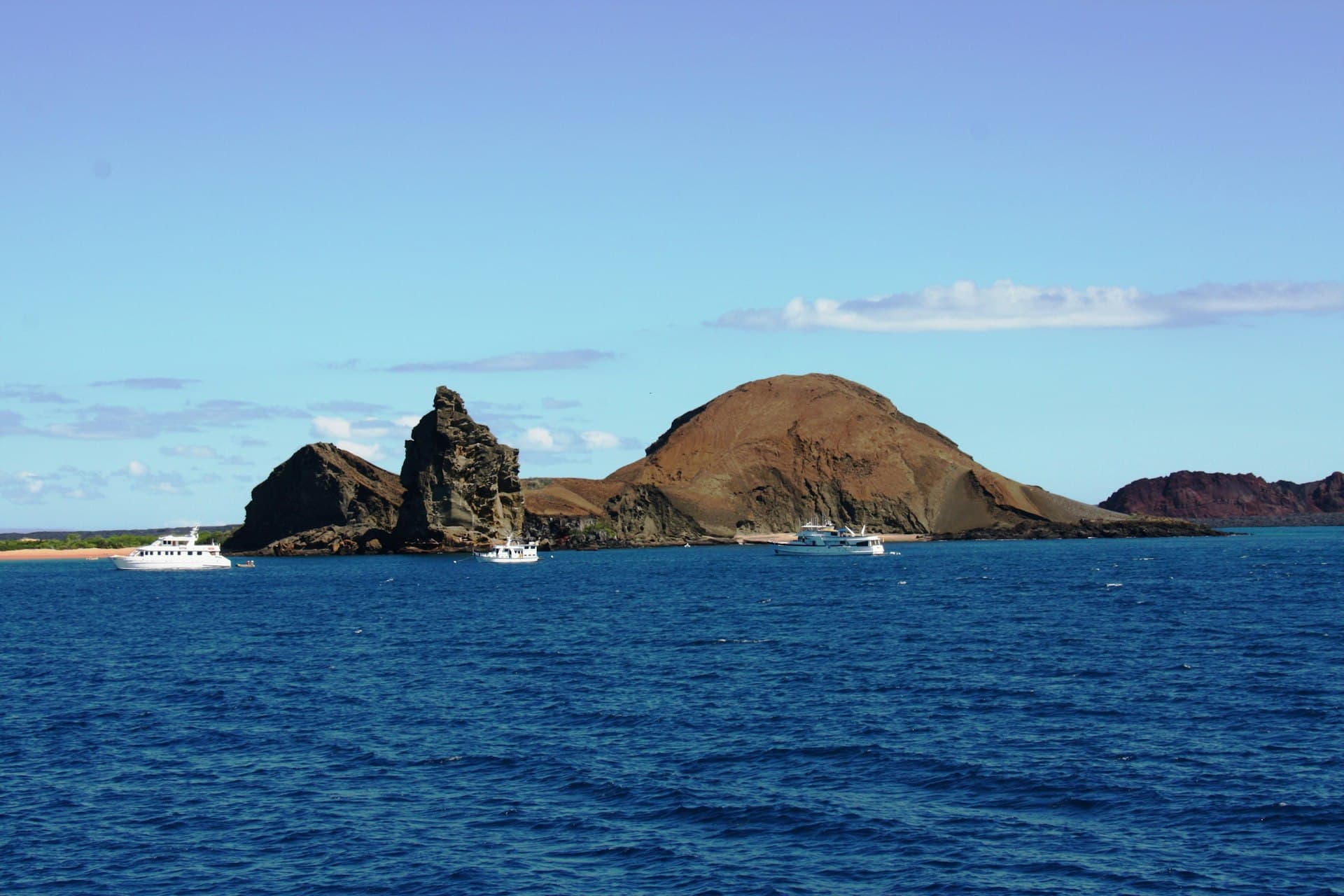
Diving Galápagos: Conditions, Seasons, and What to Expect
The Galápagos Islands sit exactly on the equator, but their water temperature behaves nothing like a tropical destination. Three major ocean currents converge here — the cold Humboldt Current from Antarctica, the warm Panama Current from Central America, and the subsurface Cromwell Current — and their relative strength shifts dramatically between seasons. The result is a dive environment where water temperature can swing 14°C in a single day, visibility ranges from 5 to 25 meters depending on where you are and when you go, and current strength at the same site varies by season, tide, and even the phase of El Niño.
This guide gives you the real numbers so you can plan your trip around what matters most to you.
The Numbers That Matter Most
Water temperature: 16–30°C (61–86°F) across the archipelago, varying by region, season, and depth. The northern islands (Wolf and Darwin) are warmest, reaching 26°C in the warm season. The western islands (Isabela and Fernandina) are coldest — 16–23°C year-round due to constant Humboldt upwelling. Central sites like Gordon Rocks and North Seymour sit in the middle at 21–25°C. Thermoclines are common and sharp: a 5–10°C temperature drop within a 10-meter vertical descent is normal.
Visibility: 5–25 meters (16–82 feet) with 30+ meter days possible in the warm season at Darwin and Wolf. Visibility is inversely correlated with nutrient density — the plankton blooms that make the water green in the cool season (June–November) are what attract whale sharks. In the warm season (December–May), the water clears to 15–25 meters at northern sites. Central sites average 10–20 meters year-round. Western sites are the most plankton-rich and consistently run 5–15 meters.
Current: Moderate to very strong. Drift diving is the standard technique across the Galápagos. At Wolf and Darwin, currents are consistently strong (1.5–3 knots depending on tide), and divers use reef hooks to hold position at cleaning stations. Gordon Rocks can produce surging currents inside the crater — the "washing machine" effect that gives the site its nickname. Central sites like North Seymour and Mosquera run mild to moderate (0.5–1.5 knots) and are suitable for less experienced divers. Negative entries from Zodiacs are the norm at Wolf, Darwin, and Gordon Rocks.
Depth range: 5–30 meters for most recreational diving. Wall dives at Wolf and Darwin drop to 30+ meters. The Darwin's Arch platform sits at 18 meters — the optimal depth for the cleaning station. Gordon Rocks has a crater rim at 8 meters, a central pinnacle at 21 meters, and an outer wall dropping to 65 meters.
Key gear difference from tropical diving: You need a 7mm wetsuit for the cool season (June–November) and a 5mm for the warm season. Hood and gloves are strongly recommended for Wolf and Darwin even in the warm season — the thermocline can drop below 20°C at depth. A reef hook is essential for northern site diving. An SMB is mandatory for every dive. A dive computer with nitrox capability is standard on liveaboards.
Season by Season
December – February: Peak Warm Season — Hammerhead Heaven
This is the Galápagos summer. The Panama Current dominates, bringing warm, clear water from the northeast. Surface conditions are at their calmest all year, and visibility at Wolf and Darwin reaches its annual peak at 15–25 meters.
Water temperatures sit at 23–26°C at the northern islands and 21–24°C in the central region. A 5mm wetsuit is the right call for the north; a 5mm with a hood is still smart at central sites. Thermoclines are present but less severe than in the cool season.
This is the absolute peak for scalloped hammerhead aggregations. At Wolf's Shark Bay, divers routinely see 200–300+ hammerheads at the cleaning station. The schools are densest in December through February, and the warm, clear water makes photography extraordinary. Manta ray activity is still good from the October–December peak. Sea lions are pupping on the central islands, making encounters at Cousins and Mosquera particularly playful.
The downside: this is the most expensive and most crowded season. Liveaboards book out 6–12 months in advance, especially for the prime December holiday window. Budget 15–20% premium over cool-season pricing.
Marine life highlights: Scalloped hammerheads (200–300+ at Wolf), Galápagos sharks, silky sharks, spotted eagle rays, golden cownose rays (groups of 15+ at Mosquera), sea lion pups, green sea turtles, Galápagos garden eels.
March – May: Transition Season — The Sweet Spot
The trade winds begin to pick up in March, but the water is still warm and clear from the Panama Current. This is widely considered the best balance of conditions and value in the Galápagos.
Water temperatures hold at 22–26°C at the northern sites and 21–25°C in the central region. Visibility remains good at 12–22 meters. Hammerhead numbers are still excellent — smaller than the December peak but still reliably in the 100–200 range at Wolf. The biggest advantage of this period is that liveaboard availability opens up: the crowds from the December holiday peak have cleared, and you can often book 2–3 months ahead instead of 6–12.
By May, whale shark season is not yet active, but manta rays are still passing through the channel at Cabo Marshall. The weather is the most pleasant on the surface — sunny, 25–30°C air temperature, and calmer seas than the cool season.
Marine life highlights: Hammerheads (100–200 at Wolf), manta rays (declining from Oct-Dec peak), eagle rays, sea lions, dolphins, Galápagos sharks, whitetip reef sharks.
June – August: Cool Season Onset — Whale Sharks Arrive
June marks the beginning of the cool season as the Humboldt Current strengthens, pushing cold, nutrient-rich water from the Southern Ocean into the archipelago. This is the most dramatic seasonal shift in Galápagos diving.
Water temperatures drop noticeably: 18–22°C at Wolf and Darwin, 19–23°C at central sites, and as low as 16–18°C at western sites like Punta Vicente Roca. A 7mm wetsuit is now mandatory. The thermocline becomes severe — expect 5–8°C drops within a single dive.
Visibility drops as plankton blooms explode across the northern sites. At Darwin and Wolf, visibility runs 8–18 meters — the green water frustrates photographers but is exactly what draws the whale sharks. The first gravid females start arriving at Darwin in June, and by July the aggregation is in full swing.
The cooler water also brings Mola mola (ocean sunfish) to Punta Vicente Roca and Cabo Marshall. Galápagos penguins become more active in the cooler water at Bartolomé. Marine iguanas are at their most visible in the western islands, where the cold upwelling creates the algae blooms they feed on.
Surface conditions get rougher: winds pick up, and the crossing to Wolf and Darwin can be uncomfortable. Seasickness medication is strongly recommended for the overnight sail.
Marine life highlights: Whale sharks (arriving, peak building), Mola mola (Jun-Oct), Galápagos penguins (most active), marine iguanas (peak feeding), scalloped hammerheads (100–200 still at Wolf), Galápagos fur seals, humpback whales (Jun-Sep).
September – November: Peak Whale Shark Season
This is the window that dedicated divers book 1–2 years ahead. September and October deliver the highest concentration of gravid female whale sharks at Darwin Island. On a good dive, you can see 5–15 individual whale sharks filtering plankton at the surface and at depth, with individuals reaching 12–15 meters in length.
Water temperatures bottom out: 16–22°C at the northern islands, with thermoclines taking the temperature below 16°C at depth at Punta Vicente Roca. This is the coolest diving in the Galápagos calendar. A 7mm wetsuit, hood, and gloves are not optional — you will be cold without them.
Visibility at Darwin and Wolf runs 5–15 meters due to plankton. At central sites it's better — 10–20 meters. But the green water is part of the experience: the whale sharks are here because of the plankton, and the reduced visibility means encounters can be startlingly close.
Manta rays peak again from October through December at Cabo Marshall, with a secondary aggregation overlapping the whale shark season. Mola mola sightings continue through October. Hammerhead numbers drop at Wolf — they're still present (50–100), but the massive schools of the warm season have dispersed.
By November, the first signs of the warm season transition appear. Calmer days become more frequent, and the water begins to warm from its August minimum.
Marine life highlights: Whale sharks (peak Sep-Oct, 5–15+ per dive at Darwin), Mola mola, Galápagos penguins, marine iguanas, manta rays (Oct-Dec peak at Cabo Marshall), scalloped hammerheads (reduced numbers), humpback whales, Galápagos fur seals, silky sharks, Galápagos sharks.
Regional Variation
Understanding Galápagos conditions means understanding that water temperature and visibility are not the same across the archipelago on any given day. Here's how the regions compare:
| Region | Water Temp (Warm) | Water Temp (Cool) | Visibility | Current | Access |
|---|---|---|---|---|---|
| Northern (Wolf & Darwin) | 23–26°C | 16–22°C | 8–25m | Strong (1.5–3 kn) | Liveaboard only |
| Western (Isabela & Fernandina) | 21–24°C | 16–23°C | 5–15m | Moderate–Strong | Liveaboard / Extended day |
| Central (Santa Cruz & surrounds) | 21–25°C | 18–23°C | 10–22m | Mild–Moderate (0.5–1.5 kn) | Day trip from Puerto Ayora |
| Southern (Floreana & Española) | 22–26°C | 20–24°C | 15–25m | Mild | Day trip from Santa Cruz |
| Eastern (San Cristóbal) | 21–25°C | 19–23°C | 15–20m | Moderate | Day trip from San Cristóbal |
Reading the Current
Galápagos current is not one thing. Four variables determine what you'll feel underwater:
Season. The cool season (June–November) brings stronger currents across the archipelago as the Humboldt Current intensifies. The warm season produces milder, more predictable flows.
Tidal phase. Tidal flow can modulate current by 0.5–1.5 knots at exposed sites. Liveaboard captains time dives at Wolf and Darwin around the tidal windows when currents are manageable.
Site geography. Wolf's Shark Bay and Darwin's Arch sit on the channel between islands where current accelerates. Gordon Rocks funnels flow through the crater opening. Cousins Rock sits in a relatively sheltered position and typically runs mild.
Depth. Current is often strongest at the cleaning stations (15–25 meters) where divers hook in. The water column above and below can flow at different speeds and directions — this is normal Galápagos diving.
If you haven't used a reef hook before, get instruction before your trip. Most liveaboards do a check dive at North Seymour or Mosquera where you can practice the technique in mild conditions. Never hook into live coral — always find volcanic rock or dead substrate.
El Niño and La Niña
El Niño events (every 8–11 years) disrupt the normal current patterns that make Galápagos diving what it is. During severe El Niño years, the Humboldt Current weakens, water temperatures rise 3–5°C above normal, and the nutrient upwelling collapses. Marine iguana populations can crash by 50–70%, sea lion pup mortality spikes, and the entire ecosystem shifts. The 2015–16 El Niño caused significant coral bleaching in the islands.
La Niña events have the opposite effect: intensified upwelling, colder water, and even better conditions for whale sharks and penguins. The 2022–23 La Niña produced one of the best whale shark seasons on record at Darwin.
If you're planning a multi-year investment in a Galápagos trip, check the NOAA El Niño forecast before booking — a moderate-to-strong La Niña year is ideal for whale shark diving.
Gear Notes for Galápagos Conditions
Wetsuit: 7mm full suit for June–November; 5mm full suit for December–May. Hood and gloves are strongly recommended year-round for Wolf and Darwin. Don't trust rental wetsuit availability for northern sites — bring your own if fit matters.
Reef hook: Essential for Wolf, Darwin, and Gordon Rocks. Most liveaboards provide them, but bring your own if you have a preference. Practice on your check dive.
Regulator: Cold-water rated regulator recommended for cool season diving. A standard tropical regulator can freeze up in the 16°C water at depth.
Dive computer: Nitrox-capable computer is standard. Galápagos profiles are multilevel drift dives — a computer with good gas management features is worth the investment.
SMB: Mandatory on every dive. You're drifting in open ocean, and the boat needs to find you at the end.
Camera setup: A 7mm dome port or a fisheye lens is ideal for the wide-angle encounters. Macro setups are useful at Cousins and Punta Vicente Roca for seahorses and nudibranchs. Consider a backup camera housing — salt spray on Zodiac crossings is unforgiving. Don't skip the lens cleaning cloth.
Weight system: You'll need 2–4 kg more weight than tropical diving to compensate for the thicker wetsuit and fresh regulator hoses. Do a weight check on your first dive — most liveaboard crews will help dial it in.
Putting It Together
Galápagos rewards divers who understand the tradeoffs. The warm season gives you the best conditions — calm seas, clear water, huge hammerhead schools — but demands early booking and premium pricing. The cool season delivers the whale sharks and the coldest, roughest diving you'll do anywhere, in exchange for lower prices and more available spaces. There is no perfect month. Pick your priority — hammerhead schools or whale sharks — and build your plan around that.
DivePass tracks real-time Galápagos conditions and aggregates operator reports so you know what to expect before you book. Check the app for live site conditions, water temperatures, and marine life sightings in the weeks before your trip.