Diving the Florida Keys: Complete Guide to America's Barrier Reef
The Florida Keys are America's tropical diving paradise — a 170-mile chain of coral cay islands stretching from Key Largo to Key West and beyond to the Dry Tortugas. This is the only living coral barrier reef in the continental United States, the third-largest barrier reef system on Earth, and one of the most accessible world-class dive destinations in the world.
Drive the Overseas Highway from Miami, cross 42 bridges, and within an hour you're on a dive boat headed for the reef. No international flight. No passport. No language barrier. Just 71–87°F water, 50+ named dive sites, and an underwater world that rivals the Caribbean in biodiversity and the Red Sea in wreck diving.
This guide covers everything you need to plan your Florida Keys dive trip: what makes the diving here special, the infrastructure that supports it, and how to choose the right Key for your diving style.
Why the Keys?
The Florida Reef Tract runs approximately 170 miles — only Australia's Great Barrier Reef and Belize Barrier Reef are larger. But what sets the Keys apart is the sheer variety of diving packed into one archipelago.
In a single trip you can:
- Snorkel over spur-and-groove coral gardens at Molasses Reef, the most-dived reef in the Florida Keys
- Swim past the 8.5-ft bronze Christ of the Abyss statue at 25 ft
- Penetrate a 510-ft Navy landing ship — the Spiegel Grove — sitting upright at 60–130 ft (requires training for wreck penetration)
- Explore the USS Vandenberg, a 523-ft missile tracking ship and the largest intentionally sunk vessel in the world when deployed
- Drift over Looe Key Reef in the Lower Keys, named for a British warship wrecked in 1744
- Take a day trip to the Dry Tortugas for pristine, remote reefs with exceptional visibility and pelagic encounters
Marine life is abundant year-round. Goliath grouper that grow to 800+ lbs patrol the wrecks. Green and hawksbill turtles are encountered on nearly every reef dive. Eagle rays glide through Hawk Channel. Nurse sharks rest under ledges. And from December through April, grouper spawning aggregations attract large predators.
Over 500 species of fish have been recorded at Molasses Reef alone — more than all of Europe's Mediterranean waters combined.
Accessibility is the Keys' superpower. Miami International Airport is a 60-minute drive from Key Largo. Key West International Airport is served from major hubs. You can fly in, pick up a rental car, and be underwater before most international dive trips have cleared customs.
The Five Keys (Diving Zones)
Each section of the archipelago offers different diving character:
Upper Keys — Key Largo (MM 106–90)
Best for: First-time visitors, beginner–intermediate divers, reef diving, famous wrecks
Key Largo is the diving hub of the Keys. John Pennekamp Coral Reef State Park (the first underwater park in the US, established 1963) protects 53,000 acres of reef. The Florida Keys National Marine Sanctuary adds another layer of protection. This is where you'll find Molasses Reef, French Reef, Christ of the Abyss, and the Spiegel Grove. Dive operators are plentiful, conditions are protected, and the mooring buoy system makes access easy.
13 named dive sites, depths from 10–130 ft. Best for all skill levels.
Upper Keys — Islamorada (MM 90–73)
Best for: Intermediate divers, varied reef formations, fewer crowds
Islamorada offers seven major sites including Alligator Reef (with its iconic white lighthouse), Conch Reef (home of the retired NOAA Aquarius Reef Base habitat), and Davis Reef. The spur-and-groove formations here are excellent, and Sanctuary Preservation Areas protect fish populations.
7 named dive sites, depths from 8–100 ft.
Middle Keys — Marathon (MM 73–47)
Best for: Beginners, families, shallow reef diving, night diving
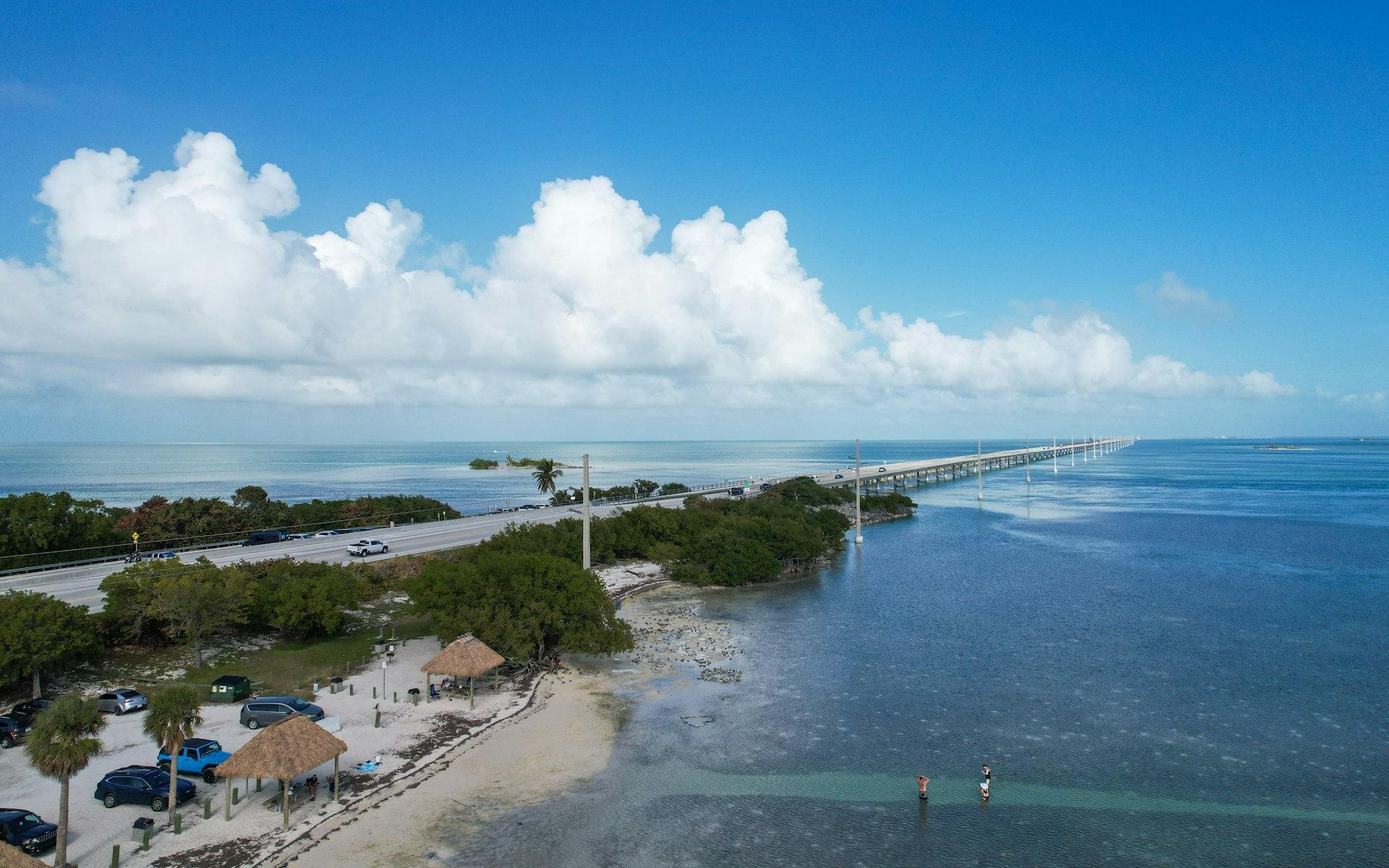
Marathon's sites are generally shallower and protected by Hawk Channel. Sombrero Reef, with its 142-ft lighthouse tower marking the mooring field, is one of the most popular snorkel and dive sites in the Middle Keys. The famous Seven Mile Bridge pilings offer some of the best night diving in the Keys. The Thunderbolt wreck (188-ft cable ship, sunk 1986) provides an intermediate wreck dive.
6 named dive sites, depths from 10–90 ft.
Lower Keys — Big Pine Key to Key West (MM 47–0)
Best for: Intermediate–advanced divers, reef biodiversity, wrecks
The Lower Keys offer everything from the exceptional coral reef at Looe Key to the massive Vandenberg wreck off Key West. Western Sambo Ecological Reserve is a no-take zone with exceptional biodiversity. Sand Key and Rock Key are excellent shallow reef dives. Key West is the departure point for the Vandenberg and for Dry Tortugas trips.
14 named dive sites, depths from 10–145 ft (Vandenberg bottom at 145 ft requires advanced/technical training).
Dry Tortugas (70 miles west of Key West)
Best for: Advanced divers, pristine reef ecosystems, full-day expeditions
Dry Tortugas National Park is a remote atoll accessible only by ferry, seaplane, or private boat. The reefs here are among the healthiest in the continental US, with exceptional coral cover, massive fish biomass, and regular pelagic encounters. Requires a full-day commitment — the ferry crossing is 2.5 hours each way — but delivers bucket-list conditions.
2 main dive areas, depths from 10–80 ft.
The Diving Infrastructure
The Keys have dozens of verified dive operators — from major fleets running 4–6 boats daily (Rainbow Reef in Key Largo, Captain's Corner in Key West) to small personalized shops running 6-pack charters. Most operators offer two-tank morning trips, single-tank afternoon trips, and night dives.
Mooring buoys are installed at every major reef and wreck site, installed and maintained by NOAA and the Florida Keys National Marine Sanctuary. No anchoring on the reef is permitted — boats tie to moorings, which protects the coral from anchor damage.
Dive shops are concentrated in Key Largo (15+ operators), Islamorada (8+), Marathon (6+), and Key West (12+). Equipment rental is standard. Nitrox is widely available. Technical diving support for deep wreck penetration exists at several shops, but most divers will find a full-service PADI 5-star center at every Key.
Practical Overview
The Florida Keys operate on Eastern Time (ET, UTC-5; EDT UTC-4). The US Dollar (USD) is the currency. English is the primary language; Spanish is widely spoken due to Caribbean and Cuban influence. Tipping dive guides 15–20% is standard practice.
Single two-tank boat dives typically run $95–160 depending on the operator, location, and whether equipment rental is included. Many shops offer multi-day packages. Pennekamp State Park charges an entry fee ($8 per vehicle), and Dry Tortugas charges a $15 entry fee included in ferry ticket prices.
Equipment: Most dive shops rent full gear. A 3 mm shorty or full suit is comfortable June–September; 5 mm full suit recommended October–May. Many divers use a 5 mm year-round for comfort on repetitive dives. Computer, SMB, and dive light are standard equipment — most shops require or strongly recommend an SMB for drift diving on ocean-side sites.
Safety note: The Florida Keys lack a locally-accessible hyperbaric chamber. The closest facilities are in Miami (1-hour drive from Key Largo) and West Palm Beach (2.5-hour drive from Key Largo). DAN dive accident insurance is strongly recommended. All dive operators carry oxygen and emergency equipment, and the Coast Guard can airlift to Miami if needed.
Bottom Line
The Florida Keys offer the most accessible world-class diving in the continental United States. The third-largest barrier reef on Earth, legendary wrecks, goliath grouper encounters, and water that stays above 71°F year-round — all within an hour's drive from a major international airport.
For US-based divers, the value proposition is unmatched: no passport, no international flights, no language barriers, no currency exchange — just a 170-mile chain of tropical islands that happens to sit on one of the most biodiverse reef systems on the planet.
For international divers looking for a North American introduction to Caribbean-style reef diving with first-world infrastructure, the Keys deliver convenience without sacrificing quality. Dive with goliath grouper at Spiegel Grove in the morning, eat key lime pie in Key West that afternoon, and sleep in a US hotel with reliable AC and WiFi. It's hard to argue with the formula.