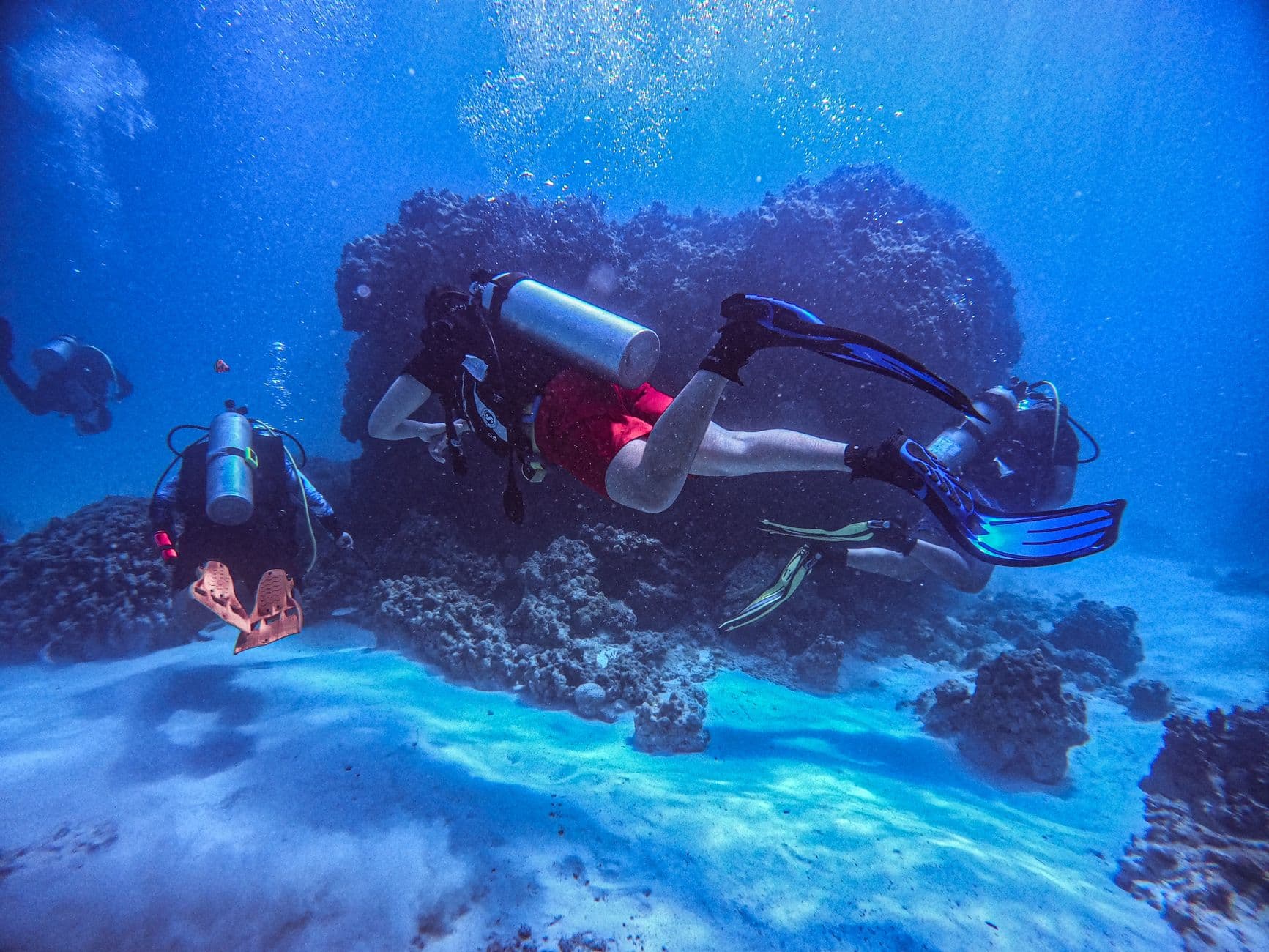
Diving Fiji: The Complete Guide to the Soft Coral Capital
Fiji is the South Pacific's diving heavyweight — 330 islands scattered across 1.29 million square kilometers of ocean, more than 1,700 species of reef fish, and coral ecosystems so dense and colorful that the country has earned the nickname "Soft Coral Capital of the World." But that moniker only tells part of the story.
This is also where you kneel on a sandy slope in Beqa Lagoon as eight bull sharks glide past your mask, where Manta Ray Passage hosts cleaning stations visited by the same mantas year after year, and where the Great White Wall — a 50-meter cascade of luminous white soft coral — has drawn divers from every continent since it was discovered.
Choose Your Region
Fiji's diving is spread across distinct regions, and picking the right one depends on what you want to see and how much travel time you have.
Pacific Harbour & Beqa Lagoon — Shark Diving Capital
A 90-minute drive from Suva puts you in Pacific Harbour, the launch point for Beqa Lagoon — the shark diving capital of the world. Beqa Adventure Divers has been running bull shark dives here for over 20 years, and the operation set the standard for responsible shark tourism. Divers kneel on a sandy bottom at 15–25 meters as bull sharks, lemon sharks, grey reef sharks, and seasonal tiger sharks swim within arm's reach. No cages. No chum in the water. Just trained feeders in mesh suits and sharks that have been visiting this site every day for two decades.
The lagoon itself also has soft coral gardens, pinnacles like Caesar's Rock, and the Cathedral — an underwater cavern where light streams through an opening in the ceiling. Seven well-known sites are documented here, with another 10–15 less-visited spots accessible to operators who know the area.
Taveuni & Rainbow Reef — The Icon
Rainbow Reef, in the Somosomo Strait between Taveuni and Vanua Levu, is why many divers come to Fiji. The Great White Wall is the headliner — a reef face covered entirely in white soft coral (Parerythropodium acanthi) that starts at 15 meters and drops beyond recreational limits. The coral is not bleached; it's a healthy species that thrives in the strong currents of the strait.
Around the corner, Annie's Bommie rises from a sandy plateau at 30 meters covered in pink, purple, yellow, and orange soft corals. Yellow Grotto is a swim-through cavern lit from above. Jerry's Jelly and the Ledge deliver drift dives over gorgonian sea fans. Ten named sites are well-documented in Rainbow Reef alone, and the entire area supports 25–35 more.
Access Taveuni via a 1-hour flight from Nadi or Suva to Matei Airport. Most divers stay at Garden Island Resort or Taveuni Dive Resort, both of which run daily 2-tank trips to Rainbow Reef.
Mamanuca & Yasawa Islands — Accessible Paradise
The Mamanucas are a 30-minute ferry from Port Denarau, making them the most accessible diving in Fiji. Supermarket Reef lives up to its name with a "shopping aisle" layout packed with biodiversity — white-tip reef sharks, turtles, octopus, and nudibranchs on every dive. Sherwood Forest delivers sea fans and soft coral trees at 10–28 meters. Gotham City is a series of bommies and coral pinnacles with swim-throughs.
The Yasawas stretch 80 kilometers farther north and reward you with sites like Manta Ray Passage — a cleaning station at the entrance to Naviti Island where manta rays arrive to be serviced by cleaner wrasse (peak aggregations June–September). The Blue Lagoon at Nanuya Lailai is shallow, clear, and perfect for beginners. The Sawa-i-Lau Caves offer a unique limestone cavern swim-through with cultural significance in Fijian legend.
Kadavu & Great Astrolabe Reef — Remote Frontier
Kadavu is one of the least-developed dive destinations in Fiji, which is exactly its appeal. The Great Astrolabe Reef is one of the largest barrier reefs in the world — roughly 200 kilometers long — and it encircles Kadavu and the Ono islands. Naiqoro Passage is the main channel through the reef wall, a drift dive where strong tidal flows bring nutrient-rich water and large pelagics. Buliya is a manta ray cleaning station on the southern reef, accessible by short boat ride from Matava or Papageno resorts.
Vunisea Airport (KAD) receives flights from Suva in about 45 minutes. Matava Resort is the premier dive operation here, a PADI 5-Star Resort that runs daily trips to the Astrolabe's best sites.
Bligh Water & Namena Reserve — The Liveaboard Circuit
Bligh Water and the Vatu-i-Ra Passage sit between Viti Levu and Vanua Levu, and they're best accessed by liveaboard. The Nai'a and Fiji Aggressor both include these waters on their itineraries. Grand Central Station in the Namena Marine Reserve is a pair of pinnacles rising from deep water, surrounded by giant gorgonian sea fans and patrolled by grey reef sharks. The reserve was voluntarily established by the Kubulau fishing communities — a no-take zone that has become one of Fiji's best dive sites.
When to Go
Fiji is a year-round dive destination, but the dry season (May–October) delivers the best conditions: water 24–27°C, visibility 20–30 meters, calm seas. This is also when mantas and humpback whales (July–September) appear. The wet season (November–April) brings warmer water at 28–31°C, lower visibility (10–20 meters), and higher cyclone risk December–April. Whale sharks are more common November–March. Many divers prefer May–October for peak conditions, but the wet season offers fewer crowds and lower prices.
Getting There
Nadi International Airport (NAN) is Fiji's main gateway, with direct flights from Los Angeles, San Francisco, Vancouver, Sydney, Melbourne, Brisbane, Auckland, and Tokyo. From Nadi, domestic flights via Fiji Link connect to Savusavu, Taveuni, Kadavu, Suva, and Labasa. The South Sea Cruises ferry network covers Mamanuca and Yasawa resorts from Port Denarau. Visa-free entry applies to most nationalities for stays up to 4 months. Carry USD or Fijian dollars — ATMs are available on Viti Levu and Vanua Levu but scarce in outer islands.
Who Should Dive Fiji
Fiji suits a wide range of experience levels. The Mamanucas, Yasawas, and Taveuni's shallower sites are accessible to Open Water divers. Beqa Lagoon shark dives require Advanced certification, as do most Namena and Bligh Water sites. The Great White Wall and other deep Rainbow Reef sites benefit from deep-dive experience and good buoyancy. Drift diving is common across several regions — bring an SMB and reel, and be comfortable being carried by current.
If you want soft coral on a scale you cannot find anywhere else, you want Fiji. If you want to share the water with bull sharks, tiger sharks, and manta rays without a cage between you, you want Fiji. And if you want a dive trip that starts with "Bula!" and ends with a kava ceremony on a beach, you definitely want Fiji.