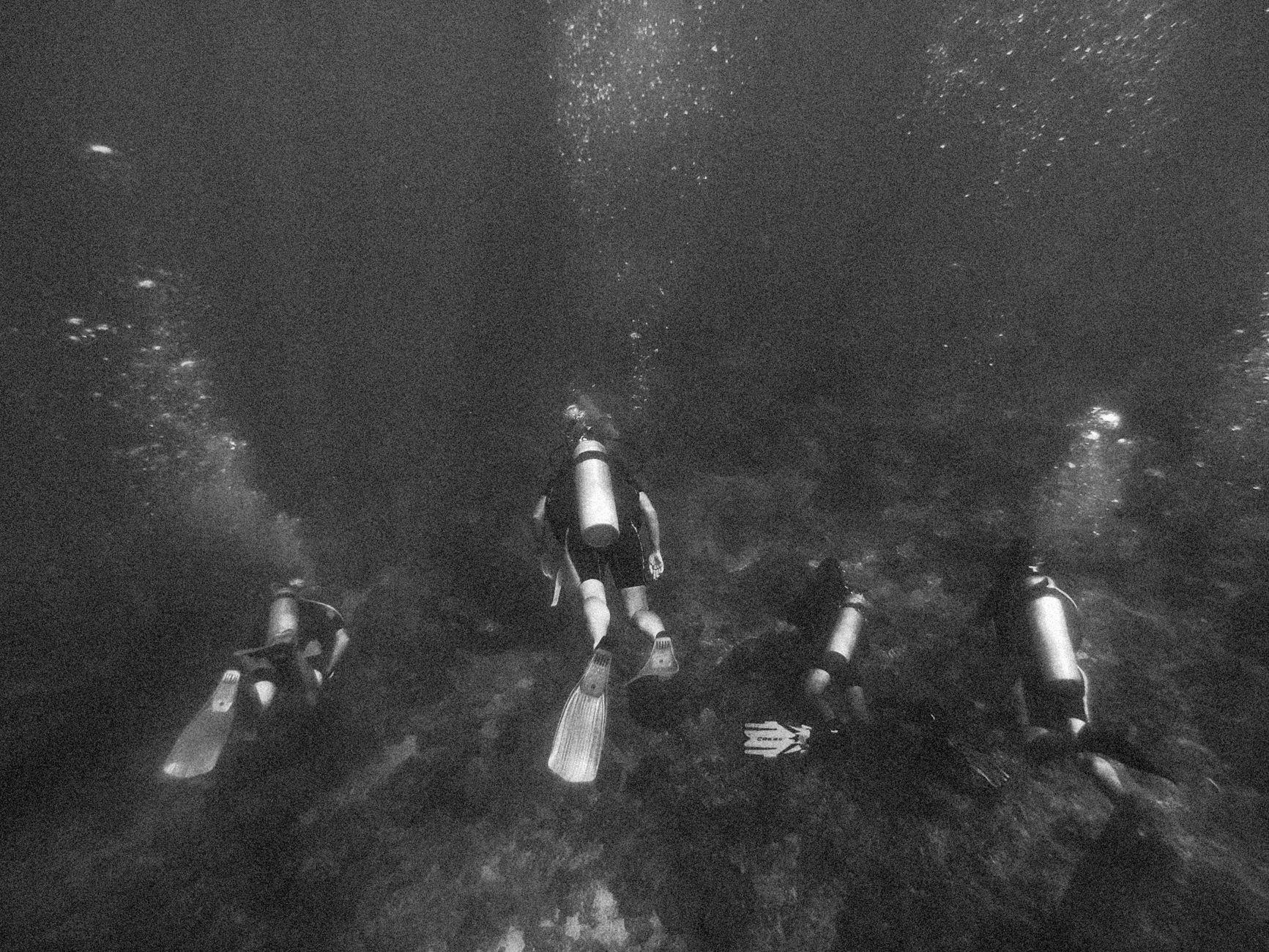
Coron Diving: The Complete Guide to the Philippines' Wreck Diving Capital
Coron is where World War II history meets world-class diving.
Tucked in the Calamian Islands of northern Palawan, this small town on Busuanga Island sits at the edge of Coron Bay — a protected natural anchorage that became the final resting place for ten Japanese warships and supply vessels after a devastating US Navy air raid on September 24, 1944. Today, those wrecks form one of the most accessible and well-preserved WWII wreck-diving destinations on the planet, complemented by lush fringing reefs, dramatic karst lagoons, and coral gardens that rival anything in the Philippines.
What makes Coron truly exceptional is the range: you can begin your day swimming through the open cargo holds of a 168-meter oil tanker at 20 meters, spend your surface interval floating in an emerald karst lagoon, and end the afternoon photographing nudibranchs on a shallow house reef — all within a 15-minute boat ride from town.
The Wrecks: History Underwater
The Sinking of the Japanese Fleet
On September 24, 1944, Task Force 38 of the US Third Fleet launched a carrier-based air raid against Japanese shipping anchored in Coron Bay. The attack caught a dozen vessels at anchor, sinking ten in a single day. Most were cargo ships, oil tankers, and auxiliary vessels that had sought shelter in the bay's protected waters.
The wrecks have sat undisturbed for over 80 years, slowly transforming into artificial reefs. Coral encrustation covers deck fittings and superstructures. Schools of batfish, jacks, barracuda, and trevally patrol the hulls. Frogfish, ghost pipefish, and ornate leaf fish hide among the encrusted railings. The wrecks are protected by Philippine law — removing artifacts is strictly prohibited.
The Big Ten: Coron's Wreck Sites
Okikawa Maru (168m Oil Tanker) — The largest and most popular Coron wreck. Resting upright in 10-26 meters, with cargo holds open for easy penetration. Its engine room is accessible via a skylight, and the propeller and rudder at the stern make for a dramatic turnaround point. Superstructure covered in soft corals with excellent macro life — frogfish, seahorses, nudibranchs, cuttlefish.
Akitsushima (118m Seaplane Tender) — The iconic Coron wreck. A 40-meter crane tower rising from the starboard bow is one of the most photographed underwater structures in Asia. Two large seaplane cranes in the well deck, hangar decks, triple-expansion engines, and anti-aircraft guns. Depth 28-38 meters — requires Advanced certification.
Irako (148m Refrigeration Ship) — The deepest of Coron's recreational wrecks at 38-44 meters. Intact refrigeration machinery, conveyor systems in cargo holds, dual diesel engines, and a stern gun platform. Least disturbed wreck due to depth — large groupers, bumphead parrotfish, and black corals. Requires nitrox or careful dive planning.
Kogyo Maru (130m Cargo Ship) — One of the most intact wrecks, with a well-preserved engine room, steering gear, and cargo holds still containing a bulldozer and mining equipment. Bridge area with telegraph and wheel. Depth 22-34 meters.
Olympia Maru (82m Cargo Ship) — Unique wreck resting on its starboard side, creating a 90-degree wall effect. Deck runs vertical — swimming along it feels like flying alongside a skyscraper. Depth 24-34 meters.
Taiei Maru (81m Cargo Ship) — Resting upright with intact bridge structure. Cargo holds contain oil drums. Good penetration dives. Depth 20-34 meters.
Kyokuzan Maru (120m Cargo Ship) — Deeper wreck (22-38 meters) known for stronger currents. Heavy coral encrustation. Large marine life — jacks, rays, occasional sharks.
Terukaze Maru (Destroyer, 5-20m) — Shallowest deep wreck, excellent for wreck dive training. Intact hull with deck guns and accessible engine room. Good light penetration and coral growth.
Lusong Gunboat (25m Patrol Boat, 10-12m) — Breaks the surface at low tide. The most accessible wreck in Coron — suitable for beginners, snorkelers, and freedivers. Covered in soft corals.
East Tangat Gunboat (12-18m) — Less visited than the main bay wrecks. Intact hull with deck gun on sand bottom surrounded by coral bommies.
Reef Diving: Beyond the Wrecks
While Coron's wrecks steal the headlines, the reef diving around Busuanga and Coron Islands is equally impressive in its own right.
Siete Pecados Marine Park
Seven limestone islets rising from the sea, protecting a dense marine sanctuary beneath. This is one of the highest-density reef fish populations in Palawan. Hard and soft corals blanket the reef slopes, sea fans sway in the gentle current, and turtles are frequent visitors. The shallow depth (1-18 meters) and protected location make it ideal for all levels including snorkelers. Environment fee: PHP 100-200.
Calumbuyan Wall
A steep wall dropping to 30+ meters off Calumbuyan Island on Busuanga's east coast. Rich coral growth with gorgonians, sea fans, and whips. Good for reef fish, turtles, and occasional rays. Known for reliable visibility even in the wet season — one of the more weather-resistant reef sites.
Black Island (Malaroyroy Island)
Named for its black volcanic rock, this dramatic wall dive on Busuanga's open-ocean (South China Sea) side delivers stronger currents and larger pelagics — reef sharks, turtles, and sometimes thresher sharks. Less frequently visited than Coron Bay sites, so the coral remains pristine.
Sangat Island Coral Garden
A healthy fringing reef surrounding Sangat Island. Good for macro life — nudibranchs, frogfish, leaf fish. Turtles and reef sharks occasionally sighted. Home to the Sangat Island Reserve dive resort.
Banol Beach House Reef
Easy shore entry from Banol Beach on Busuanga's east coast. Sandy slope with scattered coral bommies. Excellent macro life — seahorses, ghost pipefish, nudibranchs, frogfish. Also a fantastic night dive site. Protected from weather, making it ideal for rainy-season diving when boat trips are limited.
Marine Megafauna
Coron's waters support an impressive range of marine life. The wrecks act as artificial reefs, creating habitat complexity that attracts everything from tiny nudibranchs to whale sharks.
Whitetip reef sharks (Triaenodon obesus) are the most common shark, often seen resting on sandy floors inside the inner chambers of the Akitsushima and Kogyo Maru. Blacktip reef sharks (Carcharhinus melanopterus) patrol the shallow seagrass beds around Busuanga. Nurse sharks (Nebrius ferrugineus) rest under wreck overhangs in small groups.
Whale sharks (Rhincodon typus) visit the channels between Busuanga and Culion from November to April, drawn by plankton blooms from the surrounding mangrove ecosystems. Sightings are rare but documented annually.
Spotted eagle rays (Aetobatus narinari) glide gracefully over the wreck sites, often in pairs or small groups. Blue-spotted ribbontail rays (Taeniura lymma) rest on sandy patches between coral heads.
Green turtles and hawksbill turtles are year-round residents at reef sites, particularly Siete Pecados and the seagrass meadows. Dugongs (Dugong dugon) still graze in the seagrass beds around Busuanga — one of the last remaining populations in the Philippines.
When to Dive Coron
| Season | Months | Water Temp | Visibility | Marine Life Highlights |
|---|---|---|---|---|
| Peak | Nov-May | 26-30°C | 15-30m | Best overall conditions, whale sharks (Nov-Apr) |
| Shoulder | Jun-Jul | 28-30°C | 10-20m | Fewer crowds, still acceptable |
| Low | Aug-Oct | 27-29°C | 5-15m | Typhoon risk, reduced vis, budget prices |
The dry season (November to May) delivers the best visibility and calmest seas. February to April is the sweet spot — 20-30 meter visibility, warm water, and reliable weather. The wrecks in Coron Bay are sheltered enough to remain diveable year-round, but reef sites on exposed Busuanga coasts are more season-dependent.
Getting to Coron
By air (primary): Fly to Francisco B. Reyes Airport (USU) on Busuanga Island — 55-70 minutes from Manila via Philippines AirAsia, Cebu Pacific, or SkyJet. Flights also available from Cebu (~75 minutes). From the airport, it's a 30-45 minute tricycle or van ride to Coron town.
By sea: 2GO Travel operates weekly ferries from Manila (10-12 hours). Limited fastcraft service from Puerto Princesa (7-10 hours).
Practical Information
- Currency: Philippine Peso (PHP). Cash is widely preferred; ATMs in Coron town charge PHP 250-500 fees.
- Dive costs: PHP 1,500-3,000 per wreck dive; PHP 1,200-2,000 per reef dive.
- Environmental fee: PHP 200 — required for all visitors doing water activities.
- Visa: Most nationalities receive 30 days visa-free on arrival.
- Safety: No hyperbaric chamber in Coron. Nearest chambers in Puerto Princesa (1 hour flight) or Manila (1.5 hours). DAN Philippines membership strongly recommended.
- Wreck diving certification: Most wreck sites require Advanced Open Water or Wreck Diver specialty. Penetration dives require additional training.
Final Thoughts
Coron offers something that few dive destinations can match: genuine historical significance combined with world-class diving across every skill level. A beginner can swim over the Lusong Gunboat at 10 meters while an advanced diver explores the engine room of the Irako at 44 meters — on the same day. Add the karst landscapes, friendly dive community, and affordable prices, and it's easy to see why Coron is one of Southeast Asia's most beloved dive destinations.