Cape Town Diving: The Complete Guide to South Africa's Cold-Water Capital
At the southwestern tip of Africa, where two oceans collide, lies a diving destination that defies the usual tropical script. Cape Town is not a warm-water paradise with pastel corals and lazy reef fish. It is a cold-water playground of kelp forests taller than cathedral naves, shipwrecks preserved in bracing Atlantic chill, and the kind of marine megafauna that makes experienced divers book return flights every single year.
Cape Town sits at 33.93°S, on a peninsula that juts into the meeting point of the Benguela Current from the Atlantic and the Agulhas Current from the Indian Ocean. This two-ocean system creates something unique in the diving world: two entirely different ecosystems within a 40-kilometer radius. On the Atlantic side, water temperatures range from 8 to 16°C. On the False Bay side — sheltered by the peninsula and warmed by the Agulhas — temperatures run from 12 to 22°C. That 14-degree swing across a single coastline is why Cape Town demands respect, and why it rewards divers who come prepared.
What Makes Cape Town Unique
The Great African Seaforest
The Great African Seaforest is the crown jewel of Cape Town diving, and it is the only kelp forest on the African continent. Ecklonia maxima — known as sea bamboo — grows up to 12 meters tall, forming dense underwater canopies that create an entirely different world from the coral reefs found elsewhere. These kelp forests are biodiversity powerhouses: kelp crabs, Cape spiny lobsters, cuttlefish, octopus, and hundreds of species of small reef fish all depend on the forest for shelter and food. Diving through a kelp forest at A-Frame or Windmill Beach feels like navigating an underwater cathedral, with light filtering through towering green columns and marine life darting between the fronds.
Two Oceans, Two Diving Worlds
The Cape Peninsula creates a natural divider. Dive on the Atlantic side — sites like Karbonkelberg near Hout Bay — and you are in cold, nutrient-rich Benguela water with strong currents and dramatic visibility swings from 2 to 20 meters. Dive on the False Bay side — Pyramid Rock, Castle Rock, Partridge Point — and you get gentler conditions, warmer water, and the famous Marine Big Five.
The Marine Big Five
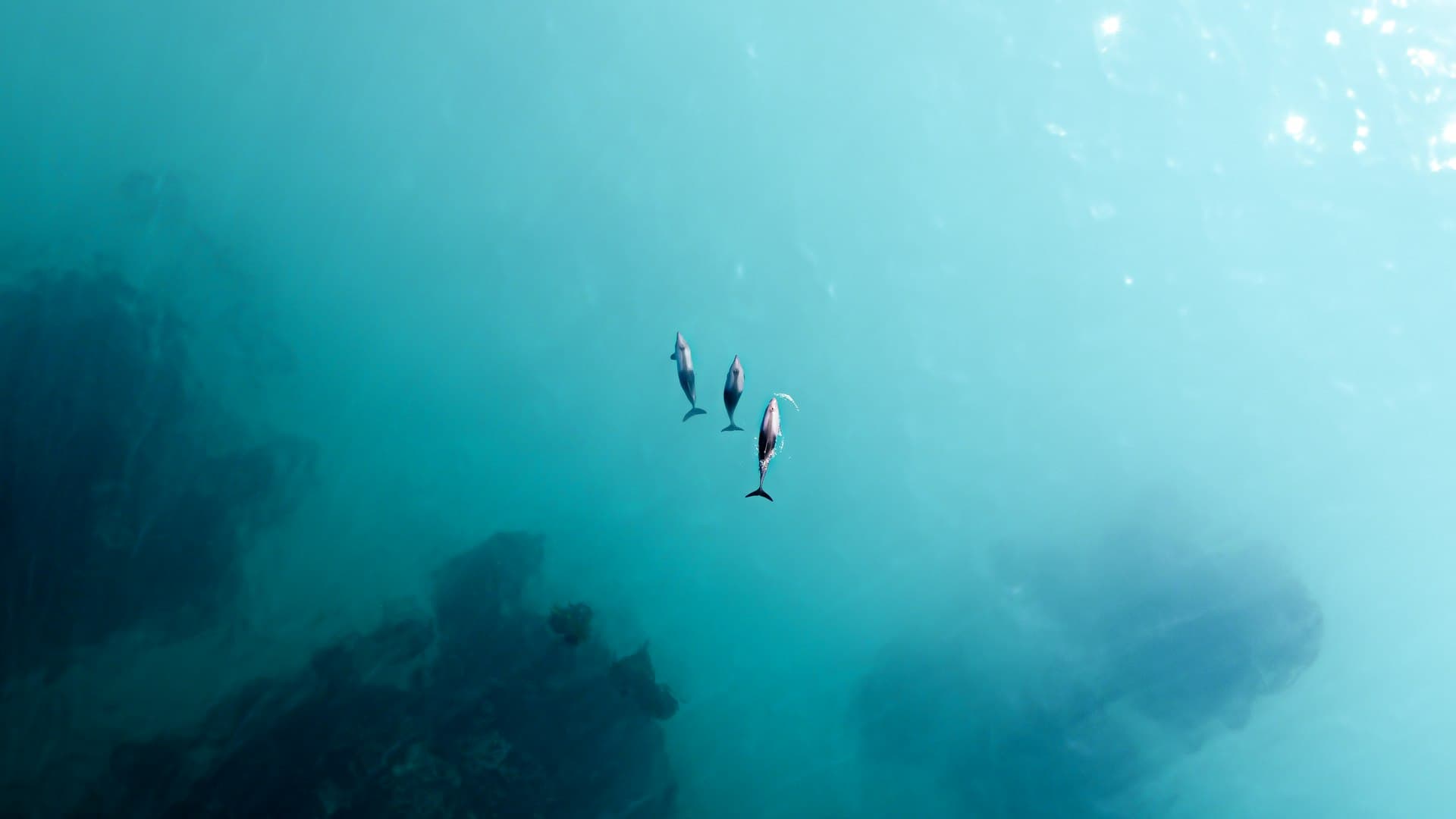
Cape Town is one of the few places on Earth where you can encounter seals, whales, dolphins, sharks, and big fish on a single week of diving. Cape fur seals play around Partridge Point. Southern right whales and humpback whales migrate past the peninsula each winter (June to November). Common dolphins, bottlenose dolphins, and even the rare Bryde's whale share these waters. Sevengill cow sharks lurk at Pyramid Rock. And the great white shark — Cape Town's most famous resident — patrols the Atlantic coastline year-round, though most encounters happen on cage-diving trips rather than recreational dives.
Wreck Diving That Spans Three Centuries
Cape Town's waters hold more than 300 documented shipwrecks, making it one of the richest wreck-diving destinations in the Southern Hemisphere. The Smitswinkel Bay wrecks — known locally as "Smits Swim" — pack five scuttled vessels into a single dive site at depths of 20 to 35 meters. The SAS Pietermaritzburg, a D-Day veteran frigate scuttled in 1994, sits upright at 35 meters and is one of South Africa's most visited artificial reefs. The Maori, a 1909 steamship, is the best-preserved wreck in the area with engines and boilers still visible. The Clan Stuart, a World War I wreck resting at just 4 to 8 meters, exposes its engine block at low tide — a rare shallow wreck accessible to intermediate divers.
Who Cape Town Is For
Cape Town is not a beginner's first destination, but it is absolutely within reach of motivated divers who prepare properly.
- Cold-water divers who enjoy the challenge of 8 to 22°C water and the unique ecosystem of kelp forests.
- Marine Big Five enthusiasts who want to see seals, whales, dolphins, sharks, and big fish in a single trip.
- Wreck divers who appreciate accessible wrecks with historical significance, from WWI vessels to modern military frigates.
- Macro photographers who find endless subjects among Cape Dorid nudibranchs, Gas Flame nudibranchs, cold-water corals, and the tiny creatures that live within kelp forests.
- Experienced divers looking for something different from the usual tropical destinations — a place where the cold is part of the adventure and the wildlife is uncompromised.
Practical Overview
Getting there: Cape Town International Airport (CPT) is well-connected with direct flights from Europe (London, Amsterdam, Frankfurt), the Middle East (Dubai, Doha, Istanbul), and major African cities. Most divers fly via Johannesburg for connections from elsewhere.
Currency and cost: South Africa uses the Rand (ZAR). Diving in Cape Town is very affordable by international standards. Boat dives typically cost $33 to $44 USD per dive. The MPA permit costs approximately $4 USD per day. Accommodation, meals, and transport are similarly budget-friendly compared to European or North American dive destinations.
Language and visas: English is widely spoken. Most nationals enjoy 90 days visa-free entry.
Dive operations: There are 12 verified dive shops operating around Cape Town, concentrated in Simon's Town, Hout Bay, and Muizenberg. Boat-based operators run daily trips to False Bay and Atlantic sites. Shore dives are popular at Pyramid Rock, Windmill Beach, and Long Beach in Simon's Town.
Best season: False Bay is best from May to August for calm conditions and from February to May for optimal visibility (10 to 20 meters). The Atlantic coast is best from November to March when the Agulhas Current brings warmer water and better visibility (15 to 20 meters).
Water temperature and gear: Water temperatures range from 8 to 22°C depending on coast and season. On the Atlantic side, winter drops to 8 to 14°C. In False Bay, summer can reach 22°C but winter falls to 12 to 16°C. A 5 mm wetsuit is the minimum for summer False Bay dives. A 7 mm wetsuit or drysuit is essential for winter and all Atlantic dives. Hood, gloves, and boots are essential year-round.
Visibility: False Bay offers 5 to 15 meters in summer (up to 20 meters on excellent days), 5 to 10 meters in winter, and 8 to 20 meters in autumn and spring. The Atlantic side delivers 15 to 20 meters in summer but drops to 2 to 8 meters in winter. The best overall visibility runs from February to May.
Safety and emergency: The Tokai Medicross hyperbaric chamber is the nearest recompression facility (single monoplace, accessible via DAN). DAN South Africa emergency line: +27 82 810 60 10. Marine Rescue Centre: +27 21 938 3300. NSRI: +27 87 094 9774.
Cape Town delivers a diving experience that is as raw and dramatic as the landscape above the water — a place where kelp forests tower overhead, wrecks rest on sandy bottoms, and the meeting of two oceans creates some of the most extraordinary marine life on the African continent.