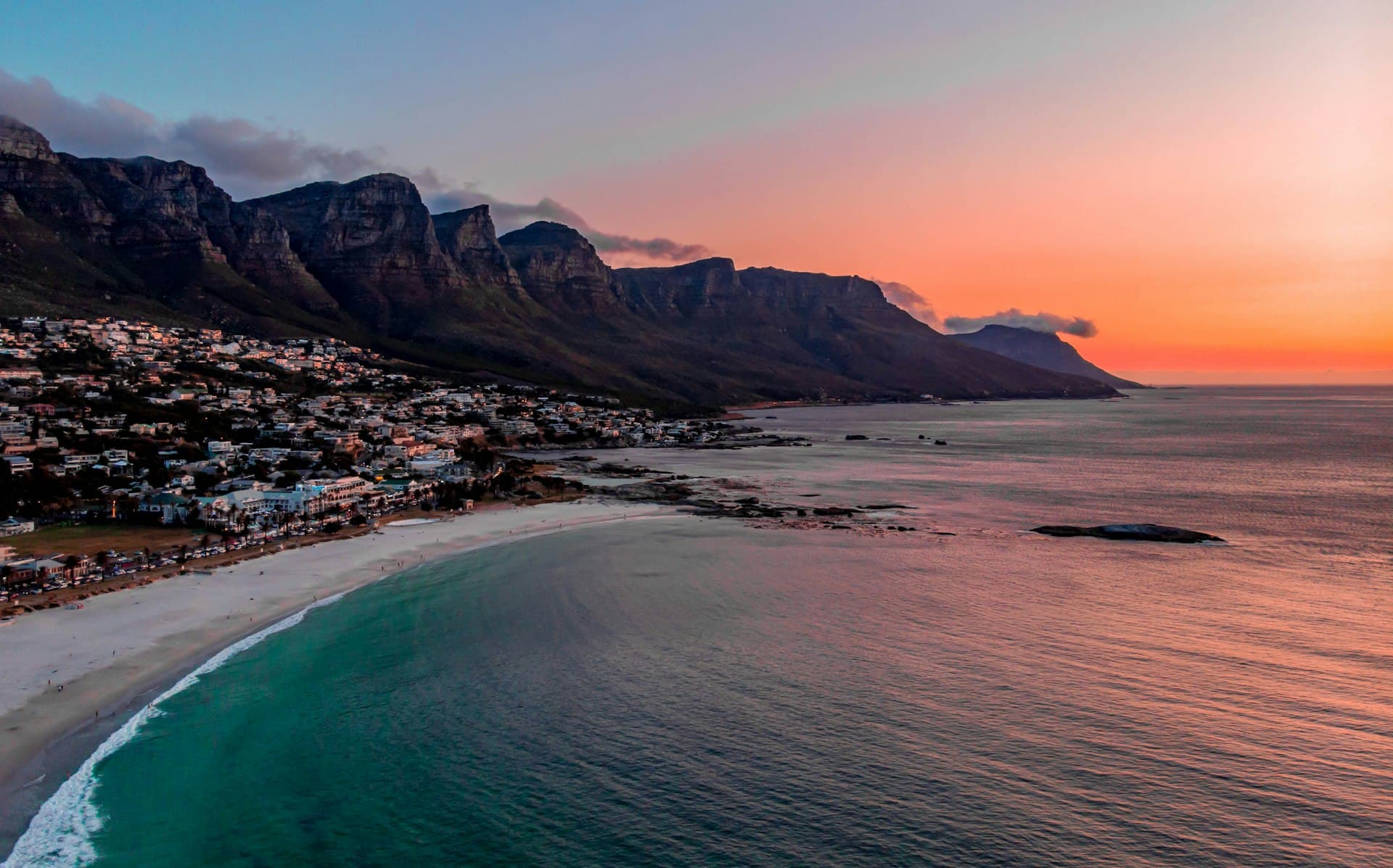
Cape Town Dive Conditions: Two Oceans, One Incredible Destination
Cape Town's diving conditions are defined by one geological fact: the Cape Peninsula sits at the exact meeting point of two ocean currents. The cold, nutrient-rich Benguela Current flows northward along the west coast of southern Africa, originating in the deep waters of the Antarctic Circumpolar Current. The warm, fast-moving Agulhas Current flows southward along the east coast, carrying tropical waters from the Mozambique Channel. They collide at Cape Point, creating a diving environment where two completely different ecosystems exist within a 40-kilometer radius.
This two-ocean system means Cape Town's conditions vary dramatically by coast, by season, and even by day. Understanding this system is the key to planning a successful dive trip. This guide breaks down everything you need to know — water temperature, visibility, currents, seasonal patterns, weather systems, and when to dive which coast.
The Two-Ocean System Explained
The Atlantic Coast (Benguela Current)
Dives on the Atlantic side — Karbonkelberg, the Hout Bay sites, and the deeper offshore wrecks — are in Benguela water. This is cold, nutrient-dense water that supports the Great African Seaforest and creates some of the most dramatic kelp-forest diving in the world. Water temperatures range from 8 to 16°C year-round. In winter (June to August), the Benguela Current dominates completely, and temperatures can drop to 8°C in shallow sites. In summer (November to February), the Agulhas Current pushes slightly further west, bringing the Atlantic side up to 14 to 16°C — still cold by most standards, but a significant improvement.
Visibility on the Atlantic coast follows the same pattern. Summer delivers 15 to 20 meters of visibility on good days. Winter visibility drops to 2 to 8 meters, driven by increased storm activity, upwelling, and sediment resuspension. The best Atlantic visibility runs from February to May, when the Agulhas influence is still present but the winter storms have not yet arrived.
Currents on the Atlantic side are moderate to strong. The Benguela Current runs at 0.5 to 1.5 knots along the coast, and local topography — headlands, bays, and the deep Hout Bay channel — can create rip currents and eddies that require careful planning. Karbonkelberg, an exposed pinnacle on the Atlantic side, is known for heavy kelp growth and strong currents, making it an advanced-level site.
The False Bay Coast (Agulhas Influence)
Dives in False Bay — Pyramid Rock, Castle Rock, A-Frame, Partridge Point, Smitswinkel Bay — are in water influenced by the Agulhas Current. False Bay is a large, semi-enclosed body of water measuring roughly 30 kilometers across, sheltered from the open Atlantic by the Cape Peninsula. This sheltering effect is significant: it blocks the strong Atlantic currents and the notorious south-easterly winds, creating a calmer diving environment.
Water temperatures in False Bay range from 12 to 22°C. In summer, the bay warms to 18 to 22°C — comfortable for a 5 mm wetsuit. In winter, the temperature drops to 12 to 16°C, requiring a 7 mm wetsuit or drysuit. The temperature swing is smaller than on the Atlantic side (10°C versus 8°C), but the difference between summer and winter is still significant enough to affect comfort and exposure requirements.
Visibility in False Bay is generally better and more consistent than on the Atlantic side. Summer visibility runs from 5 to 15 meters, with occasional excellent days reaching 20 meters. Winter visibility drops to 5 to 10 meters. The best visibility — 8 to 20 meters — runs from February to May, during the autumn and spring shoulder seasons when the water is still warm from summer and the winter storms have not yet arrived.
Currents in False Bay are mild to moderate. The Agulhas Current runs along the coast at 1 to 2 knots, but its effect in the bay is dampened by the geography. Most dives in False Bay can be done as drift dives on incoming or outgoing tides, or as deep/low dives from boats. Shore dives at Pyramid Rock and Windmill Beach are straightforward entries with minimal current.
Season-by-Season Breakdown
Summer (November to February) — Warmest Water, Best Atlantic Visibility
Summer is the warmest season in Cape Town, with air temperatures reaching 25 to 30°C. This is when the Agulhas Current pushes furthest west, warming both coasts.
False Bay in summer: Water temperature reaches 18 to 22°C. This is the most comfortable season for a 5 mm wetsuit, though some divers in excellent shape skip the wetsuit entirely on shallow dives. Visibility is 5 to 15 meters, with the best days hitting 20 meters. The Marine Big Five is at its peak: Cape fur seals are active at Partridge Point, dolphins are frequently seen, and great white shark activity increases along the Atlantic coast. Whale season has not yet begun — southern right whales arrive in June.
Atlantic in summer: Water temperature reaches 14 to 16°C. Still requires a 7 mm wetsuit or drysuit for most divers. Visibility improves dramatically to 15 to 20 meters on good days. This is the best window for Atlantic dives like Karbonkelberg and the deeper Smitswinkel Bay wrecks. The kelp forest is at its most lush and vibrant. Currents are moderate (0.5 to 1.5 knots).
Best sites in summer: All sites are accessible. False Bay for comfort and Marine Big Five. Atlantic for visibility and kelp forest diving.
Autumn (March to May) — Best Overall Conditions
Autumn is widely regarded as the best time to dive in Cape Town. The water is still warm from summer, the winter storms have not yet arrived, and the Agulhas influence keeps visibility high across both coasts.
False Bay in autumn: Water temperature is 14 to 18°C. Visibility peaks at 10 to 20 meters — the best of the year. Currents are mild. This is the prime season for all False Bay sites: Pyramid Rock, Castle Rock, A-Frame, Partridge Point, and the Smitswinkel Bay wrecks. The Marine Big Five remains active, and whale migrations begin in late May.
Atlantic in autumn: Water temperature is 12 to 16°C. Visibility remains excellent at 15 to 20 meters. This is the ideal time for Atlantic dives before the winter storms reduce visibility. Karbonkelberg is at its most productive, with kelp forests in full growth and strong currents concentrating pelagic species.
Best sites in autumn: All sites. This is the shoulder season where you get the best of both coasts.
Winter (June to August) — Coldest Water, Best Whales
Winter is the most challenging season in Cape Town. The Benguela Current dominates, bringing cold water and stormy weather. But it is also whale season, and the Atlantic coast can deliver spectacular kelp-forest diving for well-equipped divers.
False Bay in winter: Water temperature drops to 12 to 16°C. A 7 mm wetsuit or drysuit is essential. Visibility drops to 5 to 10 meters, driven by increased storm activity and wave action. However, False Bay's sheltered geography means conditions are still manageable — it is far less stormy than the Atlantic side. The Marine Big Five is at its most dramatic: southern right whales and humpback whales are breeding in False Bay, and you can see them from the dive boat surface intervals. Common dolphins are active, and Cape fur seals are at their largest and most playful.
Atlantic in winter: Water temperature drops to 8 to 14°C. A drysuit or 7 mm wetsuit with hood, gloves, and boots is essential. Visibility drops to 2 to 8 meters, making this the most challenging season for Atlantic diving. However, the kelp forests are at their most impressive, and the nutrient-rich water concentrates marine life. Karbonkelberg on the Atlantic side is exposed to heavy swell and strong currents, making it an advanced site even for experienced divers.
Best sites in winter: False Bay sites only. Pyramid Rock, Castle Rock, A-Frame, and Long Beach are the most accessible. Atlantic dives should be avoided unless conditions are calm and you are equipped with a drysuit.
Spring (September to November) — Warming Up
Spring is a transition season. The Agulhas Current begins to push west again, warming the water and improving visibility. The winter storms subside, and the Marine Big Five remains active through early spring.
False Bay in spring: Water temperature rises from 12 to 18°C. Visibility improves from 5 to 15 meters. This is when the kelp forests begin their rapid spring growth, and the reef fish populations rebound after the winter. Whale season continues through September and October — southern right whales are still present in False Bay.
Atlantic in spring: Water temperature rises from 8 to 14°C. Visibility improves from 2 to 15 meters. The Atlantic coast becomes more accessible as the Agulhas influence increases. Karbonkelberg becomes a viable dive site again by November.
Best sites in spring: False Bay sites are excellent. Atlantic sites become viable from October onward.
Visibility Patterns
Cape Town's visibility is strongly seasonal and coast-dependent:
| Coast | Summer (Nov-Feb) | Autumn (Mar-May) | Winter (Jun-Aug) | Spring (Sep-Nov) |
|---|---|---|---|---|
| False Bay | 5–15m (up to 20m) | 10–20m (best) | 5–10m | 5–15m |
| Atlantic | 15–20m (best) | 15–20m (best) | 2–8m | 2–15m |
The best overall visibility across both coasts runs from February to May. If you can only dive in one season, plan for April or May.
Current Patterns
Currents in Cape Town are driven by three factors: the major ocean currents, the tidal cycle, and local topography.
Ocean currents: The Benguela Current runs northward at 0.5 to 1.5 knots along the Atlantic coast. The Agulhas Current runs southward at 1 to 2 knots along the coast, with its strongest flow just south of Cape Point. Current strength varies with the season — the Agulhas is strongest in summer when it pushes furthest west.
Tidal currents: False Bay experiences tidal flows of 1 to 2 knots on spring tides. Most dive operators schedule dives around the incoming or outgoing tide, depending on the site. Smitswinkel Bay and Pyramid Rock are typically run on incoming tides. Partridge Point works well on outgoing tides.
Local currents: Headlands and bays create local current effects. At Karbonkelberg, the Atlantic swell and current funnelling through the Hout Bay channel create strong, unpredictable flows. At Pyramid Rock, the current is mild near the shore but increases with distance from the beach. At Partridge Point, the seal colony attracts currents that concentrate baitfish and the predators that feed on them.
Water Temperature and Gear Recommendations
Cape Town's water temperature range — 8 to 22°C across 14 degrees — means gear selection is critical. Underdressing in Cape Town is one of the most common mistakes divers make.
Summer (November to February)
False Bay: 18 to 22°C — 5 mm wetsuit is sufficient. Some divers in excellent physical condition may be comfortable in a 3 mm shorty on shallow dives, but a full 5 mm is recommended for repeated dives. Hood optional. Gloves and boots recommended.
Atlantic: 14 to 16°C — 7 mm wetsuit is the minimum. A drysuit is recommended for divers who run cold or plan multiple dives. Hood, gloves, and boots are essential.
Winter (June to August)
False Bay: 12 to 16°C — 7 mm wetsuit with hood is essential. Drysuit recommended for extended dives or multiple dives. Gloves and boots essential.
Atlantic: 8 to 14°C — Drysuit is strongly recommended. If using a wetsuit, it must be 7 mm minimum with hood, gloves, and boots. Many operators require drysuit certification for Atlantic winter dives.
Year-Round Essentials
- Hood: 5 mm minimum, essential year-round. Heat loss through the head is significant in cold water.
- Gloves: 5 mm minimum, essential year-round. Kelp forests have sharp edges, and gloves protect against cuts and abrasions.
- Boots: 5 mm neoprene, essential year-round. Shore entries on rocky beaches and kelp-covered rocks require sturdy boots.
- Backup heat: A thermal hood or neoprene cap under your hood provides extra warmth on cold days.
- Drysuit: Recommended for Atlantic dives year-round and False Bay dives in winter. If you do not own a drysuit, most operators rent them.
Weather Systems
Cape Town's weather is dominated by two wind systems that directly affect diving conditions.
The South-Easterly (The Cape Doctor)
The south-easterly wind is Cape Town's most famous weather feature. It blows from the southeast, across False Bay, and up the Atlantic coast. In summer, the south-easterly is strong and persistent — it creates the "Cape Doctor" that clears the city's pollution. For divers, the south-easterly means rough seas in False Bay and poor visibility.
Impact on diving: When the south-easterly is strong (above 30 km/h), False Bay boat dives are cancelled or limited to sheltered sites. The Atlantic side is less affected — the Cape Peninsula shields it from the direct force of the wind. Divers caught in a strong south-easterly should plan Atlantic-side dives or shore dives at protected sites like Windmill Beach.
The North-Westerly
The north-westerly wind blows from the northwest, bringing warm air from the interior of South Africa. It is less frequent than the south-easterly but can produce significant weather when it arrives.
Impact on diving: The north-westerly creates rough seas on the Atlantic coast while calming False Bay. When a north-westerly is forecast, plan False Bay dives. This wind is most common in autumn and spring.
Forecasting Tips
- Check the South African Weather Service (saweather.org) for wind and sea state forecasts.
- The "Cape Doctor" (south-easterly) is most common in summer — expect rough False Bay conditions most days.
- Autumn (March to May) offers the most stable weather across both coasts.
- Winter brings frequent cold fronts that can close all diving for 2 to 3 days at a time.
Whale Season
Cape Town's waters are a critical migration corridor for southern right whales and humpback whales. Whale watching from the dive boat surface interval is one of the most memorable aspects of diving in Cape Town.
Southern Right Whales: Arrive in False Bay in June, peak in September and October, and depart by November. They come to breed and give birth in the sheltered waters of False Bay. Calves are born in June and July and are often seen playing near their mothers.
Humpback Whales: Arrive in June, peak in August to October, and depart by November. They migrate along the coast and sometimes enter False Bay.
Bryde's Whales: These resident whales are present year-round but are most commonly sighted from September to March. They are smaller than right and humpback whales and are more likely to be seen diving.
Common Dolphins: Active year-round, with the largest groups seen in False Bay from May to August. They are frequently encountered at Partridge Point and around the Simon's Town area.
Cape Fur Seals: Present year-round, with the largest colonies at Partridge Point and Dyer Island (visible from boat dives). Seal interactions are a highlight of False Bay diving — seals are playful and curious, often approaching divers to investigate.
When to Dive Which Coast
Here is a practical guide to choosing between False Bay and the Atlantic coast by season:
| Season | False Bay | Atlantic | Recommendation |
|---|---|---|---|
| Summer | Excellent (warm water, good visibility) | Good (best visibility, moderate currents) | Dive both coasts |
| Autumn | Excellent (best visibility, calm conditions) | Excellent (best Atlantic visibility, moderate currents) | Best season overall |
| Winter | Good (cold water, moderate visibility, sheltered) | Poor (very cold, low visibility, exposed) | False Bay only |
| Spring | Excellent (warming water, improving visibility) | Improving (from poor to moderate) | False Bay primary, Atlantic from October |
Summary
Cape Town's diving conditions are as dramatic as the landscape above the water. The two-ocean system creates two distinct diving environments within a 40-kilometer radius: the cold, nutrient-rich Atlantic with its towering kelp forests and wreck diving, and the warmer, more sheltered False Bay with its Marine Big Five and accessible reef diving.
The best time to dive Cape Town is autumn (March to May), when both coasts offer excellent conditions. If you can only visit once, plan for April. Winter is challenging but rewarding for drysuit-equipped divers who want to experience the raw power of the Atlantic and the whale migrations. Summer offers the warmest water and the most active Marine Big Five.
Cape Town demands respect for its cold water and variable conditions — but it rewards prepared divers with some of the most extraordinary marine life on the African continent.