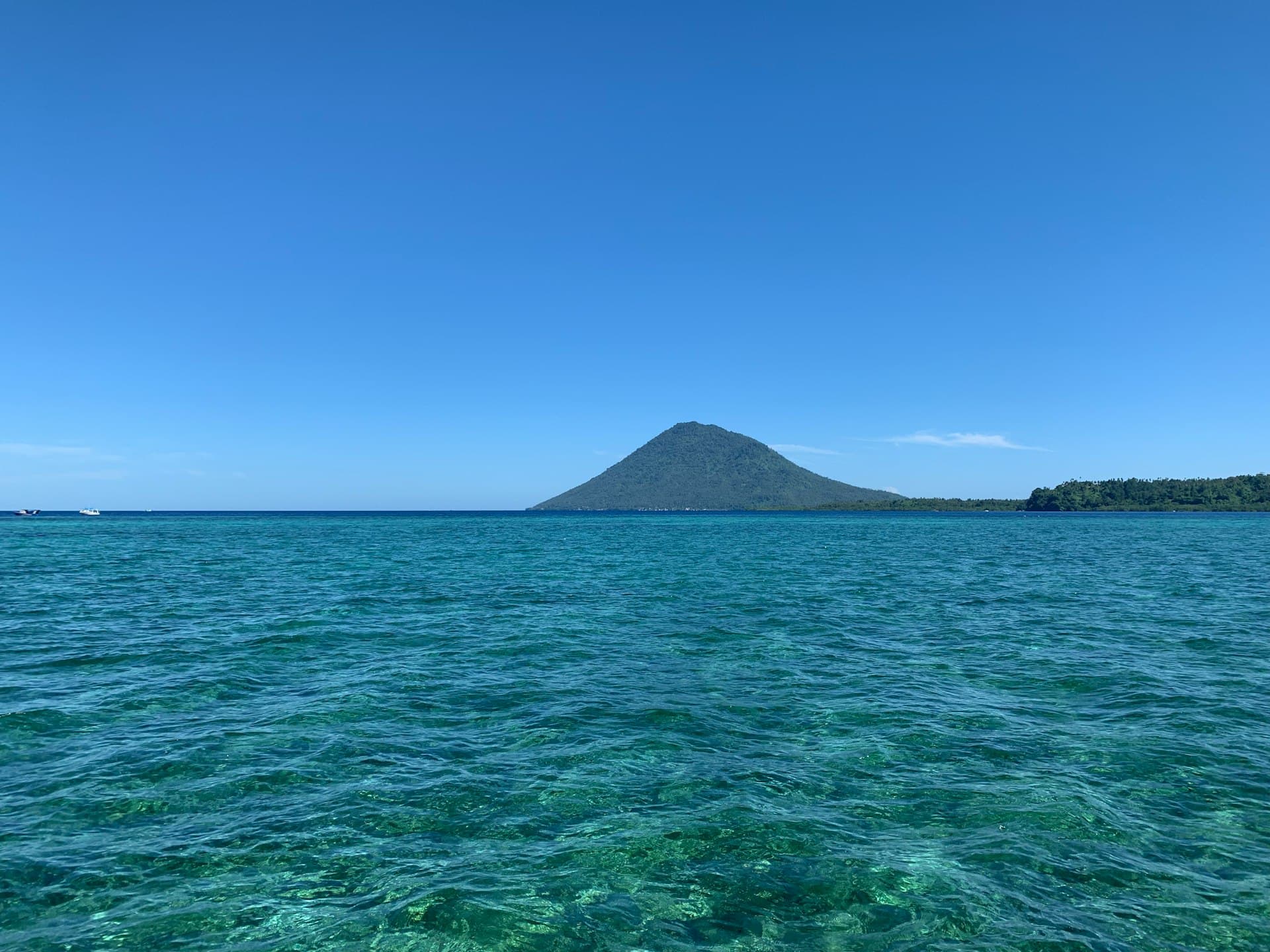
Diving Bunaken: Conditions, Seasons, and What to Expect
Bunaken's underwater conditions are shaped by the same geography that makes its walls extraordinary. The five islands sit exposed to the Sulawesi Sea with no continental shelf to buffer currents or settle sediment. That keeps visibility high — but it also means conditions change more with monsoon patterns than with tides.
The monsoon here is less pronounced than other parts of Indonesia. Even the wet season delivers clean morning dives. This guide breaks down what each month actually looks like underwater so you can plan the timing and pack the right exposure.
The Numbers That Matter Most
Bunaken sits at the edge of the Coral Triangle at approximately 1.61°N, 124.78°E — near the equator. The climate is equatorial marine: two monsoon seasons but no extreme dry/wet split, and water temperature varies only 3°C across the year.
Visibility: 15–50 m (50–165 ft) depending on season. Peak visibility is June through August when the southeast monsoon settles the water column and visibility reaches 40–50 m at Bunaken's south coast walls. The wet season (November–April) lowers visibility to 15–25 m, but morning dives on the south coast often see 25 m when afternoon storms haven't yet turned the bay.
Visibility varies by zone. The south coast walls (Lekuan, Celah Celah) hold visibility longer after rain because they face open water rather than Manado Bay. Manado Bay muck sites drop to 5–10 m after heavy rain — this is expected for muck diving and is not a problem. Manado Tua's north-facing walls and Siladen's east side are consistent because they sit in the path of the through-channel current.
Water temperature: 27–30°C (81–86°F) year-round. The warmest month is June at 30°C. The coolest are January and February at 28°C. The thermocline is mild — about 2°C drop from surface to 30 meters. A 3 mm full wetsuit is comfortable for most divers year-round. Some divers prefer a 5 mm in January–February for multi-day trips with multiple dives.
Current: Generally mild to moderate on the south coast walls (Lekuan I–III, Celah Celah). Moderate to strong at point sites — Mandolin Reef, Tanjung Kopi, and Sachiko's Point during peak tidal exchanges. The current at Mandolin can hit 2 knots during spring tides, making it an effective drift dive. Manado Bay muck sites have negligible current.
Depth range by site type: Wall tops at 3–5 m, coral gardens at 5–12 m, wall faces at 15–30 m (recreational), wall face continues beyond recreational limits. Muck sites in Manado Bay: 5–15 m. Advanced sites: 30–42 m (Batu Kapal, Johnson's Wall deeper sections).
Season by Season
January – February: Wet Season, Low Crowds
Water temperature sits at 28°C (82°F). Visibility runs 15–25 m on the south coast walls; lower in Manado Bay. January has 25 rainy days on average; February runs 24. The northwest monsoon brings afternoon thunderstorms, but morning dives at the south coast walls deliver good conditions.
This is the quietest season for tourism. Dive sites that see 10+ boats per day in July will have two or three. The turtles are still there — green and hawksbill are year-round residents — and the reef sharks still patrol the Lekuan wall. A 3 mm full suit is comfortable; some divers add a hood for back-to-back dives.
Dive resorts offer their lowest rates of the year. If budget is your primary constraint, this is the best time to visit.
March – April: Shoulder Season Transition
Water warms to 29°C (84°F). Visibility improves to 20–30 m as the rainy days taper (25 days in March, 25 in April, but less intense). The transition season between monsoons brings settled conditions and good light.
Eagle ray sightings increase during this period — the shifting currents concentrate nutrients. Napoleon wrasse are regular visitors at Mandolin and Lekuan II. Bumphead parrotfish schools cruise the walls. Muck sites in Manado Bay are in good condition because the sea is calm and recently settled.
This is the sweet spot for photographers who want both wall and muck opportunities without peak-season crowds.
May – October: Peak Dry Season
The southeast monsoon brings the best diving conditions of the year. Visibility climbs to 25–50 m. Water temperature ranges 29–30°C (84–86°F). Seas are calmest from June through August.
May is the kickoff month — visibility at 25–40 m, water at 29°C, conditions improving day by day. The first big pelagic sightings of the season at Mandolin and Tanjung Kopi start appearing.
June is the definitive Bunaken month. Water hits its warmest (30°C) and visibility peaks at 30–50 m. The coral gardens are in full bloom, fish activity is at its annual peak, and every zone in the park is accessible. Sachiko's Point delivers thousands of red-tooth triggerfish and a resident school of black snapper. This is the month for the definitive Bunaken wall diving experience.
July maintains peak conditions with the addition of slightly stronger currents — ideal for drift dives at Mandolin and Pangalingan. Dogtooth tuna hunt at Tanjung Kopi. The current-swept sites deliver their best marine life displays.
August is the driest month with only 10 rainy days. Currents are at their strongest, making it the best month for advanced divers who want Tanjung Kopi, Johnson's Wall, and Nain Island expeditions. Peak hammerhead shark season at Batu Kapal. Muck sites in Manado Bay are also at their best because there's been no recent rain.
September is a transition month — still in the dry season (24–36 m visibility) but with fewer divers. Good conditions for underwater photography with consistent light and calm seas.
October is the last good dry season month (20–30 m visibility, 29°C water). Muck diving in Manado Bay peaks — flamboyant cuttlefish, blue-ring octopus, and harlequin shrimp are active on the black sand. Afternoon storms begin returning in late October.
November – December: Wet Season
Water stays at 28–29°C (82–84°F). Visibility drops to 15–25 m. November averages 26 rainy days; December also 26. The northwest monsoon is fully active.
However — and this matters — Bunaken's south coast walls face away from the prevailing wind in this season. The Lekuan sites are sheltered and deliver reliable diving even when the north coast is rough. Morning windows are consistently good. The wet season here is less disruptive than at Komodo or Raja Ampat.
Holiday season in December brings a spike in visitors, but resorts don't reach July capacity. Budget travelers who don't mind occasional rain get excellent value.
How Current Works at Bunaken
Bunaken current is driven by three factors:
Monsoon. The southeast monsoon (May–October) drives a steady flow across the park that is mild on the south coast walls and moderate to strong at exposed points. The northwest monsoon (November–April) is generally milder except at north-facing sites like Manado Tua.
Tidal flow. The mixed semidiurnal tide has a range of about 1.5 meters in North Sulawesi. Flood tide pushes water through the Bunaken-Manado Tua strait at 1–2 knots during spring tides. Ebb tide is milder. Operators plan dives around the tidal window.
Site geography. Lekuan I is sheltered by its crescent shape — current funnels along the wall but is manageable within the crescent. Mandolin sits in the open strait and takes the full current. Tanjung Kopi on Manado Tua sits at the point where the current wraps around the volcano — this is where it gets strong and chaotic, best left for experienced divers.
Gear Notes for Bunaken Conditions
Wetsuit: 3 mm full suit works year-round. January–February, a 5 mm is comfortable for multi-day trips. A hood adds 1–2°C of effective warmth and is worth bringing for the cooler months.
Buoyancy: Bunaken wall tops are pristine coral gardens. Dropping a fin or dragging a gauge will break coral that has taken decades to grow. If you haven't dived in six months, ask for a buoyancy check on the first dive. Operators are happy to do this.
Dive computer: The multi-level, multi-wall profile of a Bunaken dive is harder to track with tables than with a computer. Most dive resorts rent well-maintained computers.
Surface marker buoy (SMB): Strongly recommended for Mandolin, Tanjung Kopi, and other current-swept sites. Drifts can carry you several hundred meters.
Dive torch: The wall crevices at Celah Celah and Lekuan hold resting whitetip reef sharks, lobsters, and macro life. A small torch penetrates the overhangs. Essential for night dives at the west coast sites.
Putting It Together
Bunaken delivers reliable conditions year-round — it's just a question of what trade-off you're making. Peak season (June–August) gives you 40–50 m visibility, maximum marine life activity, and warmest water, with the trade-off being higher prices and more divers. Wet season (November–February) gives you 15–25 m visibility, lowest prices, uncrowded sites, and the same turtles and reef sharks.
The year-round rule is simple: dive the south coast walls in the morning. If you follow this rule, every month of the year delivers good Bunaken diving.