Diving Belize: Complete Guide to the Caribbean's Best Kept Secret
Belize is a Caribbean diving powerhouse that punches far above its size. Home to the second-largest barrier reef in the world and three of only four true coral atolls in the Western Hemisphere, this small English-speaking country on the northeastern coast of Central America delivers an underwater variety that rivals destinations ten times its size. From the iconic Great Blue Hole — a 125-meter-deep karst sinkhole made famous by Jacques Cousteau in 1971 — to the whale shark aggregations at Gladden Spit triggered by snapper spawns under the full moon, Belize offers a staggering range of experiences packed into a coastline just 300 kilometers long.
What Makes Belize Unique
The Second-Largest Barrier Reef on Earth
The Belize Barrier Reef stretches approximately 300 kilometers along the country's coastline, part of the larger Mesoamerican Reef system that runs from Mexico to Honduras. It was inscribed as a UNESCO World Heritage Site in 1996. Unlike many Caribbean reef systems that have been heavily impacted by coastal development and overfishing, Belize's reef benefits from strong conservation protections — the country was the first in the world to ban all oil exploration in its waters (2017), and 30% of its ocean territory is protected across five major marine reserves.
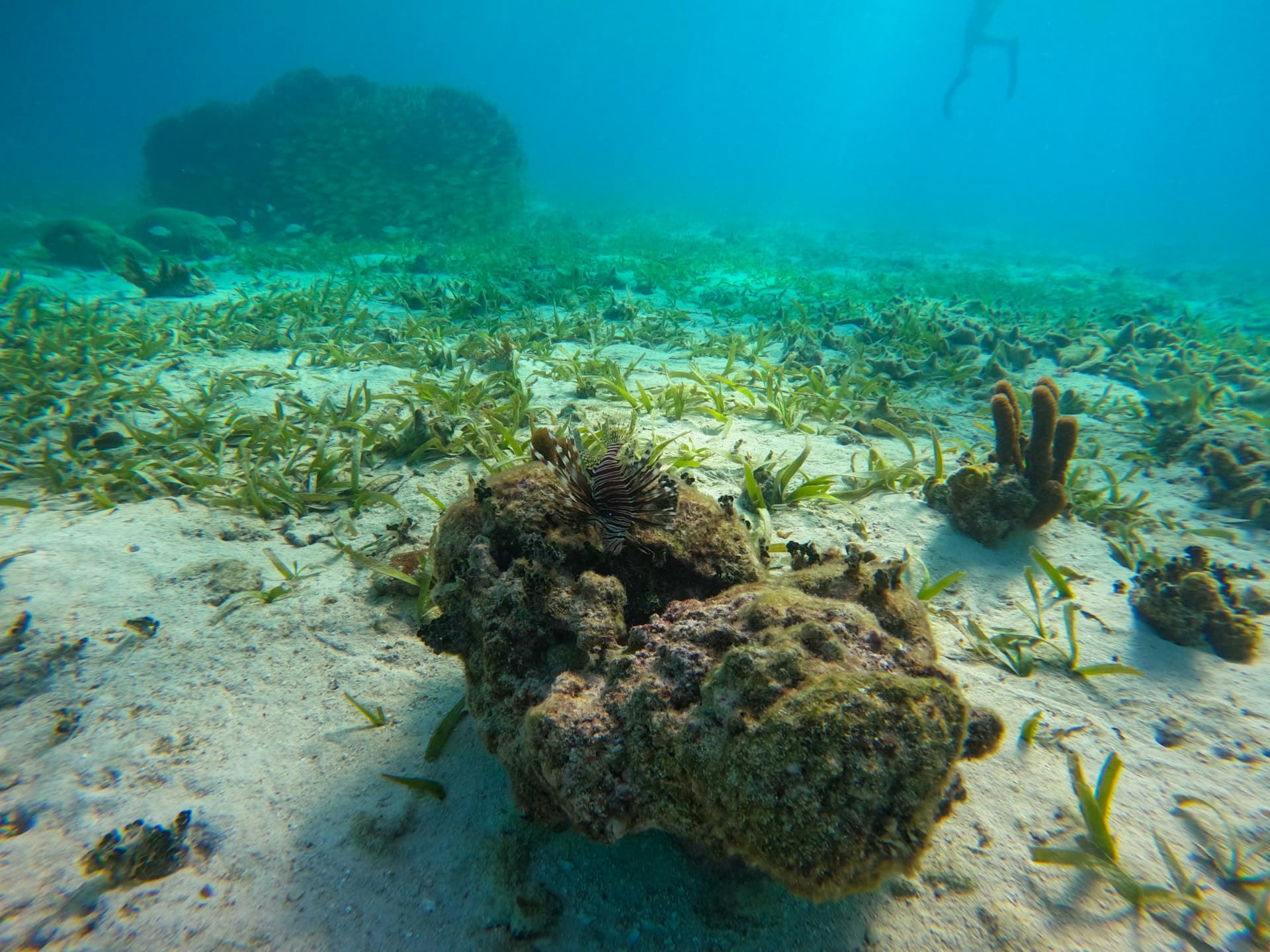
The reef structure here is exceptionally varied. Along the barrier reef you'll find spur-and-groove formations — alternating ridges of coral and sand channels — that create excellent conditions for snorkeling and shallow diving. Further offshore, the three true coral atolls deliver entirely different experiences: steep vertical walls plunging to abyssal depths, drift dives through schools of jacks and snappers numbering in the hundreds, and labyrinthine lagoon systems filled with patch reefs.
Three Atolls, Three Personalities
Turneffe Atoll is the largest coral atoll in the Western Hemisphere, stretching 48 kilometers long and 16 kilometers wide. Its extensive mangrove forests — the healthiest in the Caribbean — serve as critical nurseries for juvenile fish and provide feeding grounds for bonefish, permit, and tarpon. Dive operators report over 70 named dive sites across the atoll. The standout is The Elbow, where strong tidal currents converge at the southern tip, attracting massive schools of horse-eye jacks, barracuda, and Caribbean reef sharks. This is Belize's most adrenaline-drenched dive.
Lighthouse Reef Atoll is the most easterly of the three and home to the Great Blue Hole — the 300-meter-wide, 125-meter-deep sinkhole that Cousteau explored on his 1971 Calypso expedition, declaring it one of the top ten dive sites in the world. The dive itself is unconventional: you descend into a dark circular hole past giant stalactites at 40 meters (evidence of the cave system that existed here during the last Ice Age 18,000 years ago), while Caribbean reef sharks patrol the rim above. The marine life is at Half Moon Caye Wall, a short boat ride away, where the vertical atoll wall drops from 5 to over 1,000 meters and is coated in barrel sponges and black coral.
Glover's Reef Atoll is the most remote and least visited. A UNESCO-designated site, Glover's Reef is elliptical — 32 kilometers long and 10 kilometers wide — with a shallow central lagoon that contains over 800 patch reefs and pinnacles, making it one of the richest coral habitats in the Caribbean. The atoll hosts a Wildlife Conservation Society research station, and its isolation means the fish populations are noticeably larger and less wary than at more frequently dived sites.
Whale Shark Capital
Gladden Spit, at the southern end of the barrier reef near Placencia, is one of the most reliable places in the Caribbean to swim with whale sharks. The mechanism is unique: starting in March and running through June, cubera snapper gather in massive spawning aggregations during the full moon, releasing eggs that attract feeding whale sharks. The timing is predictable — tied to the lunar cycle rather than the vagaries of plankton blooms. This makes Gladden Spit a destination you can plan around with confidence.
Who Belize Is For
Beginner divers will find Belize exceptionally welcoming. English is the official language (the only English-speaking country in Central America), and the currency is pegged 2:1 to the US dollar. Hol Chan Marine Reserve — one of the oldest marine reserves in the Caribbean — offers easy shallow dives with abundant marine life. Mexico Rocks and Tres Cocos provide gentle reef experiences for newer divers.
Advanced divers can push deeper at the atoll walls. The Elbow at Turneffe demands strong drift-diving skills, and the remote atolls — particularly the southern edge of Glover's Reef — offer wall dives beyond the recreational limit for technical divers. The Great Blue Hole requires Advanced Open Water certification due to the 40-meter depth.
Liveaboard divers are well served. Several operators run week-long itineraries that explore all three atolls, plus the southern barrier reef including Gladden Spit and the Sapodilla Cayes. For divers who want expedition-style access to remote areas without the logistics of land-based day trips, this is the best option.
Safety Infrastructure
Belize has one of the strongest diver safety networks in the Caribbean. San Pedro, on Ambergris Caye, hosts two double-lock hyperbaric chambers — the SSS Network chamber (operational since 1989, with free treatment for affiliated dive guides) and the Belize Chamber Project facility (DAN Preferred Provider since 2015, 24/7 capability). This gives Belize better emergency recompression coverage than most Caribbean destinations.
Practical Overview
Belize is in the Central Standard Time zone (UTC-6, no daylight saving). The Belize dollar (BZD) is pegged 2:1 to the USD, and US dollars are accepted everywhere. English is the official language. Direct flights arrive at Philip S. W. Goldson International Airport (BZE) in Belize City from major US hubs — Miami is 2 hours, Houston is 2.5 hours. Most visitors receive a 30-day tourist stamp on arrival, no visa required for Western passport holders.
From Belize City, domestic flights and water taxis connect to Ambergris Caye (15-minute flight), Caye Caulker, and Placencia. Dive bases are spread across these locations, each offering access to different parts of the reef system.
Bottom Line
Belize delivers more diving variety per square kilometer than any other Caribbean destination. A single vacation can cover sinkhole dives, atoll walls, whale shark encounters, drift dives, macro photography, and wreck diving — all within a day's travel of each other. With English spoken everywhere, US dollars accepted at par, direct flights from major US cities, and the best hyperbaric chamber network in the region, Belize is the most accessible high-end dive destination in the Caribbean without the crowds of Cozumel or the premium pricing of the Maldives.