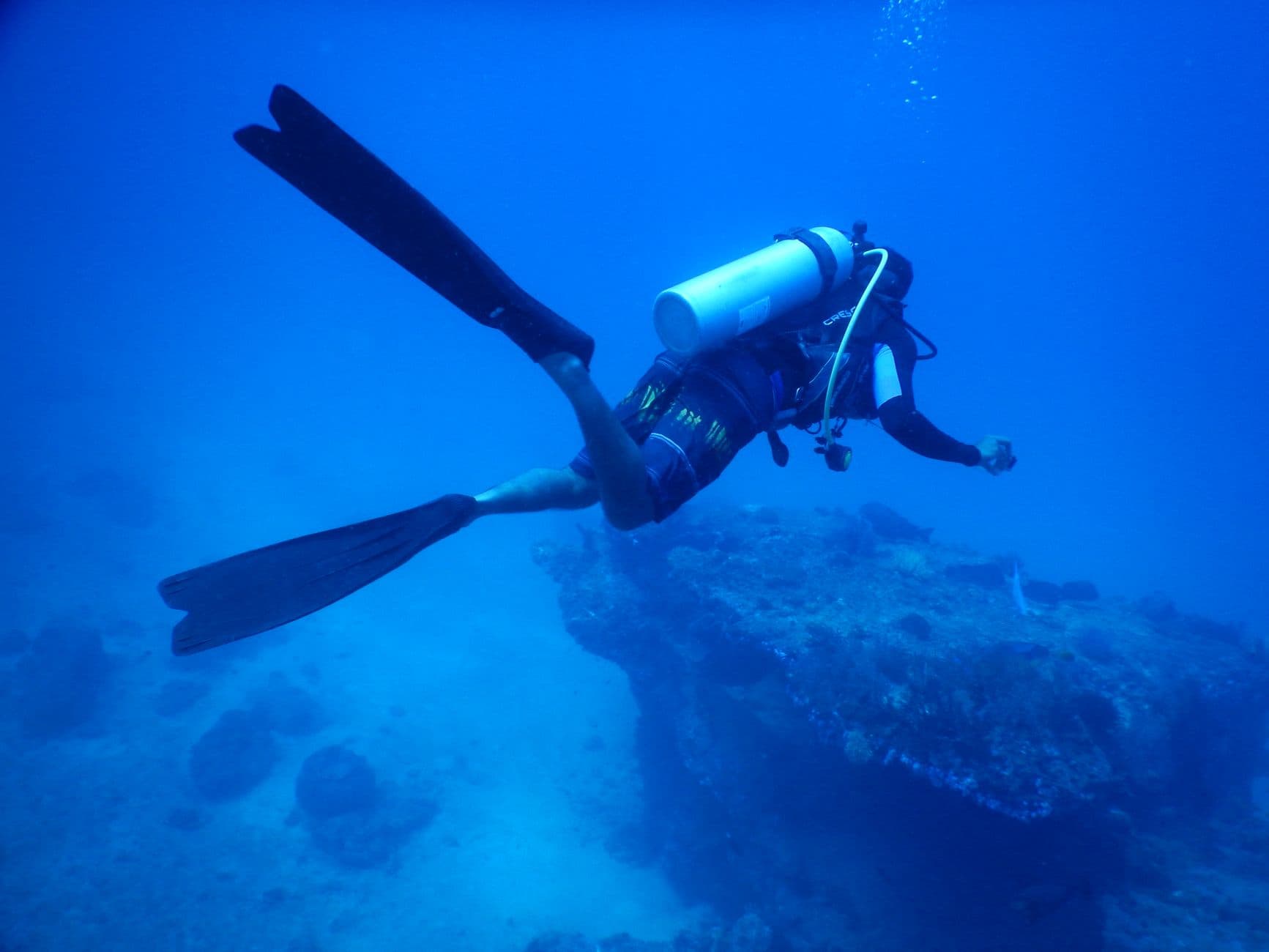
Diving Alor: The Ultimate Guide to Indonesia's Last Frontier
Alor is not a dive destination you ease into. It's an expedition.
This volcanic island in far eastern Indonesia sits at the heart of the Coral Triangle — the global epicenter of marine biodiversity — where the Pantar Strait funnels nutrient-rich currents from the Banda Sea through a narrow 16-kilometer channel. The result is one of the most biodiverse marine environments on Earth, with walls that drop directly from the surface to depths beyond 1,000 meters, submerged pinnacles that attract schooling hammerheads and oceanic mantas, and black-sand bays packed with rare macro life.
And there are almost no other divers here.
What Makes Alor Different
Alor has 45+ named dive sites across four distinct zones: the pelagic-rich walls and pinnacles of the Pantar Strait, the world-class muck diving of Kalabahi Bay, the cold-upwelling southern coast where Mola Mola congregate, and accessible house reefs near the main resorts. New sites are still being discovered by local guides.
The diversity is what separates Alor from other Coral Triangle destinations. Raja Ampat has better wall corals. Komodo has dragons and stronger currents. Lembeh has more consistent muck. Alor has all three in one trip — macro critters at Mucky Mosque in the morning, schooling hammerheads at Kal's Dream after lunch, and a Mola Mola encounter at The Cathedral the next day. And every single site will have no other dive groups competing for space.
Diver level: Intermediate to Advanced. This is not a beginner destination. Strong currents, negative entries, cold thermoclines (surface 28°C down to 16°C at depth), and no hyperbaric chamber on the island mean you need at least 50 logged dives, solid buoyancy control, and comfort with drift diving. AOWD certification is the minimum standard at most operators.
Dive season: Mid-March to mid-December. Prime conditions run April through November. December to March is the wet season — most resorts close.
The Four Dive Zones
Pantar Strait: Pelagic Highway
The Pantar Strait between Alor and Pantar islands is the primary dive zone — roughly 18 named sites on the Alor side alone. The defining feature is current: nutrient-rich water pushed through the narrow channel at 1.5–3 knots on strong tidal exchanges, which means you're drift diving almost every time. Sites run the gamut from Kal's Dream, a submerged pinnacle rising from the deep where scalloped hammerheads (50–60 individuals on good days) and dogtooth tuna patrol the current, to gentler drifts like Sharks Galore and Clown Valley, which has the highest known concentration of sea anemones of any reef on Earth.
This is the zone for pelagic encounters. Scalloped hammerheads, thresher sharks, giant trevally, rainbow runners, Napoleon wrasse (2 meters-plus), and seasonal blue whales and sperm whales passing through the strait. September through December is peak pelagic season, with maximum hammerhead encounters around new and full moon windows.
Key sites: Kal's Dream, Current Alley, Bama Wall, Sharks Galore, Clown Valley, Alcatraz, Monaseli, The Bullet.
Minimum skill: Advanced. Negative entries and reef hooks are standard. SMB is mandatory.
Kalabahi Bay: Macro Paradise
Kalabahi Bay on Alor's south side is a long, narrow inlet plunging to 200 meters. The black volcanic sand bottom, protected conditions, and minimal current create a world-class muck diving environment that rivals Lembeh Strait — with virtually no one else diving it.
Seven named sites in the bay deliver consistently excellent macro encounters. Mucky Mosque is the premier muck dive: black sand, scattered debris, and a rotating cast of rare critters including Rhinopias frogfish, mimic octopus, wunderpus, ghost pipefish, harlequin shrimp, blue-ringed octopus, and countless nudibranch species. Bakalang Jetty's pillars are encrusted with life — frogfish, ribbon eels, pygmy seahorses. The Ferry Harbor site has a sunken bus wreck and a Spanish dancer nursery.
Key sites: Mucky Mosque, Bakalang Jetty, Kendi Bay, Pink Forest, Ferry Harbor & Bus Station, Threesome, Biatabang.
Minimum skill: Beginner to Intermediate. Calm conditions, gentle slopes, no current. Ideal for photographers and divers wanting a relaxed day between Strait dives.
Southern Alor: Cold Water, Big Animals
The southern coast of Alor faces the open Banda Sea. These sites are exposed, cooler, and more challenging — but they offer encounters that few other Indonesian destinations can match.
The Cathedral is the stand-out: a pristine reef with a dramatic swim-through/cavern, multiple thermoclines that can drop from 28°C at the surface to 16°C at depth, and a resident population of Mola Mola (ocean sunfish) that's larger and more reliable than Bali's. Divers regularly report seeing 100+ mola at a single site, alongside thresher sharks, scalloped hammerheads, marble rays, and kelp-like algae that gives the reef an almost temperate-water appearance.
Key sites: The Cathedral, Halerman, Beang Abang.
Minimum skill: Advanced. Significant thermal shock risk (16°C at depth). 7 mm wetsuit with hood and vest recommended. Must be comfortable with negative entries and rapid descents.
Kalabahi Town Area: Easy Access
Resort house reefs at Nautika Dive Alor and Alor Tanapi offer dependable shore-accessible diving for check-out dives, night dives, and days when the Strait conditions are rough. The shallow slopes (3–18 meters) are beginner-friendly with healthy coral cover and typical reef fish.
When to Go
| Period | Conditions | Best For |
|---|---|---|
| April–June | Calm seas, 25–40 m visibility | First-time Alor visitors, general diving |
| July–August | Peak dry season, 30–40 m visibility | Clearest water, busiest (book early) |
| September–December | Strong currents, 25–35 m visibility | Pelagic encounters: hammerheads, Mola Mola, whales |
| January–March | Wet season, rough seas | Most resorts closed |
Marine Life Highlights
Alor's waters host 1,000+ species of reef fish and 500+ species of coral. The species catalog from our seed data covers 40 key species across sharks, rays, turtles, cetaceans, reef fish, invertebrates, and more.
Signature species: Scalloped hammerhead (Sphyrna lewini), pelagic thresher shark (Alopias pelagicus), oceanic manta ray (Mobula birostris), Mola Mola (Mola mola), Napoleon wrasse (Cheilinus undulatus), mimic octopus (Thaumoctopus mimicus), blue-ringed octopus (Hapalochlaena lunulata), pygmy seahorse (Hippocampus bargibanti), Rhinopias frogfish (Rhinopias frondosa).
Whale season runs June–July (northbound) and September–November (southbound), with blue whales, sperm whales, and pilot whales passing through the Pantar Strait.
Getting There and Practical Info
Route: International airport → Bali (DPS) or Jakarta (CGK) → Kupang (KOE, overnight often needed) → Alor Mali Airport (ARD, 45–60 min turboprop). Daily flights from Kupang.
Visa: 30-day Visa on Arrival (~$25 USD) for most nationalities, extendable for another 30 days.
Accommodation: Four purpose-built dive resorts: Nautika Dive Alor (PADI 5 Star), Alor Tanapi Dive Resort (boutique), Alor Divers (Pantar Island side), Moko Dive Resort (PADI). Book 4–8 months ahead for peak season. None are listed on Booking.com — contact via WhatsApp or email.
Cash: Limited ATMs in Kalabahi and minimal card acceptance. Carry enough IDR or USD for your stay.
Critical safety note: There is no hyperbaric chamber on Alor or anywhere in East Nusa Tenggara. The nearest chamber is in Bali — a 2.5-hour flight plus ground transport. DAN insurance is mandatory at all reputable operators.
What to pack: 5 mm wetsuit minimum (7 mm for cold-sensitive), hooded vest, SMB, reef hook, dive computer, spare parts (no dive shops on Alor for gear repairs). Telkomsel is the only mobile network that works. Starlink Wi-Fi available at Alor Divers and select resorts.
Bottom Line
Alor is not for everyone. It's a remote, current-swept, infrastructure-light destination where you earn every dive. But if you have the experience and the adventure appetite, it delivers a combination of pelagic power and macro intimacy that no other Indonesian destination can match. Forty-five dive sites. Zero crowds. One frontier.