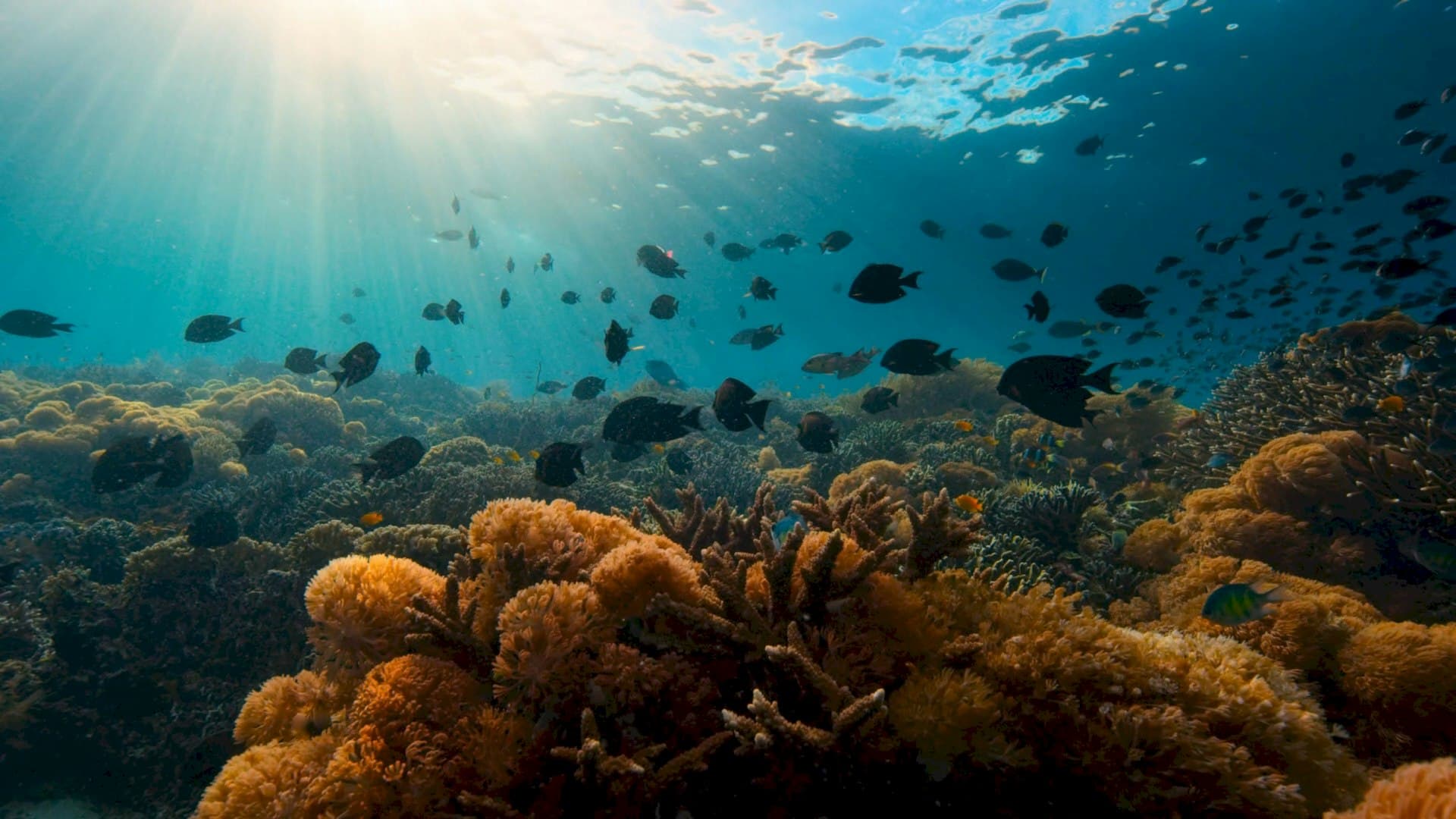
Hay un pez que vive solo en Cozumel. En ningún otro lugar del planeta — ni en la isla de al lado, ni en tierra firme a 20 kilómetros, ni en ningún otro sitio. Solo aquí.
Se llama pez sapo espléndido (Sanopus splendidus), y quizá sea lo feo más hermoso que verás bajo el agua.
¿Qué Es?
Imagina un pez diseñado por un comité que no logró ponerse de acuerdo en nada. Tiene:
- Una cabeza enorme y aplanada que es casi toda boca
- Barbillas carnosas (proyecciones parecidas a bigotes) que le cuelgan de la mandíbula
- Un cuerpo que parece haber sido metido a la fuerza en un espacio demasiado pequeño
- Brillantes rayas amarillas y negras en las aletas, con toques de azul eléctrico
- Una expresión de irritación permanente
El pez sapo se queda encajado en grietas y bajo cornisas de coral, casi sin moverse, con cara de estar profundamente molesto porque lo encontraste. Mide unos 20-25 centímetros de largo (más o menos el tamaño de tu mano y tu antebrazo) y tiene la complexión de un apoyador de fútbol americano.
A pesar de su apariencia gruñona, esas vistosas aletas con rayas amarillas lo hacen realmente llamativo. El contraste entre su cuerpo robusto y camuflado y esas aletas de colores brillantes es lo que le valió el nombre de "espléndido".
¿Por Qué Solo Vive en Cozumel?
Esta es la pregunta que fascina a los biólogos marinos. Cozumel está a solo 20 km de la costa de Yucatán, separada por un canal profundo con corrientes fuertes. Ese canal ha sido una barrera suficiente — a escala de tiempo evolutiva — para aislar a ciertas especies.
El pez sapo espléndido se separó de sus parientes más cercanos y evolucionó hasta convertirse en una especie distinta que se encuentra exclusivamente en el sistema arrecifal de Cozumel. Es un ejemplo de libro de endemismo insular — el mismo fenómeno que les dio a las Galápagos sus pinzones únicos y a Madagascar sus lémures.
Hay otras especies de pez sapo en el Caribe, pero ninguna tiene la coloración distintiva del pez sapo espléndido. La versión de Cozumel es la supermodelo de la familia de los peces sapo (la vara está muy baja, hay que admitirlo).
Dónde Encontrar Uno
El pez sapo espléndido no es raro en el sentido en que lo es un tiburón ballena — no vas a necesitar suerte. Pero sí necesitas saber dónde buscar, porque estos peces son maestros del escondite.
Mejores sitios de buceo:
- Paso del Cedral — el lugar #1. La mayoría de los divemasters tienen "rocas del pez sapo" específicas que revisan en cada inmersión.
- Yucab — sus cabezas de coral dispersas ofrecen escondites perfectos.
- Tormentos — las cabezas de coral aisladas de este sitio son departamentos para peces sapo.
- Palancar Gardens — revisa la base de las formaciones de coral.
Cómo encontrarlos:
- Busca bajo las cornisas de coral, dentro de las grietas y en los huecos de la base de las cabezas de coral.
- Nada despacio. No se mueven, así que pasarás de largo si vas con prisa.
- Busca primero las aletas con rayas amarillas — a menudo son lo único visible.
- Usa una linterna de buceo (con cuidado) para iluminar las grietas oscuras.
- Dile a tu divemaster que quieres ver uno. Es el método más confiable. Los guías con experiencia saben exactamente dónde viven los peces sapo residentes y los revisan en cada inmersión.
Lo que NO debes hacer:
- No metas la mano en una grieta para sacar uno. Pueden morder, y lo harán.
- No uses un puntero para picarlos. Son fauna protegida.
- No bloquees la entrada de su escondite. Necesitan poder refugiarse.
Datos Curiosos del Pez Sapo
Cantan. Los machos producen un zumbido/gruñido fuerte para atraer a las hembras. El sonido lo generan haciendo vibrar su vejiga natatoria, y durante la temporada de apareamiento, un arrecife lleno de peces sapo suena como un coro de motocicletas diminutas y enojadas.
Son territoriales. Un pez sapo defiende su grieta con agresividad. Los machos cuidan los huevos y las crías recién nacidas, y NO les gustan las visitas durante esta etapa.
Son depredadores de emboscada. Aunque parecen perezosos e inmóviles, los peces sapo atacan a la velocidad del rayo. Aspiran a sus presas (peces pequeños, cangrejos, camarones) abriendo de golpe su enorme boca, lo que crea una succión que atrae la comida antes de que pueda reaccionar.
Fueron al espacio. En 1998, la NASA envió peces sapo ostra (una especie emparentada) a bordo del transbordador espacial para estudiar cómo afecta la microgravedad al sistema vestibular. El oído interno de los peces sapo es similar al de los humanos, lo que los convierte en sujetos de investigación útiles. Los primos del pez sapo espléndido de Cozumel son, literalmente, astronautas.
Podrían estar disminuyendo. Aunque no tiene un estatus formal de especie en peligro, algunos divemasters veteranos de Cozumel dicen ver menos peces sapo que hace 20 años. La alteración del hábitat, el daño por anclas y la degradación del arrecife amenazan el único hábitat que tiene esta especie.
Por Qué Importa
El pez sapo espléndido es más que una curiosidad para buzos — es un indicador de conservación. Una especie endémica que existe en el sistema arrecifal de una sola isla es inherentemente vulnerable. Si los arrecifes de Cozumel se deterioran, esta especie no tiene a dónde ir.
También es un argumento poderoso a favor de la protección marina. El Parque Nacional Arrecifes de Cozumel existe, en parte, para proteger hábitats como este. Cada práctica de buceo responsable — no tocar el coral, no anclar sobre los arrecifes, no usar protector solar tóxico para los arrecifes — beneficia directamente la supervivencia del pez sapo.
Cuando veas uno en una inmersión, estarás viendo algo que nadie fuera de Cozumel puede ver. Eso es especial. Trátalo como tal.
La Lista del Pez Sapo
¿Listo para tachar al pez sapo espléndido de tu lista de deseos submarina? Este es tu plan:
- ✅ Reserva una inmersión en Paso del Cedral, Yucab o Tormentos
- ✅ Dile a tu divemaster que quieres ver uno (les encanta presumirlos)
- ✅ Nada despacio y revisa bajo cada cornisa
- ✅ Lleva una cámara con modo macro o de acercamiento
- ✅ Regístralo en DivePass y agrégalo a tu colección de vida marina
- ✅ Presúmeles a tus compañeros de buceo que viste algo que no existe en ningún otro lugar del planeta
Registra tu avistamiento del pez sapo en DivePass — nuestra base de datos de vida marina incluye al pez sapo espléndido y a todas las demás especies que encontrarás en Cozumel. Arma tu colección, una inmersión a la vez.
Dato curioso: en inglés se llama "splendid toadfish" — literalmente, "pez sapo espléndido". En cualquier idioma suena a oxímoron. Y justo por eso lo amamos.