Top 10 Dive Sites in Zanzibar: From Mnemba to Pemba
Zanzibar's 42 dive sites span two islands and every skill level, from 3-meter snorkeling lagoons to 40-meter-deep drift channels. You could spend a month here and not hit every site — but most divers have a week, maybe ten days. This guide ranks the ten sites that should anchor your trip, whether you're logging your first open-water dives or chasing grey reef sharks through Pemba's legendary current.
Every site listed here is actively dived by local operators. Depths, current conditions, and seasonal recommendations are drawn from operator dive briefings and cross-referenced against the experiences of guides who work these sites daily.
1. Fundu Gap (Pemba)
Type: Channel drift dive | Depth: 10–35 m | Access: Boat from Pemba west coast | Difficulty: Advanced | Best season: June–October
Fundu Gap is the signature dive of Zanzibar — and the single site that puts Pemba on the map for serious divers. This is a drift dive through a narrow channel between two islands on Pemba's west coast, where the tide funnels nutrient-rich water through at speeds that can hit 3 knots during spring tides. For the 45–50 minutes you're in the water, you're a passenger: the current carries you, and your job is to watch for what the current brings.
What it brings is impressive. Grey reef sharks are the headline act, patrolling the channel margins with an assured presence that makes Fundu Gap one of the most reliable shark encounters in the Indian Ocean — not because the sharks are baited or fed, but because the channel's hydrography naturally concentrates them. Spotted eagle rays glide past in small groups of 2–5, their white-spotted backs unmistakable. Giant trevally hunt in packs, silver torpedoes appearing from the blue. Napoleon wrasse — some exceeding 1.5 meters — cruise the reef edge. Yellow-edged morays, which reach about 1.5 meters, peer from crevices in the wall — while the giant moray, growing beyond 2 meters, haunts the larger holes.
The dive profile is simple: negative entry from the boat, descend to 15–20 meters, deploy your reef hook if needed, and let the channel show you what's passing through. The wall on either side is covered in gorgonian sea fans, soft corals, and barrel sponges — but the marine life is the focus, not the reef.
Skill requirements: Advanced Open Water with drift-diving experience. Minimum 30–50 logged dives recommended. Surface marker buoy mandatory. Reef hook recommended. Dive computer essential — the depth can creep deeper than intended when focused on the marine life. This is not a site for divers who haven't done drift dives before — the current is not optional.
Why it's #1: No other site in Zanzibar delivers the combination of reliable shark encounters, current-driven pelagic action, and the raw, untamed feeling of a channel drift. Fundu Gap is the dive you'll tell people about when you get home.
2. Leven Bank (Unguja)
Type: Offshore seamount | Depth: 12–40+ m | Access: Boat from Nungwi/Kendwa (45–60 min) | Difficulty: Advanced | Best season: June–October for mantas; November–March for whale sharks
Leven Bank is Zanzibar's big-animal lottery ticket. This offshore seamount rises from 60+ meters of open Indian Ocean to within 12 meters of the surface, approximately 45–60 minutes by boat from Nungwi. There is no land reference — just deep blue water in every direction and a submerged mountain that concentrates pelagic life like a magnet.
During the Kusi season (June–October), reef manta rays circle the seamount's cleaning stations, hovering motionless while cleaner wrasse pick parasites from their gills and skin. Visibility during this period runs 25–30 m, often more. Giant trevally, yellowfin tuna, and great barracuda are constant companions. Grey reef sharks patrol deeper, and the occasional silvertip shark has been documented.
During the Kaskazi season (November–March), the star attraction shifts to whale sharks. Leven Bank's nutrient-rich upwelling supports plankton blooms that draw these gentle giants — the largest fish in the ocean — to filter-feed near the surface. Peak sightings are December through February, and encounters at Leven Bank are generally less crowded and more relaxed than at famous whale shark aggregation sites elsewhere in the Indian Ocean.
Skill requirements: Advanced Open Water minimum. This is open-ocean diving with no bottom reference. Strong currents are possible, and the depth can exceed 40 meters beyond the seamount's summit. Surface marker buoy mandatory. The boat ride can be rough during the Kusi season — motion sickness medication advised.
Why it's #2: Leven Bank is the only site in Zanzibar where you can reasonably hope to see whale sharks in summer and manta rays in winter, all at one location. It's a genuine pelagic experience accessible as a day trip.
3. Mnemba Atoll — The Wall (Mkungwi Wall)
Type: Coral wall | Depth: 8–30 m | Access: Boat from Nungwi/Matemwe (25–35 min) | Difficulty: Intermediate | Best season: Year-round (best visibility June–October)
Mnemba's Wall is the most complete dive in the atoll — and arguably the best single reef dive on Unguja. The wall drops from a coral plateau at 8 meters to 30 meters, with the deeper section hosting gorgonian sea fans, large barrel sponges, and overhangs where whitetip reef sharks rest during the day. The plateau above is a thriving hard-coral garden with massive table corals, brain corals, and schools of anthias and fusiliers so dense they sometimes obscure the reef.
The marine life here reflects the atoll's protected status. Green turtles are seen on virtually every dive — grazing the seagrass edge or resting on coral outcrops. Hawksbill turtles are almost as common, using their specialized beaks to work sponge from crevices. Grey reef sharks patrol the deeper sections during the Kusi season. Schools of great barracuda hover at the wall's edge. Napoleon wrasse, Moorish idols, emperor angelfish, and regal angelfish add splashes of color.
During the Kusi monsoon (June–October), visibility at the Wall can reach 30+ meters, and the current — while present — is moderate enough that divers with 20+ logged dives handle it comfortably. During Kaskazi (December–March), the site is calmer and warmer but visibility drops to 15–20 m due to plankton.
Why it's #3: The Wall offers the best balance of accessibility and quality of any site on Unguja. It's within reach of intermediate divers, delivers reliable turtle and shark encounters, and photographs beautifully in the June–October visibility window.
4. Njao Gap (Pemba)
Type: Channel drift dive | Depth: 12–35 m | Access: Boat from Pemba west coast | Difficulty: Advanced | Best season: June–October
Njao Gap is Fundu Gap's northern sibling — similar in structure, slightly wilder in character, and the site where scalloped hammerhead sightings are most likely from August through October. The drift carries you through a deeper, wider channel than Fundu Gap, which means the current can be slightly less intense but the pelagic action is equally stacked.
Grey reef sharks are present year-round but peak during Kusi. Eagle rays, giant trevally, and barracuda schools are constant. The hammerheads, when they appear, tend to cruise at depth (20–30 m), and you'll need both luck and a calm, unhurried dive profile to maximize your odds. Even without hammerheads, Njao Gap delivers a world-class drift dive.
Skill requirements: Same as Fundu Gap — Advanced, experienced with drift diving, surface marker buoy mandatory. Deep diving specialty recommended for optimal hammerhead chances. The deeper channel means you'll spend more time at 20–30 m than at Fundu Gap — watch your no-decompression limit closely.
Why it's #4: Njao Gap offers the same core experience as Fundu Gap — sharks, eagle rays, pelagic predators — plus the possibility of hammerheads. If Fundu Gap is booked or conditions don't align, Njao Gap is an exceptional alternative.
5. Mnemba Atoll — Watumbi Reef
Type: Pinnacle reef | Depth: 6–20 m | Access: Boat from Nungwi/Matemwe | Difficulty: Intermediate | Best season: Year-round
Watumbi Reef sits at the southeastern edge of Mnemba Atoll and offers the site's densest concentration of marine life in a compact, pinnacle-style dive. The reef rises from a sandy bottom at 20 meters to within 6 meters of the surface, creating a vertical profile that attracts schooling fish, hunting trevally, and curious whitetip reef sharks.
The pinnacle itself is thick with hard corals — massive Porites colonies, branching Acropora, and table corals that shade the reef below. Bluestreak cleaner wrasses operate multiple cleaning stations, and it's common to see groupers and moray eels queued up for service. Giant moray eels inhabit the larger crevices; ribbon eels — undergoing their color-phase transitions — poke out from sandy burrows at the base of the pinnacle.
Hawksbill turtles frequent the site, working the coral for sponges. Spotted eagle rays cruise past on the current. The compact nature of the pinnacle means you can circle it 2–3 times on a single dive, catching new species on each pass.
Why it's #5: Watumbi Reef is the best site at Mnemba for divers who want to see maximum biodiversity in one dive. The pinnacle concentrates life in a way that the longer Wall doesn't, and the moderate depth (20 m maximum) means you get generous bottom time.
6. Misali Island — House Reef (Pemba)
Type: Fringing reef / coral garden | Depth: 5–20 m | Access: Boat from Pemba west coast | Difficulty: Beginner–Intermediate | Best season: Year-round
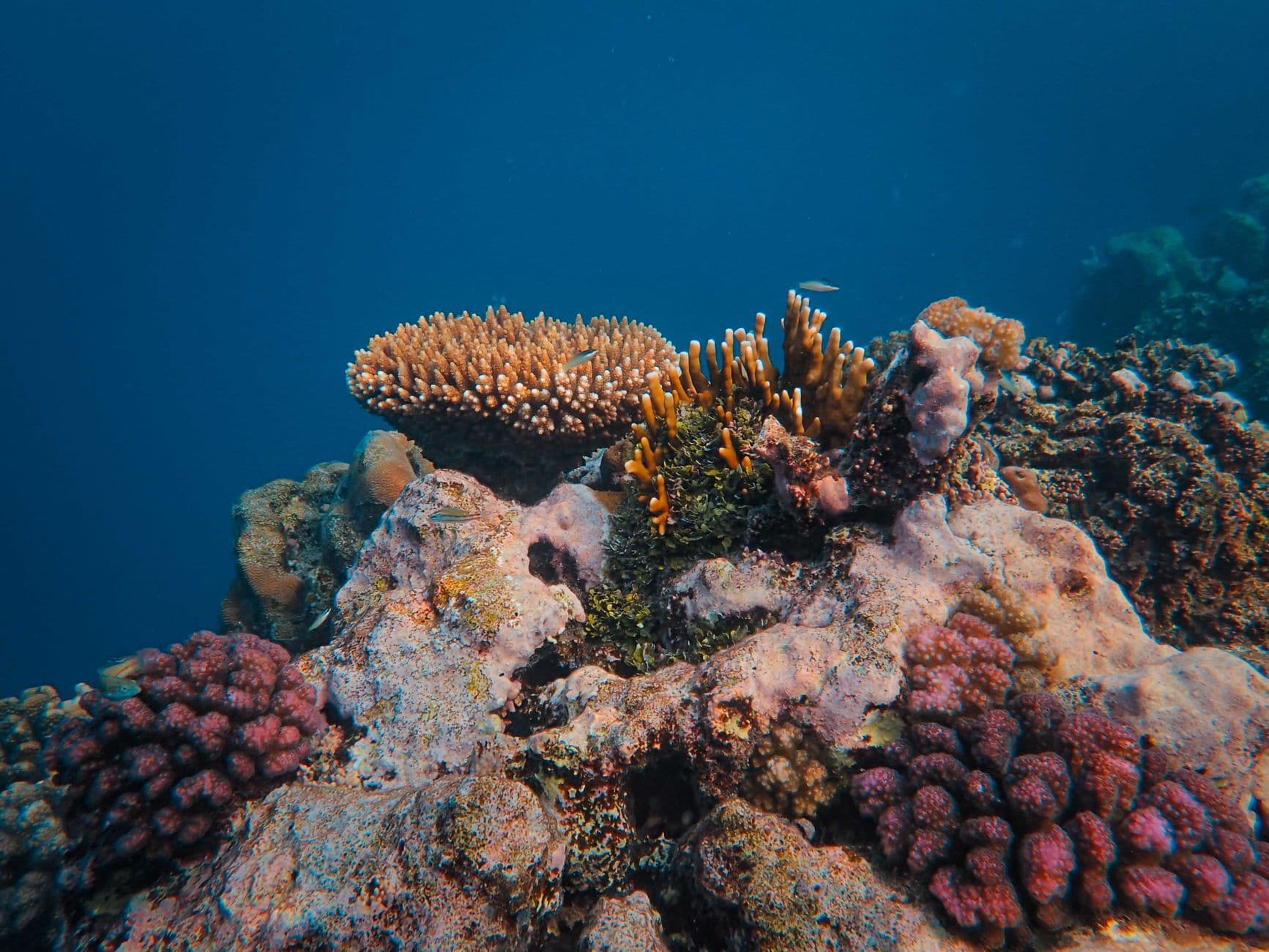
Misali Island is Pemba's protected gem — a marine conservation area with some of the healthiest fringing reef in the Zanzibar archipelago. The house reef on the island's west side offers what might be the best coral dive in either island: massive table corals, staghorn thickets, brain coral colonies centuries old, and soft corals in pink, purple, and orange.
The reef's protected status means fish life is abundant and unafraid. Green turtles graze the seagrass at the reef's edge. Whitetip reef sharks patrol the deeper sections. Napoleon wrasse, emperor angelfish, parrotfish, and triggerfish are ubiquitous. The site is shallow enough (5–20 m) that it's accessible to Open Water divers, yet rich enough to satisfy experienced divers looking for a relaxed second or third dive of the day.
The shallow coral gardens (5–12 m) are ideal for beginner divers, with green turtles grazing the adjacent seagrass beds and parrotfish working the coral. The deeper sections (15–20 m) add morays, groupers, and the occasional reef manta ray. The island's protection means corals here grow dense and healthy in a way that has largely disappeared from the channel.
Misali is also the site where you'll find the best examples of the bluestreak cleaner wrasse symbiosis — multiple active cleaning stations where even large predators hold still for service. The area is also known for its dolphins — pods of bottlenose and Indo-Pacific humpback dolphins are regularly seen during the boat crossing to Misali from Pemba's west coast.
Why it's #6: Misali is Pemba for everyone. If the channel drifts are beyond your skill level (or you want a recovery day between Fundu Gap and Njao Gap), the Misali house reef delivers a pristine, relaxed reef experience that rivals Unguja's best sites.
7. Mnemba Atoll — House Reef
Type: Sloping reef | Depth: 5–18 m | Access: Boat from Nungwi/Matemwe | Difficulty: Beginner | Best season: Year-round
Mnemba's House Reef is the gentle giant of Zanzibar diving — accessible, forgiving, and packed with enough marine life to satisfy even experienced divers. The reef slopes gradually from 5 to 18 meters, with healthy hard and soft corals, sandy patches where bluespotted ribbontail rays rest, and resident green turtles that have become so accustomed to divers that they barely glance up from grazing.
The site functions as the default first dive for many Zanzibar operators — it's where they assess diver skills, run Open Water training dives, and take first-time divers for their maiden reef experience. But don't mistake "beginner-friendly" for "boring." Octopus hunt in the open during daylight hours. Broadclub cuttlefish pulse their chromatophores in hypnotic displays. Giant moray eels occupy the larger crevices. Clownfish — the Indian Ocean orange-fin variant — defend their magnificent sea anemones.
The site's low current and shallow depth mean generous bottom times of 50–60 minutes. It's also an excellent night dive — the resident octopus and cuttlefish become more active, Spanish dancers emerge from crevices to swim, and the reef takes on a different character entirely.
Why it's #7: The House Reef is your first dive in Zanzibar and the benchmark against which you'll judge every other reef site. For beginners, it's perfect. For experienced divers, it's the reliable, no-stress dive you can slot between Leven Bank and Fundu Gap.
8. Tumbatu Island — East Wall
Type: Reef wall | Depth: 12–30 m | Access: Boat from Nungwi (25–35 min) | Difficulty: Intermediate–Advanced | Best season: June–October
Tumbatu Island, off Unguja's northwest coast, is a narrow strip of land with a dramatic east wall that serves as Unguja's best shark dive — and a crucial alternative when Mnemba is wind-affected during the Kusi season. The wall drops from 12 to 30 meters, with gorgonian sea fans clinging to the vertical face and grey reef sharks patrolling deeper.
The current here can be moderate to strong — enough to require active finning, not enough to require a reef hook. Grey reef sharks are the primary draw, with encounters common during June–October. Green turtles, spotted eagle rays, and giant trevally are frequent. Tumbatu also delivers the best Napoleon wrasse sightings on Unguja, with individuals exceeding 1 meter.
The west side of Tumbatu — the Coral Gardens — offers a completely different experience: a sheltered, shallow (6–18 m) garden that's ideal for beginners and a perfect second dive after the East Wall.
Why it's #8: Tumbatu East Wall is the clear-water, cooler-season answer to the question "where do I see sharks on Unguja?" It's also less crowded than Mnemba and offers a different, more dramatic reef profile.
9. Chumbe Island Coral Park
Type: Fringing reef / marine protected area | Depth: 3–14 m | Access: Boat from Stone Town | Difficulty: Beginner | Best season: Year-round
Chumbe Island is less a dive site and more a conservation success story. This private island coral park, established in 1991, protects one of the last pristine shallow reef systems in the Zanzibar channel. The reef here has recovered dramatically over three decades — the staghorn coral thickets and table coral stands at Chumbe are among the healthiest in East Africa.
Diving at Chumbe is shallow (3–14 m) and guided-only, with strict limits on diver numbers to protect the ecosystem. This is not a site for big animals — it's for divers who want to see what a healthy Indian Ocean coral reef is supposed to look like. Brain corals centuries old, dense Acropora stands, and fish life that reflects three decades of no-take protection.
Green turtles feed on the seagrass beds. Hawksbills pick at sponges. Blue Linckia starfish dot the sandy patches. Picasso triggerfish, regal angelfish, and Moorish idols add color to every square meter.
The site is also excellent for snorkeling — the shallow depth and clear water make it accessible to non-divers, and the eco-lodge on the island offers overnight stays.
Why it's #9: Chumbe Island is the conservation dive in Zanzibar. It's the site you visit to understand what these reefs looked like before fishing pressure and coastal development — and what they could become again with proper protection.
10. Matemwe Drop-Off
Type: Wall dive | Depth: 10–30 m | Access: Boat from Matemwe (10–15 min) | Difficulty: Intermediate | Best season: Year-round
Matemwe Drop-Off is the quiet achiever of Zanzibar diving — less famous than Mnemba, less dramatic than Pemba, but consistently delivering quality wall diving within a short boat ride from Matemwe village on Unguja's northeast coast. The wall drops from 10 to 30 meters with overhangs, crevices, and a healthy cover of soft corals and sea fans.
Grey reef sharks patrol the deeper sections. Green turtles are present on most dives. Large groupers and Napoleon wrasse are regular visitors. The site's proximity to Matemwe means it's often used as a first or last dive of the day paired with Mnemba, but it deserves recognition as a standalone site — particularly for divers staying in the Matemwe area who want to avoid the larger Mnemba boat traffic.
Why it's #10: Matemwe Drop-Off is the reliable local favorite — a wall dive with shark potential, turtle sightings, and the convenience of a 10-minute boat ride. If you're staying in Matemwe, this should be on your list.
Site Comparison Table
| Rank | Site | Depth | Access | Difficulty | Current | Best Season | Key Species |
|---|---|---|---|---|---|---|---|
| 1 | Fundu Gap | 10–35 m | Boat (Pemba) | Advanced | Strong | Jun–Oct | Grey reef shark, eagle ray, GT, Napoleon wrasse |
| 2 | Leven Bank | 12–40+ m | Boat (45–60 min) | Advanced | Mod–Strong | Jun–Oct / Nov–Mar | Manta ray, whale shark, tuna, GT, barracuda |
| 3 | Mnemba Wall | 8–30 m | Boat (25–35 min) | Intermediate | Moderate | Year-round | Green turtle, hawksbill, grey reef shark, barracuda |
| 4 | Njao Gap | 12–35 m | Boat (Pemba) | Advanced | Strong | Jun–Oct | Grey reef shark, hammerhead (Aug–Oct), eagle ray |
| 5 | Watumbi Reef | 6–20 m | Boat (Mnemba) | Intermediate | Mild–Mod | Year-round | Whitetip shark, giant moray, hawksbill, cleaner wrasse |
| 6 | Misali House Reef | 5–20 m | Boat (Pemba) | Beginner–Int | Mild | Year-round | Green turtle, table coral, Napoleon wrasse, reef fish |
| 7 | Mnemba House Reef | 5–18 m | Boat (25–35 min) | Beginner | Mild | Year-round | Green turtle, octopus, cuttlefish, ribbontail ray |
| 8 | Tumbatu East Wall | 12–30 m | Boat (25–35 min) | Int–Advanced | Mod–Strong | Jun–Oct | Grey reef shark, Napoleon wrasse, eagle ray, turtle |
| 9 | Chumbe Island | 3–14 m | Boat (Stone Town) | Beginner | None | Year-round | Staghorn coral, table coral, turtles, reef fish |
| 10 | Matemwe Drop-Off | 10–30 m | Boat (10–15 min) | Intermediate | Moderate | Year-round | Grey reef shark, grouper, Napoleon wrasse, turtle |
How to Choose
If you want sharks and adrenaline: Fundu Gap and Njao Gap on Pemba. These are the two sites where grey reef shark encounters are essentially part of the dive briefing. Book 2–3 days on Pemba, stay at the Manta Resort or nearby, and time your trip for June–October.
If you want whale sharks: Leven Bank, November–March, peak December–February. Book early in your trip in case weather cancels a day — you want multiple shots.
If you want manta rays: Leven Bank and Manta Point (Pemba), June–October, peak July–September. The cleaning stations are the key — look for the sandy plateau areas where cleaner wrasse are active.
If you're a beginner: Mnemba House Reef, Chumbe Island, and Misali House Reef. All three offer shallow, low-current, high-marine-life dives that will make your first reef experience memorable. Stay on Unguja (Nungwi or Matemwe) for easy access to Mnemba.
If you want one dive that does everything: Mnemba Atoll — The Wall. Accessible to intermediate divers, reliable turtles and sharks, excellent coral, good photo opportunities, and diveable year-round. This is the site you plan your trip around.
If you're traveling with a non-diving partner: The Mnemba sites all offer excellent snorkeling in the same lagoon. Chumbe Island and Prison Island (Changuu) are also strong snorkeling options. Stone Town's cultural attractions — spice markets, historic doorways, the former slave market — fill your surface intervals with genuine depth.
Safety reminder: Zanzibar has no hyperbaric chamber. The nearest are in Dar es Salaam and Mombasa. Dive conservatively — stay within no-decompression limits, respect depth restrictions, surface with ample air, and carry DAN insurance. The sites on this list range from beginner-friendly to genuinely challenging. Respect the one that matches your certification and experience level. The sharks, turtles, and coral will be there next time.