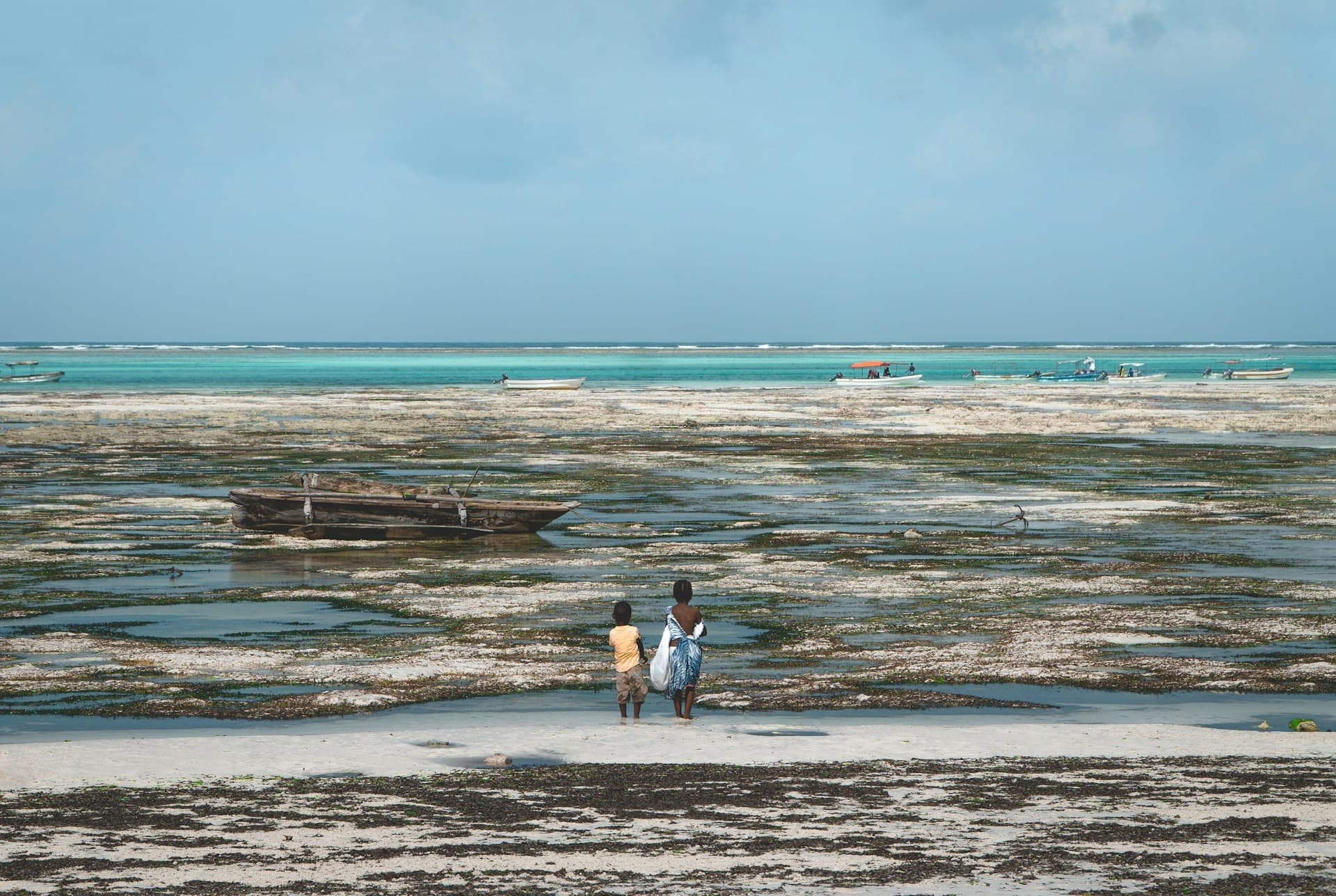
Zanzibar Diving: The Complete Guide to Africa's Spice Island Underwater
Zanzibar is where East Africa's Swahili Coast meets the warm, life-filled waters of the Indian Ocean — and the result is one of the continent's most rewarding and accessible dive destinations.
This is diving with a soundtrack of spice-scented breezes and the distant call to prayer from Stone Town's minarets. It's drift dives through shark-filled channels off Pemba, gentle reef explorations around the protected Mnemba Atoll, and early-morning encounters with whale sharks at an offshore seamount called Leven Bank. It's two islands — Unguja (the main island, commonly called Zanzibar) and Pemba — with two distinct diving personalities. One accessible, beginner-friendly, and culturally rich. The other remote, wild, and home to some of the most reliable grey reef shark encounters in the Indian Ocean.
Zanzibar delivers 84 catalogued marine species across 19 categories, 42 dive sites from shallow coral gardens to deep drift channels, water that stays between 24.7 and 30.8°C across the year, and a dive industry with 22 operators ready to get you underwater. Here's everything you need to know before you dive the Spice Islands.
Two Islands, Two Diving Experiences
Unguja: The Accessible Paradise
Unguja — the island most people mean when they say "Zanzibar" — is the dive destination for every level. The crown jewel is Mnemba Atoll, a private island surrounded by a marine protected area about 4 kilometers off the northeast coast. Mnemba's fringing reef delivers what might be the most consistently satisfying diving in East Africa: green turtles seen on virtually every dive, whitetip reef sharks resting under coral overhangs, and coral gardens in water that stays 24.7–30.8°C across the year. The atoll's sites range from the shallow Aquarium (3–10 meters, perfect for snorkeling and training) to the Wall (8–30 meters, with gorgonian sea fans and schooling barracuda).
Beyond Mnemba, Unguja offers surprising variety. Tumbatu Island on the northwest coast has a dramatic east wall for grey reef sharks and a sheltered west-side coral garden where turtles graze. Leven Bank, a 45–60 minute boat ride from Nungwi, is the island's premier big-animal site — an offshore seamount rising from 60+ meters to just 12 meters below the surface, drawing whale sharks (November–March), manta rays (June–October), and enormous schools of giant trevally and yellowfin tuna. On the west coast, Pange Reef and the Chumbe Island Coral Park offer calm, protected diving with pristine hard corals, while the south coast around Kizimkazi in Menai Bay is the dolphin capital — resident pods of bottlenose and Indo-Pacific humpback dolphins patrol these waters year-round.
Pemba: The Wild Frontier
Pemba, 50 kilometers north of Unguja, is a different proposition entirely. This is where experienced divers come for the kind of current-swept, shark-filled drift dives that build reputations. Pemba's signature sites — Fundu Gap, Njao Gap, and Pemba Shark Point — are deep channels between islands where the tide funnels nutrient-rich water through at 2–3 knots during spring tides. The result: grey reef sharks patrolling the channel margins, spotted eagle rays gliding effortlessly through the current, Napoleon wrasse growing to 2 meters, and the occasional scalloped hammerhead school during August–October.
Pemba is less developed than Unguja, with fewer operators. The Manta Resort on the northwest coast runs the premier dive operation, with access to all the channel sites and a cleaning station called Manta Point where reef manta rays gather reliably from June to October. Misali Island, a marine conservation area off Pemba's west coast, offers pristine fringing reefs with exceptional coral cover — a gentler alternative to the channel drifts.
The practical difference matters: Pemba has stronger currents, deeper sites, and fewer backup options if conditions turn. It rewards divers with at least 30–50 logged dives who are comfortable with negative entries and drift protocols. Unguja rewards everyone.
The Marine Life
Zanzibar's waters host an impressive diversity across the food chain. Here's what you can expect on a typical dive trip:
Sharks. Grey reef sharks are the signature species, encountered reliably at Pemba's channel drifts and at Tumbatu East Wall on Unguja. Whitetip reef sharks are year-round residents on every reef system, often resting under coral overhangs during the day. Whale sharks are seasonal visitors at Leven Bank from November to March, with peak sightings December–February. Scalloped hammerheads migrate through the Pemba Channel from August to October — rare but possible for advanced divers at Njao Gap and Pemba Canyon.
Rays. Reef manta rays gather at Manta Point (Pemba) and Leven Bank from June to October, with cleaning-station behavior at both sites. Spotted eagle rays are year-round residents, most active in the channel currents during the June–October Kusi monsoon. Bluespotted ribbontail rays, with their electric-blue spots, are common on sandy patches near reef systems — a photographer's favorite at Mnemba Atoll's sandbank.
Turtles. Green turtles and hawksbill turtles are guaranteed sightings at Mnemba Atoll, Chumbe Island, and Misali Island. Greens feed on the seagrass beds; hawksbills use their specialized beaks to extract sponges from coral crevices. Both species are present year-round.
Marine mammals. The Menai Bay Conservation Area on Unguja's south coast is home to resident pods of bottlenose dolphins and Indo-Pacific humpback dolphins — the latter developing a distinctive pinkish hue in adults. Humpback whales migrate through the Zanzibar Channel from July to October during the southern-hemisphere winter; their songs are sometimes audible during quiet dives at Mnemba Atoll.
Reef fish. Napoleon wrasse patrol Pemba's channels. Giant trevally hunt in packs at Fundu Gap and Leven Bank. Great barracuda shadow divers across all reef systems. Emperor angelfish, regal angelfish, Moorish idols, and Picasso triggerfish add color to every reef dive. Bluestreak cleaner wrasses operate cleaning stations where groupers and moray eels line up for parasite removal — guaranteed on every dive.
Eels. Giant moray eels peer from crevices across every reef system. Yellow-edged morays, reaching about 1.5 meters, are regularly sighted at Pemba's channel sites — while giant morays, which grow beyond 2 meters, haunt the larger holes. Ribbon eels — undergoing dramatic color changes from jet black (juvenile) to brilliant blue (male) to bright yellow (female) — are occasional finds at macro sites like Boribi Reef.
Invertebrates and corals. Common octopus, broadclub cuttlefish, and painted spiny lobsters are frequent sightings. Brain corals (centuries-old colonies), staghorn coral thickets, gorgonian sea fans on current-swept walls, and table corals at Chumbe and Misali represent a healthy reef ecosystem. The Spanish dancer — the world's largest nudibranch at up to 40 centimeters — performs its undulating escape dance at night-dive sites.
Dive Site Zones
Mnemba Atoll (Unguja Northeast)
The flagship dive area. Access from Nungwi, Kendwa, and Matemwe. Eight named sites across the atoll, ranging from the 3-meter Aquarium to the 30-meter Wall. The atoll's marine reserve status means healthy coral, abundant fish, and reliably calm conditions on the leeward side during both monsoon seasons. Excellent for all levels, from Discover Scuba to advanced.
Key sites: House Reef (5–18 m, turtles, reef fish), The Wall (8–30 m, sea fans, barracuda, grey reef sharks), Watumbi Reef (6–20 m, pinnacle-style, whitetip sharks), Boribi Reef (10–25 m, macro, morays, nudibranchs).
Tumbatu Island & Leven Bank (Unguja Northwest)
Tumbatu's east wall drops to 30 meters with strong currents and grey reef sharks. The west side offers sheltered coral gardens. Leven Bank, further offshore, is the big-animal ticket: 45–60 minutes from Nungwi to a seamount where whale sharks, manta rays, tuna, and giant trevally converge.
Key sites: Tumbatu East Wall (12–30 m, advanced), Tumbatu Coral Gardens (6–18 m, beginner–intermediate), Leven Bank (12–40+ m, advanced only).
Pemba Channel (Pemba West)
The adrenaline zone. Fundu Gap and Njao Gap are signature drift dives through deep channels — strong currents, grey reef sharks, eagle rays, Napoleon wrasse, and seasonal hammerheads. Manta Point is the region's cleaning station.
Key sites: Fundu Gap (10–35 m, advanced), Njao Gap (12–35 m, advanced), Manta Point (10–22 m, intermediate), Pemba Canyon (18–40+ m, advanced/deep).
Misali Island (Pemba West)
A marine conservation area with pristine fringing reefs. The house reef (5–20 m), east wall (8–28 m), and south coral gardens (5–16 m) offer a calmer Pemba experience with excellent coral cover, turtles, and reef sharks. Suitable for beginner to intermediate divers.
Chumbe Island & West Coast (Unguja West)
Chumbe Island Coral Park is a private marine protected area with some of the healthiest hard corals in the region. Pange Reef and Bait-L-Baobab offer calm, protected dive sites within 20 minutes of Stone Town — ideal backup when the east coast is windy during the Kusi monsoon.
When to Go
Zanzibar's diving calendar is driven by two monsoon seasons:
Kaskazi (Northeast Monsoon) — December to March. Hot, humid, with strong sea breezes from the northeast. Water temperature 28–30°C — the warmest of the year. Good visibility (15–25 m). Whale shark season at Leven Bank (November–March, peak December–February). The east coast sites (Mnemba) are calm and sheltered. This is the peak tourist season.
Kusi (Southeast Monsoon) — June to October. Cooler, drier air from the southeast. Water temperature 25–27°C — a 3 mm shorty or 5 mm suit recommended. Best visibility of the year (20–30 m, up to 40 m in the Pemba Channel). Manta ray season (June–October at Leven Bank and Manta Point). Humpback whale migration (July–October). Stronger winds on the east coast mean leeward (west) sites are preferred — Tumbatu and Pange Reef shine during this season. Grey reef shark encounters at Pemba are at their most reliable.
Between seasons (April–May, November): The long rains (April–May) bring reduced visibility (10–15 m) and rougher seas — the least recommended period. The short rains (October–December) are lighter and still very diveable.
Overall sweet spot: July through October for visibility and pelagic action; December through February for warm water and whale sharks.
Getting There and Around
Flights
Abeid Amani Karume International Airport (ZNZ), 15–20 minutes south of Stone Town, receives direct flights from Dar es Salaam (20 minutes), Nairobi, Kilimanjaro, Addis Ababa, Doha, Istanbul, and seasonally from Amsterdam. For Pemba, Pemba Airport (PMA) connects via short flights from Zanzibar or Dar es Salaam (25–45 minutes on Auric Air, Coastal Aviation, or ZanAir).
The alternative: fly into Julius Nyerere International (DAR) in Dar es Salaam and take the ferry (1.5–2 hours, $35–50 one-way, 4–6 daily departures) to Stone Town's ferry terminal.
Getting Around
Taxis connect the airport to Stone Town ($15–25) and Nungwi/Kendwa ($40–60). Dala-dalas (shared minibuses) are $1–3 for the adventurous. Bajaj (tuk-tuks) handle short trips for $5–15. Most dive shops offer hotel pickup within their zone.
Practical Diving Information
Dive costs: Single guided dives run $40–55 including equipment. Two-tank trips $70–100. PADI Open Water courses $350–500. Equipment rental $15–25/day. Nitrox $10–15/fill.
Wetsuit recommendation: 3 mm shorty December–June; 5 mm full suit July–November (the cooler months). Many divers use a 5 mm year-round for repetitive diving comfort.
Certification requirements: Open Water for most sites. Advanced Open Water recommended for Leven Bank, Fundu Gap, Njao Gap, and the Pemba Canyon. Deep specialty needed for 30 m+ dives.
Critical safety note: Zanzibar has NO hyperbaric chamber. The nearest chambers are in Dar es Salaam (1–2 hours including ferry) and Mombasa, Kenya (about 1 hour by air). DAN dive insurance is strongly recommended — many operators require proof. Conservative dive profiles are non-negotiable here. The medical evacuation provider is AMREF Flying Doctors (+255 22 211 0888).
Marine park fees: Mnemba Atoll Marine Reserve charges $5–10 per dive (included in operator prices). Chumbe Island and Misali Island also have conservation fees.
Sunscreen: Zanzibar banned non-biodegradable sunscreen in 2020. Only reef-safe mineral sunscreens are permitted.
Dive Operators
Zanzibar has approximately 25–30 dive operators, with 22 verified across Unguja and Pemba. The highest concentration is in Nungwi on Unguja's north coast, where Dive Point Zanzibar (PADI 5* IDC, the largest operation), One Ocean, Swahili Divers, and several others compete on service and boat quality. Matemwe offers direct Mnemba access with fewer crowds. On Pemba, the Manta Resort runs the premier operation with expert local guides who know the channel currents intimately.
Why Zanzibar?
Zanzibar delivers something rare in dive travel: a destination where you can combine world-class diving with genuine cultural richness. A morning drift through Fundu Gap's shark-filled channel. An afternoon exploring Stone Town's spice markets and carved wooden doorways. The next day, a gentle reef dive at Mnemba followed by a sunset dhow cruise. No other East African dive destination offers this combination of underwater quality and surface-level depth.
It's not the Maldives — the coral isn't as pristine, and the pelagic action isn't as predictable. It's not the Red Sea — the visibility doesn't hit 40 meters every day. But Zanzibar is warm, welcoming, affordable, and surprisingly diverse for a destination most divers haven't yet discovered. The reefs are healthy where they're protected, the sharks are reliably present in the channel, and the dolphin encounters at Kizimkazi happen with a consistency that feels almost scripted.
Pack your 5 mm, bring your DAN card, and prepare for dive briefings delivered with a Swahili "pole pole" — slowly, slowly. The Spice Islands are waiting.