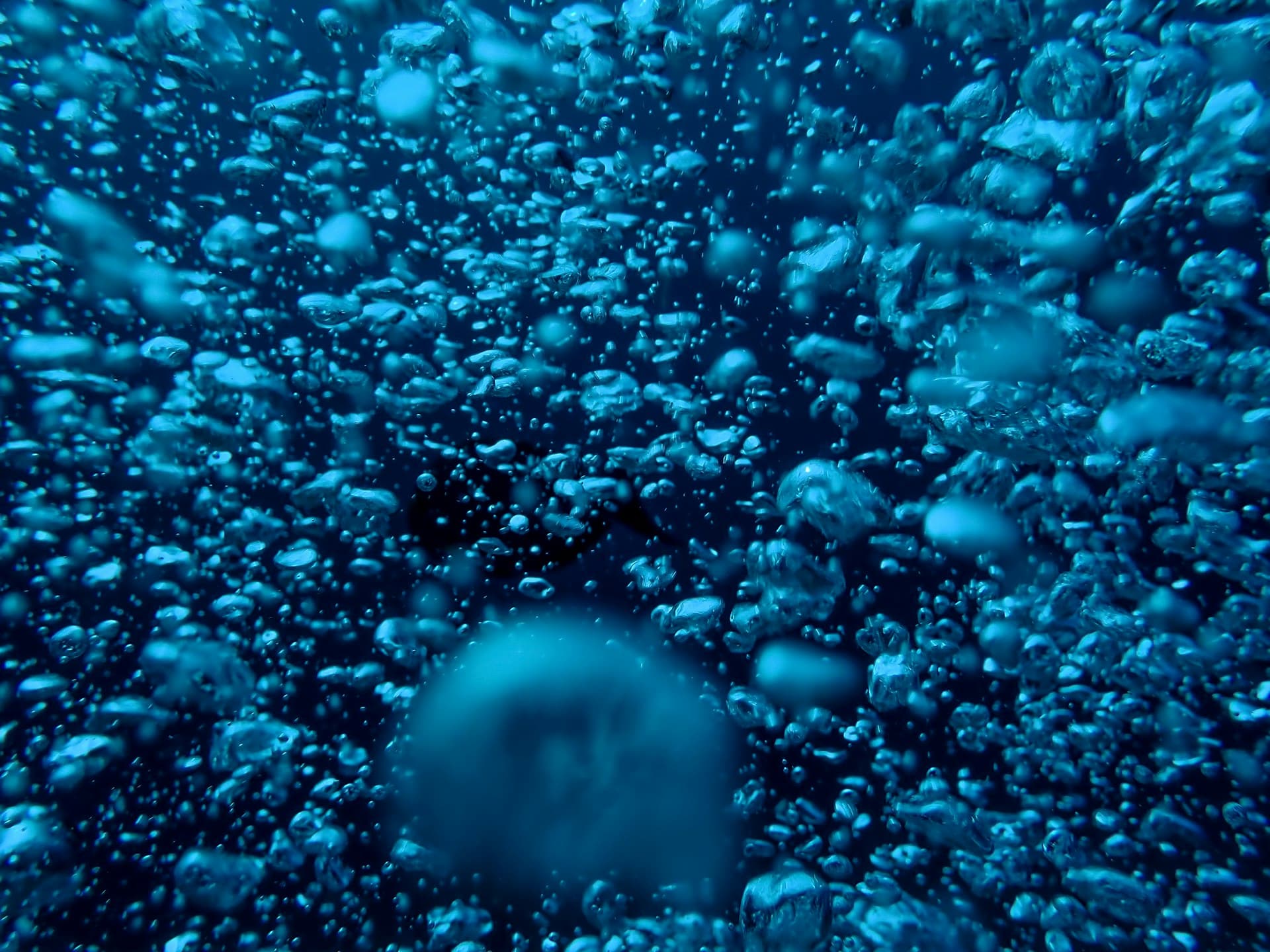
The Squeeze Begins
At 10 meters, pressure has doubled. At 30 meters, 4 atmospheres compress every gas space in your body to one-quarter.
Nitrogen Narcosis
Starting around 24-30 meters, dissolved nitrogen affects your central nervous system.
| Depth | Effect | Equivalent |
|---|---|---|
| 20m | Usually none | Sober |
| 30m | Mild euphoria, slowed thinking | 1-2 drinks |
| 40m | Impaired judgment | 3-4 drinks |
The critical thing: you often do not realize it is happening.
Where the Colors Go
- 5m: Red is gone
- 10m: Orange fades
- 20m: Yellow weakens
- 30m: Only blues and greens remain
This is why underwater photographers use strobes — artificial light restores stolen colors.
Air Consumption
At 30 meters, air is 4x as dense. You consume it 4x faster. A 200-bar tank lasts roughly 15-20 minutes at 30m versus 50-60 minutes at 5m.
The Ascent: Why Slow Matters
Dissolved nitrogen forms bubbles if you ascend too quickly — like opening a shaken soda bottle. The 9m/min ascent rate and 3-minute safety stop at 5 meters let nitrogen outgas gradually. They are not optional.
Respect the Physics
The ocean does not care about your experience level. Pressure physics affects a 500-dive instructor the same as a newly certified diver.