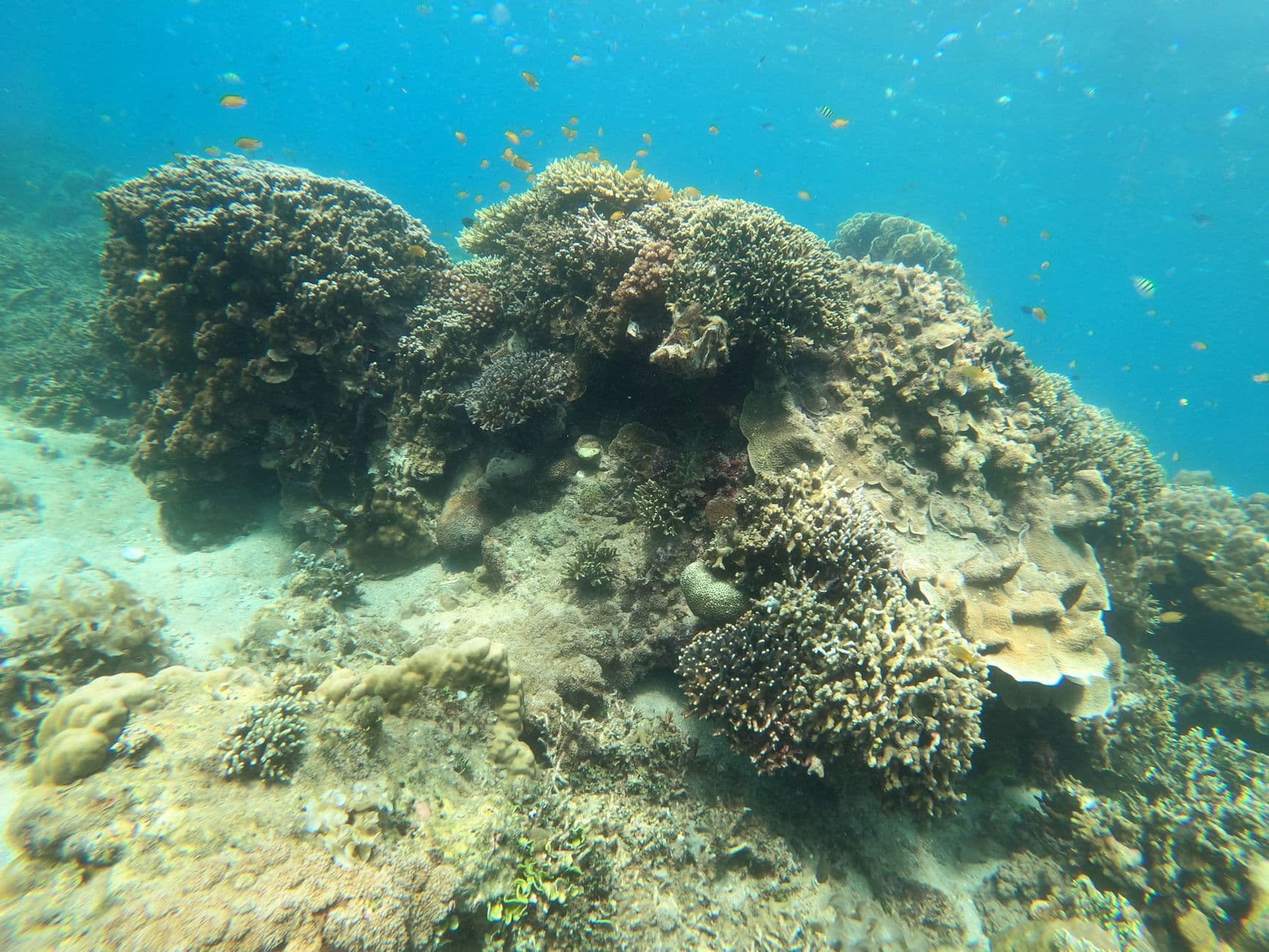
Top 10 Dive Sites in Vietnam: Con Dao, Nha Trang & Phu Quoc
Vietnam has over 30 documented dive sites across four regions, but the best of them cluster in three zones: Con Dao Archipelago, Nha Trang's Hon Mun MPA, and Phu Quoc's An Thoi Archipelago. Each delivers a different character — frontier wilderness, reliable reef diving, and relaxed island exploration.
This guide ranks the top 10 dive sites based on marine biodiversity, visibility, access, and overall dive experience. Every site is verified through local dive operator itineraries and field reports.
1. Hon Mun — East Wall (Nha Trang)
Type: Wall dive | Depth: 8–30 m | Distance from shore: ~20 min boat | Difficulty: Intermediate–Advanced | Best season: February–August
Hon Mun's East Wall is the signature dive site of Nha Trang Bay and the anchor of the Hon Mun Marine Protected Area — one of the first four MPAs recognized by the IUCN globally. The wall drops from 8 meters to 30+ meters, covered in hard and soft corals with caves and overhangs cut into the volcanic rock.
The marine life concentration here is exceptional. Napoleon wrasse patrol the wall, barracuda form loose aggregations in the blue, and trevally hunt along the reef edge. Moray eels — giant, honeycomb, and snowflake — are common residents in the crevices. Reef sharks (white-tip and black-tip) are occasional visitors, especially at the deeper sections below 20 meters.
Best conditions: March–June delivers the best visibility (15–20 m) with water temperatures of 26–29°C. The morning window is typically the calmest — afternoon dives may encounter stronger currents as daily heating amplifies tidal flow through the channel between Hon Mun and the mainland.
Target species: Napoleon wrasse, barracuda, trevally, moray eels, nudibranchs, reef sharks (occasional), coral groupers.
Practical tips: The wall is steep — maintain good buoyancy control to avoid damaging coral at the shallower sections. Bring a dive light for the caves and overhangs. A 3 mm wetsuit works year-round, though January–February may call for 5 mm.
2. Bay Canh Island (Con Dao)
Type: Fringing reef / turtle nesting | Depth: 3–25 m | Distance from shore: ~30 min boat from Con Son | Difficulty: All levels | Best season: March–July
Bay Canh Island (Hòn Bảy Cạnh) is Con Dao's ecological crown jewel. This 5.5 km² island is one of Vietnam's most important sea turtle nesting grounds — green sea turtles, hawksbill turtles, and olive ridley turtles all come ashore here between June and September. The fringing coral reefs that surround the island are among the healthiest in the country, thanks to decades of isolation and protected status as part of Côn Đảo National Park.
The dive profile is relaxed: shallow fringing reefs from 3–12 meters give way to a gentle slope to 25 meters. Visibility averages 15–20 meters in the best months (March–May), and currents are mild. The seagrass meadows that fringe the island are feeding grounds for the critically endangered dugong — one of the last remaining habitats for this species in Vietnam.
Target species: Green sea turtles, hawksbill turtles, dugong (rare), parrotfish, butterflyfish, angelfish, cuttlefish, octopus, moray eels, blue-spotted rays.
Best conditions: March–July for diving; June–August for turtle nesting peak. August–October for hatchling emergence.
Practical tips: Night dives off Bay Canh during turtle season are exceptional — you may see juvenile turtles in the shallows. Be aware that nesting beaches are protected after dark; guided night patrols operate during nesting season. A 3 mm wetsuit is adequate from March–November; use 5 mm in December–February.
3. Hon Ba Island (Con Dao)
Type: Wall dive | Depth: 5–25 m | Distance from shore: ~40 min boat from Con Son | Difficulty: Intermediate–Advanced | Best season: March–July
Hon Ba (Little Côn Lôn) is Con Dao's premier wall dive. The island's steep drop-offs create a wall that plunges from 5 meters into deep water, with coral-covered rock faces that attract larger pelagic species. Stronger currents here — 1.5–2.5 knots at peak tidal exchange — funnel nutrient-rich water past the wall, drawing barracuda, giant trevally, and Napoleon wrasse.
The marine life is more pelagic-oriented than Bay Canh. Schools of bigeye trevally and barracuda are consistent presences. Giant groupers have been reported at the deeper sections, and reef shark encounters increase as you move toward the outer edge of the archipelago.
Target species: Barracuda, giant trevally, bigeye trevally, Napoleon wrasse, snappers, groupers, reef sharks (occasional), giant moray eels.
Best conditions: March–June for calmest seas and best visibility. July–August remains good but conditions become slightly rougher. Avoid November–February when the northeast monsoon brings strong currents and reduced visibility.
Practical tips: This is drift diving territory — your guide will drop you upcurrent and the boat follows. Make sure your SMB deployment is solid. An Advanced Open Water certification is recommended due to the current and depth profile.
4. Hon Mun — Coral Gardens (Nha Trang)
Type: Coral garden / shallow plateau | Depth: 4–16 m | Distance from shore: ~20 min boat | Difficulty: Beginner–Intermediate | Best season: February–August
If the East Wall is Nha Trang's dramatic side, Coral Gardens is its gentle heart. This shallow plateau on the western side of Hon Mun Island features extensive hard and soft coral coverage — table corals, brain corals, and soft coral trees create a dense underwater garden accessible to divers of all levels.
The shallow profile (4–16 meters) means long bottom times and excellent light penetration for underwater photography. The marine life is reef-centric: anemonefish in their host anemones, butterflyfish, Moorish idols, angelfish, parrotfish, and triggerfish are all common. This is also a reliable site for encountering the banded sea krait — venomous but docile, frequently seen swimming through the coral gardens.
Target species: Anemonefish, butterflyfish, Moorish idols, emperor angelfish, parrotfish, banded sea krait, blue-spotted rays, cuttlefish.
Best conditions: March–August delivers the best visibility (12–18 m) and water temperatures of 26–29°C. This site is less affected by currents than the East Wall, making it suitable as a second dive after a deeper profile.
Practical tips: Excellent for macro photography — bring a close-up lens or diopter for nudibranchs and anemonefish. This is the ideal check-out dive for a Vietnam trip. A 3 mm shorty or full suit works year-round.
5. Hon Mot Island (Nha Trang)
Type: Coral gardens / sandy patches | Depth: 5–20 m | Distance from shore: ~20 min boat | Difficulty: All levels | Best season: Year-round
Hon Mot offers a mix of coral garden and sandy slope terrain in the protected waters of Nha Trang Bay. The site features gentle slopes with scattered coral bommies, sandy patches, and rocky outcrops that host a diverse range of marine life.
This is one of the most reliable sites in Nha Trang for cephalopod encounters — pharaoh cuttlefish are common, octopus sightings are frequent, and squid aggregations happen in season. Stingrays rest in the sandy patches, and moray eels occupy the rocky crevices. The easy conditions make it suitable for all levels.
Target species: Pharaoh cuttlefish, octopus, blue-spotted ribbontail ray, moray eels, nudibranchs, small reef fish.
Best conditions: Year-round diving is possible, but February–August offers the best visibility. The site is sheltered enough to operate in conditions that might close more exposed sites.
Practical tips: Keep an eye on the sandy patches for resting rays. Hon Mot is often paired with Hon Mun East Wall or Coral Gardens as a second, shallower dive. A dive light is useful for peering under coral ledges.
6. Dat Tham Wreck Area (Con Dao)
Type: Shipwreck | Depth: 15–30 m | Distance from shore: ~35 min boat | Difficulty: Advanced | Best season: March–July
The Dat Tham Wreck Area is Con Dao's only known wreck dive — an unidentified WWII-era shipwreck lying at 15–30 meters, encrusted in coral and home to a resident population of lionfish, batfish, and coral groupers. The wreck has not been fully identified, which adds an element of mystery to every dive.
The wreck structure is partially collapsed but still recognizable, with the hull and deck sections providing habitat for marine life. Barracuda and schooling jacks patrol the perimeter. Stronger currents can develop around the wreck structure, and the 30-meter max depth limits bottom time.
Target species: Lionfish, batfish, coral groupers, barracuda, schooling jacks, moray eels, fusiliers.
Best conditions: March–July for best visibility and calmest seas. The wreck can be current-dependent — operators will evaluate conditions the morning of the dive.
Practical tips: This is a deep recreational dive requiring good air consumption and buoyancy control. Maximum bottom time at 30 meters is limited to 20 minutes without mandatory decompression. Bring a dive light for the interior sections. An Advanced Open Water certification with deep specialty is strongly recommended.
7. Madison Reef (Nha Trang)
Type: Coral bommies / reef | Depth: 5–18 m | Distance from shore: ~25 min boat | Difficulty: All levels | Best season: March–August
Madison Reef is one of Nha Trang's most reliable sites for shark encounters. White-tip and black-tip reef sharks are regular visitors to the large coral bommies that dominate this site, and rays — including ocellated eagle rays — are frequently spotted cruising over the sandy channels between bommies.
The site features large coral formations separated by sandy channels, creating a terrain that attracts both resident reef fish and passing pelagics. Schools of fusiliers and bigeye trevally are common, and the site's accessibility makes it a popular choice for both morning and afternoon dive rotations.
Target species: White-tip reef sharks, black-tip reef sharks, ocellated eagle rays, bigeye trevally, fusiliers, coral groupers, snappers.
Best conditions: March–August for best visibility (12–18 m) and warmest water. The site is exposed enough that strong winds from typhoon season (October–December) can close it.
Practical tips: The reef sharks here are habituated to divers but not fed — maintain a respectful distance and avoid cornering them. The sandy channels between bommies are good for spotting rays resting or foraging. A 3 mm wetsuit is adequate year-round.
8. An Thoi Archipelago — Hon Thom (Phu Quoc)
Type: Fringing reef / coral gardens | Depth: 3–18 m | Distance from shore: ~20 min boat | Difficulty: All levels | Best season: December–April
Hon Thom (Pineapple Island) is the premier dive site in Phu Quoc's An Thoi Archipelago. The fringing reefs around this island offer the most consistent coral cover of any site in the region, with depths from 3–18 meters suitable for all experience levels.
Marine life is typical of the Gulf of Thailand: butterflyfish, angelfish, parrotfish, and anemonefish are common reef residents. Cuttlefish are frequently encountered on the sandy sections, and small rays — blue-spotted and bluespotted ribbontail — rest in the sandy patches between coral heads.
Target species: Butterflyfish, angelfish, parrotfish, anemonefish, cuttlefish, blue-spotted rays, small reef fish.
Best conditions: December–April for best visibility (8–15 m) and calmest seas. January–February is the absolute peak for water clarity. May–October sees visibility drop to 5–8 m.
Practical tips: Phu Quoc's diving is relaxed — expect short boat rides, mild currents, and easy conditions. This is the most beginner-friendly dive destination in Vietnam. A 3 mm shorty or rash guard is sufficient for the warm water (27–30°C). Combine with snorkeling at the nearby islands for a full day trip.
9. Moray Reef (Nha Trang)
Type: Boulder reef / crevices | Depth: 8–20 m | Distance from shore: ~25 min boat | Difficulty: Intermediate | Best season: February–August
Moray Reef lives up to its name. This boulder-covered reef site features extensive crevices, overhangs, and small caves that provide ideal habitat for moray eels — giant moray, honeycomb moray, and snowflake moray are all resident species here. The site is also reliable for scorpionfish and lionfish, which use the crevices for ambush hunting.
The boulder terrain creates a complex dive profile with swim-throughs and channels between large rock formations. Macro life is excellent — nudibranchs, mantis shrimp, and coral crabs are common finds for observant divers.
Target species: Giant moray eels, honeycomb moray eels, snowflake moray eels, scorpionfish, lionfish, nudibranchs, mantis shrimp, coral groupers.
Best conditions: February–August for best visibility. The site is relatively sheltered but can have moderate currents at the outer edges.
Practical tips: This is a site where slow, methodical diving pays off — search every crevice and overhang for eels and macro life. A dive light is essential for spotting morays in the shadows. Watch your buoyancy around the boulders — contact with fire coral is a real risk.
10. An Thoi Archipelago — Hon May Rut (Phu Quoc)
Type: Sandy slopes / coral bommies | Depth: 3–15 m | Distance from shore: ~20 min boat | Difficulty: Beginner | Best season: December–April
Hon May Rut rounds out the top 10 as the quintessential Phu Quoc beginner dive. Sandy slopes with scattered coral bommies create a gentle, approachable dive profile for first-timers and Discover Scuba participants. The shallow depths (3–15 meters) allow for extended bottom times, and the mild currents make it accessible even for nervous beginners.
Marine life leans toward the colorful and photogenic: clownfish in their anemones, blue-spotted stingrays resting on sand patches, parrotfish grazing on coral, and sea stars scattered across the sandy bottom. Snorkel-friendly sections mean this site works well for mixed ability groups.
Target species: Clownfish, blue-spotted stingrays, parrotfish, sea stars, anemones, small reef fish.
Best conditions: December–April. January–February offers the best visibility. This site is less affected by weather than other Phu Quoc sites due to its sheltered position.
Practical tips: This is a perfect first dive of a Vietnam trip, or a relaxed second dive after a deeper morning site. The sandy bottom means good buoyancy practice — avoid finning up sand that reduces visibility for other divers. A rash guard or thin shorty is all you need for exposure protection.
Quick Reference: Vietnam Top 10 Dive Sites
| Rank | Site | Region | Max Depth | Skill Level | Best Season | Key Species |
|---|---|---|---|---|---|---|
| 1 | Hon Mun East Wall | Nha Trang | 30 m | Int–Adv | Feb–Aug | Napoleon wrasse, barracuda, trevally |
| 2 | Bay Canh Island | Con Dao | 25 m | All levels | Mar–Jul | Green turtles, hawksbills, dugong |
| 3 | Hon Ba Island | Con Dao | 25 m | Int–Adv | Mar–Jul | Barracuda, GT, Napoleon wrasse |
| 4 | Hon Mun Coral Gardens | Nha Trang | 16 m | Beginner+ | Feb–Aug | Anemonefish, Moorish idol, krait |
| 5 | Hon Mot Island | Nha Trang | 20 m | All levels | Year-round | Cuttlefish, octopus, rays |
| 6 | Dat Tham Wreck | Con Dao | 30 m | Advanced | Mar–Jul | Lionfish, batfish, coral groupers |
| 7 | Madison Reef | Nha Trang | 18 m | All levels | Mar–Aug | Reef sharks, eagle rays, trevally |
| 8 | Hon Thom (An Thoi) | Phu Quoc | 18 m | All levels | Dec–Apr | Butterflyfish, cuttlefish, rays |
| 9 | Moray Reef | Nha Trang | 20 m | Intermediate | Feb–Aug | Giant moray, lionfish, scorpionfish |
| 10 | Hon May Rut (An Thoi) | Phu Quoc | 15 m | Beginner | Dec–Apr | Clownfish, stingrays, sea stars |
Choosing Your Vietnam Dive Adventure
Nha Trang offers the widest range of site types — walls, coral gardens, boulder reefs, and shark sites all within a 25-minute boat ride. It's the best base for a multi-day diving trip with variety.
Con Dao is for the diver who wants pristine reefs, turtle encounters, and the sense of being somewhere genuinely remote. Limited dive infrastructure means fewer divers but also less flexibility.
Phu Quoc delivers relaxed, beginner-friendly diving in warm, calm waters. It's not the destination for biodiversity or visibility bragging rights, but it's the perfect addition to a beach vacation.