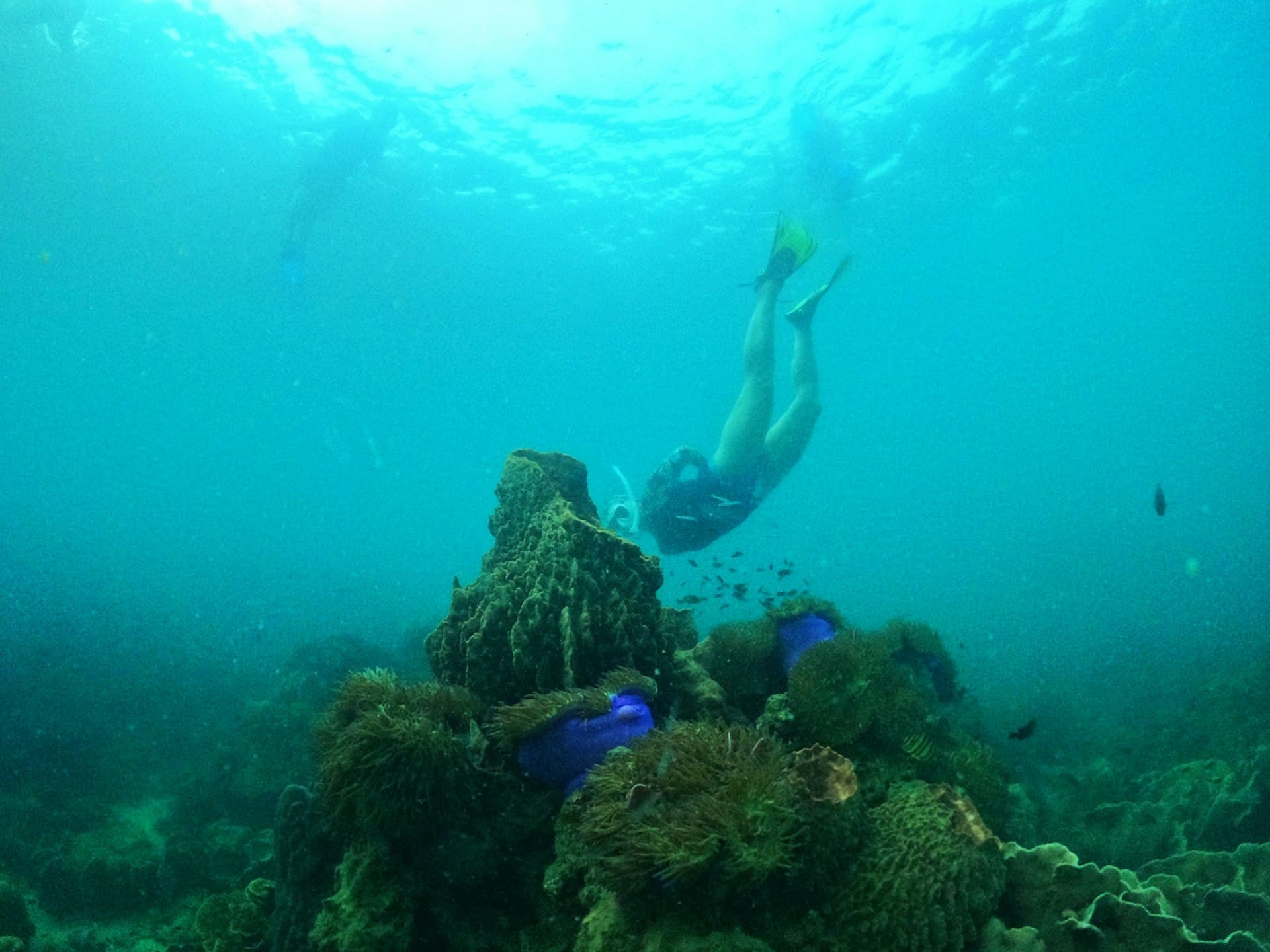
Diving Vietnam: The Complete Guide to Con Dao, Nha Trang, Phu Quoc & Beyond
Vietnam's 3,260-kilometer coastline holds one of Southeast Asia's most underrated dive scenes. While Thailand and Indonesia grab the headlines, Vietnam offers something different: four distinct dive regions, each with its own character, season, and marine life — and far fewer divers in the water.
This guide covers the four main dive regions worth planning a trip around — Con Dao Archipelago, Nha Trang / Hon Mun MPA, Phu Quoc Island, and Hoi An / Cham Islands — so you can pick the right destination for your skill level, budget, and what you want to see underwater.
Con Dao Archipelago: Vietnam's Frontier Dive Destination
Con Dao is a 16-island archipelago 230 kilometers southeast of Ho Chi Minh City, and it's the closest thing Vietnam has to a frontier dive destination. This former prison colony — the infamous "tiger cages" held Vietnamese revolutionaries during French rule — was isolated from mass tourism for decades, and that isolation preserved one of the healthiest reef systems in the country.
The diving: Eight documented dive sites across the archipelago, from turtle nesting beaches to WWII-era wrecks. Bay Canh Island is the crown jewel — a Ramsar Wetland of international importance where green sea turtles, hawksbill turtles, and olive ridley turtles nest on the beaches from June to September. Hon Ba Island offers wall dives with barracuda, trevally, and occasional Napoleon wrasse. The Dat Tham Wreck Area has an unidentified WWII-era shipwreck encrusted in coral, accessible to advanced divers at 15–30 meters.
Water temperature: 25–30°C (77–86°F) year-round. The coolest months are January–February (25–27°C), warmest are May–June (28–30°C).
Visibility: 10–20 meters on average, reaching 25 meters in calm conditions during the dry season (March–July). Visibility drops November–January when the northeast monsoon stirs up sediment.
Best season: March–October, with the sweet spot being March–July (lowest rainfall, calmest seas, best visibility).
Who it's for: Intermediate and above divers who value pristine, uncrowded reefs over convenience. Con Dao has exactly one dedicated dive center plus resort-based diving at Six Senses. You're here for the isolation, the turtle encounters, and the feeling of diving somewhere that still feels genuinely wild.
Safety note: No hyperbaric chamber on Con Dao. The nearest is in Ho Chi Minh City, 230 kilometers away. DAN insurance with evacuation coverage is mandatory.
Nha Trang / Hon Mun MPA: Vietnam's Dive Capital
Nha Trang is the dive training capital of Vietnam. More PADI-certified divers are trained here than anywhere else in the country. The centerpiece is Hon Mun Marine Protected Area — one of the first four MPAs in the world recognized by the IUCN — which protects a dense concentration of coral reefs, walls, and caves just 20 minutes by boat from shore.
The diving: Ten documented sites within Nha Trang Bay, ranging from shallow coral gardens at Hon Tam (3–14 meters) to the dramatic East Wall of Hon Mun (8–30 meters) with caves, overhangs, and pelagic visitors. Madison Reef delivers white-tip and black-tip reef sharks, rays, and schools of fusiliers. Moray Reef is, as the name suggests, prime territory for giant moray eels, honeycomb moray eels, and snowflake morays.
Water temperature: 24–29°C (75–84°F). Coolest January–February (24–25°C), warmest May–September (28–29°C).
Visibility: 8–20 meters. Best March–August during the dry season. October–December sees reduced visibility from typhoon-related runoff.
Best season: February–August, with the peak window March–June.
Who it's for: All levels. This is the best region in Vietnam for beginners — multiple operators run Discover Scuba programs, and the shallow sites at Hon Tam and Hon Mot are gentle enough for first-timers. Advanced divers can push deeper at Hon Mun's East Wall or take a day trip north to Xuan Tu (Whale Island) for seasonal whale shark encounters.
Dive shops: Nine operators in Nha Trang, including several PADI 5-Star IDC resorts. Rainbow Divers, Master Divers, and Sailing Club Divers are the most established. Prices run $30–80 per dive, with significant discounts for packages.
Phu Quoc Island: Visa-Free Island Diving
Phu Quoc is Vietnam's largest island (575 km²) and offers a different diving experience — warmer water, shorter boat rides, and the country's best visa policy (30-day visa-free entry for all nationalities when arriving through Phu Quoc International Airport).
The diving: Seven sites concentrated around the An Thoi Archipelago at the southern tip of the island. Hon Thom (Pineapple Island) has the most consistent coral cover with depths of 3–18 meters suitable for all levels. Hon May Rut offers shallow sandy slopes with blue-spotted stingrays and clownfish. For intermediate divers, Hon Ghenh delivers more exposed conditions with barracuda and trevally.
Water temperature: 26–31°C (79–88°F) — the warmest of Vietnam's dive regions, thanks to its position in the Gulf of Thailand. Coolest January (26–27°C), warmest April–May (29–31°C).
Visibility: 5–15 meters. The Gulf of Thailand carries more sediment than Vietnam's eastern coast, so Phu Quoc visibility is lower. Best months December–May.
Best season: December–April. The rest of the year brings monsoon rains that reduce visibility and make sea conditions rougher.
Who it's for: Resort divers, families, and vacation divers who want to combine beach time with decent diving. Phu Quoc is the least challenging dive destination in Vietnam — currents are mild (1 knot or less), depths are moderate, and the vibe is relaxed.
Hoi An / Cham Islands: UNESCO Biosphere Diving
The Cham Islands (Cu Lao Cham) were declared a UNESCO Biosphere Reserve in 2009, and diving here is strongly seasonal — operators typically run from March to August only. Five sites are documented around the islands, with Hon Lao offering the most variety (5–22 meters, coral reefs, and rocky shores) and Bai Chong providing a shallow shore dive option.
Season: March–August only. The rest of the year, typhoons and rough seas make diving unreliable or impossible. This is the most seasonal destination in Vietnam's dive lineup.
How to Choose Between Vietnam's Dive Regions
| Factor | Con Dao | Nha Trang | Phu Quoc | Cham Islands |
|---|---|---|---|---|
| Best season | Mar–Oct | Feb–Aug | Dec–Apr | Mar–Aug |
| Water temp (°C) | 25–30 | 24–29 | 26–31 | 23–29 |
| Visibility (m) | 10–20 | 8–20 | 5–15 | 5–15 |
| Difficulty | Int–Adv | All levels | Beginner+ | All levels |
| Dive ops | 1 | 9 | 6 | 2 |
| Price/dive | $50–80 | $30–80 | $35–65 | $40–70 |
Practical Information
Visa: All nationalities need a visa for mainland Vietnam (e-visa $25, 90 days, 3 business day processing at evisa.xuatnhapcanh.gov.vn). Exception: 30-day visa-free entry through Phu Quoc International Airport.
Getting there: Con Dao by 1-hour flight from HCMC (Vietnam Airlines/VASCO, $80–150 round trip). Nha Trang via Cam Ranh Airport (CXR), 35km from town. Phu Quoc via PQC Airport. Hoi An via Da Nang Airport (DAD), 30km away.
Cost: Vietnam is one of the cheapest dive destinations in Southeast Asia. Street food $1–3, restaurant meals $3–8, beer $0.50–1. Dive packages in Nha Trang start around $30 per dive.
Currency: Vietnamese Dong (VND), approximately 25,000 VND to $1 USD. Cash is widely required. ATMs available in all dive towns.
Bottom Line
Vietnam delivers four distinct dive experiences in one country. Con Dao for the frontier diver who values pristine reefs and solitude over convenience. Nha Trang for the diver who wants reliable conditions, professional operators, and the best variety of site types. Phu Quoc for the vacation diver combining beach and diving. And the Cham Islands for the diver traveling through central Vietnam's cultural heartland.
The common thread across all four regions? Fewer divers, lower prices, and genuinely warm hospitality — both above and below the water.