Top 7 Dive Sites in Socotra: Ranked Guide for 2026
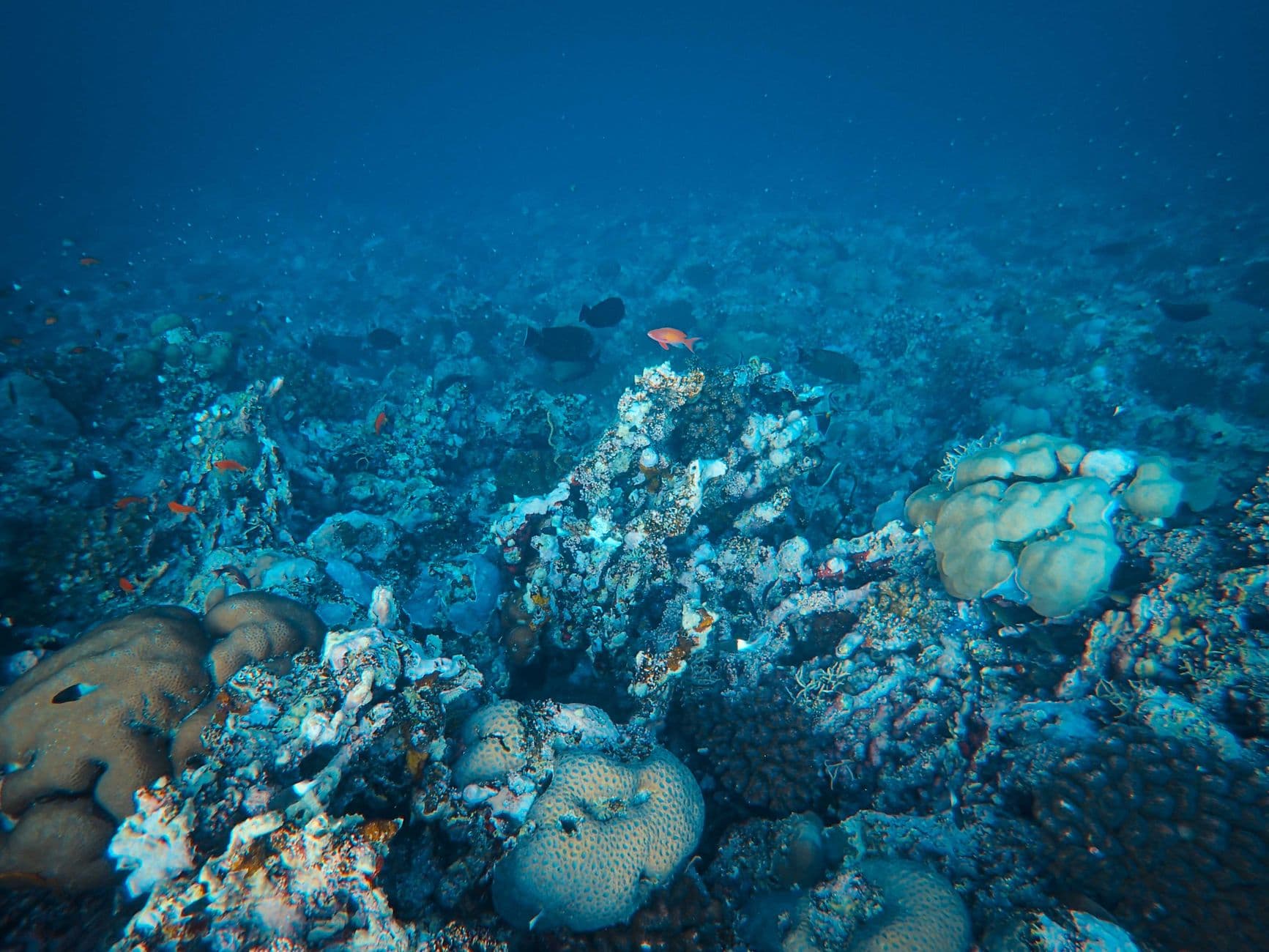
Socotra's sixteen dive sites are spread across five marine areas, each with a completely different character. Some are sheltered coral gardens calm enough for beginners. Others are shipwreck graveyards where centuries of maritime history lie scattered across the seafloor. One is a deep underwater mountain where mantas patrol the 50-meter drop-off.
This guide ranks the best dive sites across the island so you can plan your expedition around what you want to see, your skill level, and the season you're traveling. Every site listed here is verified by the Dihamri Diving Center and supported by field reports from tour operators.
1. Dihamri Deep Mountain Wall
Type: Deep wall / mountain | Depth: 20–50 m | Location: Dihamri MPA, north-central coast | Difficulty: Advanced | Best season: March–April, October–November
The Deep Mountain Wall is Socotra's signature dive and the deepest single site on the island. An underwater mountain formation in Dihamri Bay rises from the seafloor and creates a dramatic vertical wall that drops from 20 meters to 50 meters — the maximum recreational depth on Socotra. This is where large pelagics come to hunt, and the wall itself is covered in gorgonian fans, soft corals, and cup corals that thrive in the current-swept environment.
The dive profile works like this: descend along the reef wall to 20 m, follow the contour down to 30–40 m, and hold bottom in the 40–50 m zone where the mountain face opens into the deep blue. This is a multilevel dive requiring careful nitrogen management — your computer is non-negotiable here. The marine life at depth includes manta rays, barracuda, and blacktip reef sharks. In the right season (March–April), whale sharks pass through the channel.
Target species: Manta rays, barracuda, blacktip reef sharks, giant groupers, whale sharks (March–April), 80+ coral species, 150+ fish species.
Dive profile: Multilevel. Standard 20–40 m profile with a deep ceiling at 50 m. AOWD certification minimum.
Why it's the best: The combination of depth, marine biodiversity, and reliable large-animal encounters makes this the most complete dive site on Socotra. It's the one site experienced divers talk about for years after.
Practical tips: Descend early in the dive to maximize bottom time at depth. Use a reef hook if current is running — the wall provides natural protection from the main flow. Nitrox is not available on Socotra, so plan your surface intervals accordingly.
2. Ras Irsil Shipwreck Graveyard
Type: Shipwreck / drift dives | Depth: 5–25 m | Location: Northeastern cape | Difficulty: Intermediate–Advanced | Best season: February (calmest currents), October–April
Ras Irsil is one of the most unique dive sites in the world. Hundreds of vessels — from ancient dhows to 20th-century steel ships — have been lost at this cape over centuries, driven onto an underwater mountain by treacherous currents and navigational errors. The result is an underwater museum: a scattered debris field spanning centuries of maritime history, with steel hull fragments, coral-encrusted cargo, and the skeletal remains of wooden ships visible across seven designated dive sites.
The wrecks span three depth zones. Shallow wrecks (5–12 m) are partially intact and coral-encrusted — accessible to intermediate divers with calm conditions. Mid-depth wrecks (10–18 m) feature steel hulls with enterable compartments (extreme caution required). Deep wrecks (15–25 m) and the current drift dive along the cape deliver the most spectacular encounters. The drift dive is an open-ocean experience where the current carries you along the cape wall past multiple wrecks — this is the most demanding dive on Socotra.
February offers the calmest currents at Ras Irsil, making it the ideal month for wreck exploration. Even then, currents run moderate (1.5–2.5 knots). Outside February, expect strong flows.
Hazards: Strong currents, entanglement risk from old fishing nets on wrecks, reduced visibility in non-peak months. This is NOT a site for beginner divers.
Target species: Snappers, barracuda, moray eels, hammerhead sharks (rare), schooling reef fish that use wrecks as habitat.
Practical tips: Bring a dive light — the wreck interiors and deep crevices between debris fields are dark year-round. Wear a 3–5 mm suit (febrical waters 23–26°C). Do not enter any wreck without explicit guide approval. The nearest hyperbaric chamber is 1,100 km away in Oman.
3. Dihamri Coral Gardens (Shallow Reef)
Type: Coral gardens | Depth: 3–15 m | Location: Dihamri MPA | Difficulty: Beginner | Best season: October–April
The Dihamri Coral Gardens are the most accessible dive site on Socotra and the only site suitable for uncertified divers doing adventure dives (up to 10 m). This near-shore area features white sand patches interspersed with coral bommies, healthy hard and soft corals, and abundant reef fish. The shallow profile makes it ideal for long bottom times, photography, and introducing new divers to Socotra's underwater world.
The site is also one of Socotra's best for macro life — scorpionfish, nudibranchs, and the smaller reef species are plentiful. Mantas and turtles pass through regularly. Night dives are available in this same area, where lobsters, moray eels, and sleeping turtles become the main attraction.
Target species: Parrotfish, scorpionfish, reef fish of all varieties, lobsters (night), turtles.
Dive profile: Single-level shallow dive. Unlimited bottom time within no-deco limits.
Why it's great: This is your check-out dive, your night dive, your macro photography location, and your companion diver's intro to Socotra — all in one site.
Practical tips: The sand patches between bommies make this a gentle site for buoyancy practice. Bring a macro lens for the scorpionfish and nudibranchs. The best light for photography is mid-morning.
4. Rosh Reef Wall
Type: Coastal reef wall | Depth: 10–20 m | Location: Northeast coast | Difficulty: Beginner–Intermediate | Best season: October–April
Rosh features a single extensive reef approximately 1 kilometer long running parallel to the northeast shore. The wall is gentle and accessible — a gradual slope from 10 m to 20 m with excellent coral cover throughout. This is one of the best beginner-to-intermediate sites on Socotra because the conditions are consistently manageable and the marine life is reliably abundant.
The signature species at Rosh is the white-spotted guitarfish, a flat shark-like ray that rests on the sandy patches between coral heads. These distinctive creatures are seen on nearly every dive at Rosh during the peak season. Blacktip and whitetip reef sharks are regular visitors, and the giant coral formations — some reaching 3+ meters across — are among the largest on the island.
Rosh has an eco-campsite with modern facilities, including proper toilets and showers, making it one of the more comfortable overnight diving locations on Socotra. Night dives are available and productive — the reef wall at night is a different world.
Target species: White-spotted guitarfish, blacktip reef sharks, whitetip reef sharks, giant coral formations, diverse reef fish.
Practical tips: Spend time at Rosh's eco-camp — it's one of the most comfortable basecamps on the island. The guitarfish sightings are most reliable in the late afternoon. Bring a wide-angle lens for the giant coral formations.
5. Shoab Bay — Sunrise Wreck
Type: Shipwreck | Depth: 25–27 m | Location: West coast near Qalansiyah | Difficulty: Advanced | Best season: February–April (calmest)
The Sunrise wreck in Shoab Bay is Socotra's largest single shipwreck: a steel ship that sank in the center of the bay and now sits at 25–27 m on a sandy bottom. The wreck structure is heavily encrusted with coral growth, creating an artificial reef that draws an extraordinary concentration of marine life.
The main attraction here is the giant skates — individuals with wingspans up to 3 meters patrol the wreck's perimeter. They're so common that local dive guides call them the site's signature species. Schooling barracuda hang in the water column above the wreck. Large groupers and moray eels inhabit the structure. Open-water species, including dolphins, pass through the bay regularly.
Access requires a 1-hour boat ride from Qalansiyah on the west coast. The dive itself is 25–27 m, which means it's a bottom-time-limited dive. Strong currents are possible — this is classified as an advanced dive even in the calmest conditions.
Hazards: Currents, depth limits, and the fact that a 3-meter skate can appear from the blue at any moment (not actually a hazard, but it will get your attention).
Target species: Giant skates (up to 3 m), barracuda, groupers, moray eels, dolphins, the wreck structure itself.
Practical tips: Plan this dive for the morning when the light hits the wreck structure best. The boat ride from Qalansiyah is exposed to open water — take seasickness precautions. The best conditions are February through April.
6. Adho Reserve — North Reef
Type: Fringing coral reef | Depth: 5–20 m | Location: East coast | Difficulty: Beginner | Best season: October–April
Adho Reserve on the east coast offers Socotra's most rustic and secluded dive experience. There is no equipment rental, no dive shop, no running water at the campsite — you bring everything and you handle yourself. In return, you get pristine coral reefs with exceptionally low diver traffic.
The North Reef site (5–20 m) features fringing coral with colorful soft corals and shallow plateaus teeming with life. The isolation means the coral is in near-pristine condition — no anchor damage, no diver impact on the fragile formations. Octopus, lobsters, and moray eels are common sightings.
Practical reality: Adho requires self-sufficiency. If your itinerary includes Adho, coordinate with Dihamri Diving Center to transport equipment before heading to the east coast. The camping is basic but the solitude is absolute — the best site on the island for divers who want to be completely off-grid.
Target species: Soft corals, octopus, lobsters, moray eels, reef fish.
7. Dihamri Mid-Depth Slope
Type: Coral slope | Depth: 10–25 m | Location: Dihamri MPA | Difficulty: Intermediate | Best season: October–April
The Mid-Depth Slope at Dihamri connects the shallow coral gardens to the deep mountain wall, creating a gradient of coral zones that changes character as you descend. At 10–15 m, the slope is dominated by hard corals and schooling reef fish. Between 15–20 m, gorgonian fans and soft corals take over as the light diminishes. At 20–25 m, the slope transitions to cup corals and deeper-water species.
This is the sweet spot for divers who want more than the Coral Gardens but aren't ready (or certified) for the 40 m+ Deep Mountain Wall. The mid-slope delivers reliably good marine life — manta rays pass through at this depth, turtles are common, and the reef fish diversity is the highest in Dihamri.
Target species: Gorgonian fans, soft corals, manta rays, turtles, diverse reef fish, scorpionfish.
Practical tips: This site works well as a second dive after the Coral Gardens — the gradual depth increase makes it a natural progression. Bring both macro and wide-angle lenses if possible.
Summary Table
| Rank | Site | Type | Max Depth | Difficulty | Best Season | Key Species |
|---|---|---|---|---|---|---|
| 1 | Dihamri Deep Mountain | Deep wall | 50 m | Advanced | Mar–Apr, Oct–Nov | Mantas, whale sharks, barracuda |
| 2 | Ras Irsil Wrecks | Shipwreck | 25 m | Int–Adv | Feb for calmest, Oct–Apr | Snappers, barracuda, hammerheads |
| 3 | Dihamri Coral Gardens | Shallow reef | 15 m | Beginner | Oct–Apr | Parrotfish, scorpionfish, turtles |
| 4 | Rosh Reef Wall | Coastal wall | 20 m | Beginner–Int | Oct–Apr | Guitarfish, reef sharks, giant corals |
| 5 | Shoab Sunrise Wreck | Shipwreck | 27 m | Advanced | Feb–Apr (calmest) | Giant skates (3 m), barracuda |
| 6 | Adho North Reef | Fringing reef | 20 m | Beginner | Oct–Apr | Octopus, lobsters, soft corals |
| 7 | Dihamri Mid-Slope | Coral slope | 25 m | Intermediate | Oct–Apr | Mantas, turtles, gorgonians |
Choosing Your Socotra Dive Adventure
Socotra's dive sites range from beginner-friendly coral gardens to advanced deep walls and shipwreck drift dives. Here's how to match your skill level to the right sites:
- Beginner / Adventure Diver (0–20 dives): Start with Dihamri Coral Gardens, Adho North Reef, and Rosh Reef Wall. These are shallow, gentle, and consistently rewarding. Adventure dives up to 10 m are available at Dihamri for uncertified divers.
- Advanced Open Water (20–50 dives): Add Dihamri Mid-Slope and Shoab Sunrise Wreck (with guide). You're ready for the full Dihamri experience.
- AOWD with deep current experience (50+ dives): Tackle Dihamri Deep Mountain Wall and the Ras Irsil drift dive. These are the experiences that make Socotra legendary.
- 100+ logged dives + buoyancy mastery: Explore the deepest shipwreck at Ras Irsil (25 m), run the full Ras Irsil drift circuit, and plan multi-day expeditions to Shoab and the south coast.
Bottom Line
Socotra offers only sixteen sites across five areas, but every one of them is a genuine expedition dive — uncrowded, uncommercialized, and unforgettable. The Dihamri Deep Mountain Wall is the island's defining dive. The Ras Irsil shipwreck graveyard is one of the most unique sites on the planet. The Coral Gardens give you a gentle introduction. And every dive you do here carries the knowledge that there is no hyperbaric chamber within 1,100 km, no other dive boats competing for space, and no experience quite like it anywhere else.