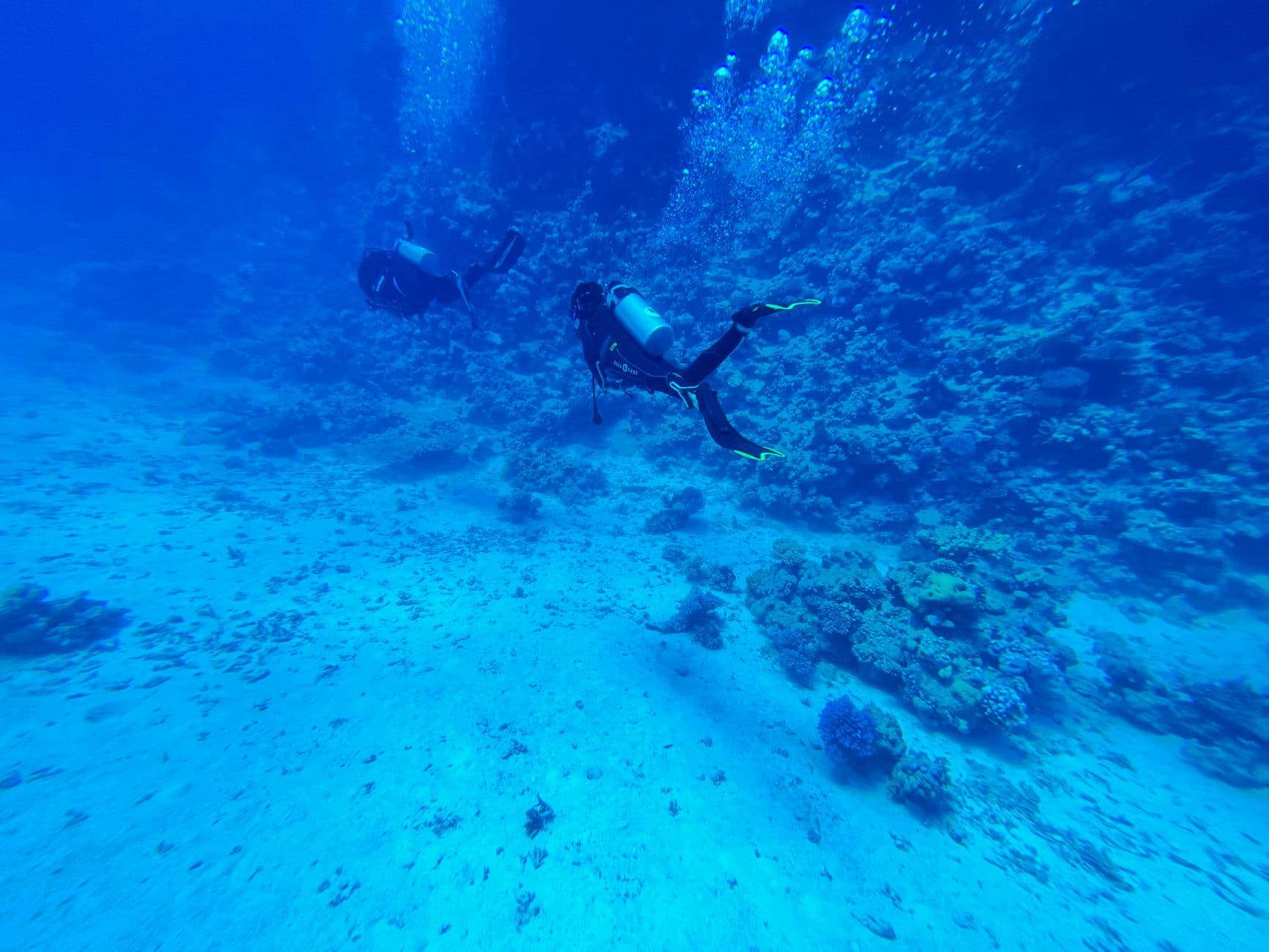
Socotra Diving: The Ultimate Guide to the Indian Ocean's Last Frontier
Socotra is not a dive destination you visit casually — it's an expedition.
This Yemeni archipelago, 380 kilometers south of the Arabian Peninsula, is called the Galápagos of the Indian Ocean for good reason. A continental fragment that split from Gondwana 20 million years ago, Socotra evolved in isolation, producing an alien landscape of dragon blood trees, desert roses, and limestone plateaus. Above water, it looks like another planet. Below water, it's something just as extraordinary: pristine coral reefs, a shipwreck graveyard carrying centuries of maritime history, and some of the most remote diving on Earth.
The numbers tell the story of what you're signing up for. One dedicated dive center. One PADI-certified dive master. Sixteen dive sites across five marine areas. A maximum of eight divers per trip, limited not by demand but by cylinder supply on the island. This is expedition diving stripped to its bones — no walk-in dive shops, no daily boat dives from a marina, no resort courses. Just you, the reef, and the Indian Ocean.
Socotra's Five Marine Areas
Socotra's diving is concentrated in five distinct marine areas, each offering a different experience. The island sits at 12.463°N, 53.823°E in the northwest Indian Ocean, and its 1-kilometer coastal reef shelf drops abruptly into deep water, creating dramatic topography across all five areas.
Dihamri Marine Protected Area — The Premier Dive Zone
Dihamri, on the north-central coast east of Hadiboh, is Socotra's flagship dive destination and the home of the island's only dive center. The area protects an underwater mountain formation that enables Socotra's deepest dives, reaching down to 50 meters. With 80+ coral species and 150+ fish species documented in this single bay, Dihamri is the most biodiverse dive site on the island.
Five named dive sites span a range of depths and skill levels here. The near-shore coral gardens (3–15 m) are beginner-accessible, with white sand patches and abundant reef fish. Mid-depth slopes (10–25 m) deliver gorgonian fans and soft corals. The deep mountain wall (20–50 m) is the big draw for advanced divers — a vertical drop-off where large pelagics patrol the edge. Night dives are available in the shallows, where octopus, moray eels, and sleeping turtles emerge after dark.
Marine life you'll see: Manta rays, barracuda, blacktip reef sharks, sea turtles, giant groupers, parrotfish, scorpionfish, lobsters, and the full spectrum of coral reef fish. The manta ray season peaks in November and March.
Adho Reserve — Remote and Pristine
On the east coast, accessible by foot or jeep from the Adourno area, Adho is the most rugged dive site on Socotra. There is no equipment rental here — you bring everything. In return, you get pristine coral reefs with minimal human impact.
Two dive sites sit within the reserve. The north reef (5–20 m) features fringing coral with colorful soft corals and shallow plateaus. The south drop-off (5–30 m) offers a gentle slope into deeper water with healthy coral cover and abundant fish. The camping here is rustic, the diving is self-sufficient, and the solitude is absolute.
Marine life you'll see: Soft corals, octopus, lobsters, moray eels, and the full complement of Socotran reef fish.
Rosh Marine Protected Area — The Long Reef
Rosh, on the northeast coast approximately 1 kilometer offshore, features a single extensive reef stretching 1 kilometer parallel to the shore. The reef wall (10–20 m) is gentle and accessible, making it one of the best beginner-to-intermediate dive sites on the island.
The signature species here is the white-spotted guitarfish, a distinctive ray species that's reliably sighted on the sandy patches between coral heads. Blacktip and whitetip reef sharks also patrol the reef regularly. The eco-campsite at Rosh has modern facilities, and night dives are available.
Marine life you'll see: White-spotted guitarfish, blacktip reef sharks, whitetip reef sharks, giant coral formations, colorful reef fish.
Ras Irsil Cape — The Shipwreck Graveyard
Ras Irsil, at the northeastern tip of Socotra, is one of the most extraordinary dive sites in the world. Hundreds of vessels have been lost here over centuries — a result of an underwater mountain, strong currents, and centuries of navigation errors before modern GPS. The seafloor here is a museum of maritime history, with wreck fragments spanning decades and layered with coral growth.
Seven designated dive sites explore the wreck fields. Shallow wrecks (5–12 m) are partially intact and coral-encrusted. Mid-depth wrecks (10–18 m) feature steel hulls that enterable with caution, surrounded by schooling fish. Deep wrecks (15–25 m) and drift dives along the cape deliver the most dramatic experiences. The current drift dive is the most demanding site on the island, requiring solid buoyancy control and comfort with open-ocean conditions.
Hazards: Strong currents, reduced visibility outside peak season, entanglement risk from old fishing nets. This area is intermediate-to-advanced only.
Marine life you'll see: Hammerhead sharks (rare), snappers, barracuda, moray eels, and the reef fish that have made Ras Irsil's wrecks their home.
Shoab Bay — The Sunrise Wreck
On the west coast near Qalansiyah, reachable by a 1-hour boat ride, Shoab Bay holds Socotra's most famous single wreck: the "Sunrise," a large steel ship sitting at 25–27 m depth on a sandy bottom, now transformed into an artificial reef.
The Sunrise wreck is Socotra's largest shipwreck, and the marine life around it is spectacular. Giant skates with wingspans up to 3 meters patrol the wreck's perimeter. Schooling barracuda, large groupers, and moray eels are resident. The wreck itself is heavily encrusted with coral, and the open water above attracts dolphins regularly.
Best months: February through April for the calmest conditions. This is an advanced dive — currents around the wreck can be strong.
Marine life you'll see: Giant skates, barracuda, groupers, moray eels, dolphins, coral-encrusted wreck structure.
Who Socotra Is For
Socotra is not a destination for casual vacation divers. It is the most rewarding dive experience on Earth for divers who want:
- Expedition diving — the real thing: charter flights, visa processing, camping on remote beaches, one dive master running the show
- Pristine, uncrowded reefs — you will not share a dive site with another boat. There are no other boats.
- Shipwreck exploration — centuries of maritime history scattered across the seafloor at Ras Irsil
- Pelagic encounters — manta rays, whale sharks (seasonal), reef sharks, giant skates, and the full Indian Ocean ecosystem
- Above-water adventure — Dragon Blood Trees, limestone plateaus, 1,503-meter mountain peaks, a UNESCO World Heritage site above and below the water
Socotra is suitable for Advanced Open Water divers and above. The minimum certification for most dives is AOWD, and the single dive master on the island (Naseem, PADI-certified and UNDP-trained) personally guides every dive. Beginner divers can do shallow adventure dives at Dihamri (up to 10 m), but the full Socotra experience is built for experienced divers who can handle current, depth, and remote logistics.
The Seven Dive Operators
Socotra has exactly one dedicated dive center — Dihamri Diving Center (run by Socotra Eco-Tours) — and six tour operators that include diving in their multi-day island expeditions. Every diving operation on the island routes through Dihamri's equipment and dive masters. Tour prices range from approximately $1,950 to $2,500 for an 8-day all-inclusive package (excluding flights at $950 and visa at $200). Extra dives by boat: $175. Night dives: $175.
The key operators are Traveling Socotra (best-documented 8-day diving itinerary), Socotra Trek, Socotra Phoenix Tours, Legendary Socotra, Socotra Island Expeditions, and Socotra Info (Denis Romanov, who runs expeditions to outlying islands Darsa, Samha, and Abd al-Kuri).
Practical Overview
Socotra sits in the Arabia Standard Timezone (UTC+3). The Yemeni Rial (YER) is the official currency, but USD is accepted everywhere — bring crisp $50/$100 bills from specific series (2009, 2013, 2017, or 2023). ATMs do not work on the island. The airport code is SCT (Hadiboh). Flights are exclusively through Yemenia Airways from Jeddah (weekly Tuesday, ~$950 round-trip, booked through your tour operator). Visa processing takes 3 weeks and runs $150–200.
The diving season runs October through April, with March–April and October–November the optimal windows. The monsoon (Khareef) from June through September makes diving effectively impossible — strong SW winds, rough seas, and airborne dust.
Critical safety note: There is no hyperbaric chamber on Socotra Island. The nearest chambers are in Oman and the UAE — approximately 2–3 hours flight away via evacuation. Every diver on Socotra should carry DAN (Divers Alert Network) dive accident insurance with evacuation coverage.
Bottom Line
Socotra is the last truly remote dive destination on Earth. One dive master, sixteen dive sites, an alien landscape above water, and shipwreck-strewn reefs below. If you want crowds, walk-in shops, and resort diving, go to the Caribbean. If you want an expedition that will mark you as someone who has dived one of the most untouched places on the planet, Socotra is waiting.
It costs about $3,000 for an 8-day trip, requires three weeks of visa processing, and demands Advanced Open Water certification and comfort with remote logistics. But for the diver who goes, Socotra delivers something no other destination can: the sense that you are the first person to see what you're about to see.