Top 10 Dive Sites in Sharm El Sheikh: Wrecks, Reefs, and Walls
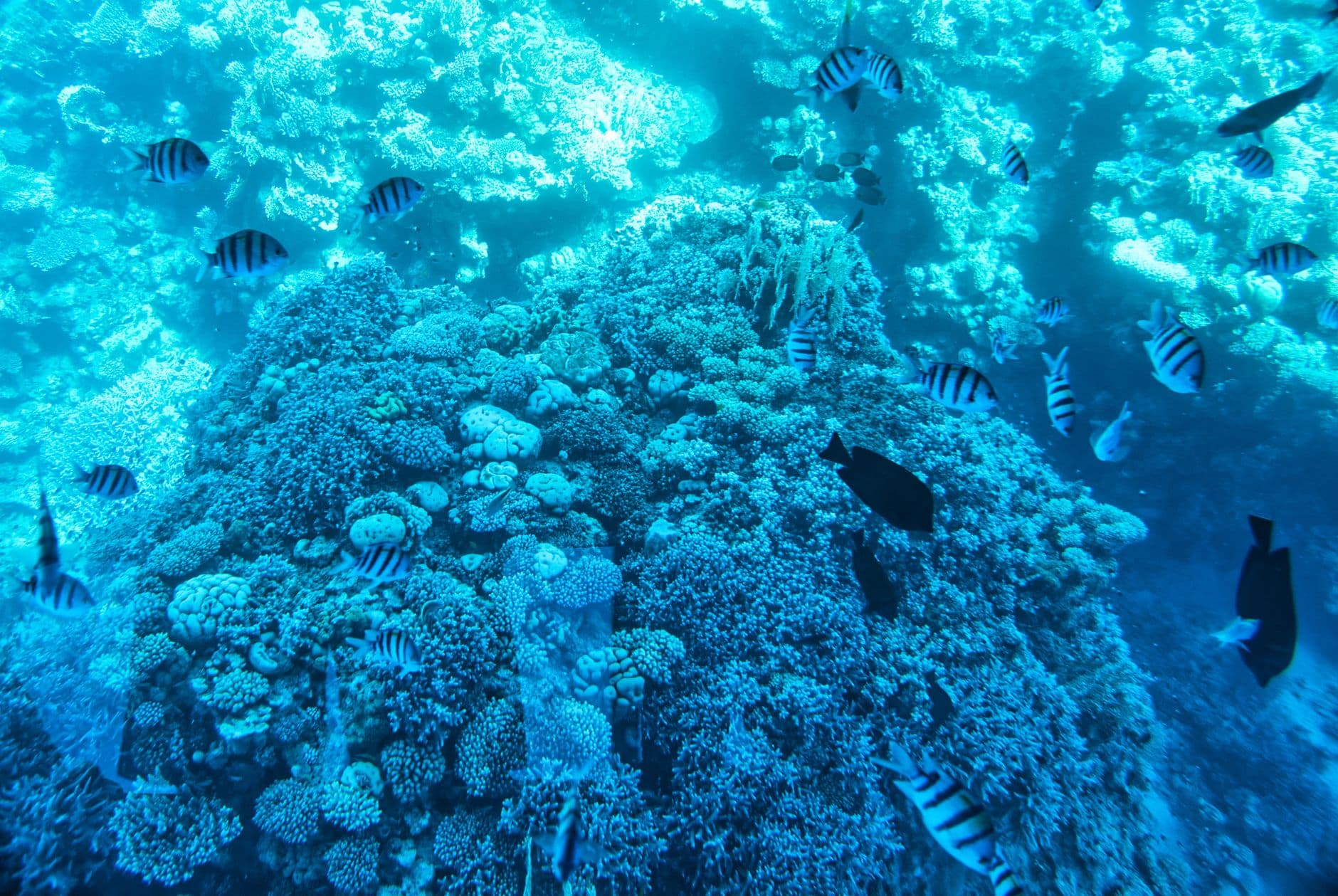
Sharm El Sheikh packs an extraordinary range of dive sites into a relatively small area. Within a two-hour boat ride from Naama Bay, you can explore a WWII wreck carrying locomotives, drift along a 700-meter wall drop-off carpeted in soft corals, and swim through schools of hammerhead sharks in the strong currents of the Tiran Straits. The variety here is what sets Sharm apart: no other single destination lets you rotate between legendary wrecks, national park walls, and sheltered fringing reefs on consecutive dives.
This guide ranks the top dive sites across Sharm's four regions so you can match your skill level and interests to the right site.
1. SS Thistlegorm
Type: WWII armed freighter wreck | Depth: 16–30 m | Distance from Sharm: ~4–5 hours by boat | Difficulty: Advanced Open Water (deep) | Best season: March–November
The SS Thistlegorm is the most famous wreck dive in the world, and it earns the title. This 126-meter British armed freighter was sunk on October 6, 1941, by German bombers while carrying a full cargo of war supplies to the British 8th Army in North Africa. She rests in two main sections on a sandy seabed: the bow at 16 meters, the stern at 30 meters.
The holds are the main event. Cargo includes BSA motorcycles, Bedford trucks, Bren gun carriers, aircraft wings, and two intact railway locomotives — all still visible and remarkably preserved after 80+ years underwater. The wreck is encrusted in soft corals and surrounded by clouds of glassfish, making every penetration a choice between history and marine life.
Jacques Cousteau rediscovered the Thistlegorm in 1956, but the wreck's exact location was lost until the 1990s when liveaboard operators and tech divers relocated it. Today, it's a full-day trip from Sharm (4–5 hours each way) and appears on nearly every Red Sea liveaboard itinerary. The deck sits at 16 meters, so Open Water divers can view the superstructure, but penetration below deck (where the locomotives and vehicles are) requires the 30-meter depth, making Advanced Open Water the practical minimum.
Target species: Glassfish (in their thousands inside the holds), batfish, lionfish, crocodilefish, scorpionfish, reef fish encrusting the structure.
Why it's number one: No other dive in the world combines underwater history, preservation, and wreck scale like the Thistlegorm. It is a genuine bucket-list dive that consistently delivers.
Practical tips: This is a full-day commitment with an early start (departure around 6–7 AM). Strong currents are possible, especially in spring and autumn. Carry a torch for the holds, and keep your buoyancy precise — silt inside the wreck reduces visibility instantly. Most operators do the Thistlegorm as a two-dive trip with a second reef dive on the way back.
2. Shark Reef (Ras Mohammed)
Type: Vertical wall / drift dive | Depth: 5–40+ m (wall drops to 700+ m) | Distance from Sharm: ~30–45 min | Difficulty: Intermediate | Best season: Year-round (best March–November)
Shark Reef is the crown jewel of Ras Mohammed National Park. This vertical wall at the southern tip of the Sinai Peninsula drops from 5 meters to abyssal depths of 700+ meters, creating a nutrient upwelling that attracts dense pelagic life. It is almost always dived in combination with Yolanda Reef as a single drift dive — you drop in at Shark Reef, ride the current along the wall, and emerge at Yolanda's plateau.
The wall face is covered in soft corals, gorgonians, and black coral trees, with massive schools of anthias and fusiliers swirling in the current. Grey reef sharks are the most reliable large-animal sighting — expect to see 5–15 individuals cruising the wall edge. Whitetip reef sharks, Napoleon wrasse, turtles, and barracuda are regulars. Visibility regularly hits 30+ meters.
Target species: Grey reef sharks, whitetip reef sharks, Napoleon wrasse, green and hawksbill turtles, barracuda, giant trevally, schools of anthias and fusiliers.
Why it's the best: Shark Reef is the definitive Red Sea wall dive. The combination of dramatic drop-off, dense marine life, and reliable shark encounters makes it the dive that every Sharm visitor remembers. The visibility here, even on an average day, rivals the best sites in the Maldives and Palau.
Practical tips: This is a drift dive with current that typically runs 1–2 knots. Your DM manages the drop and exit — listen to the briefing carefully. The wall has no gradual shelf, so precise buoyancy is important. Do a check dive on a local reef before attempting this if you haven't dived recently.
3. Yolanda Reef (Ras Mohammed)
Type: Reef plateau with wreck cargo | Depth: 5–30 m | Distance from Sharm: ~30–45 min | Difficulty: Intermediate | Best season: Year-round
Yolanda Reef is adjacent to Shark Reef and forms the second half of the iconic drift dive. The site is famous not for a ship hull but for its cargo: in 1980, the Cypriot freighter Yolanda lost her cargo of bathroom fixtures — toilets, bathtubs, sinks, and basins — which scattered across the reef plateau at 25 meters. The cargo is now encrusted in coral and has become one of the most photographed underwater scenes in diving.
The plateau itself is a coral-rich area with healthy hard coral formations, home to turtles, Napoleon wrasse, and reef fish. The shallow sections (5–15 meters) are excellent for safety stops and photography. The hull of the Yolanda itself slid into deeper water and is less frequently visited.
Target species: Green and hawksbill turtles, Napoleon wrasse, grey reef sharks (passing through from Shark Reef), reef fish.
Why it's unique: Yolanda Reef delivers one of the most surreal underwater sights in diving — a bathroom showroom scattered across a coral reef. It's quirky, genuinely interesting, and perfectly complemented by the serious wall diving at Shark Reef next door.
Practical tips: The plateau is shallower than Shark Reef (max 25–30 meters) and is a good place to pause and conserve air on the combined dive. Keep an eye on your depth — the cargo is photogenic but it's easy to descend past 25 meters studying the toilets and lose track of your profile.
4. Jackson Reef (Straits of Tiran)
Type: Exposed reef wall / pelagic highway | Depth: 5–40+ m | Distance from Sharm: ~60–90 min | Difficulty: Advanced | Best season: March–May and September–November
Jackson Reef is the northernmost and most exposed of the four Tiran reef systems, and it is the most reliable site in the Red Sea for scalloped hammerhead shark encounters. The reef drops steeply into the deep channel of the Gulf of Aqaba, where strong currents concentrate plankton and attract pelagic predators. Schools of hammerheads are sighted most reliably during spring (March–May) and autumn (September–November), when current-driven upwellings are at their peak.
The wall is covered in healthy coral with gorgonian fans, black coral bushes, and large barrel sponges at depth. Grey reef sharks, whitetips, and barracuda are permanent residents. Giant trevally patrol the reef edge. The SS Turkia, a broken wreck, lies on the southern edge of the reef at 5–20 meters — a shallow wreck option accessible during the same dive.
Target species: Scalloped hammerhead sharks (seasonal), grey reef sharks, whitetip reef sharks, barracuda, giant trevally, jacks, tuna.
Why it's the best: Jackson Reef offers the most reliable hammerhead shark diving in the Red Sea. The currents create an environment where pelagics concentrate predictably, and the reef wall itself is spectacular even without the sharks.
Practical tips: This is an advanced dive due to potentially strong currents (1–3 knots). Check conditions with your operator before booking. Limited visibility days (winter) make the site less rewarding. Best done as the first dive of the day before the wind picks up. The SS Turkia wreck on the southern edge provides a shallow second dive option.
5. Ras Um Sid
Type: Coastal wall | Depth: 3–40 m | Distance from Sharm: ~10 min | Difficulty: Intermediate | Best season: Year-round
Ras Um Sid is the best local dive site accessible from Naama Bay — and it is genuinely world-class. This coastal wall drops from 3 meters to 40 meters in a dramatic coral slope, with excellent hard and soft coral cover throughout. The site is exposed to open water at the point, so current can pick up (moderate, not extreme), and the variety of marine life rivals more famous sites further out.
The shallow section (3–12 meters) is a coral garden with healthy table corals, brain corals, and schooling anthias. The wall section (15–40 meters) features gorgonian fans, black coral trees, and larger pelagic visitors. Napoleon wrasse, tuna, and jacks are regulars at the wall. At night, the site transforms: octopus, moray eels, and cuttlefish emerge from the reef.
Target species: Napoleon wrasse, tuna, jacks, octopus (night), moray eels, coral reef fish, rays.
Why it's great: Ras Um Sid is proof that Sharm's local diving is not a compromise. This site would be a headline attraction at most destinations — the fact that it's a 10-minute boat ride from Naama Bay, diveable year-round, and consistently excellent is remarkable.
Practical tips: Best March–November when seas are calmest. Winter can bring chop to the point. Doable as a night dive — the site is protected enough for safe night operations. One of the best photo opportunities on a local dive.
6. Woodhouse Reef (Straits of Tiran)
Type: Coral wall | Depth: 5–30 m | Distance from Sharm: ~60–90 min | Difficulty: Intermediate–Advanced | Best season: March–November
Woodhouse Reef sits between Jackson and Thomas in the Tiran chain. It has steep coral walls with excellent hard and soft coral cover — arguably the best coral condition of any Tiran reef. The site is slightly less exposed than Jackson, making current more manageable for intermediate divers on a calm day.
The wall drops from shallow water at 5 meters to around 30 meters, where a sandy slope continues more gradually. The coral coverage on the upper wall is spectacular: large table corals, staghorn thickets, and soft coral bushes in dense concentrations. Pelagic life is less consistent than at Jackson but still reliable — grey reef sharks, barracuda, and jacks are frequent visitors.
Target species: Grey reef sharks, barracuda, jacks, fusiliers, anthias, Napoleon wrasse, reef fish.
Why it's great: Woodhouse has the best coral of any Tiran site. For divers who want healthy, dense reef ecosystems with the possibility of pelagic encounters (rather than the pelagic-only intensity of Jackson), Woodhouse is the superior choice.
Practical tips: Current can still be moderate to strong — the site is Tiran, after all. Woodhouse is frequently the second dive in a two-dive Tiran trip (after Jackson or Gordon), making it a good pairing. The coral on the upper wall is particularly sensitive — watch your fins.
7. Amphoras
Type: Reef with archaeological cargo | Depth: 5–30 m | Distance from Sharm: ~10 min | Difficulty: Intermediate | Best season: Year-round
Amphoras is one of Sharm's most unusual local sites. The reef features ancient amphorae (clay storage vessels) at 22 meters, scattered across the seabed — likely from a Roman-era ship that foundered on the reef centuries ago. The jars are partially encrusted in coral and lie scattered among natural rock formations, overhangs, and swim-throughs.
The site's topography is its standout feature: the reef face has multiple ledges, small canyons, and overhangs that shelter glassfish, lionfish, and crocodilefish. The swim-throughs are wide enough for recreational divers and add an exploratory quality to the dive. Current is typically gentle to moderate.
Target species: Glassfish, lionfish, crocodilefish, moray eels, octopus (night dives), scorpionfish, reef fish.
Why it's great: Amphoras combines archaeology with natural reef diving. The amphorae add a historical dimension that most local reefs lack, and the swim-through topography makes every dive slightly different. It's one of the best second dives during a local Sharm boat trip.
Practical tips: The amphorae are fragile — do not touch them. The swim-throughs can cause silt if fins are too aggressive — use controlled, gentle finning. Best for intermediate divers who can navigate small spaces comfortably. Excellent for night dives.
8. Dunraven Wreck
Type: 19th-century steamship wreck | Depth: 15–30 m | Distance from Sharm: ~45–60 min | Difficulty: Intermediate | Best season: March–November
The Dunraven is an 80-meter British steamship that sank in 1876 while carrying cotton and wool from India. She lies in two sections on a sandy bottom in Sha'ab Mahmoud, south of Sharm. The wreck is 150 years old and has become one of the most coral-encrusted wrecks in the Red Sea — a genuine artificial reef whose structure is almost entirely cloaked in marine growth.
The boiler, propeller shaft, and cargo remnants are visible and easily identifiable. Swim-throughs through the broken hull sections are possible for experienced divers. Because the wreck is less famous than the Thistlegorm, it sees far fewer visitors — you might have the site to yourself on a weekday.
Target species: Coral-encrusted structure with schooling goatfish, glassfish, squirrelfish, groupers, moray eels, nudibranchs, crocodilefish, occasional Napoleon wrasse and turtles.
Why it's great: The Dunraven offers a wreck experience without the crowds. Its 150 years of submersion have created a mature artificial reef that rivals natural reefs for biodiversity. For wreck enthusiasts who want to escape the Thistlegorm's popularity, the Dunraven is the perfect alternative.
Practical tips: The wreck lies in two sections — most dives cover the bow section and boiler. Maximum depth 30 meters, making it accessible at the Advanced Open Water level. Current can be moderate. Pair with a second reef dive in Sha'ab Mahmoud for a full morning of diving.
9. Gordon Reef (Straits of Tiran)
Type: Coral reef with collapsed lighthouse | Depth: 5–30 m | Distance from Sharm: ~60–90 min | Difficulty: Intermediate | Best season: March–November
Gordon Reef is the southernmost of the four Tiran reefs and the most accessible to intermediate divers. The iconic feature here is the remains of a lighthouse on the reef crest — collapsed in recent years, the metal structure lies half-submerged and serves as a recognizable landmark visible from the boat. The reef slopes steeply into deep water with good coral cover.
Current at Gordon is generally moderate — less intense than at Jackson but enough to make it a proper drift dive. The coral condition is excellent, with large gorgonians and soft coral bushes on the upper wall. Turtles are frequent visitors, and grey reef sharks pass through regularly.
Target species: Grey reef sharks, turtles, reef fish, jacks, barracuda.
Why it's great: Gordon offers the Tiran experience in a slightly more accessible package than Jackson. The lighthouse wreck adds visual interest, and the coral condition is among the best in the Tiran chain. It's an excellent introduction to Tiran diving for intermediate-level divers.
Practical tips: Gordon is frequently the first dive in a two-dive Tiran trip. The collapsed lighthouse structure can have entanglement hazards — keep a respectful distance. Moderate current is standard; the dive is generally suitable for any Advanced Open Water diver.
10. Tower
Type: Local reef | Depth: 5–30 m | Distance from Sharm: ~10 min | Difficulty: Beginner–Intermediate | Best season: Year-round
Tower is named after a prominent fossil coral formation that rises from the reef and marks the site entrance — divers descend alongside this natural tower and follow the reef slope to deeper water. It's one of Naama Bay's most popular local sites, and for good reason: the coral cover is healthy, the marine life is diverse, and the conditions are almost always manageable.
The initial descent follows the tower structure, which is covered in soft corals and schooling anthias. The reef then slopes gently to around 25–30 meters with intermittent ledges and overhangs. Moray eels, lionfish, and octopus are common. The site works well for Open Water divers staying in the shallow section and more experienced divers exploring the deeper reef.
Target species: Anthias, glassfish, moray eels, lionfish, octopus, rays, garden eels in the sand patches.
Why it's great: Tower is the quintessential Sharm local reef dive. It's reliable, accessible, and consistently delivers good diving regardless of season or conditions. For divers with limited time in Sharm who can't make it to Ras Mohammed or Tiran, Tower offers a representative Red Sea reef experience.
Practical tips: Tower is an excellent check dive after arrival. It's also a popular night dive — octopus and moray eels are active after dark. The tower structure at the entry point is a good photo opportunity. Suitable for all levels; beginners can stay above 12 meters while advanced divers explore the deeper slope.
Summary Table: Top 10 Sharm El Sheikh Dive Sites
| Rank | Site | Type | Max Depth | Difficulty | Best Season | Key Species |
|---|---|---|---|---|---|---|
| 1 | SS Thistlegorm | WWII wreck | 30 m | Adv. OW | Mar–Nov | Glassfish, batfish, lionfish + historical cargo |
| 2 | Shark Reef (Ras Mohammed) | Vertical wall | 40+ m | Intermediate | Year-round | Grey reef sharks, Napoleon wrasse, turtles |
| 3 | Yolanda Reef (Ras Mohammed) | Reef plateau + cargo | 30 m | Intermediate | Year-round | Turtles, Napoleon wrasse, cargo toilets |
| 4 | Jackson Reef (Tiran) | Exposed wall | 40+ m | Advanced | Mar–May, Sep–Nov | Scalloped hammerheads, grey reef sharks |
| 5 | Ras Um Sid | Coastal wall | 40 m | Intermediate | Year-round | Napoleon wrasse, tuna, jacks, octopus |
| 6 | Woodhouse Reef (Tiran) | Coral wall | 30 m | Int–Adv | Mar–Nov | Grey reef sharks, barracuda, best coral |
| 7 | Amphoras | Reef + amphorae | 30 m | Intermediate | Year-round | Glassfish, lionfish, crocodilefish, swim-throughs |
| 8 | Dunraven Wreck | 1876 steamship | 30 m | Intermediate | Mar–Nov | Coral-encrusted wreck, goatfish, groupers |
| 9 | Gordon Reef (Tiran) | Coral reef | 30 m | Intermediate | Mar–Nov | Grey reef sharks, turtles, lighthouse wreck |
| 10 | Tower | Local reef | 30 m | Beginner–Int | Year-round | Anthias, moray eels, octopus, rays |
Choosing Your Sharm Dive Adventure
Sharm's dive sites span the full spectrum from beginner-friendly local reefs to advanced pelagic walls and deep wrecks. Here's how to match your experience to the right itinerary:
-
Open Water (0–20 dives): Start with local reefs — Tower, Near Garden, Ras Nasrani, Ras Ghamila. These are shallow, gentle, and perfect for building confidence. Add Amphoras and Ras Um Sid as you progress. Book a Ras Mohammed trip when you're comfortable with drift diving techniques.
-
Advanced Open Water (20–50 dives): The Thistlegorm (deep specialty recommended), Ras Mohammed walls, and Woodhouse/Gordon Reefs are all accessible. The Dunraven wreck is a good deep dive option. Most of Sharm's best diving opens up at this level.
-
50+ logged dives: Jackson Reef for hammerheads, the Rosalie Moller (deep wreck, 50 meters), and penetration dives on the Thistlegorm and Dunraven. Consider technical diving courses (trimix, rebreather) if you want to explore the deeper wrecks.
-
100+ logged dives + technical training: The Rosalie Moller at 50 meters, Abu Nuhas Reef wrecks (liveaboard accessible from Sharm), and deep seamount sites accessible via liveaboard from Sharm. Technical infrastructure is available at Emperor Divers and PADI 5-star centers.
Bottom Line
Sharm El Sheikh's dive sites are the reason divers return to the Red Sea year after year. The variety — from a 10-minute boat ride to a WWII locomotive wreck, from a gentle coral garden to a hammerhead highway — is unmatched in any single destination. Start with the local reefs to build your bearings, work your way through Ras Mohammed's walls, and finish with the wrecks and Tiran reefs. That's a dive trip that will stay with you.