Santa Elena Diving: The Complete Guide to Ecuador's Mainland Pacific Coast
Ecuador's mainland Pacific coast is where the Humboldt Current crashes into the shore and creates one of the most extraordinary marine environments on the planet.
This is not the Galápagos. The Galápagos are 960 kilometers (600 miles) west, in the middle of the Pacific, and they are expensive, logistically complex, and require a permit system that can take months to navigate. The mainland coast — specifically the Santa Elena and Manabí provinces — delivers the same ecosystem at a fraction of the cost, with the same species, and with the accessibility of a two-and-a-half-hour drive from Guayaquil. The numbers are striking: 30 dive sites across five marine areas, 12 PADI-certified dive operators, water temperatures from 19 to 28°C (66 to 82°F), visibility of 7 to 25 meters, and a documented 28,000-plus individual oceanic manta rays — the largest population of these gentle giants anywhere on Earth.
A 2022 study by Oregon State University mapped this population and confirmed what local dive operators have known for decades: Bajo Cope, a submerged reef system 10.3 kilometers long, is the undisputed capital of giant manta ray encounters off South America. Divers here don't just see manta rays occasionally — they see them guaranteed.
What Makes Santa Elena Unique
The Two-Season System
Santa Elena diving operates on a dual-season calendar that most Caribbean and Central American destinations don't have. The warm season runs from December to May, when water temperatures reach 24–28°C (75–82°F), visibility exceeds 20 meters, and conditions are calm enough for snorkeling and beginner dives. The cool season runs from June to November, when water drops to 19–24°C (66–75°F) and upwelling brings nutrient-rich deep water to the surface. This is when the megafauna arrives: manta rays, humpback whales, and whale sharks all converge on the coast during these months.
The seasonal shift is dramatic. In July, you can hear humpback whale songs through the water — they migrate 7,000 kilometers from Antarctica every year, and their low-frequency calls carry for miles underwater. In January, the same waters are warm, clear, and teeming with reef life.
Two Marine Protected Areas
Ecuador has only one coastal national park — Machalilla National Park, established in 1979 — and it covers a stretch of the Manabí coastline including Isla de la Plata. The park protects a complete marine-to-mountain ecosystem, from coral reefs to dry tropical forest to the nesting grounds of green sea turtles. Machalilla is one of Ecuador's oldest protected areas and the only coastal national park in the country.
The El Pelado Marine Reserve, located near Ayangue between Santa Elena and Manta, is a no-take zone that protects some of the most productive reef habitat on the mainland coast. The name "El Pelado" means "the bald one" — it refers to the distinctive rocky islet that rises from the water and serves as a navigational landmark for divers.
The "Poor Man's Galápagos"
Isla de la Plata, 40 kilometers offshore from Puerto López, is called the "Poor Man's Galápagos" for good reason. The island sits in the same Humboldt Current ecosystem as the Galápagos Islands, which means the same species of marine life — sharks, sea lions, marine iguanas, and flightless cormorants — but at a dramatically lower cost. A full-day trip to Isla de la Plata, including two dives, gear rental, lunch, and park entrance fees, runs $170–190. The same experience in the Galápagos would cost $400–600.
Dive Sites and Marine Areas
Ayangue (Santa Elena Province)
Ayangue is the primary dive hub on the northern coast, just 15 kilometers from Santa Elena city. It serves as the gateway to the El Pelado Marine Reserve and the Bajo Cope reef system. The dive sites here are accessible from shore or by short boat ride.
El Cristo — A 3-meter-tall bronze statue of Christ sits at 11 meters depth off the Ayangue coastline. It is one of the most photographed dive sites in Ecuador and serves as an artificial reef that attracts schools of fish, sea turtles, and occasionally manta rays. The statue was placed in the ocean in the early 2000s and has since become encrusted with coral and sponges, creating a thriving micro-ecosystem.
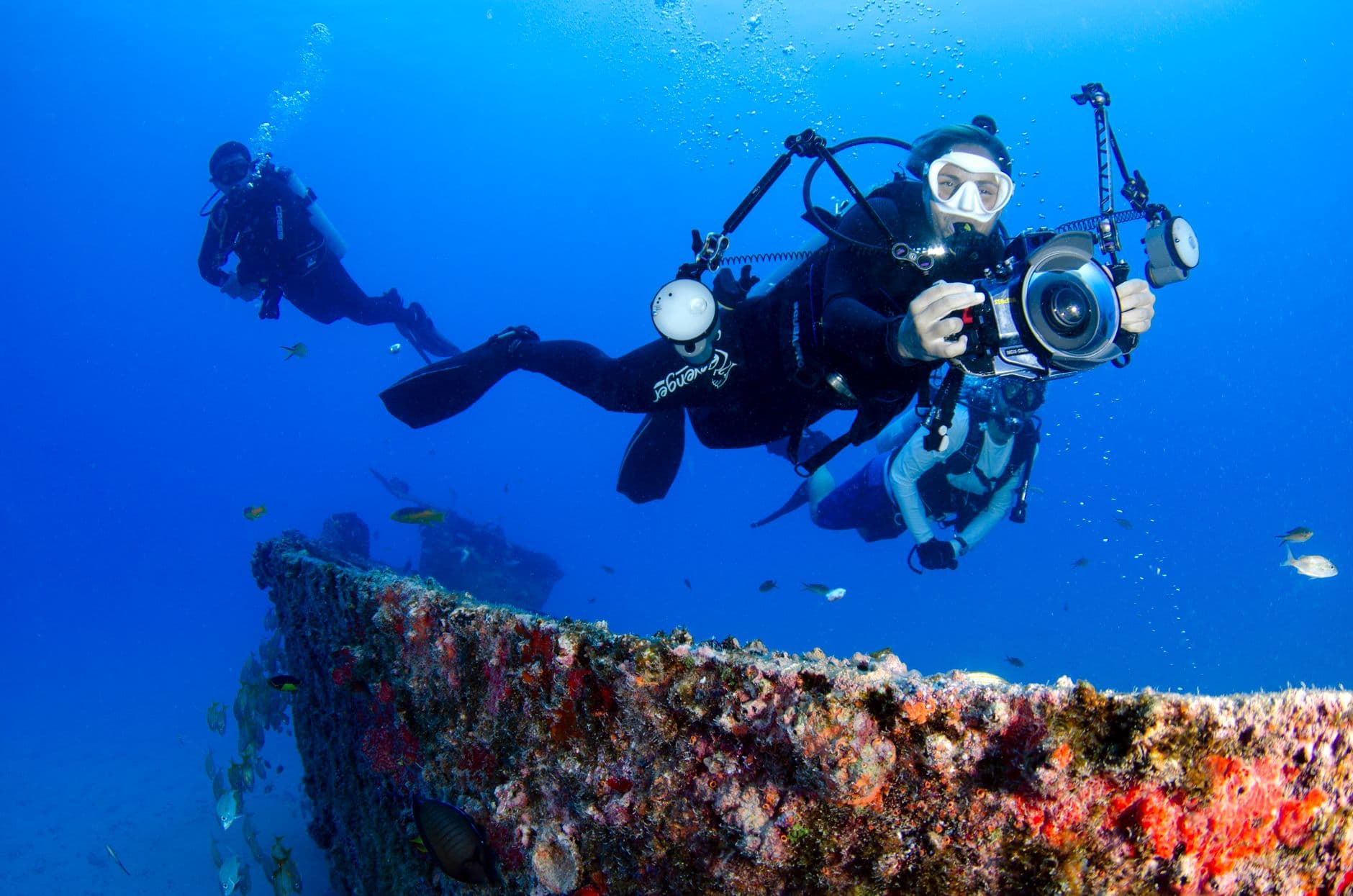
Rigel Wreck — Located at 8–15 meters depth, the Rigel is a small vessel intentionally sunk as an artificial reef. It is accessible to all certification levels and offers excellent visibility, abundant reef fish, and a unique wreck experience without the complexity of deep penetration diving.
Bajo Cope — The crown jewel of Ecuadorian diving. This massive 10.3-kilometer submerged reef system is home to the world's largest documented population of giant oceanic manta rays. Divers at Bajo Cope can expect multiple manta ray encounters per dive, particularly during the cool season (June–September). The reef itself drops from shallow coral formations to 30 meters, with walls, overhangs, and sandy channels. Advanced divers can explore the deeper sections where scalloped hammerhead sharks are occasionally sighted.
Puerto López (Manabí Province)
Puerto López is a fishing town on the southern coast, 3 hours from Guayaquil by car. It serves as the base for Isla de la Plata and Machalilla National Park dives. The town has a laid-back atmosphere with several dive operators, restaurants, and hostels catering to budget and independent travelers.
Isla de la Plata — A 40-kilometer boat ride from Puerto López takes you to this island reserve. The dive sites around the island offer encounters with whitetip reef sharks, sea lions, and — during the cool season — manta rays and humpback whales. The island's dry tropical forest is a habitat for the endemic Santa Elena fur seal, one of the rarest mammals in South America.
Manta (Manabí Province)
The city of Manta, between Ayangue and Puerto López, is known primarily for wreck diving. Several vessels have been sunk in the area to create artificial reefs, and the deeper channels between the offshore islands provide drift diving opportunities with strong currents and large pelagics.
Marine Life
Giant Oceanic Manta Ray
The star of Ecuadorian diving. The 28,000-plus individual manta rays documented by Oregon State University make this coast the most reliable place on Earth to encounter these animals. From June to January, you are virtually guaranteed a manta ray encounter on every dive. The peak season is June to September, when the cooler, nutrient-rich water brings plankton blooms that feed the mantas. At Bajo Cope, it is common to see 10–20 mantas in a single dive session.
Humpback Whale
Humpback whales migrate 7,000 kilometers from Antarctica to Ecuador's coast every year, arriving in June and departing in October. The peak sighting period is July to September. Unlike many whale-watching destinations, Ecuador's humpbacks are known for their curiosity — they frequently approach boats and divers, and their songs are audible underwater. You can dive alongside them during the cool season, provided you follow responsible wildlife guidelines.
Sea Turtles
Ecuador's mainland coast hosts three species of sea turtle, all of which are common year-round. Hawksbill turtles (tortuga carey) nest on the beaches of Machalilla National Park. Green sea turtles are seen on almost every dive around the reef sites. Olive ridley turtles are occasionally spotted in deeper offshore waters. The nesting season runs from November to March, and night tours to watch turtles lay eggs are available from Puerto López.
Sharks and Rays
Whitetip reef sharks are common at all dive sites, particularly around the rocky outcrops and reef walls. Scalloped hammerhead sharks are occasionally sighted at deeper sites like Bajo Cope, particularly during the cool season. Spotted eagle rays visit the cleaning stations around El Pelado and Bajo Cope throughout the year.
Dolphins and Other Megafauna
Bottlenose dolphins are common along the coast and frequently accompany dive boats. Giant moray eels, panamic green morays, and cortez rainbow wrasse are abundant on the reef walls. Other reef residents include cortez angelfish, king angelfish, yellowfin tuna, and a variety of goatfish, snapper, and barracuda.
When to Dive
December to May (Warm/Calm Season): Water temperature 24–28°C (75–82°F). Visibility 20+ meters. Calm seas, ideal for snorkeling and beginner divers. Fewer megafauna encounters but excellent reef conditions. Best for: coral photography, beginner divers, snorkelers, families.
June to November (Cool/Megafauna Season): Water temperature 19–24°C (66–75°F). Visibility 7–25 meters. Nutrient-rich upwelling brings manta rays, humpback whales, and whale sharks. Peak manta season is June to September. Peak whale season is July to September. Best for: megafauna encounters, underwater whale photography, experienced divers comfortable with cooler water.
Who Santa Elena Is For
Santa Elena is the best diving destination in Ecuador for:
- Budget-conscious divers — Full-day dive trips with two sites run $40–70 USD. A full-day Isla de la Plata trip with two dives, gear, lunch, and park fees costs $170–190, compared to $400–600 for the same experience in the Galápagos.
- Megafauna enthusiasts — The 28,000+ manta ray population and seasonal humpback whale migrations make this one of the most reliable megafauna diving destinations on the Pacific coast.
- Independent travelers — Dive operators cater to self-guided divers. You can book day trips, rent gear, and explore the sites at your own pace.
- Conservation-minded travelers — The El Pelado Marine Reserve and Machalilla National Park provide real protected areas where diving practices are regulated.
Santa Elena is less suited for divers seeking luxury resort infrastructure, Caribbean-style white-sand beaches, or year-round warm-water diving. The cool season requires a 5mm wetsuit or semi-dry suit, and the Pacific coast has a raw, working-fishing-town atmosphere that appeals to divers who prioritize underwater encounters over resort amenities.
Practical Overview
The closest international gateway is Guayaquil (GYE), Ecuador's largest city, with direct flights from Miami, Los Angeles, Houston, and Bogotá. From Guayaquil, it is 2.5 hours by car to Ayangue and 3 hours to Puerto López. Domestic flights to Manta (MEC) are available from Guayaquil and Quito.
Ecuador uses the US dollar as its official currency. Spanish is the official language, but dive operators in Santa Elena and Puerto López are accustomed to English-speaking divers.
Insurance: There is no hyperbaric chamber on Ecuador's mainland coast. The nearest chamber is in Guayaquil, 2.5–3 hours away. DAN (Divers Alert Network) insurance is mandatory for all dive trips. Operators will ask for proof of coverage before diving.
Gear: A 5mm wetsuit or semi-dry suit is essential during the cool season (June–November). A 3mm is sufficient during the warm season. Many operators provide full gear rental, but bringing your own mask, regulator, and computer is recommended.
Getting Around: Renting a car or using local buses is the most economical way to travel between Ayangue, Manta, and Puerto López. Buses run regularly and cost $5–15 per trip. Car rentals from Guayaquil start at $35–50 per day.
Bottom Line
Santa Elena's mainland coast is Ecuador's hidden diving secret. It delivers world-class manta ray encounters, seasonal humpback whale dives, pristine coral reefs, and the accessibility of shore-based diving — all at prices that make the Galápagos look like a luxury cruise. The 28,000-plus manta ray population confirmed by Oregon State University is a conservation success story, and the two marine protected areas ensure this ecosystem remains intact for the next generation of divers. If you want guaranteed megafauna encounters without the Galápagos price tag, Santa Elena is the place to dive.