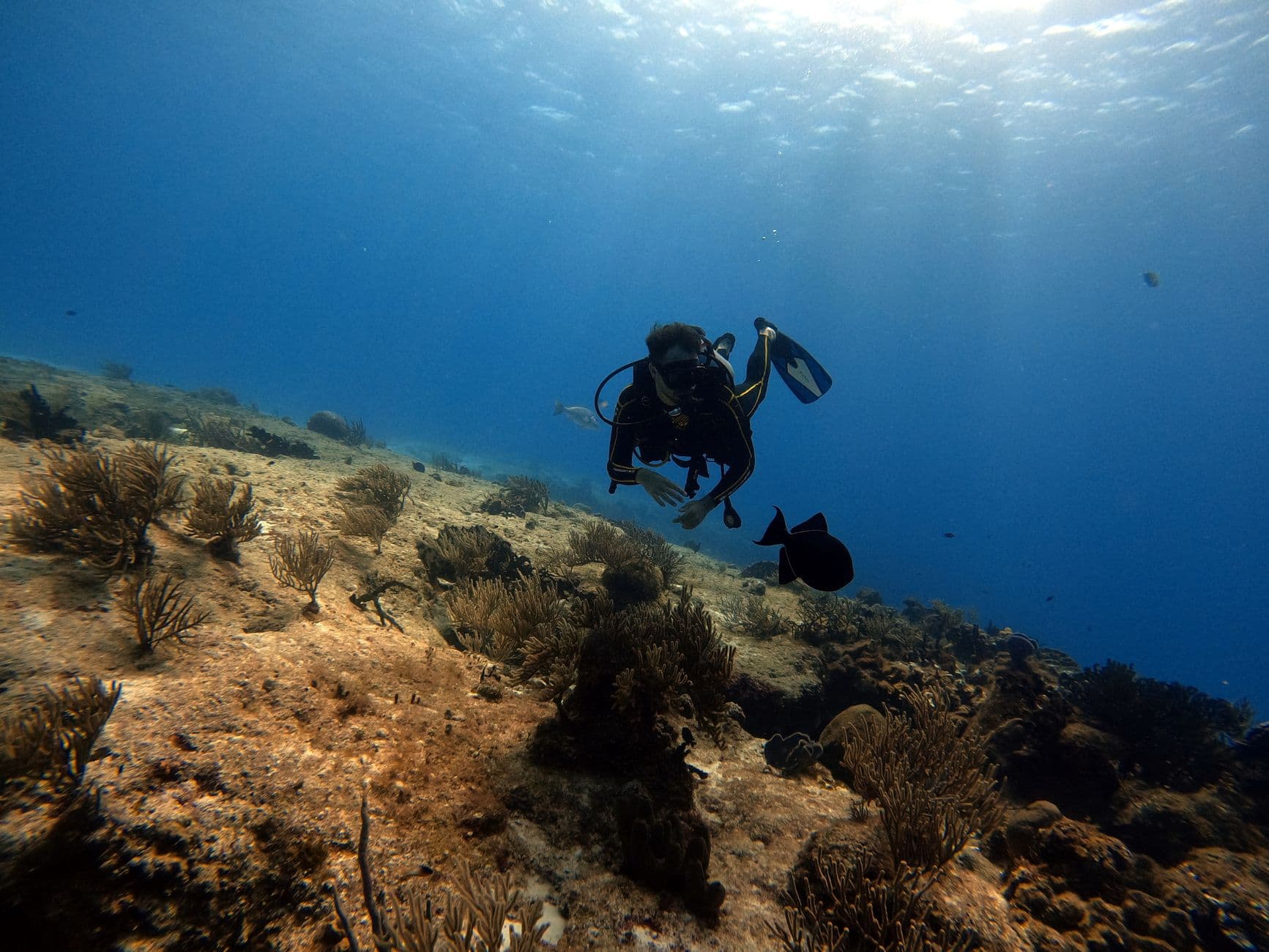
San Benedicto Island: Dive Guide to Mexico's Little Galápagos
San Benedicto is the most remote of Mexico's Revillagigedo archipelago — an uninhabited volcanic cinder cone 390 km (240 miles) southwest of Cabo San Lucas. There are no resorts, no dive shops on the island, no showers, no Wi-Fi. You get here by boat, and the boat takes 26 hours each way. What you get instead is two of the most extraordinary dive sites on Earth, a 148,000 km² no-take marine reserve, and pelagic megafauna density that rivals the Galápagos.
This is not a weekend diving trip. It is a 10-day ocean expedition. And for the right diver, it is the most rewarding dive destination in the Americas.
The Two Sites
San Benedicto has exactly two named dive sites — both are world-class. The island is small (4.8 km × 2.4 km) and uninhabited, so there is no need for a long list. Every dive on a Revillagigedo liveaboard itinerary includes both sites, usually multiple times across the trip.
El Boiler — The Premier Manta Interaction Site on Earth
El Boiler is a shallow guyot rising from ~50 m (165 ft) to just 6–7 m (20–23 ft) below the surface. The flat, football-field-sized top draws oceanic mantas to a cleaning station where Clarion angelfish — endemic to this archipelago — remove parasites. What makes El Boiler globally unique is the mantas' behavior: they actively seek divers, hover above exhaled bubbles, and some divers report mantas "playing" with the air on their bellies. This is not staged. This is the most consistent manta-diver interaction in the world.
Depth: 6–50 m · Skill: Advanced · Features: Shallow guyot, drift diving, manta cleaning station, Clarion angelfish, dolphin encounters, shark circles
El Cañón — Hammerhead Alley
El Cañón sits at the southern end of the island. It is a deep-wall dive with canyon-like rock formations, two active cleaning stations, and the most reliable large-school scalloped hammerhead encounters in the Eastern Pacific. Schools of 200+ hammerheads swirl in the blue. Silky sharks and Galápagos sharks patrol the cleaning stations. The canyon formations create eddy zones and back-currents where sharks hang out, making this one of the most high-energy dives on any liveaboard itinerary.
Depth: 10–50 m · Skill: Advanced · Features: Deep vertical walls, canyon formations, shark aggregation zones, abyss dropoff, drift diving
Who It's For
San Benedicto is not for beginners. You need:
- Advanced Open Water certification minimum, though most operators recommend 50+ logged dives
- Drift diving experience — currents at both sites are moderate to strong, and drift diving is the only way to dive here
- Comfort in deep blue water — there are no shallow reefs. The bottom drops from 25 m to 2,000+ m with no gradual shelf. If you haven't dived in six months, do a shallow check-out dive first
- Patience for the journey — 52 hours at sea round trip just for the commute. No land-based accommodation. You sleep on the boat
If you meet those criteria and you want to dive with mantas that look you in the eye, this is the place.
Access & Logistics
Getting there: All diving is exclusively via liveaboard vessels departing from Cabo San Lucas or San José del Cabo, Baja California Sur. The sea crossing takes 24–26 hours each way. You arrive at Los Cabos International Airport (SJD), drive about an hour to the marina, and board.
Operators: Six verified liveaboard fleets run Revillagigedo trips that include San Benedicto:
- Nautilus Liveaboards — Belle Amie (33 guests), UnderSea (18 guests), Explorer (25 guests). 8-night trips from $3,244 USD. PADI 5-Star. Nitrox available.
- Mexico Liveaboards — Rocio del Mar (20 guests), Quino del Mar (12 nights, $5,795). Longest standard itinerary with multiple days at San Benedicto.
- Socorro Aggressor (Aggressor Adventures) — 10-day trips from $2,800–$3,200. Known for mega-fauna encounters. Mandatory whistle + DSMB + GPS beacon for every diver.
- Dive Ninja Expeditions — Partners with Nautilus and Mexico Liveaboards. Unique value: manta photo-ID training and conservation workshops.
- Southern Sport — 8-night trips from $2,800–$3,200. 18 cabins, often sells out.
- Valentina — 9-night (10 days / 9 nights / 6 days diving) from $4,300.
Dive season: November to June. Peak season is February–April, when conditions are calmest and wildlife density is highest. July–October is off-season; hurricane risk and boats are relocated.
What to pack: 5 mm wetsuit (hooded vest recommended January–April when water drops to 21°C / 70°F), dive computer, DSMB/safety sausage, whistle. Nitrox is highly recommended and available on most boats for an additional fee.
Regulations: Revillagigedo National Park prohibits fishing within 12 km of every island. Dive gloves and reef hooks are strictly banned. You must carry a whistle and inflatable safety sausage during every dive.
Marine Life You'll See
The Revillagigedo archipelago hosts 50+ marine species in 18 categories. The megafauna list is extraordinary:
- Giant oceanic mantas (Mobula birostris) — up to 7 m wingspan, the stars of El Boiler. Sightings year-round, peak November–April.
- Scalloped hammerhead sharks (Sphyrna lewini) — schools of hundreds at El Cañón, reliable November–April.
- Silky sharks, Galápagos sharks, whitetip reef sharks — common at both sites.
- Humpback whales — seasonal January–April, breeding and calving grounds. Divers can sometimes hear them singing underwater.
- Whale sharks — April through December.
- Bottlenose dolphins — year-round, frequent at both sites.
- Endemic Clarion angelfish (Pomacanthus clarionensis) — only found in the Revillagigedo archipelago, the manta cleaners at El Boiler.
- Pygmy devil rays — large schools of hundreds, often seen at Roca Partida (on most itineraries).
Conservation & Ethics
Revillagigedo National Park is the largest fully protected marine reserve in North America. No fishing. No habitation. No extraction. The marine life here is pristine because it has never been harvested. The park is actively pursuing UNESCO World Heritage Site status.
Divers are encouraged to participate in citizen science: submit manta photos to mantamatcher.com to help the Pacific Manta Research Group catalog individual animals. The group has been studying these mantas for 30+ years.
Putting It Together
San Benedicto rewards the diver who shows up prepared — physically, technically, and mentally. The 26-hour crossing is not a minor detail; it is the first test. The currents will test your skills. The depth will test your buoyancy. But the mantas at El Boiler, the hammerheads at El Cañón — they make every hour at sea worth it.
DivePass tracks real-time site conditions and aggregates local operator briefing notes so you have current data, not just seasonal averages, before every dive. Check the app the morning of your dive day.