Top 7 Dive Sites in Ponta do Ouro
Ponta do Ouro has more than twenty named reef sites along the southern Mozambique coast, from shallow training reefs near town to exposed offshore pinnacles and deep sandstone structures. Most dives are run by beach launch, and the best site on any given day depends on swell, current, wind, certification level, and the marine life calendar.
This list focuses on the seven sites that define the destination for most divers: the manta cleaning station everyone talks about, the beginner reefs that make Ponta accessible, and the deeper structures where big fish patrol.
1. The Pinnacle
Type: Offshore pinnacle / cleaning station | Depth: 5-30 m | Difficulty: Intermediate to advanced | Best season: Year-round, with manta and whale shark peaks from November to March
The Pinnacle is Ponta do Ouro's signature dive. The reef rises from roughly 30 meters to about 5 meters below the surface, creating a current-swept cleaning station where manta rays come to be serviced by cleaner wrasse. When visibility is good, the structure appears out of the blue like a submerged tower: soft corals and sponges on the sides, reef fish on the top, and deeper water holding sharks, kingfish, barracuda, and potato bass.
The site is famous for manta rays, but it is not only a manta dive. Grey reef sharks cruise the edges, giant trevally and yellowfin tuna may pass in the blue, and whale sharks can appear in the warmer months when plankton is present. The reef top can be manageable, but current around the pinnacle tip can be strong, so this is not the place to fake comfort with drift diving.
Why dive it: The best single expression of Ponta's big-animal potential.
2. Coral Gardens
Type: Shallow coral reef | Depth: 3-15 m | Difficulty: Beginner to intermediate | Best season: Year-round
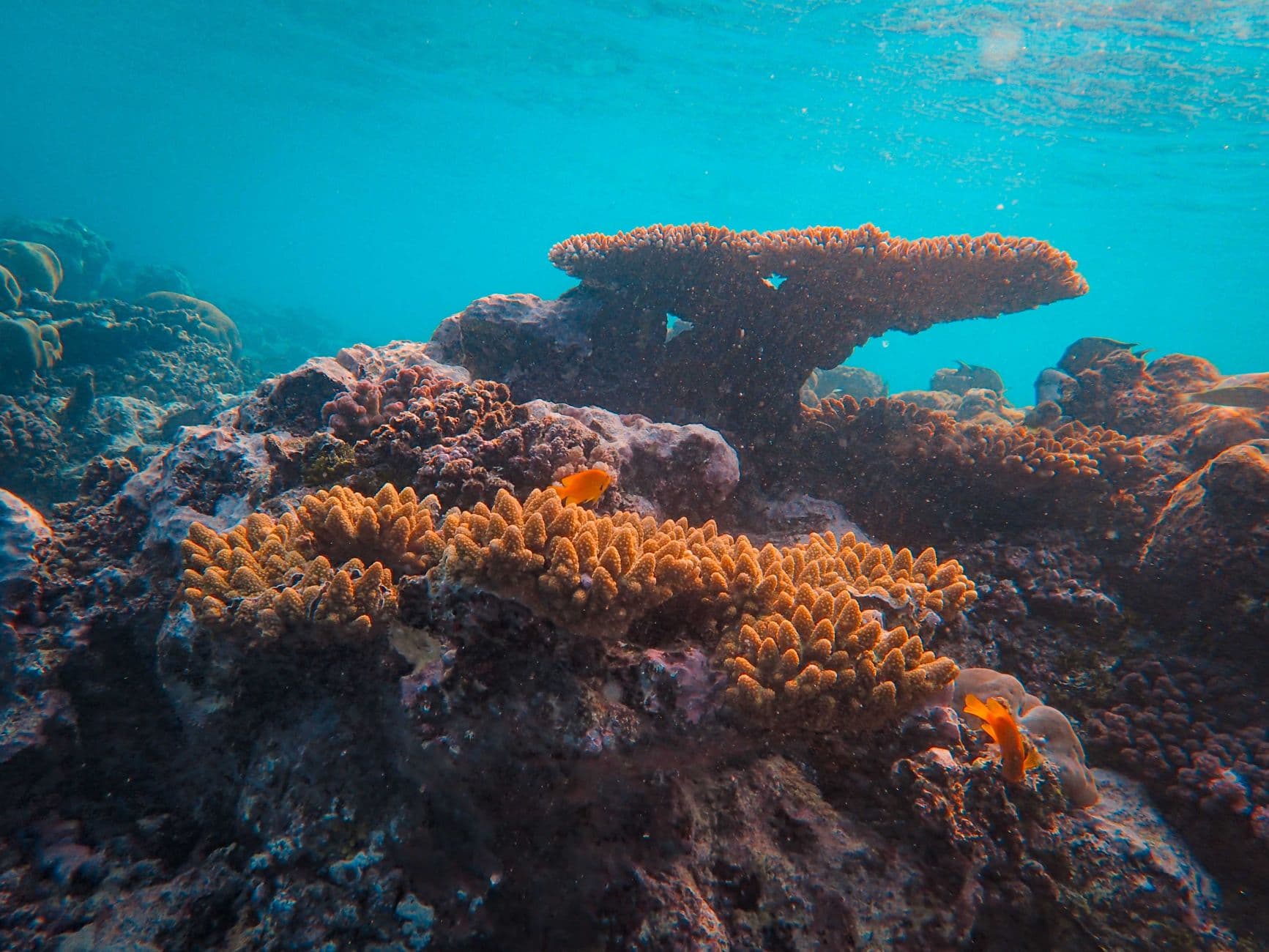
Coral Gardens is the site to request if you want long bottom time, easy navigation, and a friendly first look at Ponta. The reef has hard coral, sandy patches, garden eels, morays in crevices, butterflyfish, damselfish, and good light for photography. On calm days it is suitable for newer divers, snorkelers, and anyone doing a refresher after time out of the water.
Do not dismiss it as only a training site. Shallow reefs are where small behavior becomes visible: cleaner wrasse working on client fish, octopus tucked under ledges, juvenile reef fish using coral branches as shelter, and turtles resting in sandy bowls. Because the site is shallow, air consumption and no-decompression limits are forgiving.
Why dive it: The best easy reef and a useful first dive for checking buoyancy and conditions.
3. Big Gats
Type: Sandstone reef with walls and gullies | Depth: 10-27 m | Difficulty: Intermediate to advanced | Best season: May to September
Big Gats is one of Ponta's more dramatic reef structures. It has steep sections, gullies, soft-coral growth, overhangs, moray eels, nurse sharks, rays, and enough current potential to keep the dive interesting. The site is deeper and more exposed than the town reefs, so it is best for divers who are comfortable maintaining position and following a guide in moving water.
The attraction here is structure. Gullies create edges where fish school, rays rest on sand, and predators patrol. Soft corals on the walls make the reef colorful, especially when visibility opens during winter. Big Gats pairs well with Little Gats, a slightly easier nearby site that offers macro life, glassfish, frogfish, and calmer second-dive energy.
Why dive it: Big reef topography, strong fish life, and a more advanced Ponta profile.
4. Anemone Reef
Type: Shallow reef / photography site | Depth: 5-16 m | Difficulty: All levels | Best season: Year-round
Anemone Reef is one of the prettiest shallow sites in the Ponta system. Carpet anemones host clownfish, reef fish move through coral heads, and the shallow profile keeps colors bright. It is a strong choice for underwater photographers, families with mixed experience levels, and divers who want a beautiful reef without committing to deeper current.
Because it is shallow, conditions matter less than at the offshore pinnacles, but surge can still affect comfort. On a calm morning this is a relaxed, high-reward dive: slow movement, careful finning, and plenty of time to watch behavior rather than chase distance.
Why dive it: Color, macro subjects, and a shallow profile suitable for nearly everyone.
5. Three Sisters
Type: Three-pinnacle reef | Depth: 12-30 m | Difficulty: Advanced | Best season: June to October
Three Sisters is a pelagic-minded site: three distinct pinnacles rise from around 30 meters to roughly 12 meters, with current lines between them. Barracuda, kingfish, tuna, and occasional hammerheads use this kind of structure because it concentrates food and creates predictable flow. The dive can be spectacular when visibility is high and the current is moderate, but it requires confidence.
This is not the right site for a first dive in Ponta. Divers should be comfortable descending without delay, holding depth in blue water, and managing gas on a profile where excitement can distract from the computer. If you have the experience, Three Sisters shows the wilder side of the reserve.
Why dive it: Pinnacle terrain and the best chance of schooling pelagic action.
6. Bass City
Type: Deep sandstone reef / potato bass habitat | Depth: 20-38 m | Difficulty: Advanced | Best season: June to September
Bass City is a series of deeper sandstone outcrops, coral bommies, overhangs, and sandy channels known for large potato bass. These curious groupers may approach calmly while scorpionfish, morays, rays, lionfish, and reef fish occupy the surrounding structure. The depth and possible current make careful gas and no-decompression planning essential.
This is not a site to rush. Moving slowly between the outcrops gives divers time to find camouflaged animals and lets resident potato bass choose whether to approach. Winter visibility can reveal the whole broken reefscape, while the sandy lanes provide clear reference points between structures.
Why dive it: Close potato-bass encounters and a serious deep-reef profile.
7. Sanctuary Reef
Type: Shallow protected bay reef | Depth: 5-18 m | Difficulty: Beginner | Best season: Year-round
Sanctuary Reef is a sheltered bay site with mild current, abundant reef fish, and a forgiving depth profile. Its protected setting makes it useful for training, refresher dives, buoyancy practice, and photographers who want time to work slowly around coral heads instead of fighting current.
This is not the most dramatic reef in Ponta, but it is one of the most useful. On days when exposed sites are too rough, a protected shallow reef can keep the diving going. It is also an excellent choice for family groups, new divers, or a relaxed final dive before flying.
Why dive it: Easy conditions, abundant reef fish, and a forgiving profile.
Other sites worth knowing
Ponta Barra Falsa is a shallow northern reef with rays and mixed sandy-coral terrain. The Tunnel offers a sandstone swim-through for intermediate divers. The Ledges has stepped limestone, overhangs, lobsters, morays, and good night-dive potential. Coral Tree Reef is shallow and scenic. The Deep Pinnacle adds manta cleaning behavior and pelagic fish to a 15-35 meter profile.
How to choose your itinerary
If you are a beginner, start with Coral Gardens, Anemone Reef, Sanctuary Reef, Coral Patch, Gull Reef, and Coral Tree Reef. If you are intermediate, add The Pinnacle in calm conditions, Big Gats, Little Gats, The Tunnel, and Ponta Barra Falsa. If you are advanced, prioritize Three Sisters, Bass City, and The Deep Pinnacle when operators say conditions are right.
The best Ponta trips do not lock in a fixed site list months ahead. Tell your operator your experience level and wishlist — mantas, whale sharks, turtles, shallow reef, deep reef, photography — then let daily conditions decide the exact order. That flexibility is how you get the best diving here.