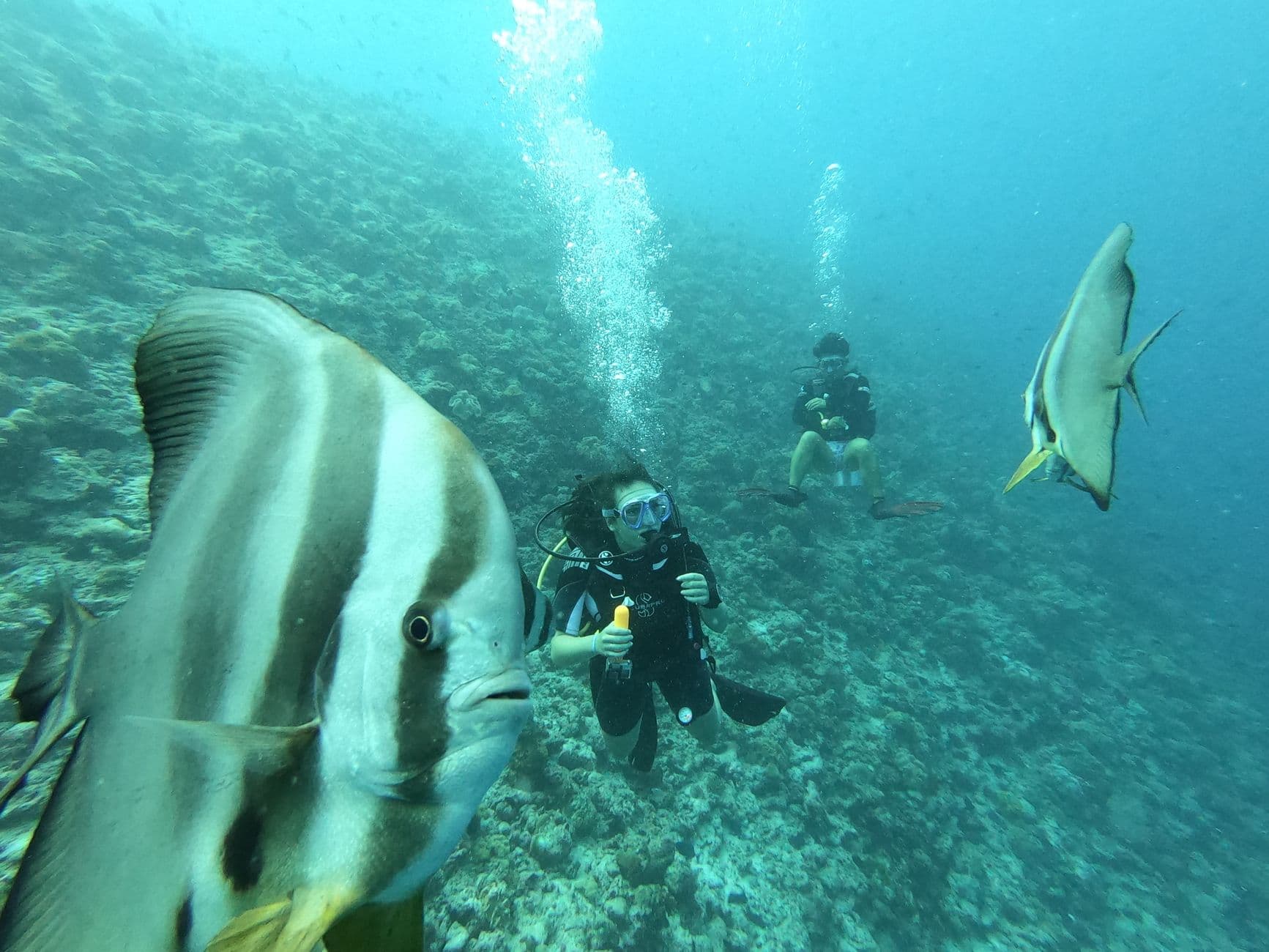
Maldives Diving: The Complete Guide to the Atoll Nation
Strung across the equator like a scattered necklace of turquoise rings, the Maldives is one of diving's true icons. This is a nation built almost entirely of coral — 26 natural atolls comprising more than a thousand low-lying islands, none rising much above a couple of meters from the sea. There is barely any land here at all. The Maldives is, in the truest sense, an underwater country, and the diving reflects that: vast channel systems flushing nutrient-rich water between the atolls, submerged pinnacles teeming with life, and some of the most reliable big-animal encounters anywhere on Earth.
For divers, the appeal is immediate and overwhelming. Warm water that rarely strays outside 27 to 30°C. Visibility that frequently stretches past 30 meters. Manta rays gliding through cleaning stations, whale sharks cruising the shallows, and grey reef sharks stacked up in the current like aircraft on a runway. Whether you stay at a resort and dive the surrounding reefs each morning or board a liveaboard and chase the best sites across multiple atolls, the Maldives delivers a diving experience that has kept divers returning for decades.
The Geography of Atolls
Understanding the Maldives means understanding the atoll. An atoll is a ring-shaped coral structure that grew up around a sinking volcanic island long since vanished beneath the waves, leaving a circular reef enclosing a sheltered lagoon. The Maldives has 26 of these natural atolls, running roughly 870 kilometers north to south. The word "atoll" itself comes from the Dhivehi language spoken here — this is the place that gave the term to the world.
Three reef features define almost every Maldivian dive:
- Kandus (channels): The gaps in the atoll rim where ocean water surges in and out with the tide. These channels funnel current — and with current comes food, and with food comes everything else. Channel diving is the signature Maldivian experience, and it is where sharks, mantas, and large schooling fish congregate.
- Thilas (submerged pinnacles): Underwater coral mountains that rise from the atoll floor but never reach the surface. Thilas are biodiversity magnets, their overhangs and ledges crowded with soft corals, schooling snapper, and reef predators. Many of the country's most celebrated sites are thilas.
- Farus (reef platforms): Broad, flatter reef structures, often forming the gentle house reefs that fringe resort islands. These are where most check-out and easy dives happen.
The atolls are loosely grouped into geographic regions. North and South Malé Atolls cluster around the capital and international airport, making them the most accessible. Ari Atoll, to the west, is famous for whale sharks and pinnacle dives. Baa Atoll, a UNESCO Biosphere Reserve, is the manta capital. Vaavu (Felidhu) Atoll offers some of the wildest channel diving in the country.
The Marine Life
The Maldives sits in the nutrient-rich currents of the central Indian Ocean, and its reefs reflect that abundance. But it is the big animals that make the country legendary.
Manta rays are the headline act. The Maldives hosts one of the largest known populations of reef manta rays on the planet. They gather at cleaning stations year-round, where wrasse and other small fish pick parasites from their skin, and during the right season they aggregate in extraordinary numbers to feed on dense blooms of plankton. The most famous of these gatherings happens at Hanifaru Bay in Baa Atoll, where currents and tides can concentrate hundreds of mantas — and occasionally whale sharks — into a single small bay in a swirling feeding frenzy.
Whale sharks, the largest fish in the sea, are present in Maldivian waters year-round, though they shift location with the seasons. The southern reaches of Ari Atoll are a particular hotspot, where these gentle giants cruise the outer reefs filtering plankton. Encounters are often by snorkel as well as scuba, given the sharks' surface-feeding habits.
Sharks of many kinds patrol the reefs. Grey reef sharks gather in the channels, holding station against the current in impressive numbers. Whitetip reef sharks rest on sandy ledges and under coral overhangs. Nurse sharks, eagle rays, and the occasional hammerhead round out the cast, and night dives often reveal sharks hunting actively across the reef.
Beyond the megafauna, the reefs themselves are dense with life: napoleon wrasse, schooling bannerfish and fusiliers, moray eels, octopus, turtles, and a kaleidoscope of soft and hard corals clinging to the channel walls and pinnacle faces. Macro photographers find plenty too, from nudibranchs to frogfish tucked into the reef.
When to Go
Diving is possible in the Maldives year-round — the water never gets cold and there is always something to see — but the country runs on two monsoons that shape conditions and wildlife.
The northeast monsoon (iruvai), roughly December to April, is the dry season. Skies are clearer, seas calmer, and underwater visibility is at its best, often exceeding 30 meters. This is the classic high season, ideal for general reef diving and channel dives on the eastern sides of the atolls.
The southwest monsoon (hulhangu), roughly May to November, brings wetter weather and rougher seas, but it also drives the plankton blooms that fuel the Maldives' most spectacular wildlife. This is peak season for manta rays and whale sharks, especially on the western atolls and at Hanifaru Bay, where the August-to-November window is prime time. Visibility on the plankton-rich western reefs can drop, but the trade-off — the chance to be surrounded by feeding mantas — is one many divers happily make.
A useful rule of thumb: the animals move with the current and the plankton. Mantas and whale sharks feed on the side of the atoll the monsoon is pushing nutrients toward, which is why western atolls shine in the southwest monsoon and eastern channels shine in the northeast.
How Diving Works
There are two ways to dive the Maldives, and many divers eventually try both.
Resort diving is the relaxed option. You stay on a single island with its own dive center, dive the surrounding house reef and nearby sites by boat each day, and return to comfort each evening. It is ideal for divers traveling with non-diving partners or families, for those who want a holiday alongside their diving, and for newer divers building experience on gentler sites. The trade-off is that you are limited to the dive sites within reach of that one island.
Liveaboard diving is the way to see the most. A liveaboard is a dive boat you live on for a week or more, moving between atolls and reaching remote channels and thilas that no resort can access. Liveaboards typically offer three or four dives a day, including dawn and night dives, and follow the seasons to put divers in front of the best action. For serious divers chasing mantas, sharks, and the country's most famous sites, a liveaboard is the gold standard.
Skill Level
The Maldives suits a wide range of divers, but it rewards experience. The house reefs and faru dives around resorts are gentle and suitable for beginners and recently certified divers. The channel dives — the ones with the sharks and the mantas — are another matter. These sites can carry strong, sometimes unpredictable currents, and divers are often asked to use reef hooks to hold position against the flow while the big animals pass.
For that reason, an Advanced Open Water certification and solid buoyancy control are strongly recommended for anyone wanting to dive the channels comfortably. Many operators advise (and some require) a minimum number of logged dives for the more demanding sites. Nitrox is widely available and genuinely useful here, extending bottom time across the multiple daily dives that liveaboards in particular pack in.
The Bottom Line
Few destinations combine warm, clear water, world-class big-animal encounters, and such a profusion of dive sites in one place. The Maldives is a country shaped by the sea, and whether you experience it from a single resort reef or a week-long liveaboard crossing the atolls, it delivers the kind of diving that explains why so many divers count it among the very best on the planet.