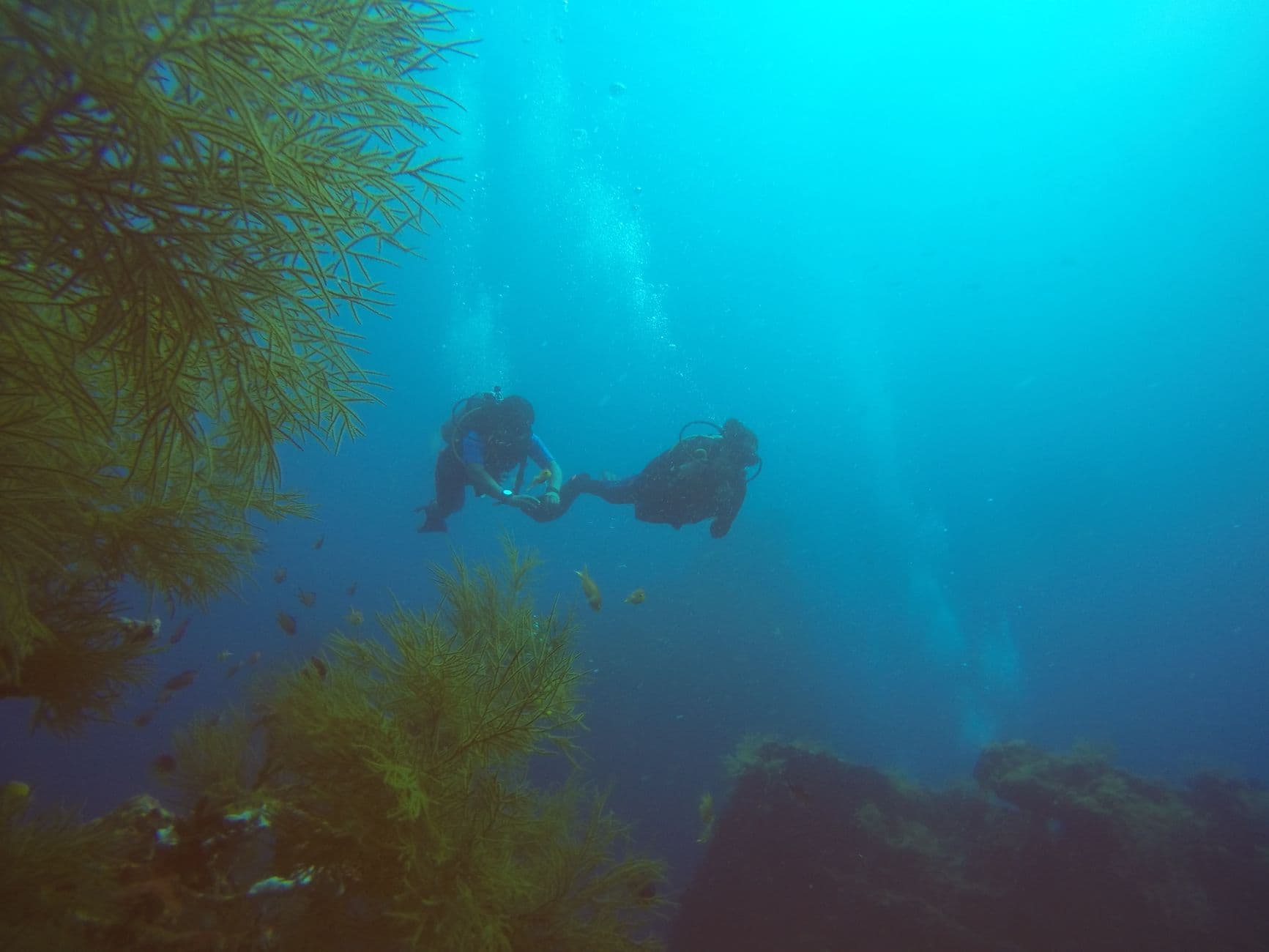
Malapascua Diving: The Thresher Shark Capital of the World
There are places divers travel to hoping for a shark encounter. And then there's Malapascua — a 3 km² island in the Visayan Sea where you don't hope. You wake up at 5:00 AM, walk to the beach, and climb onto an outrigger boat. By 6:00 AM you're descending onto a sunken seamount where pelagic thresher sharks arrive like clockwork to be cleaned at a station they've been visiting for as long as anyone can remember. It happens every single day.
Malapascua is the only place on Earth where thresher sharks are virtually guaranteed on every dive, every day of the year. That's not marketing. That's a biological reality rooted in two sunken seamounts — Kimud and Monad Shoals — that rise from 80 meters to just 18–25 meters below the surface, creating permanent cleaning stations that thresher sharks have been using for decades.
What Makes Malapascua Unique
Kimud Shoal: The Guarantee
The thresher shark (Alopias pelagicus) is an animal with a tail as long as its body — a biological whip it uses to stun schooling fish. At Kimud Shoal, these elegant predators commute from deep water every morning, arriving between 5:30 and 7:00 AM to be cleaned by reef fish at the seamount's flat summit. The encounter happens at 22–27 meters, and the sharks pay no attention to divers. They're focused on the cleaning station, and you're just another piece of reef to them.
The phenomenon was discovered by local fishermen long before it became a dive destination. Thresher Shark Divers started running dives here in 2004, pioneering what is now the most reliable thresher shark encounter in the world. Around 2020, tiger sharks took over Monad Shoal — the original site — and the threshers simply moved two kilometers south to Kimud. Now divers can visit both shoals on the same trip and see two different apex predators in one morning.
Gato Island: The Shark Tunnel
Seven kilometers north of Malapascua, the Gato Island marine sanctuary delivers one of the most unusual dives in the Philippines. A 100-meter sea tunnel runs clear through the limestone island — you can swim from one side to the other. Inside, whitetip reef sharks rest on the sandy floor, banded sea snakes drift through, and the walls are covered in soft corals and sea fans. The shark cave at the entrance guarantees whitetips every time. Outside the tunnel, the Garden site offers seagrass beds where seahorses, pipefish, and flamboyant cuttlefish hide in plain sight.
The Dona Marilyn Wreck
In October 1988, Typhoon Unsang (Ruby) sank the Dona Marilyn — a 180-tonne passenger ferry — off Malapascua's east coast. The wreck sits upright on a sandy bottom at 18–32 meters, heavily encrusted with soft corals, sponges, and hydroids. Lionfish patrol the deck, batfish hover in schools near the bridge, and barracuda hold station at the bow. Penetration is possible for properly trained wreck divers, but most divers explore the exterior — the encrustation alone makes this one of the most photogenic wrecks in the Visayas.
Mandarin Fish at Lighthouse
Every evening at sunset, the Lighthouse site hosts one of diving's most photographed rituals. Mandarinfish (Synchiropus splendidus) emerge from the rubble and coral bommies to perform a 30-to-60-second courtship dance — the male flares his electric-blue fins, the female responds, and both rise a few feet off the bottom in a brief, intensely colorful display. It's over fast, but the image stays with you. Along with the mandarinfish, this site delivers frogfish, ghost pipefish, ribbon eels, and seahorses — making it a premiere macro photography destination on its own.
Deep Rock and the Pinnacles
For experienced divers looking to escape the crowds, Deep Rock and the offshore pinnacles offer deep seamount dives at 18–30 meters with black coral trees, gorgonian fans, and encounters with bigeye trevally, dogtooth tuna, and schools of snappers. These sites are less visited because they're deeper and require better conditions, but the reward is clean water and fewer boats.
Who Malapascua Is For
Malapascua is ideal for:
- Open Water divers — the inshore sites (Lighthouse, House Reef, Lapus Lapus, Chocolate Island) are gentle, shallow, and full of macro life. The whole island is a training ground.
- Advanced divers — Kimud and Monad Shoals require deep-dive awareness and comfort with moderate to strong currents. Dakit Dakit is deceptively current-prone despite its shallow depth.
- Macro photographers — the muck sites and inshore reefs rival Lembeh Strait for frogfish, seahorses, ghost pipefish, and nudibranch diversity.
- Tech divers — Evolution Diving Resort runs Trimix, rebreather, and CCR courses. Deep wreck penetration on the Dona Marilyn is available with the right certification.
- Non-divers — Kalanggaman Island's iconic sandbar, Bounty Beach's laid-back village atmosphere, and snorkeling at the House Reef make this a viable couples destination.
Malapascua is less suited for divers who prefer resort-based diving with no early starts. The thresher sharks operate on their schedule, not yours — if you want to see them, the 5:00 AM boat departure is non-negotiable.
Practical Overview
The island is accessed via Mactan-Cebu International Airport (CEB), then a 3-to-4-hour van ride north to Maya Port, followed by a 30-minute outrigger boat crossing. Public transport runs PHP 300–500 for the van and PHP 150–250 for the boat. Private transfers are PHP 2,500–3,500 for the van and PHP 1,500–2,500 for a chartered boat.
There are approximately 40 dive shops on this 3 km² island — the highest density of any DivePass destination. Most are concentrated along Bounty Beach. PADI, SSI, and independent operators coexist, with major players including Thresher Shark Divers (the pioneer since 2004), Evolution (tech diving specialist), Sea Explorers (chain with resort integration), and Atlas Divers (award-winning SSI center). Fun dives run PHP 1,500–2,500 ($25–45 USD) per dive.
The currency is Philippine Peso (PHP ~55–58 to 1 USD). ATMs on the island are unreliable — bring sufficient cash from Cebu City. The nearest hyperbaric chamber is the Cebu Recompression Chamber in Cebu City, 3–4 hours from the island. A new chamber for Daanbantayan was announced in February 2025 but was not yet operational as of mid-2026. DAN insurance is strongly recommended.
Bottom Line
Malapascua delivers something no other dive destination can match: a guaranteed thresher shark encounter every single day of the year. But the island isn't just the sharks. Gato Island's tunnel, the Mandarinfish dance at Lighthouse, the Dona Marilyn wreck, and some of the best macro diving in the Visayas combine to make this one of the most well-rounded dive destinations in the Philippines. It's accessible from a major international airport, affordable, and open 365 days a year. The only catch is the 5:00 AM wake-up call — and that stops feeling like work the first time you drop onto Kimud Shoal at sunrise.