Diving Lembeh Strait: The Critter Capital of the World
If Cozumel is the Serengeti of reef diving, Lembeh Strait is its insectarium — except every insect is a masterpiece. This narrow 16 km channel between Sulawesi's mainland and Lembeh Island holds a reputation that precedes it: the muck diving capital of the world. But "muck" is a misnomer that confuses first-timers. Lembeh's black volcanic sand isn't garbage — it's a nutrient-rich seabed that supports an estimated 2,000+ marine species in an area smaller than Central Park.
What Makes Lembeh Different
Lembeh is not a visibility destination. You will not dive here for 40-metre clarity. You dive here because the water column is teeming with life that you literally cannot see at other destinations until you get close enough to recognise it — and by then, you've missed the frogfish camouflaged against the sand, the blue-ringed octopus the size of a golf ball, or the mimic octopus deciding which form to wear today.
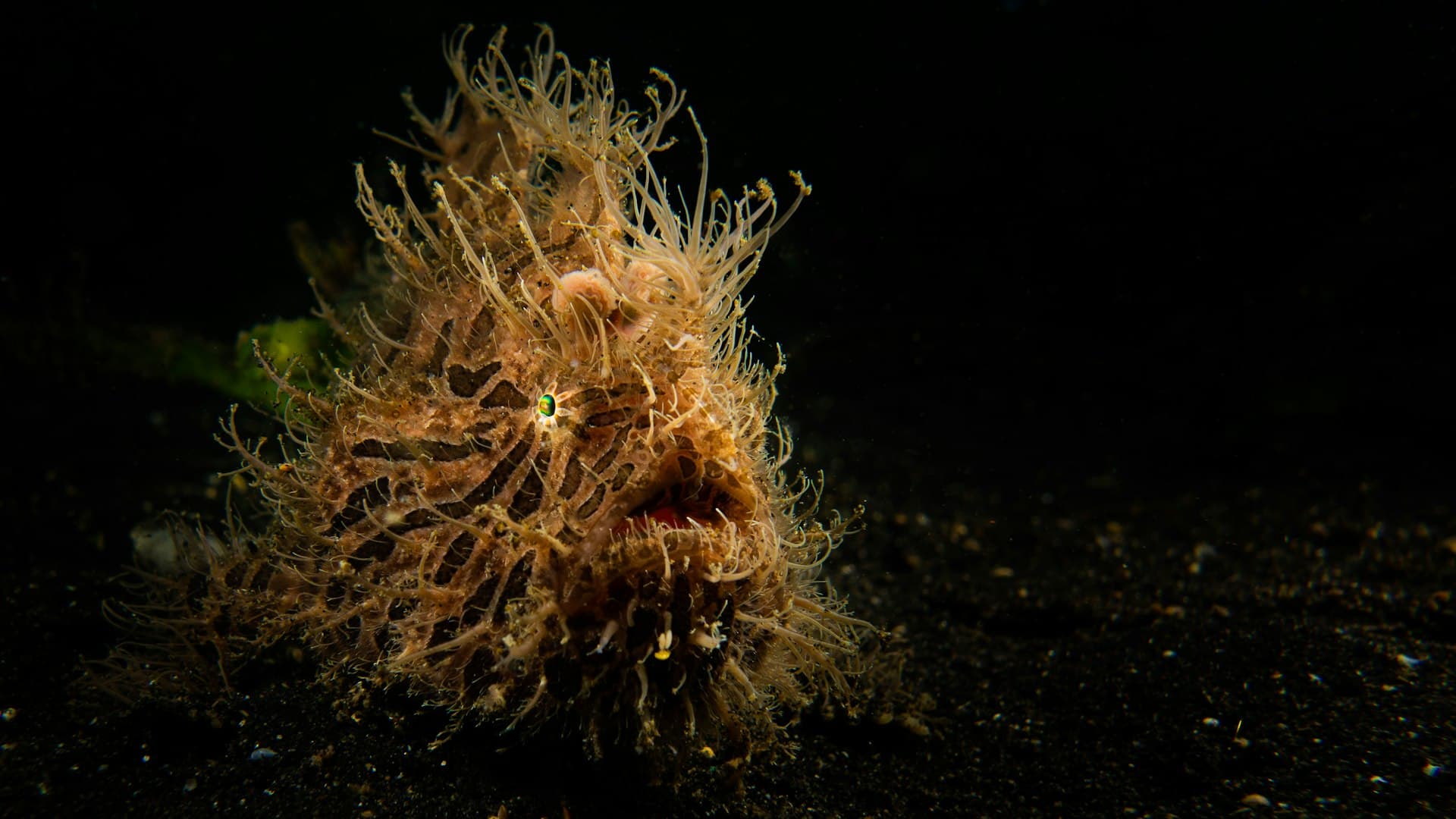
The volcanic substrate is the key. Black sand absorbs light rather than reflecting it, which means underwater photographers get zero backscatter — the dark background makes every critter pop. This is why National Geographic spent three weeks filming here in 2023-24, and why macro photographers from around the world plan entire trips around a single week in Lembeh.
The Critters
Lembeh's fame rests on its extraordinary invertebrate and fish diversity. The strait is home to:
- Hairy frogfish — the highest concentration of any species on earth. National Geographic's black hairy frogfish, filmed here for three weeks, became an internet sensation.
- Mimic octopus — first observed in the Lembeh Strait. This shape-shifter can imitate a flounder, lionfish, sea snake, and even a jellyfish.
- Flamboyant cuttlefish — brilliantly coloured, ground-dwelling cephalopods that look like alien art installations.
- Blue-ringed octopus — one of the most venomous marine animals on earth, found hiding in shallow rubble.
- Pygmy seahorses — Bargibanti, Pontohi, and Denise species living exclusively on specific sea fans.
- Lembeh seadragon (Kyonemichthys rumengani) — endemic to this strait, found nowhere else on earth.
- Mandarinfish — among the most photographed fish in the world, with iridescent blue and orange patterns.
- Wonderpus octopus — the "octopus of mystery," a rare species that mimics multiple forms.
- Rhinopias scorpionfish — the "devil fish," bizarrely ornate predators that look like living coral.
- Coconut octopus — one of the few invertebrates known to use tools, carrying coconut shells as portable shelters.
That's just the headline acts. Every dive produces species you won't find in any field guide.
Dive Sites
Lembeh's ~55-70+ named dive sites fall into four categories:
Muck (Mainland/Bitung side): Black volcanic sand and silt — the iconic Lembeh experience. Sites like Hairball 1 & 2 (the most-photographed muck site on earth), Jahir (named after the local guide who discovered it), and Police Pier (the definitive night dive) deliver critter after critter on a slow, patient drift across black sand.
Reef (Lembeh Island side): Hard and soft coral gardens, walls, and pinnacles — a welcome change of pace. Angel's Window is the crown jewel: a twin-peaked coral pinnacle with a swim-through cave at 22-25m where morning sunlight streams through. California Dreaming offers gorgeous soft coral gardens at 24-28m. Dante's Wall drops to 35m with rich coral growth.
Wrecks: Four wrecks within recreational limits, including the Mawali Wreck (Tanduk Rusa) — a 60m Japanese WWII freighter lying on its side, heavily encrusted with crinoids and black coral.
Mixed: Sites combining muck and reef, like Nudi Falls (vertical wall to rubble to deep sand) and Makawidi (coral shallows over deep sandy slope).
Who It's For
Lembeh is ideal for:
- Macro photographers — this is the world's premier destination. If you have a macro lens, bring it.
- Experienced divers — while many sites are beginner-accessible, the depth range (up to 30m at some sites) and the patience required for critter hunting suit divers with 30-50 logged dives minimum.
- Nature lovers — even without a camera, the density of unusual species is extraordinary.
- Divers combining with Bunaken — the "Walls & Muck Safari" (Bunaken's walls + Lembeh's critters) is one of Indonesia's most popular combinations.
It is less ideal for:
- Visibility chasers — if you want 30m+ clarity, go to Raja Ampat or the Red Sea.
- Big-fish hunters — pelagics exist but are not the draw.
- Beginners with nologged dives — buoyancy control is essential. Silty bottoms punish poor trim.
Diving the Way Lembeh Does
A typical day at Lembeh involves 3-4 dives: two morning, one afternoon, one night or dusk. Dives are slow-paced — expect to cover about 50 metres of bottom per dive, spending most of your time searching. Your guide will point out species you'd walk right past. Night diving is a major attraction: Police Pier, Nudi Falls, and the Hairball sites produce spectacular critter displays under torchlight — Spanish dancer nudibranchs swimming freely, bobtail squid lighting up, stargazers rising from the sand.
Blackwater diving is also available from some operators — dropping a light stick into the water column at night and watching plankton-eaters swarm around it. This is where you'll find ribbon eels, ghost pipefish, and species you didn't know existed.
Gear Recommendations
- Wetsuit: 3mm full suit year-round. A 5mm shorty for July-September when water cools to 25-27°C.
- Dive torch: Essential even for day dives. The dark sand and steep slopes make lighting critical.
- Underwater camera: Macro lens (60mm or 100mm) plus diopters for pygmy seahorses and tiny species.
- Pointer / muck stick: Stabilises you without damaging habitat.
- Nitrox: Highly recommended for multi-dive days — longer bottom times matter when you're hunting 5cm critters.
Getting There
Fly into Sam Ratulangi International Airport (MDC) in Manado. From there, the new toll road to Bitung (opened 2022) cuts the drive to 60-90 minutes — half the previous time. From Bitung, resorts arrange 10-30 minute boat rides to Lembeh Island or mainland-side properties. Most packages include airport transfers.
Visa on arrival is available at Manado for many nationalities (~IDR 500,000 / ~$35 USD). Bring enough cash — ATMs are limited on Lembeh Island itself.
Diver Safety
There is NO hyperbaric chamber on Lembeh Island or in Bitung. The nearest chambers are in Manado (~2-3 hours by boat plus road). DAN insurance is mandatory. The closest hospital without a chamber is RSUD Bitung.
Putting It Together
Lembeh rewards patience. Bring a pointer, a macro lens, and the willingness to spend 60 minutes searching a single square metre of black sand. The species you find will redefine what you thought the ocean contained.
DivePass aggregates local operator briefing notes so you know which sites are running which critters before every dive.