Espiritu Santo Diving: Wrecks, Reefs, and Responsible Planning
Espiritu Santo is the South Pacific's wreck-diving capital. Its headline attraction, the SS President Coolidge, is not simply a shipwreck that appears on a two-dive itinerary. It is a roughly 200-meter former luxury liner and troopship whose bow, cargo holds, decks, machinery spaces, historic objects, and deep stern can occupy qualified divers for an entire week. Around it, Luganville and Segond Channel preserve a broader underwater record of World War II: the machinery field at Million Dollar Point, the broken USS Tucker, and coastal traders that have become artificial reefs.
Santo also rewards divers who leave the wrecks for a day. Aore Wall and Cindy's Reef offer sea fans, anemones, reef fish, turtles, rays, and macro subjects. Bokissa, Tutuba, Mal Mal, and Araki add walls, caves, swim-throughs, stronger water movement, and the possibility of reef sharks or passing pelagics. The result is a destination with a genuine skill ladder: shallow reefs for newer divers, historic wreck exteriors for developing Advanced divers, and demanding overhead or decompression objectives for properly trained teams.
Why the SS President Coolidge Is Different
The Coolidge began life as a passenger liner, was converted to carry troops, and sank in 1942 after striking friendly mines while entering Segond Channel. The captain ran the ship aground, allowing almost everyone aboard to escape. Today the vessel lies on its side, with its shallower bow in the recreational-deep range and its stern descending toward about 70 meters.
That depth range matters. A first guided route may visit the bow, Cargo Holds 1 and 2, military equipment, and coral-covered exterior structure between roughly 20 and 35 meters. Later dives may progress toward the ABC decks, medical stores, the dining-room area, and the porcelain figure known as The Lady. Engine-room, swimming-pool, and deep-stern objectives extend into technical territory. A diver certified for an introductory wreck tour is not automatically qualified for every route on the ship.
The attraction is both historical and ecological. Coral and sponges occupy exposed metal, fish shelter around deck structure, barracuda patrol open edges, and flashlight fish (Anomalops katoptron) create one of Santo's most unusual night-dive experiences in Cargo Hold 2. Nothing should be removed or moved. The wreck is a protected historical site, a grave, and a living reef.
More Than One Wreck
Million Dollar Point is a very different historical dive. After World War II, large quantities of American machinery were pushed into the sea. Bulldozers, vehicles, cranes, boats, and fragmented equipment now form a shallow artificial reef. Much of the dive lies between about 15 and 28 meters, making it more accessible than the deeper Coolidge routes. Nudibranchs, feather stars, juvenile fish, and other small life reward slow photographers who look beyond the dramatic metal shapes.
The USS Tucker lies broken in shallower channel water, commonly around 17-22 meters. Boilers, propellers, hull sections, soft corals, sea fans, snapper, jacks, batfish, and glassfish make it a useful second dive after a deeper morning profile. It provides wartime history without the long penetrations and depth demands of the Coolidge.
The MV Henry Bonneaud, MV Tui Tawaite, and MV Dedele represent Santo's coastal-trader wrecks. These artificial reefs add swim-throughs, sponges, soft coral, morays, schooling fish, and occasional turtles or reef sharks. Route depth and penetration expectations vary, so ask the operator which wreck and profile is actually planned rather than booking from a generic name.
Reef Days Around Aore and the Outer Islands
A reef day changes the pace and reduces repetitive deep-wreck loading. Cindy's Reef, near Aore Island, slopes from shallow coral gardens toward about 30-35 meters. It suits photography and mixed-experience groups when current is mild. Orangefin anemonefish (Amphiprion chrysopterus), regal angelfish (Pygoplites diacanthus), nudibranchs, mantis shrimp, pipefish, and blue-spotted ribbontail rays (Taeniura lymma) are plausible subjects.
Aore Wall and Fan Garden combine a sheltered channel setting with drift-diving character. Large gorgonian fans, anemones, reef fish, WWII fragments, turtles, and occasional larger visitors create a colorful counterpoint to the wrecks. Divers should still carry a surface marker buoy and follow the local current plan; sheltered does not mean current-free.
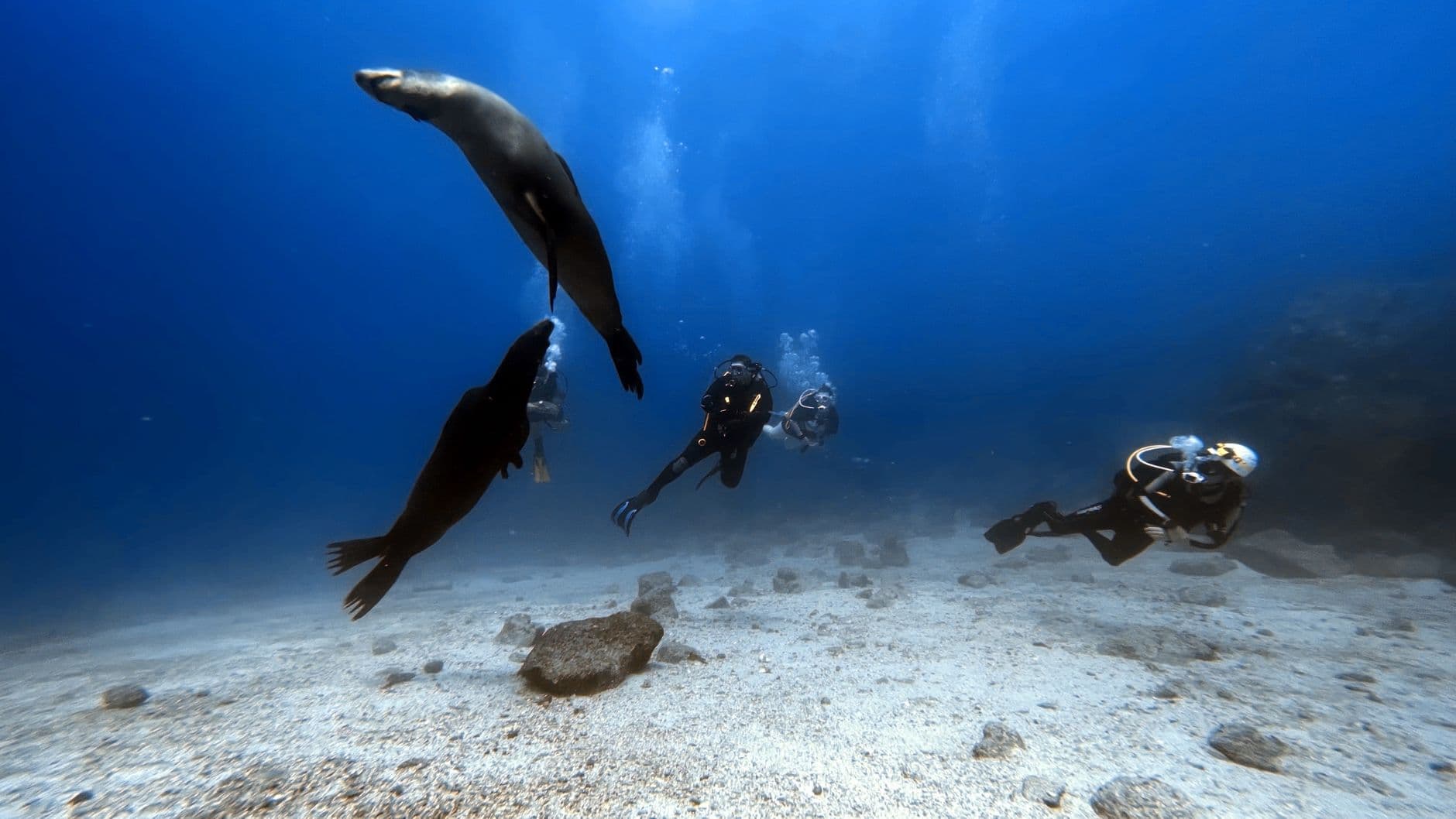
Bokissa Reef is shallower, often 5-18 meters, with staghorn and plate corals, turtles, trevally, barracuda, and possible reef sharks. Tutuba, Mal Mal, and Araki are more exposed. Their caves, canyons, walls, and blue-water edges favor experienced divers and settled weather. Whitetip reef sharks (Triaenodon obesus), grey reef sharks (Carcharhinus amblyrhynchos), spotted eagle rays (Aetobatus ocellatus), dogtooth tuna (Gymnosarda unicolor), and giant trevally (Caranx ignobilis) are possibilities, not guarantees.
Dugongs (Dugong dugon) occur around quiet seagrass areas of Santo, but they are rare and should never be marketed as a guaranteed wreck-dive encounter. Humpback whales (Megaptera novaeangliae) may be seen at the surface during the austral winter migration, especially from July through October. Wildlife should be allowed to choose the distance.
When to Dive Espiritu Santo
May through October is the most dependable overall window. June through September usually brings the driest, most settled weather, water around 24-26°C, and visibility commonly in the 20-35 meter range. Outer reefs may be clearer. Cooler water is comfortable on shallow reefs but can feel cold during repetitive dives to 30-45 meters, so many wreck divers prefer a 5 mm suit, hood, and adequate surface warmth.
November through April is warmer, generally 26-28°C, but wetter. January through March carries the highest tropical-cyclone risk. The protected Coolidge may remain diveable when exposed reef trips are cancelled, yet no site is immune to severe weather. Build buffer days into a wet-season itinerary and accept that operators may change the plan.
April, May, October, and early November are useful shoulder periods. They can combine warmer water, fewer visitors, improving or still-settled seas, and good access. The best month is therefore linked to the objective: settled dry-season weather for technical wreck progression and outer reefs, or warmer shoulder-season water for a mixed wreck-and-reef holiday.
Skills, Equipment, and Safety
Santo should be planned around the most demanding dive, not the easiest reef on the brochure. Advanced Open Water is a practical starting point for many Coolidge highlights, but certification alone does not replace recent deep experience, buoyancy control, gas awareness, or comfort in low light. Penetration requires suitable wreck training, redundant lights, a disciplined guide or team, and a route that matches every diver's qualification. Technical objectives require technical certification, appropriate gases, decompression procedures, and operator support.
Do not let historical excitement override basic limits. Agree on maximum depth, turn pressure, no-decompression or decompression plan, lost-line procedure, and separation response before entering the water. Avoid touching silt, cables, coral, or unstable metal. Keep enough gas for the exit rather than treating the turnaround as an afterthought. After deep morning dives, choose a shallower second profile and monitor cumulative loading.
Emergency planning deserves special attention. Public information about Vanuatu's chamber pathway has changed: older sources place the main recompression capability in Port Vila, while a 2025 ProMedical/VESA notice mentions an Espiritu Santo presence. Travelers should verify the currently operational, publicly accessible chamber and transfer protocol directly before the trip. Carry insurance that explicitly covers remote evacuation and recompression, save the Vanuatu emergency number 115 and the DAN emergency hotline, and select an operator with oxygen, first aid, communications, and an evacuation plan.
Getting There and Building an Itinerary
Most international travelers connect through Port Vila's Bauerfield airport, then fly to Santo-Pekoa Airport near Luganville. Regional direct routes can change, so confirm schedules rather than relying on an old timetable. Luganville is the practical base for shore access, hotels, food, and operator transfers. Aore Island resorts use short boat transfers across the channel.
A balanced four-day plan begins with a Coolidge orientation dive and Million Dollar Point. Day two can progress to The Lady or ABC decks for qualified divers, followed by Cindy's Reef or Aore Wall. Day three can pair the USS Tucker or Henry Bonneaud with Bokissa. Day four can return to a deeper Coolidge objective or use settled weather for Tutuba or Araki. Extra days are valuable because the wreck rewards progression and tropical weather can alter boat plans.
Vanuatu uses the vatu. Cards are accepted at many established businesses, but cash remains useful for small transfers and outer-island logistics. English, Bislama, and French are widely used. Non-diving companions can visit blue holes, beaches, Aore Island, and local WWII history sites, making Santo more flexible than a wreck-only label suggests.
The Bottom Line
Espiritu Santo belongs on a wreck diver's life list because it combines scale, access, history, and route variety in a way few destinations can match. Its best trips are not rushed. They progress from orientation to deeper objectives, alternate wrecks with living reefs, and treat training and evacuation planning as part of the adventure. Come for the Coolidge, but leave time for the channel walls, outer reefs, and small life growing across Santo's underwater history.