Dahab Diving: The Ultimate Guide to the Red Sea's Shore Diving Capital
There are dive destinations where you need a boat, a liveaboard, and a week of planning to reach the good stuff. Dahab is not one of them. Here, you put your wetsuit on at the dive center, walk across the road, and step into some of the most iconic dive sites on the planet. No boat, no seasickness, no hassle.
Dahab (Arabic for "gold") sits on the southeast coast of Egypt's Sinai Peninsula, on the shores of the Gulf of Aqaba. Once a quiet Bedouin fishing village, it has grown into a global dive mecca without losing the relaxed bohemian character that first attracted backpacker-divers in the 1980s. Today it is the closest thing the Red Sea has to a shore diving paradise — 26 documented dive sites along a 15-kilometer stretch of fringing reef, most within a 10-minute walk or taxi ride from town.
What Makes Dahab Different
The Shore Diving Advantage
Dahab's coastline is one continuous fringing reef — a coral structure that grows directly from the shore and drops into deep water within meters. That geography means you can dive the Blue Hole, the Canyon, the Bells, Lighthouse, Eel Garden, and over a dozen other sites without stepping on a boat. You walk to the entry point, gear up on the beach, and descend.
This changes how you dive. Surface intervals happen on the beach. You can do two dives before lunch and be back at your hotel by 1 PM. There are no morning boat briefings to race through, no group-splitting logistics, and no cancellations for rough seas — if the surface is choppy, the underwater conditions remain excellent because the reef blocks the swell.
The Blue Hole: Legend, Beauty, and Respect
The Blue Hole is Dahab's most famous site — a submarine sinkhole roughly 6 meters in diameter that opens into a 100-meter-deep chamber in the reef plateau. From above, it looks like a perfect turquoise circle cut into the coral. The shallow lagoon around it is only 6 meters deep and perfectly safe for snorkelers and beginner divers.
The danger lies at the Arch — a 26-meter tunnel at 56 meters that connects the hole to the open sea. Over 100 divers have died attempting it, earning the Blue Hole the reputation of the world's deadliest dive site. The message is simple: stay in the lagoon and the reef shelf at 6–9 meters, and you get the beauty without the risk. The Arch is for properly trained technical divers only.
The Canyon, The Bells, and the Drift Routes
North of the Blue Hole complex, the Canyon is a fossilized coral reef that fractured and collapsed into an underwater swim-through system with walls up to 10 meters high. The canyon meanders from 18 meters to a sandy bottom at 55 meters, filling with glassfish that create dramatic light effects when sunlight hits the school.
The Bells is a narrow chimney — a vertical crack in the reef plateau that divers descend through to reach the outer wall at 30 meters. From there, a signature drift dive carries you south along the wall to the Blue Hole, covering roughly 500 meters with minimal effort. It is the closest thing to flying underwater.
Who Dahab Is For
Dahab is for divers who value freedom and flexibility. It's ideal for:
- Beginner divers — The shallow lagoon at the Blue Hole, the gentle slope at Lighthouse, and the calm waters of Bannerfish Bay make Dahab one of the best places in the world to learn. PADI Open Water courses run $350–500, significantly cheaper than Sharm El Sheikh or resort-based destinations.
- Experienced divers — Technical divers come specifically for the Blue Hole Arch, deep trimix profiles, and CCR training. Shams Hotel & Dive Centre is one of the Red Sea's premier technical diving facilities.
- Freedivers — Dahab is a global freediving capital, hosting international competitions and attracting depth-training athletes year-round.
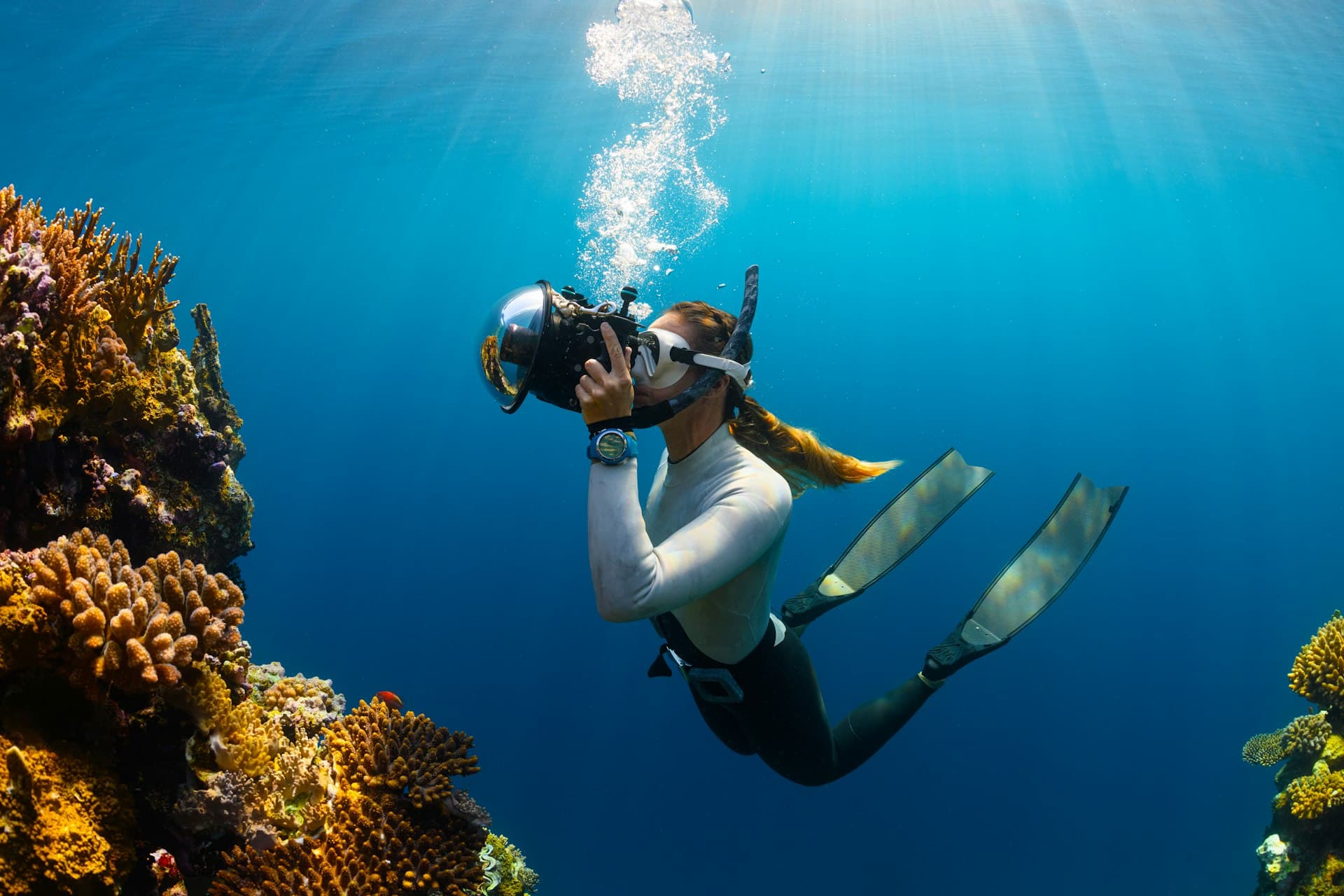
- Underwater photographers — The shallow reef sites, dramatic canyon light, and macro life at Eel Garden and Moray Garden offer exceptional variety in a small area.
- Solo travelers and budget divers — Dahab is 30–50% cheaper than Sharm El Sheikh for comparable diving. Single dive prices run $25–45, and 10-dive packages range from $180–280.
The Dive Shops
Dahab has one of the highest densities of dive shops in the Red Sea — 21 verified operators along a 2-kilometer stretch of town. The majority are concentrated on the Lighthouse Road and Masbat Street areas, where you can walk between shops comparing rates, course packages, and group schedules.
Notable operators include Big Blue Dahab (PADI 5 Star), Octopus World Dahab, Circle Divers, Scuba Seekers, Desert Divers (unique camel-and-dive packages), and Shams Hotel & Dive Centre (technical/CCR training). Most shops offer the standard Dahab price range: $25–45 per guided fun dive, $45–80 for a two-dive day, and $15–25 for full equipment rental.
Practical Overview
Dahab sits in the Egypt Standard Timezone (UTC+2, no daylight saving as of 2025). The Egyptian Pound (EGP) is the local currency — cash is dominant, though larger dive centers accept Visa/Mastercard with a 3–5% fee. English is widely spoken in all dive centers, hotels, and restaurants. The nearest major airport is Sharm El Sheikh International (SSH), a 1.5-hour drive south.
Perhaps most importantly, Dahab has its own hyperbaric chamber at Dahab Specialized Hospital (Deco International), with a second chamber in Sharm El Sheikh 90 kilometers away. This is the best diver safety infrastructure of any non-Sharm destination on the Sinai coast.
Bottom Line
Dahab is the most accessible world-class diving destination on Earth. The combination of shore-accessible dive sites, affordable pricing, relaxed town atmosphere, and the sheer diversity of underwater terrain — from the legendary Blue Hole to the Canyon's swim-throughs to the marine reserve at Ras Abu Galum — makes it a destination every diver should experience at least once. You don't need a boat. You don't need a liveaboard. You just need to walk into the water.