Dahab Dive Conditions: Water Temperature, Visibility, Currents, and Season Guide
Dahab is a year-round diving destination, but that does not mean conditions are identical every month. Water temperature swings 8°C across the year, visibility varies from 15 to 40 meters depending on wind and plankton cycles, and the best sites for each season shift with the Gulf of Aqaba's natural rhythms.
This guide gives you the real numbers — monthly temperatures, visibility ranges, current patterns, and seasonal highlights — so you can plan when to go and what to pack.
The Numbers That Matter Most
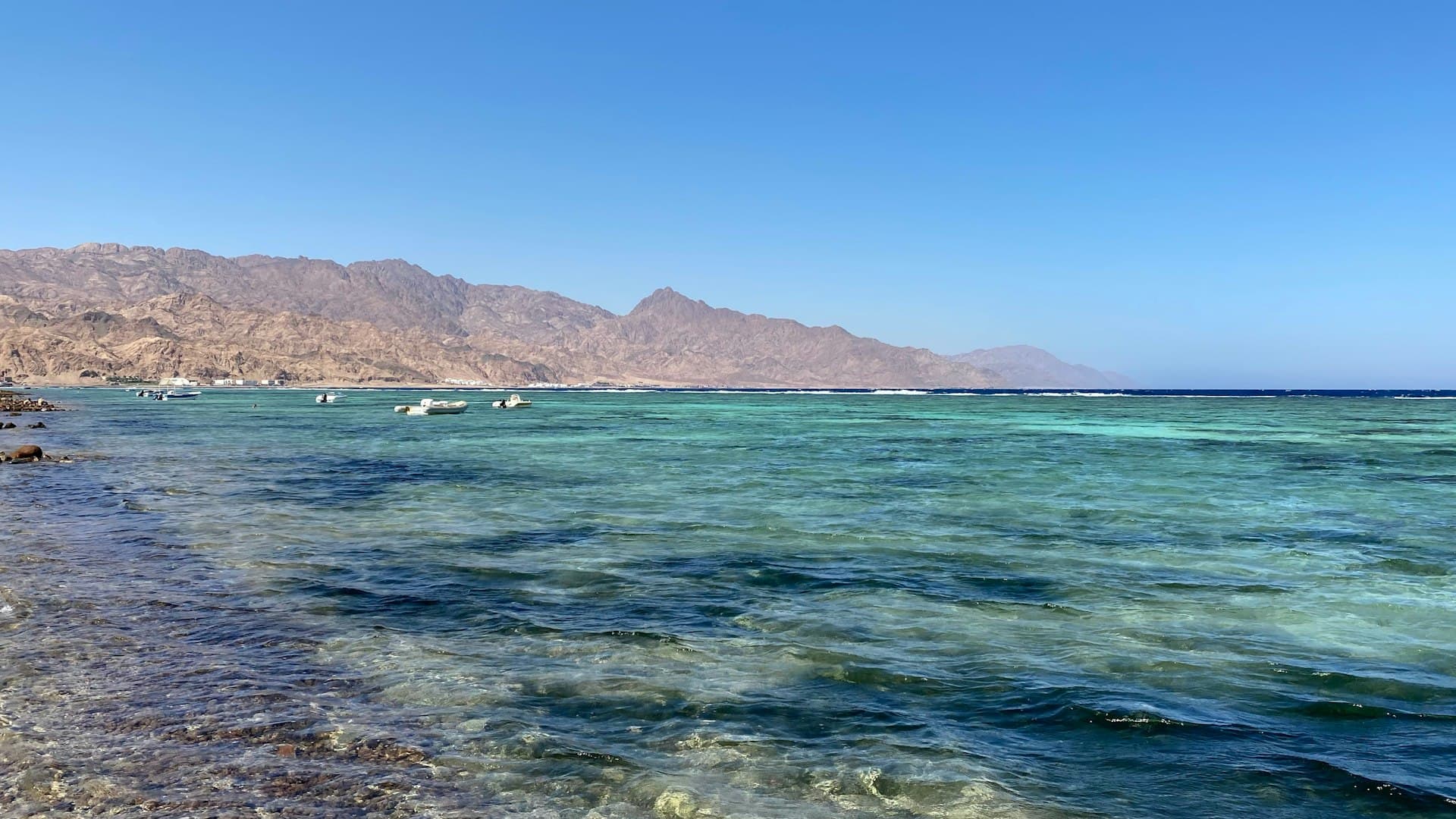
Dahab sits on the Gulf of Aqaba, a deep, narrow body of water reaching 1,850 meters at its deepest point. The Gulf's unique geography — a self-contained sea with minimal tidal exchange — creates unusually stable diving conditions compared to the open Red Sea.
Water temperature: 21–29°C (70–84°F) across the year. February is the coldest month at 21–22°C; August peaks at 28–29°C. The thermocline is mild — temperature drop with depth is gradual, not abrupt.
Visibility: 15–40 meters (50–130 ft). The range depends on season and site. Spring and autumn consistently deliver 25–40 meters. Winter and summer sit at 15–30 meters. The desert climate means minimal runoff — visibility recovers quickly after wind events.
Current: Mild to moderate across most sites. The prevailing current runs north to south along the Gulf of Aqaba. Drift dives follow predictable routes: the Bells to Blue Hole (500 meters), Golden Blocks to Moray Garden, Eel Garden to Lighthouse. Current strength is typically 0.5–1.5 knots at most sites, with occasional spikes at exposed points.
Depth range: Shore diving from 1–55 meters across the reef profile. Most recreational diving occurs between 5–40 meters. The fringing reef drops steeply within meters of the shore — there is no long wade to deep water.
Best season overall: March through May and September through November. These shoulder seasons deliver peak visibility, comfortable water temperatures, and calm surface conditions. Summer (June–August) offers the warmest water but stronger winds and higher temperatures. Winter (December–February) is cooler but less crowded.
Month by Month
January – February: Cool Water, Clear Skies, Fewer Divers
Water temperatures sit at 21–22°C (70–72°F) — the coolest of the year. A 5mm wetsuit with a hood is the right choice for comfort, especially for multiple-dive days. Visibility averages 15–25 meters, though stable high-pressure systems can push it to 30 meters.
These are the quietest months in Dahab. European winter means fewer tourists, dive sites with fewer groups, and better attention from guides. The cooler water can concentrate marine life — spotted eagle rays are reliably seen cruising the outer reef walls, and whitetip reef sharks are common at Lighthouse and Canyon.
Surface air temperatures are pleasant at 18–25°C (64–77°F), making surface intervals comfortable. The risk of wind-induced chop is moderate — the northern Sinai winds can pick up, but the reef blocks most of the swell.
Wetsuit: 5mm full suit plus hood. Gloves recommended for divers doing 3+ dives per day.
Target species: Whitetip reef sharks, spotted eagle rays, hawksbill turtles, garden eels, masked butterflyfish.
Best sites: Lighthouse (sheltered, consistent), Eel Garden (calm and macro-rich), Canyon (good light penetration on clear days).
March – May: The Prime Window
March through May is Dahab's finest season. Water temperatures climb from 22°C in March to 27°C by May — comfortable in a 5mm at the start, a 3mm shorty by the end. Visibility hits its annual peak of 25–40 meters, making this the best time for underwater photography.
The spring plankton bloom attracts marine life across the food chain. Reef manta rays visit cleaning stations at offshore pinnacles and Ras Abu Galum. Grey reef sharks patrol the outer walls at Bells and Canyon in small groups. Eagle ray sightings are at their most reliable.
Surface conditions are at their calmest — the north/northwest wind that picks up in summer stays mild through May. Air temperatures range from 25–35°C (77–95°F), warm enough for comfortable beach intervals.
This is also peak season for turtle encounters. Hawksbill and green turtles are sighted on almost every reef dive, especially at Canyon and Moray Garden.
Wetsuit: March — 5mm full suit. April–May — 3mm shorty or 3mm full suit.
Target species: Reef manta rays, grey reef sharks, spotted eagle rays, hawksbill turtles, green turtles, masked butterflyfish, clownfish (two-band anemonefish).
Best sites: Bells (clear wall diving), Canyon (excellent light), Blue Hole shelf, Moray Garden (moray eels active), Ras Abu Galum (mantas).
June – August: Warm Water, Wind, and Peak Marine Life
Summer in Dahab means air temperatures of 35–45°C (95–113°F) and water reaching its warmest at 26–29°C (79–84°F). A rash guard or a 3mm shorty is all you need in the water — the warmest diving of the year.
The trade-off is wind. The prevailing north/northwest wind kicks up during summer, creating choppy surface conditions that can make shore entries at exposed sites like the Bells more challenging. Underwater conditions remain excellent — the reef blocks the wind chop below the surface, and visibility stays at 20–30 meters.
Marine life is at its most active. Turtles are abundant, with hawksbill and green turtles feeding on the reef daily. Dolphin pods (10–15 bottlenose dolphins) are frequently sighted on boat dives to Ras Abu Galum and on surface intervals near the Blue Hole. Lionfish are visible on every reef, and night dives at Lighthouse reveal octopus hunting in the shallows.
The wind makes afternoon dives at northern sites less comfortable for entry and exit. Most divers schedule morning dives, with a long lunch break during the hottest part of the day. Night dives in summer are exceptional — the warm water and calm conditions bring out octopus, moray eels, and lionfish on every reef.
Wetsuit: 3mm shorty or rash guard. A 3mm full suit is comfortable for deeper dives below 25 meters where the thermocline may drop 2–3°C.
Target species: Bottlenose dolphins, green and hawksbill turtles, grey reef sharks, lionfish, bluespotted ribbontail rays, octopus (night dives).
Best sites: Lighthouse (night dives), Islands (sheltered, calm), Bannerfish Bay (shallow, beginners), Ras Abu Galum (boat dives, dolphins).
September – November: Second Prime Window
September through November is Dahab's second prime season, and for many regulars it is actually better than spring. Water temperatures hold at 24–29°C in September, dropping to 24–25°C by November — still warm enough for a 3mm shorty through October.
Visibility in September and October matches spring's peak at 25–40 meters. The wind drops significantly from summer levels, creating calm surface conditions that make all sites accessible. The summer crowds thin out after September, and the combination of excellent conditions and lower diver density makes this the best value window of the year.
Marine life remains abundant. Eagle rays return to the outer walls in reliable numbers. Reef sharks are active at Bells and Canyon. The dolphin pod is still present in the Gulf of Aqaba, and turtle sightings remain common through October.
By November, water temperatures drop to 24–25°C — time to switch back to a 5mm suit. Visibility can drop to 15–25 meters as the first winter weather systems arrive, but settled days between fronts still deliver excellent diving.
Wetsuit: September–October — 3mm shorty or full suit. November — 5mm full suit.
Target species: Spotted eagle rays, grey reef sharks, whitetip reef sharks, turtles, dolphins, bluespotted ribbontail rays, masked butterflyfish (all year).
Best sites: All sites are excellent. Canyon, Bells, Blue Hole, Eel Garden, Golden Blocks, Moray Garden — peak conditions.
December: Transition to Winter
December marks the transition to Dahab's coolest conditions. Water temperatures drop to 22–23°C (72–73°F), and a 5mm suit with a hood is necessary for comfort. Visibility averages 15–25 meters, with occasional 30-meter days between weather systems.
The holiday period (late December through early January) brings a spike in visitors, but conditions remain solid for those who pack the right exposure protection. Surface air temperatures are a mild 18–25°C (64–77°F), making Dahab one of the warmest winter diving destinations in the Northern Hemisphere outside the tropics.
Wetsuit: 5mm full suit plus hood.
Target species: Year-round residents — whitetip reef sharks, garden eels, butterflyfish, lionfish.
Best sites: Lighthouse (sheltered), Bannerfish Bay (calm entry), Islands (sheltered between pinnacles).
Reading Dahab Currents
Dahab's current patterns are generally mild compared to the open Red Sea, but understanding them matters for drift dives.
North-to-south flow: The Gulf of Aqaba has a prevailing current running from north to south. This is why signature drift dives follow predictable routes: start at the Bells and finish at the Blue Hole, start at Golden Blocks and end at Moray Garden, start at Eel Garden and drift to Lighthouse.
Tidal influence: The Red Sea has a microtidal regime with a range of roughly 0.5 meters. Tidal effects on current are minimal — the Gulf of Aqaba's restricted inlet at the Straits of Tiran moderates tidal flow. You will not see the 2–3 knot tidal races found in other parts of the Red Sea.
Wind-driven current: The prevailing north wind in summer pushes surface water south, which creates a compensating northward current at depth. This is mild (0.5–1 knot) but worth knowing for drift dive planning.
Exposed vs. sheltered sites: Northern sites (Bells, Blue Hole, Canyon) are more exposed to wind and swell. The wall at the Bells can have a stronger current than sheltered town sites like Lighthouse or Islands. Your guide will brief the expected conditions before each dive.
Gear Recommendations for Dahab Conditions
Wetsuit: 5mm full suit December–March; 3mm shorty or full suit April–November. If you run cold, bring a 5mm year-round — you can always open the zipper to cool off. Rental suits are widely available ($5–10 per day) but quality varies.
Exposure for multiple dives: If you do 3+ dives per day in winter, a 5mm suit with a hooded vest under it keeps you warm through the surface interval. The desert sun helps, but wind chill after a dive is real.
Buoyancy: Dahab's wall sites demand good buoyancy control. The fringing reef drops from 6 meters to 55+ meters with no gradual shelf. A check-out dive at Lighthouse (sheltered, shallow wall) before tackling the Bells or Canyon is a smart move.
Dive computer: The complex depth profiles at canyon and wall sites — multi-level dives from 5 to 40 meters — make a dive computer essential. Hand tables handle these profiles poorly.
Surface marker buoy (SMB): Required for drift dives. The Bells-to-Blue-Hole drift covers 500 meters, and the boat or guide needs to track your position. Most shops provide SMBs with guided dives.
Dive light: Useful for the Canyon's swim-through sections, and essential for night dives at Lighthouse — one of the best night dives in the Red Sea.
Summary Table
| Month | Water Temp | Visibility | Current | Best For |
|---|---|---|---|---|
| Jan–Feb | 21–22°C | 15–25 m | Mild | Fewer crowds, budget travel |
| Mar–May | 22–27°C | 25–40 m | Mild | Peak conditions, photography, mantas |
| Jun–Aug | 26–29°C | 20–30 m | Mild | Warmest water, dolphins, night dives |
| Sep–Nov | 24–29°C | 25–40 m | Mild | Value season, second peak, calm conditions |
| Dec | 22–23°C | 15–25 m | Mild | Holiday travel, fewer divers |
Bottom Line
Dahab delivers reliable diving 365 days a year, but the sweet spot is March through May and September through November, when visibility peaks at 25–40 meters, water temperatures are comfortable in a 3mm suit, and conditions are calmest. Summer offers the warmest water and best night diving. Winter gives you the lowest prices and the fewest crowds. Pack the right wetsuit for the season, and Dahab delivers every time.