The 6 Best Dive Sites in Colombia: Hammerheads and Coral Gardens
Colombia's dual-ocean geography means its top dive sites span two completely different marine ecosystems. On the Caribbean coast, you'll find warm, clear waters and thriving coral gardens. On the Pacific coast, you'll encounter some of the most dramatic volcanic topography and pelagic concentrations on Earth.
Whether you're looking to drift along sheer, shark-filled volcanic walls or explore gentle, sun-drenched coral gardens, Colombia has a world-class site for you. Here are the 6 best dive sites in the country, covering both coasts and representing the best of Colombian diving.
1. Altar de los Castores (Beaver's Altar) — Malpelo Island
The World's Best Scalloped Hammerhead Cleaning Station
- Location: Malpelo Fauna and Flora Sanctuary (Pacific Coast)
- Depth: 15–40 meters (50–130 feet)
- Skill Level: Advanced
- Features: Wall dive, extreme pelagics, volcanic topography, strong currents
Located on the southern tip of Malpelo Island, Altar de los Castores is widely considered one of the most spectacular dive sites on Earth. This sheer volcanic rock face drops into the abyssal depths, but the action happens along a shelf between 20 and 30 meters. Here, a major cleaning station is managed by king angelfish (Holacanthus passer) and barberfish (Johnrandallia nigrirostris).
The main attraction is the scalloped hammerhead sharks (Sphyrna lewini). Hundreds of hammerheads cruise along the wall, queuing to be cleaned of parasites by the smaller reef fish. Divers descend quickly to the shelf, find a secure rock to hold onto (using a reef hook is highly recommended), and hover silently. As long as you remain still and control your bubbles, the sharks will pass within arm's reach. Alongside the hammerheads, you can expect to see massive schools of silky sharks, Galapagos sharks, eagle rays, and dense schools of bigeye trevally that block out the sun.
Tip: Watch your depth and computer carefully. The current can be intense, and it's easy to get swept away from the wall into open water where there is no bottom.
2. El Acuario (The Aquarium) — San Andrés Island
The Ultimate Caribbean Coral Garden
- Location: San Andrés Island (Western Caribbean)
- Depth: 2–15 meters (6–50 feet)
- Skill Level: Beginner
- Features: Protected marine reserve, shallow reef, exceptional visibility, abundant reef life
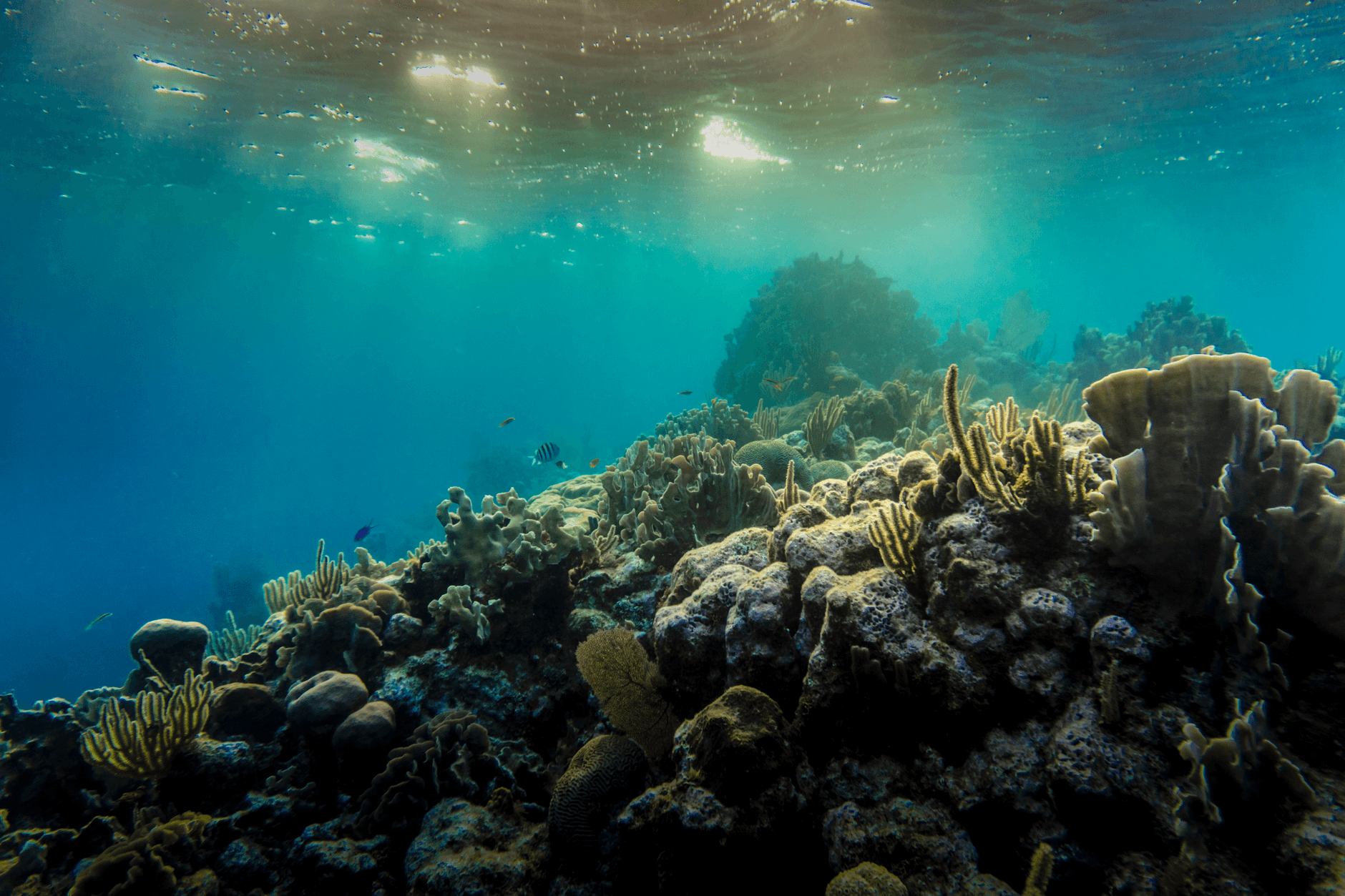
If Malpelo represents the wild limits of Pacific diving, El Acuario represents the gentlest and most beautiful of Caribbean diving. Located on the east side of San Andrés Island, this protected marine reserve is a shallow coral lagoon with crystal-clear, turquoise water and visibility that often exceeds 30 meters.
The site is a labyrinth of healthy hard and soft corals, including elkhorn, staghorn, and brain corals. Because the area has been protected for years, the fish populations are incredibly dense and unafraid of divers. You'll swim alongside schools of blue tangs, sergeant majors, parrotfish, queen angelfish, and yellowtail snappers. It's also an excellent spot for spotting southern stingrays resting in the sand, nurse sharks sleeping under coral ledges, and green sea turtles feeding on seagrass.
Tip: This is an ideal site for a relaxed second dive of the day, underwater photography, or for bringing non-diving friends and family who want to snorkel in a safe, vibrant environment.
3. Islas del Rosario (Rosario Islands) — Cartagena
Vibrant Coral Walls and Tunnels
- Location: Corales del Rosario y de San Bernardo National Natural Park (Caribbean Coast)
- Depth: 5–25 meters (16–82 feet)
- Skill Level: Beginner to Intermediate
- Features: Coral reef, national park, walls, tunnels, swim-throughs
Located about 45 minutes by boat from Cartagena, the Rosario Islands are an archipelago of 27 islands that form one of Colombia's most important coral national parks. The diving here is characterized by beautifully formed coral reefs that benefit from park protections, meaning healthy coral cover and abundant fish life.
The top sites around the islands feature dramatic coral walls that drop from a shallow shelf at 5 meters down to 25 meters. The reef is highly structured, with narrow tunnels, overhangs, and swim-throughs encrusted with colorful sponges and sea whips. Divers can expect to see Caribbean reef sharks, large green moray eels, spotted drum fish, and a variety of lobsters and crabs hiding in the crevices. The visibility is usually excellent, ranging from 15 to 25 meters, and the water is warm and comfortable.
Tip: Take your time exploring the cracks and crevices along the wall. The macro life here — including peppermint shrimp, nudibranchs, and juvenile reef fish — is outstanding.
4. Parque Nacional Natural Tayrona (Tayrona National Park) — Santa Marta
Where Jungle Meets Reef
- Location: Santa Marta (Caribbean Coast)
- Depth: 3–20 meters (10–66 feet)
- Skill Level: Beginner
- Features: National park, rocky reefs, mangrove ecosystems, sea turtles
Tayrona National Park is famous for its stunning beaches where the Sierra Nevada de Santa Marta mountain range descends directly into the Caribbean Sea. Below the surface, this dramatic topography continues, creating a unique diving environment where granite rock formations mix with coral reefs.
The dive sites inside the park feature healthy coral gardens growing over large granite boulders. The mix of rocky structures and corals creates a complex habitat that supports a diverse range of marine life. This is one of the best places on the mainland coast to encounter hawksbill and green sea turtles, which feed on the sponges and algae growing on the rocks. You'll also see schools of yellowtail snapper, schoolmaster snappers, octopus, and occasionally nurse sharks resting in the sand.
Tip: Combine your dive trip with a hike through the national park's coastal jungle for a complete land-and-sea Colombian adventure.
5. Gorgona National Natural Park — Pacific Coast
Pristine Pacific Reefs and Humpback Whale Songs
- Location: Gorgona Island (Pacific Coast)
- Depth: 5–30 meters (16–100 feet)
- Skill Level: Intermediate
- Features: National park, rocky reefs, endemic species, seasonal humpback whales
Gorgona Island, located about 55 kilometers off Colombia's Pacific coast, was once a notorious island prison, but today it is a fully protected national park. Because the island has been isolated and protected for decades, its reefs are among the healthiest and most biodiverse in the Eastern Pacific.
Diving Gorgona offers a fascinating mix of hard corals, volcanic rock formations, and dense marine life. The park's strict protections have allowed fish populations to reach incredible densities. You'll dive among massive schools of barracuda, snappers, and jacks. Giant groupers are common, as are white-tipped reef sharks and green sea turtles. If you visit between July and October, your dives will be accompanied by the haunting, echoing songs of migrating humpback whales, which use the island's warm, protected bays to breed and give birth.
Tip: Keep an eye out for the island's unique terrestrial wildlife between dives, including the blue anole lizard and capuchin monkeys.
6. Manchineel Bay — Providencia Island
Remote Caribbean Wall Diving
- Location: Providencia Island (Western Caribbean)
- Depth: 10–30 meters (33–100 feet)
- Skill Level: Intermediate
- Features: Barrier reef, wall dive, remote island, pristine corals, nurse sharks
Providencia Island is a small, mountainous island located northeast of San Andrés. It is far more remote and less commercialized than its neighbor, and its diving is spectacular. The island is surrounded by an extensive barrier reef system within the Seaflower Biosphere Reserve, and Manchineel Bay on the south shore offers some of its best diving.
The site is a dramatic wall dive where the reef shelf drops from 10 meters down into the deep blue. The wall is covered in giant barrel sponges, sea fans, and healthy black corals. Due to the island's remote location and low diver numbers, the reef is in pristine condition. Divers frequently encounter friendly reef sharks, blacktip sharks, eagle rays, and massive schools of horse-eye jacks. The water is exceptionally clear, and the feeling of diving a remote, untouched reef is unforgettable.
Tip: Reach Providencia via a short flight or catamaran ride from San Andrés. The extra effort is rewarded with some of the most pristine and uncrowded diving in the entire Caribbean.