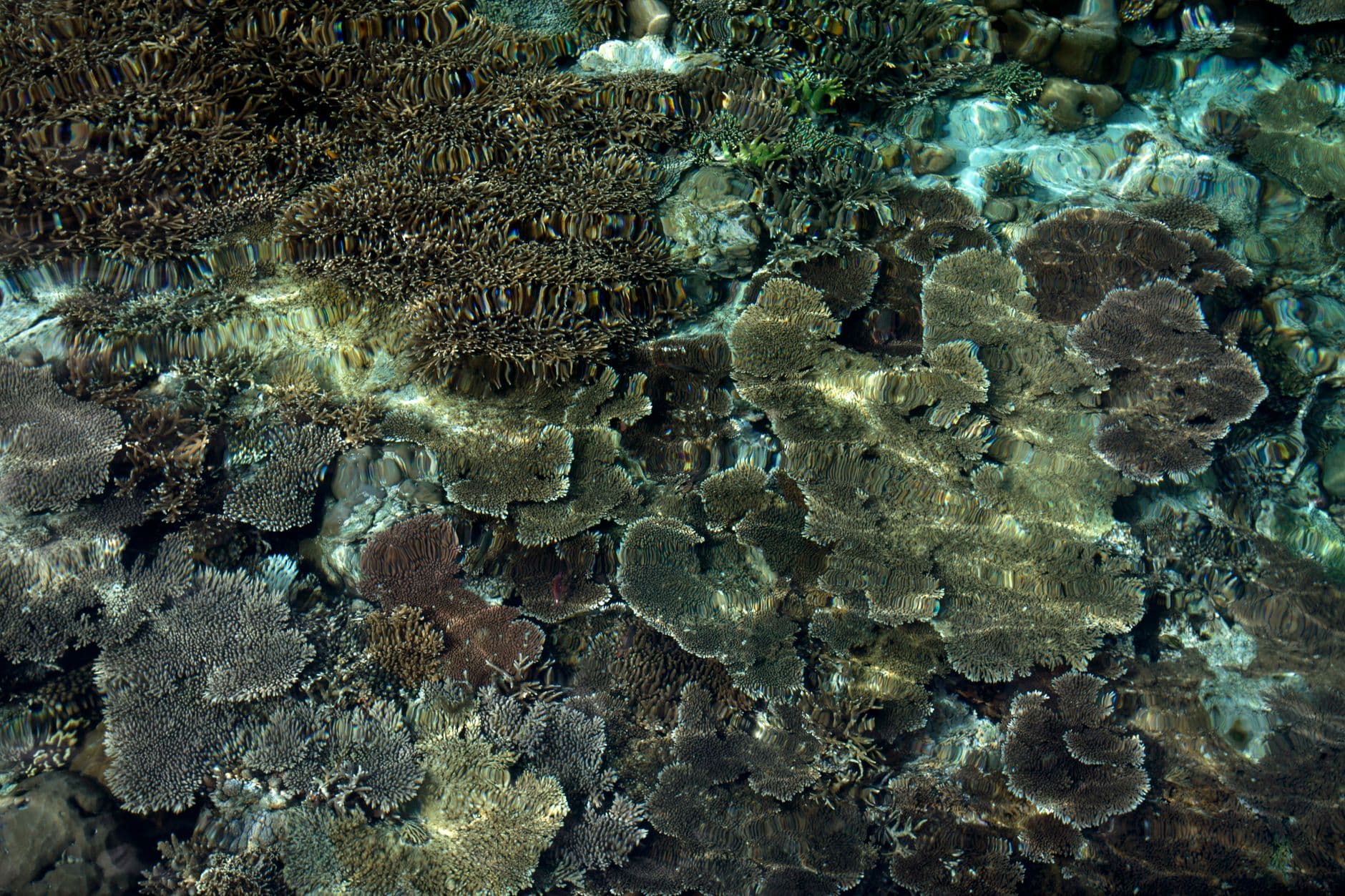
Top 10 Dive Sites in Sipadan & Mabul: From Walls to Muck
Sipadan and Mabul together offer 22 dive sites spanning the full spectrum of tropical diving: current-swept walls thick with pelagic action, shallow sandy slopes hiding the ocean's most creative small creatures, limestone caves with a dark history, and pristine coral gardens that define the Coral Triangle.
These 10 sites represent the best of both islands — seven from Sipadan's ring of wall dives, three from Mabul's muck diving treasure hunt. They are ranked by what matters: consistency of marine encounters, uniqueness of the experience, and overall quality of the dive.
1. Barracuda Point (Sipadan)
Type: Wall / current-swept ridge | Depth: 5–40 m | Difficulty: Advanced | Best season: Year-round; March–September for visibility
Barracuda Point is the single most famous dive site in Sipadan — and one of the most iconic dives in all of Southeast Asia. A submerged ridge extends from the reef crest at 5 meters, dropping to 40 meters on the outer edge and creating a current funnel that concentrates an extraordinary volume of marine life.
The signature encounter: Thousands of chevron barracuda (Sphyraena qenie) form the legendary "barracuda tornado" — a massive, spiraling column of silver bodies that rotates slowly in the current, parting to let divers through and closing behind them. It is one of the most hypnotic spectacles in diving, and at Barracuda Point it happens with a consistency that borders on routine. The tornado can be 10–15 meters in diameter and extend from 15–35 meters deep.
Beyond the barracuda: Grey reef sharks patrol the edges of the barracuda school, their silhouettes sharp against the blue. Giant trevally (Caranx ignobilis) streak through the formation in hunting bursts. Green turtles graze on the reef crest, seemingly oblivious. Massive bumphead parrotfish (Bolbometopon muricatum) cruise by in small groups, their crunching audible underwater as they scrape algae from the coral.
Dive profile: Descend to 25–35 meters on the outer ridge, hook in, and watch the show. Ascend gradually along the wall, spending the last 10 minutes on the reef crest at 5–12 meters with the turtles. The current can run 2–3 knots — reef hook mandatory. Early morning dives produce the largest barracuda aggregations.
Why it's #1: Barracuda Point delivers, dive after dive. The barracuda tornado alone is a bucket-list encounter, and the supporting cast of sharks, trevally, and turtles makes every descent rewarding. It is the definitive Sipadan experience.
2. South Point (Sipadan)
Type: Deep wall / pelagic | Depth: 10–40+ m | Difficulty: Advanced | Best season: March–November (hammerheads peak April–August)
South Point is where Sipadan shows its pelagic teeth. Located on the southern tip of the island where the wall faces open ocean, this site consistently attracts the largest pelagic aggregations in the Semporna Archipelago.
The signature encounter: Scalloped hammerhead sharks (Sphyrna lewini) aggregate at South Point from March through November, peaking in June and July when schools of 30–50+ individuals cruise the deep wall at 25–40 meters. The hammerheads school in loose formations, their dorsal fins cutting distinctive silhouettes against the deep blue. Morning dives produce the most reliable encounters — the sharks are most active in the first hour after sunrise.
Beyond hammerheads: Grey reef sharks are year-round residents. Dogtooth tuna (Gymnosarda unicolor) hunt the wall's edge in bursts of speed. Giant trevally and great barracuda patrol the water column. Turtles ascend from the depths with an almost comical frequency — it's common to see 10+ turtles on a single South Point dive.
Dive profile: This is a blue-water dive. Descend to 30–40 meters along the wall and hover, scanning the deep water for hammerhead silhouettes. The current can be strong (1–3 knots). Bottom time is limited by depth and air consumption — typical dives are 30–40 minutes. The surface interval happens in open ocean with no visible land, adding to the sense of adventure.
Why it's #2: South Point offers the best hammerhead diving in Southeast Asia outside of the Cocos-Galapagos-Malpelo circuit. On a good day in June, it rivals any pelagic dive on Earth.
3. Drop Off (Sipadan)
Type: Vertical wall | Depth: 3–600+ m | Difficulty: Beginner to Advanced | Best season: Year-round; March–September for visibility
The Drop Off is Sipadan's signature wall — the dive that defines the island's underwater topography. From the shallow reef crest at 3–5 meters, the wall plunges vertically into the abyss. Swim 20 meters from the beach entry and you're already suspended over 200 meters of water.
The signature encounter: Hovering at 20–25 meters on the wall, with nothing below you but the deep blue of the Celebes Sea, while green turtles, hawksbill turtles, grey reef sharks, and schools of fusiliers stream past against a backdrop of gorgonian sea fans and barrel sponges. Bumphead parrotfish and Napoleon wrasse (Cheilinus undulatus) are regular visitors. The wall itself — encrusted with life — is the main attraction.
Dive profile: Descend the wall to 25–30 meters, then drift slowly along the face, ascending gradually. The shelf at the top (3–5 meters) is perfect for a long safety stop, with turtles grazing on the reef crest and butterflyfish dancing through the coral. Current is typically mild to moderate — the Drop Off is the most accessible of Sipadan's wall sites and suitable for Open Water divers.
Why it's #3: The Drop Off is Sipadan distilled to its essence: the sheer wall, the blue abyss, and an abundance of life that feels almost impossibly dense. It's also the most accessible wall dive for less experienced divers.
4. Turtle Cavern / Turtle Tomb (Sipadan)
Type: Limestone cave system | Depth: 18–22 m | Difficulty: Advanced (guided penetration only) | Best season: Year-round
Turtle Cavern is Sipadan's most haunting and unique dive site — a limestone cave system at 18–22 meters that holds the skeletons of sea turtles that entered the cave, became disoriented in the darkness, and never found their way out.
The dive: The cavern entrance is a wide opening in the wall at 18 meters. Inside, a network of chambers and tunnels extends over 100 meters into the limestone. The first chamber is large enough for multiple divers and receives ambient light from the entrance — this is the standard guided penetration. Deeper chambers require technical training and are accessed only by qualified cave divers.
Inside the cavern: Turtle skeletons rest on the sandy floor and in rock crevices — some complete, others scattered by current and time. The calcium carbonate of the bones has acquired a ghostly white patina. Bats roost in the air pockets above the water line. The atmosphere is cathedral-like: silent, dark, and charged with the weight of time. Lobsters and moray eels shelter in the rock crevices.
Why it's #4: Turtle Cavern is utterly unique — there is nothing else like it in recreational diving. The combination of geology, biology, and tragedy creates an experience that stays with you long after the dive. It requires a guide and comfort in enclosed overhead environments. Not for the claustrophobic.
5. Hanging Gardens (Sipadan)
Type: Terraced wall / soft coral garden | Depth: 10–35 m | Difficulty: Intermediate | Best season: Year-round; March–September for visibility
Hanging Gardens is Sipadan's most beautiful wall — a terraced drop-off covered in soft corals and gorgonian sea fans that cascade down the face in overlapping layers, creating the illusion of a submerged botanical garden.
The signature encounter: Drifting along the terraced wall at 20–25 meters, surrounded by pink and orange soft corals, purple sea fans, and clouds of anthias and fusiliers. Whitetip reef sharks rest under the ledges. Green turtles hover over the coral terraces. Leopard sharks (Stegostoma tigrinum) occasionally rest on the sandy patches between the terraces. It is a gentler, more contemplative dive than Barracuda Point or South Point.
Dive profile: Multi-level wall dive. Start at 25–30 meters on the deeper terraces, work upward through the soft coral gardens, and finish on the reef crest at 5–12 meters. Current is typically mild to moderate, making this an accessible wall dive for intermediate divers. Photographers favor Hanging Gardens for its color and the soft, diffused light that filters through the coral canyons.
Why it's #5: Hanging Gardens is Sipadan's most photogenic site — a riot of color that showcases the Coral Triangle's biodiversity at its most visually spectacular. It's also the most relaxing Sipadan wall dive, perfect for a second or third dive of the day.
6. Whitetip Avenue (Sipadan)
Type: Wall / shark resting area | Depth: 10–30 m | Difficulty: Intermediate | Best season: Year-round
Whitetip Avenue is named for what it delivers with remarkable consistency: whitetip reef sharks (Triaenodon obesus) resting on the sandy bottom and under coral overhangs, often 5–10 individuals visible at once. This is one of the most reliable sites in the world for observing whitetip reef sharks in their natural resting behavior.
The signature encounter: A sandy ledge at 15–25 meters, punctuated by coral bommies and overhangs, where whitetip reef sharks lie motionless — sometimes stacked two or three in the same crevice — while approaching divers drift past. The sharks are famously tolerant of observation, and photographers can approach within 2–3 meters. Turtles, grey reef sharks, and the occasional leopard shark pass through.
Dive profile: Drift along the wall at 15–25 meters, stopping at the sandy ledges to observe the resting sharks. Ascend to the reef crest for the safety stop. Current is mild to moderate. Suitable for Advanced Open Water divers.
Why it's #6: Whitetip Avenue is a photographer's dream — stationary sharks in good light at moderate depth. The reliability of the whitetip encounters makes this a must-do site on any Sipadan itinerary.
7. Mid-Reef (Sipadan)
Type: Mid-depth reef wall | Depth: 10–30 m | Difficulty: Intermediate | Best season: Year-round; March–September for visibility
Mid-Reef is the versatile workhorse of Sipadan's dive sites — a mid-depth wall that combines elements of the other sites into one consistently rewarding dive. It's less famous than Barracuda Point or South Point, which means it's often less crowded, and it delivers a solid cross-section of Sipadan's marine life.
The dive: A sloping wall from 10–30 meters with coral bommies, sandy channels, and small overhangs. Green turtles are abundant. Grey reef sharks patrol the deeper water. Chevron barracuda schools pass through. Macro life includes nudibranchs, flatworms, and shrimp in the coral crevices. The variety — walls, sand channels, bommies, blue water — makes Mid-Reef an excellent site for dive guides to tailor the profile to the group's interests.
Why it's #7: Mid-Reef is Sipadan's most underrated site. It doesn't have a signature attraction like the barracuda tornado or the hammerhead aggregation, but it consistently delivers a representative, high-quality Sipadan dive with fewer divers in the water.
8. Froggyfish Lair (Mabul)
Type: Muck / sandy slope | Depth: 10–25 m | Difficulty: Beginner to Advanced | Best season: Year-round
Froggyfish Lair is Mabul's signature muck site — and one of the best places on Earth to see frogfish. The sandy slope, punctuated by scattered coral heads, sponges, and discarded debris, is a macro photographer's paradise.
The signature encounter: Striated frogfish (Antennarius striatus) in an astonishing range of colors — bright yellow, jet black, crimson, pink, mottled brown — camouflaged against sponges and coral heads. Giant frogfish the size of a basketball. Painted frogfish that look like they were designed by an abstract expressionist. The guides know every frogfish on this slope individually and can find them with uncanny precision.
Beyond frogfish: Broadclub cuttlefish (Ascarosepion latimanus) hover in the water column, their chromatophores pulsing. Flamboyant cuttlefish (Metasepia pfefferi) walk across the sand on their arms. Mimic octopus emerge from burrows. Blue-ringed octopus (Hapalochlaena lunulata) flash their warning rings. Peacock mantis shrimp (Odontodactylus scyllarus) peer from burrows. Nudibranchs — Chromodoris, Phyllidia, Hypselodoris, Nembrotha — cover the coral heads.
Dive profile: Slow, patient, stop-and-observe. Drop to the sand at 15–20 meters and work your way up the slope, spending 5–10 minutes with each subject. Bottom times of 60–70 minutes are typical. Current is negligible.
Why it's #8: Froggyfish Lair defines what muck diving can be. The density and diversity of macro life on one sandy slope is staggering.
9. Paradise 1 & 2 (Mabul)
Type: Muck / artificial reef | Depth: 5–25 m | Difficulty: Beginner to Advanced | Best season: Year-round
Paradise is actually two adjacent sites (Paradise 1 and Paradise 2) that together form Mabul's most complete macro experience. Where Froggyfish Lair specializes in frogfish, Paradise offers the full catalog of muck diving's greatest hits.
The signature encounter: A sandy slope with scattered artificial structures — old tires, ropes, wooden frames, metal debris — that have been colonized by a staggering variety of life. Mimic octopus are Paradise's most famous residents, emerging from burrows to hunt across the sand. Flamboyant cuttlefish parade across the bottom. Ribbon eels (Rhinomuraena quaesita) sway from sandy burrows, their blue-and-yellow juvenile coloration or electric-blue adult male form immediately recognizable. Harlequin sweetlips (Plectorhinchus chaetodonoides) shelter under ledges. Clown triggerfish (Balistoides conspicillum) patrol the coral heads.
Dive profile: Like all muck dives, Paradise rewards patience. Descend to 15–20 meters and work the slope methodically, scanning the sand for movement and the guides for signals. Dive times of 60–75 minutes are common. The shallows (5–10 meters) are often the most productive zone, with cuttlefish and octopus hunting in the seagrass.
Why it's #9: Paradise is the complete muck diving experience — mimic octopus, flamboyant cuttlefish, ribbon eels, frogfish, and nudibranchs at one site. It's the essential Mabul dive.
10. Lobster Wall (Mabul)
Type: Wall / macro slope | Depth: 5–25 m | Difficulty: Beginner to Intermediate | Best season: Year-round
Lobster Wall bridges the gap between Mabul's muck diving and Sipadan's wall diving — a modest wall (5–25 meters) whose crevices are packed with painted spiny lobsters (Panulirus versicolor), making it an excellent introduction to Mabul for divers arriving from Sipadan.
The signature encounter: The wall's crevices reveal clusters of painted spiny lobsters with their long white antennae waving in the current. Giant moray eels (Gymnothorax javanicus) and honeycomb morays (Gymnothorax favagineus) peer from holes. Leaf scorpionfish (Taenianotus triacanthus) rock back and forth in the surge, their camouflage so effective that even experienced eyes struggle. Blue-spotted ribbontail rays (Taeniura lymma) glide across the sandy patches at the wall's base. Spotted eagle rays (Aetobatus narinari) pass by in the blue.
Dive profile: Drift along the wall at 15–20 meters, peering into crevices for lobsters and morays. Current is mild. Suitable for Open Water divers and an excellent night dive — the lobsters emerge from their crevices after dark, and octopus hunt along the sand.
Why it's #10: Lobster Wall is the most accessible site on this list — suitable for all skill levels, rich in macro life, and excellent for both day and night dives. It's the ideal first Mabul dive and a consistently rewarding site for all experience levels.
Site Comparison Table
| # | Site | Location | Depth | Access | Difficulty | Best For | Key Species |
|---|---|---|---|---|---|---|---|
| 1 | Barracuda Point | Sipadan | 5–40m | Boat | Advanced | Barracuda tornadoes | Chevron barracuda, grey reef shark, giant trevally, bumphead parrotfish |
| 2 | South Point | Sipadan | 10–40m+ | Boat | Advanced | Hammerhead sharks | Scalloped hammerhead, grey reef shark, dogtooth tuna, turtles |
| 3 | Drop Off | Sipadan | 3–600m+ | Boat/Shore | All levels | Classic wall, turtles | Green turtle, hawksbill, grey reef shark, Napoleon wrasse |
| 4 | Turtle Cavern | Sipadan | 18–22m | Boat | Advanced | Cave, turtle skeletons | Lobsters, moray eels, bat colony |
| 5 | Hanging Gardens | Sipadan | 10–35m | Boat | Intermediate | Soft corals, photography | Whitetip reef shark, leopard shark, turtles, anthias clouds |
| 6 | Whitetip Avenue | Sipadan | 10–30m | Boat | Intermediate | Whitetip sharks resting | Whitetip reef shark, leopard shark, turtles |
| 7 | Mid-Reef | Sipadan | 10–30m | Boat | Intermediate | All-around variety | Green turtle, grey reef shark, barracuda, nudibranchs |
| 8 | Froggyfish Lair | Mabul | 10–25m | Boat | All levels | Frogfish, macro | Striated frogfish, giant frogfish, flamboyant cuttlefish |
| 9 | Paradise 1 & 2 | Mabul | 5–25m | Boat | All levels | Complete muck diving | Mimic octopus, flamboyant cuttlefish, ribbon eel, blue-ringed octopus |
| 10 | Lobster Wall | Mabul | 5–25m | Boat | All levels | Lobsters, morays, night dives | Painted spiny lobster, giant moray, leaf scorpionfish, eagle ray |
How to Choose
If you want the big stuff — sharks, barracuda, pelagics: Barracuda Point (#1), South Point (#2), and Drop Off (#3) are your must-dive sites. Book a Sipadan permit for a full 3-dive day and request these three.
If you're a photographer: Hanging Gardens (#5) for wide-angle color, Whitetip Avenue (#6) for stationary shark portraits, Froggyfish Lair (#8) and Paradise (#9) for macro masterpieces. Bring both wide-angle and macro lenses — you'll use both.
If you're a beginner or intermediate diver: Drop Off (#3) and Mid-Reef (#7) on Sipadan offer world-class diving without extreme current. On Mabul, Lobster Wall (#10) and Paradise (#9) are accessible to all levels.
If you want the bucket-list experience: Barracuda Point (#1) for the tornado, South Point (#2) for the hammerheads, and Turtle Cavern (#4) for the haunting cave — these three are the dives you'll tell people about for years.
If you love the weird and wonderful: Skip Sipadan for a day and dedicate yourself to Mabul's muck. Froggyfish Lair (#8), Paradise (#9), and Lobster Wall (#10) will keep you busy for an entire day and you'll surface with a camera full of creatures that look like they were designed by science fiction writers.
If you only have one Sipadan day: Barracuda Point (#1), South Point (#2) or Hanging Gardens (#5), and Drop Off (#3) — the definitive Sipadan trilogy.