Sipadan & Mabul Diving Conditions: Visibility, Temperature, Currents, and Seasons
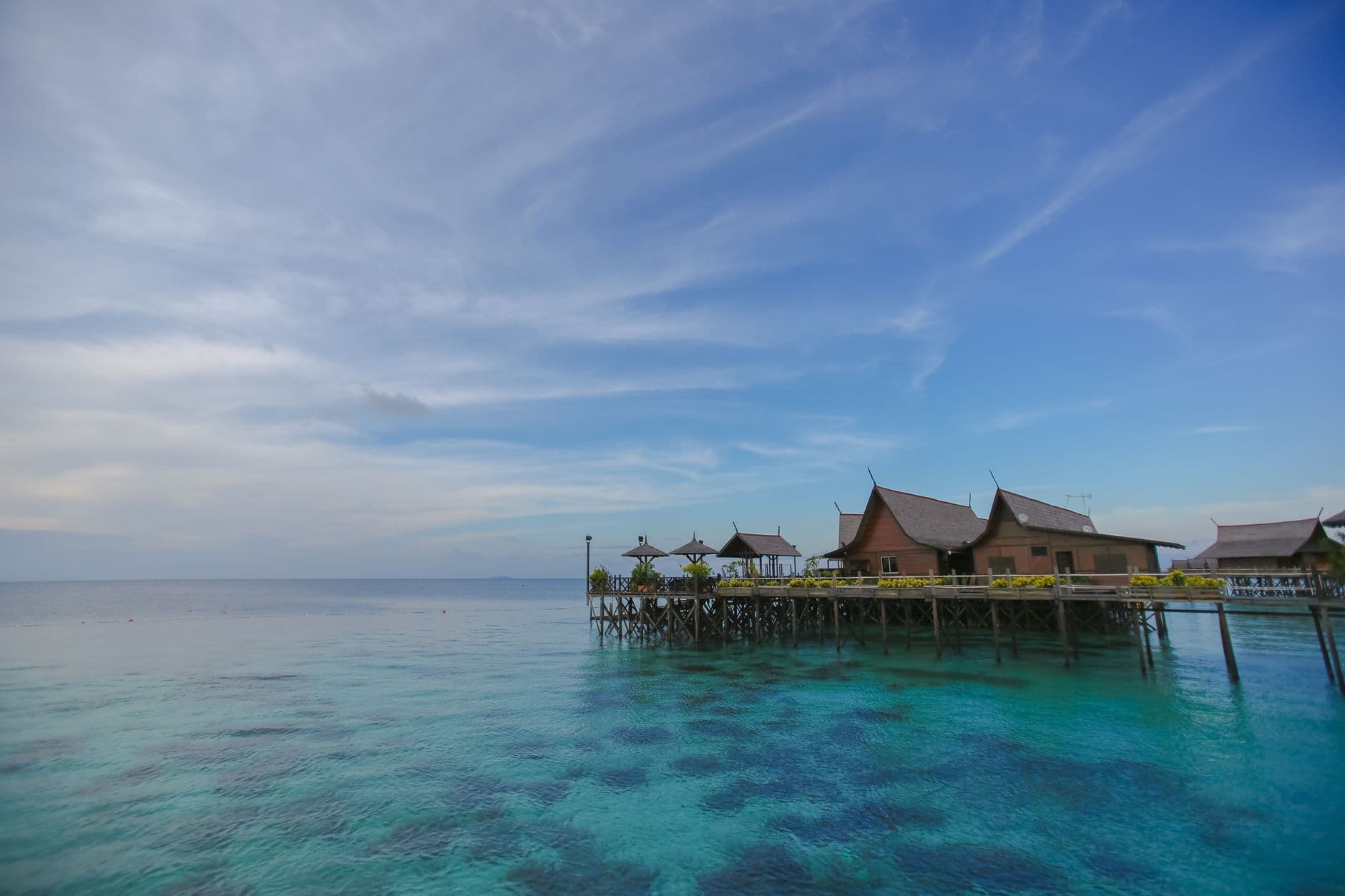
The Semporna Archipelago sits just 5 degrees north of the equator in the Celebes Sea, giving it a true tropical maritime climate with warm water year-round. But "year-round" doesn't mean uniform — Sipadan and Mabul experience two distinct monsoon seasons that dramatically affect everything from which sites are accessible to what marine life you'll encounter.
The key to planning a Sipadan trip is understanding that the destination is, in effect, two different places depending on when you go. The dry season (March through September) is Sipadan at its most spectacular: calm seas, crystalline visibility, wall dives at every site, and scalloped hammerheads aggregating at South Point. The wet season (December through February) trades clarity and accessibility for solitude, lower prices, and a completely different energy.
This guide gives you the real numbers — temperatures, visibility ranges, current profiles, and the marine life calendar — so you can align your trip with the diving you care about most.
The Numbers That Matter Most
Water temperature: 27.9–29.8°C (82–86°F) across the year. May is the warmest month at 29.8°C; January is the coolest at 27.9°C. The annual swing of just 1.9°C is minimal — thermal protection is more about dive duration and personal comfort than seasonal variation. A 3mm shorty or full suit is comfortable year-round; many divers add a 3mm vest for repetitive dives.
Visibility: 5–40 m (16–130 ft) depending on season and site type. During the dry season (March to September), Sipadan's wall sites deliver visibility of 20–40 meters — genuinely world-class clarity. Mabul's muck sites run lower at 10–25 meters even in peak season due to the sandy substrate. During the wet season (December to February), Sipadan visibility drops to 10–25 meters and Mabul to 5–12 meters as rainfall runoff and plankton blooms reduce water clarity.
Current: Moderate to strong on Sipadan's exposed walls (1–3 knots typical at Barracuda Point, South Point, and Hanging Gardens). Mild to moderate on Mabul's sandy slopes (0.5–1.5 knots). Current direction is predominantly tidal, and the strongest flows occur around the new and full moons. Sipadan's sites face different directions, so operators rotate sites based on the tide — there's almost always a diveable current profile somewhere around the island. Reef hooks are standard equipment for Sipadan — you hook into dead coral and hover in the current while the pelagic life streams past.
Depth range by site type: Sipadan walls begin at 3–5 meters on the reef crest and drop vertically to beyond recreational limits (600m+). Most wall dives stay within 10–35 meters. The Turtle Cavern system is at 18–22 meters. Mabul sites range from 3 meters (seagrass beds and sandy slopes) to 25 meters (artificial reefs and deeper muck sites). Kapalai's house reef tops at 2–5 meters.
Best season overall: March through September. This is the dry season, when Sipadan's walls deliver their legendary visibility, the seas are calm enough for all 10 Sipadan sites plus Mabul, and the marine life calendar is at its peak — hammerheads from April through August, manta rays possible June through September, turtles nesting on Sipadan's beaches June through July.
October and November are the monsoon transition months — still very diveable, with hammerheads sometimes present into November, but increasing rainfall and occasional rough-sea days that can temporarily close Sipadan's outer-wall sites. This is the value window: lower prices, fewer divers, and conditions that are still good-to-excellent most days.
December through February is the Northeast Monsoon. Visibility drops, seas can be rough enough to close Sipadan on some days, and rain is frequent (200–350mm per month). But Mabul's sheltered muck sites remain diveable throughout, and the low-season prices and near-empty sites appeal to divers who don't mind trading clarity for solitude.
Wetsuit recommendation: 3mm shorty or full suit year-round. The water never drops below 27°C, so thermal protection is light. A 3mm full suit adds protection from stinging hydroids on Sipadan's walls and from the occasional jellyfish bloom. A thin hooded vest is appreciated on repetitive dive days, especially during the slightly cooler December–January window.
Month by Month
January: Northeast Monsoon
Water temperature: 27.9°C | Visibility: Sipadan 10–25m, Mabul 5–12m
January sits squarely in the Northeast Monsoon, bringing 250–350mm of rainfall and the roughest seas of the year. Sipadan diving continues in weather windows — operators assess conditions each morning and pivot sites accordingly. When Sipadan's outer-wall sites are exposed, the inner-wall sites (Mid-Reef, Coral Gardens, Staghorn Crest) are often still accessible.
The reduced visibility during January is driven by plankton blooms and freshwater runoff, which means more nutrients in the water column. Grey reef sharks and whitetip reef sharks remain year-round residents and are active in January. Turtles are as abundant as ever — Sipadan's turtle population does not migrate seasonally. Mabul's muck diving is excellent in January, with frogfish, cuttlefish, and nudibranchs unaffected by surface conditions. The sheltered sandy slopes of Paradise and Froggyfish Lair are protected from the monsoon swell.
January's advantage is the price and the solitude. Resort rates are 20–40% lower than peak season, Sipadan permits are easier to secure, and you may have Barracuda Point to yourself. The trade-off is unpredictability — some January days are stunning, others are washouts. Divers with flexible itineraries who don't mind rolling with the weather find January rewarding.
Best for: Budget-conscious divers, macro photographers, those who value solitude over visibility. Not ideal for first-time Sipadan visitors who want the classic postcard conditions.
February: Monsoon Easing
Water temperature: 28.0°C | Visibility: Sipadan 10–25m, Mabul 5–12m
February mirrors January in most respects, with the Northeast Monsoon beginning to show early signs of easing by late in the month. Rainfall averages 200–300mm, slightly less than January. Clear days become more frequent. Water temperature begins its slow climb toward the April–May peak.
Shark activity remains consistent. The barracuda schools at Barracuda Point are year-round — the "tornado" formation is driven by current, not season, and February's moderate to strong currents can produce spectacular barracuda aggregations. Giant trevally hunt the edges of the school, and grey reef sharks patrol the perimeter.
By the last week of February, the first signs of the transition to the dry season appear: longer clear windows, diminished rainfall, and the earliest hammerhead scouts at South Point.
Best for: Late February is the transition sweet spot — monsoon conditions fading, dry-season marine life beginning to stir, and the crowds haven't arrived yet.
March: Transition to Dry Season
Water temperature: 28.3°C | Visibility: Sipadan 15–30m, Mabul 8–20m
March is the hinge month. The Northeast Monsoon winds down, and the dry season begins to establish itself. Visibility improves noticeably, rainfall drops to 150–200mm, and the seas calm enough that all 10 Sipadan sites are regularly accessible again.
Scalloped hammerheads begin appearing reliably at South Point from late March onward. The schools are small at first — 5–15 individuals — but sightings become more consistent through the month. This is the start of the hammerhead window that peaks in June–July.
March is also when Sipadan permit demand begins to rise. The first wave of dry-season visitors arrives, and the most popular operators start filling their permit allocations for April–May dates. Book 2–3 months ahead for March travel if you want guaranteed Sipadan days with a preferred operator.
Best for: Divers who want dry-season conditions without peak-season crowds. March delivers 80% of the dry-season experience at 70% of the peak-season price.
April: Prime Season Opens
Water temperature: 29.2°C | Visibility: Sipadan 20–35m, Mabul 10–25m
April is when Sipadan truly shines. The seas are calm, visibility is climbing toward its annual peak, and the marine life calendar is firing on all cylinders. Water temperature reaches 29.2°C — warm enough for extended dives in a 3mm shorty.
Hammerhead schools at South Point grow to 15–30 individuals, with morning dives producing the most reliable encounters. The hammerheads cruise the deep wall at 25–40 meters, and the improving visibility makes them visible from distance — a far more satisfying experience than the murkier winter encounters.
Barracuda Point produces the most spectacular barracuda tornadoes of the year. The combination of strengthening currents, high fish biomass, and stable water conditions creates aggregations of thousands of chevron barracuda spiraling in the blue. Grey reef sharks circle the edges. Green turtles graze on the reef crest, seemingly indifferent to the chaos around them.
April marks the start of peak permit demand. All 178 daily permits are typically claimed, and the most sought-after operators (Seaventures, Sipadan Water Village, Borneo Divers) may be fully allocated for Sipadan days 2–3 months out.
Best for: The complete Sipadan experience. If you're making the trip once, April through August is the window.
May: Peak of Perfection
Water temperature: 29.8°C | Visibility: Sipadan 25–40m, Mabul 12–25m
May is the single best month for Sipadan diving, period. Water temperature peaks at 29.8°C — as warm as it gets. Visibility reaches 25–40 meters on the outer walls. The hammerhead aggregation at South Point is at full strength (20–50+ individuals). Barracuda tornadoes are a daily feature at Barracuda Point. And the first whale sharks of the season may pass through the Semporna Archipelago following plankton blooms.
Spinner dolphins and bottlenose dolphins are frequently sighted during surface intervals and boat transits between sites. Turtles are everywhere — Sipadan's density approaches one turtle per 10 square meters on the reef crest. The resident population of green and hawksbill turtles is bolstered by mating aggregations in the shallows.
Reef manta rays begin appearing at cleaning stations on Sipadan's outer walls and occasionally on Mabul's deeper sites. Sightings are not as predictable as Socorro or the Maldives, but May through September is the window.
All sites are fully accessible. The sea is glass-flat on most mornings. The only downside: May is the busiest month for Sipadan permits, and top-tier operators may be fully booked 4–6 months in advance.
Best for: Everything. Shark divers, macro photographers, wide-angle shooters, first-timers — May delivers the best conditions for every type of diver.
June: Summer Peak
Water temperature: 29.6°C | Visibility: Sipadan 25–40m, Mabul 12–25m
June maintains the peak-season excellence. Water temperature remains at 29.6°C. Visibility stays in the 25–40 meter range. The seas remain calm, and the current profiles on Sipadan's walls are at their most consistent — strong but predictable, making drift dives straightforward for experienced divers.
Hammerhead activity peaks in June and July. Schools of 30–50+ individuals cruise South Point's deep wall on morning dives. These are some of the largest hammerhead aggregations in Southeast Asia, rivaling the schools at Cocos Island and the Galapagos.
Turtle nesting season begins on Sipadan's beaches in June. Green and hawksbill turtles come ashore at night to lay eggs. The nests hatch approximately 45–60 days later in August and September. While the beaches are off-limits for nesting observation (park regulations), the increased turtle activity is evident underwater — mating pairs, nesting females resting on the reef between egg-laying sessions, and a general sense of heightened turtle presence.
June has excellent light for underwater photography. The combination of warm water, maximum visibility, and 12+ hours of equatorial daylight (sunrise ~6:00 AM, sunset ~6:15 PM year-round) creates ideal conditions for both wide-angle and macro shooting.
Best for: Hammerhead chasers, underwater photographers, turtle enthusiasts.
July: Mid-Summer Stability
Water temperature: 29.4°C | Visibility: Sipadan 20–35m, Mabul 10–25m
July is a mirror of June with slightly warmer air temperatures (32°C vs 31°C in June) creating ideal surface conditions. Water clarity remains excellent. Hammerhead schools are still large, though beginning to show the first signs of dispersal toward late July.
July's unique feature is the combination of peak reef fish activity and peak turtle activity. The coral spawning events of April–May have produced a new generation of reef fish, and the biomass on Sipadan's walls is at its annual maximum. Massive schools of lunar fusiliers (Caesio lunaris) and yellowback fusiliers (Caesio xanthonota) stream past the walls in swirling clouds, pursued by giant trevally and dogtooth tuna (Gymnosarda unicolor).
Mabul's macro life is excellent in July. The warm water temperatures keep nudibranchs active, and the stable conditions allow for long, unhurried muck dives. Flamboyant cuttlefish are mating and laying eggs on coconut shells and discarded ropes, and blue-ringed octopus are more active in the warmer water.
Best for: Fish-watchers, turtle lovers, macro photographers wanting maximum bottom time in warm, clear water.
August: Peak Heat, Peak Life
Water temperature: 29.3°C | Visibility: Sipadan 20–35m, Mabul 10–25m
August is the hottest month for air temperature (32.5°C), but the water remains a comfortable 29.3°C. Early morning dives (7:00–8:00 AM start) are standard practice to beat the afternoon heat and the occasional surface chop that builds as the land heats up.
Hammerhead numbers begin to decline in August as the aggregation starts to disperse, but schools of 15–30 individuals are still regular at South Point. This is the last month of truly reliable hammerhead encounters before the September–October taper.
Turtle hatchlings emerge on Sipadan's beaches from the June nesting. The tiny turtles make their dash to the sea at night, and early-morning divers sometimes witness the last stragglers reaching the water. This is a rare privilege — Sipadan's beaches are otherwise off-limits.
Manta ray encounters are at their most probable in August. Offshore cleaning stations on Sipadan's deeper walls attract reef mantas, and the calm seas make the longer boat transits to these stations feasible. Spotted eagle rays are common on Mabul's sandy slopes.
August also brings the occasional typhoon in the broader Western Pacific, but the Semporna Archipelago sits in a protected pocket of the Celebes Sea that rarely receives direct hits. The swell from distant storms can stir up visibility on exposed sites for a day or two, but conditions recover quickly.
Best for: The last call for hammerheads, manta ray hopefuls, turtle hatchling observers.
September: End of Peak
Water temperature: 29.0°C | Visibility: Sipadan 20–35m, Mabul 10–25m
September is the bridge between peak season and the monsoon transition. Water temperature begins its slow decline to 29.0°C. Visibility remains excellent on most days. The seas are still predominantly calm, though the first monsoon clouds appear on the horizon.
Hammerhead sightings become less reliable — small groups of 5–15 pass through South Point, but the mass aggregations of June–July are gone. This shifts the diving focus to the year-round stars: the barracuda tornadoes, the turtle carpets, the grey reef shark patrols, and Mabul's macro treasure hunt.
September has one significant advantage over June–August: the crowds thin out as European summer holidays end. Permit demand drops, prices soften slightly, and the dive sites feel noticeably quieter. For divers who prioritize solitude over the peak hammerhead window, September may be the ideal month — near-peak conditions with shoulder-season crowds.
Spinner dolphins remain active and visible during surface intervals. Manta ray encounters continue at the offshore cleaning stations. Mabul's macro life is as productive as ever.
Best for: Divers who want peak conditions without peak crowds, macro photographers, couples and small groups seeking a quieter experience.
October: Monsoon Transition
Water temperature: 28.8°C | Visibility: Sipadan 15–30m, Mabul 8–20m**
October is the beginning of the monsoon transition. The Southwest Monsoon gives way to the approaching Northeast Monsoon, creating a period of variable conditions. Days alternate between glass-flat seas and moderate chop. Visibility dips to 15–30 meters on Sipadan's walls and 8–20 meters on Mabul's muck sites as the first plankton blooms arrive.
Hammerhead activity is at its annual low — October and November are the least reliable months for hammerhead encounters. But the year-round residents don't take a break: grey reef sharks, whitetip reef sharks, green turtles, hawksbill turtles, barracuda schools, and giant trevally are all present at full strength.
October's trade-off is value. Resort rates drop to their lowest point before the December holiday surge. Sipadan permits are readily available. The dive sites are uncrowded. You might get a week of September-quality conditions or a week of November-quality rain — October is the gamble month.
Mabul's macro life is unaffected by the transition. Frogfish, flamboyant cuttlefish, blue-ringed octopus, and nudibranchs are year-round residents that neither know nor care about monsoon winds. For macro-focused divers, October is a bargain.
Best for: Budget travelers, macro specialists, divers comfortable with variable conditions.
November: Deep Transition
Water temperature: 28.4°C | Visibility: Sipadan 12–25m, Mabul 5–15m
November is the deep monsoon transition. Rainfall increases to 200–300mm. Sipadan's outer-wall sites (South Point, North Point, Barracuda Point) may close on days with heavy swell. When they're open, visibility runs 12–25 meters — a significant drop from peak season but still diveable.
The barracuda schools at Barracuda Point often aggregate more tightly in November as the current strengthens with the approaching monsoon. The tornado formations can be spectacular, even if the visibility to appreciate them from a distance is reduced. Giant trevally and dogtooth tuna hunt aggressively around the edges of the school.
November is the quietest month on Sipadan. Fewer than 100 of the 178 daily permits are typically used, especially in the first three weeks of the month. This is the closest you'll get to having Sipadan to yourself — an experience that's increasingly rare at the world's top dive destinations.
Mabul's sheltered sites remain reliably accessible. Paradise, Froggyfish Lair, and Lobster Wall are protected from the monsoon swell and deliver excellent macro diving throughout November.
Best for: Divers who value solitude above all else, photographers seeking uncrowded sites for macro work, repeat visitors who've already experienced peak-season Sipadan.
December: Northeast Monsoon
Water temperature: 28.0°C | Visibility: Sipadan 10–25m, Mabul 5–12m
December mirrors January in most respects, with the added variable of the holiday season surge in visitor numbers. The Northeast Monsoon is in full effect: 250–350mm of rainfall, rougher seas that periodically close Sipadan's outer walls, and reduced visibility driven by plankton blooms and runoff.
The Christmas–New Year window sees a spike in demand despite the monsoon conditions. Permits book out for the holiday week, and resort prices peak. This is the one window where the cost-to-conditions ratio is genuinely unfavorable — you'll pay peak-season prices for shoulder-season visibility. If you have date flexibility, push your trip to mid-January for the same conditions at 30% lower cost.
When Sipadan is diveable in December, the experience is distinctly different from the dry season. The reduced visibility creates a moodier, more dramatic atmosphere — sharks materializing from the blue rather than visible from 30 meters away. The barracuda schools are dense. The turtles remain abundant. And the macro life on Mabul is unaffected by the surface weather.
Best for: Divers who want a Christmas dive trip, macro enthusiasts, repeat visitors who want to experience Sipadan's different seasonal personality. Not recommended for first-time Sipadan visitors — save your first trip for March through September.
Summary Comparison Table
| Month | Water Temp | Sipadan Vis | Mabul Vis | Hammerheads | Barracuda | Turtles | Crowds | Price |
|---|---|---|---|---|---|---|---|---|
| Jan | 27.9°C | 10–25m | 5–12m | Absent | Good | Excellent | Very low | Low |
| Feb | 28.0°C | 10–25m | 5–12m | Absent | Good | Excellent | Low | Low |
| Mar | 28.3°C | 15–30m | 8–20m | Arriving | Excellent | Excellent | Moderate | Moderate |
| Apr | 29.2°C | 20–35m | 10–25m | Good | Excellent | Excellent | High | High |
| May | 29.8°C | 25–40m | 12–25m | Peak | Epic | Epic | Peak | Peak |
| Jun | 29.6°C | 25–40m | 12–25m | Peak | Epic | Epic | Peak | Peak |
| Jul | 29.4°C | 20–35m | 10–25m | Good | Excellent | Epic | High | High |
| Aug | 29.3°C | 20–35m | 10–25m | Good | Excellent | Excellent | High | High |
| Sep | 29.0°C | 20–35m | 10–25m | Rare | Excellent | Excellent | Moderate | Moderate |
| Oct | 28.8°C | 15–30m | 8–20m | Rare | Good | Excellent | Low | Low |
| Nov | 28.4°C | 12–25m | 5–15m | Rare | Good | Excellent | Very low | Low |
| Dec | 28.0°C | 10–25m | 5–12m | Absent | Good | Excellent | Moderate* | High* |
*December holiday period (Christmas–New Year)
Current Profiles and Dive Planning
Sipadan's currents are tidal and predictable. Operators plan the day's site rotation around the tide chart: wall sites with strong currents (Barracuda Point, South Point, Hanging Gardens) when the current is running, and inner-wall sites (Mid-Reef, Coral Gardens) during slack tide.
Reef hooks are essential equipment for Sipadan. You hook into a dead section of coral, deploy your reef hook line, and hover stationary in the current while the marine life streams past. This is how you experience a barracuda tornado at Barracuda Point — not swimming against or with the current, but hooked in and watching the show. Every Sipadan operator provides reef hooks, and dive briefings cover proper technique.
Dive profiles on Sipadan walls: Typically multi-level. Start deep (25–35 meters) to check the wall for sharks and pelagics, then gradually ascend the reef, spending the last 10–15 minutes on the shallow reef crest (5–12 meters) with the turtles and reef fish. Safety stops are done in the blue, hanging off the wall — one of the more exhilarating safety stops in world diving.
Night diving: Restricted on Sipadan (no night dives permitted). Mabul offers excellent night diving — the muck sites transform at dusk as octopus, cuttlefish, and crustaceans emerge. Kapalai's house reef is a standout night dive, with mandarinfish displays at dusk.
Weather Risks
Monsoon swell: The primary weather risk is the Northeast Monsoon (December–February) closing Sipadan's outer-wall sites on days with heavy swell. This is a day-by-day call made by operators each morning. On closed Sipadan days, operators run additional Mabul/Kapalai dives or reschedule Sipadan days within your stay.
Typhoons: The Semporna Archipelago is south of the main typhoon belt and rarely receives direct hits. Typhoons in the Philippines (October–December) can generate swell that reaches Sipadan, reducing visibility for 1–3 days. This is uncommon and not a factor in trip planning for most visitors.
Heat: Air temperatures of 32–33°C (90–91°F) combined with high tropical humidity can be draining on multiple-dive days. Early morning starts, hydration between dives, and shade on the boat are essential. Heat exhaustion is a real risk for divers accustomed to cooler climates.
Jellyfish: Occasional blooms of small jellyfish occur during the monsoon transition (October–November). A 3mm full suit provides adequate protection for most blooms. Severe blooms are rare.
Bottom Line: When Should You Go?
For the classic Sipadan experience — walls, clarity, hammerheads, barracuda tornadoes: April through August. May is the single best month.
For the best value with very good conditions: March and September. Near-peak diving at shoulder-season prices.
For hammerhead sharks specifically: May, June, July, August. June and July are the peak months with schools of 30–50+.
For macro photography on Mabul without crowds: January, February, October, November. The muck diving is excellent year-round, and the low-season prices and empty sites are ideal for patient macro hunting.
For maximum solitude: November. The quietest month on Sipadan, with diving in weather windows and empty sites.
For budget travel: January, February, October, November. Resort rates are 20–40% lower than peak season.
Not recommended: December 20 through January 2. Peak holiday prices for monsoon conditions. Push your trip to mid-January or February for the same conditions at much lower cost.
Sipadan delivers extraordinary diving regardless of when you visit. The difference between seasons is about optimization, not access — the turtles, sharks, barracuda, and coral walls are there year-round. The monsoon season reveals a different, moodier Sipadan that many repeat visitors come to prefer. Choose your window based on what matters most to you.