Bonaire Diving: The Complete Guide to the World's Shore Diving Capital
Bonaire is where diving becomes as simple as walking into the ocean.
This 38-kilometer-long limestone island in the southern Caribbean, part of the ABC Islands (Aruba, Bonaire, Curaçao), has built its entire identity around underwater access. There are 97 numbered dive sites around the island — 88 of them active — and approximately 88 percent are accessible directly from shore. You park your rental truck, put on your gear, walk down a set of stone steps or across a rocky beach, and within 30 meters you're on a pristine coral reef.
It sounds almost too good to be true. But Bonaire has been doing this longer than almost anyone else. The Bonaire National Marine Park was established in 1979 — one of the first marine protected areas in the Caribbean — and the island's diving infrastructure has been purpose-built around shore access ever since. The result is a destination where independent divers can explore at their own pace, guided by yellow stone markers that line the coast like underwater street signs.
What Makes Bonaire Unique
Shore Diving Without Equal
The single defining feature of Bonaire diving is that you don't need a boat. Most Caribbean dive destinations require booking a boat trip, gearing up on deck, and descending with a group. Bonaire is the opposite. You choose your site — from a numbered list on the STINAPA dive map — drive to the yellow stone marker, gear up at the truck, and walk in. The fringing reef system runs along most of the west coast, beginning just 10–30 meters from the shoreline. The shallow terrace drops gently from 3 to 8 meters, then the reef slope descends to 30–45 meters, then a sandy bottom. This consistent profile makes navigation simple: head out to the reef line, turn left or right along the wall, and explore.
The Bonaire National Marine Park
Established in 1979, the park covers 27 square kilometers (6,672 acres) stretching from the high-water mark to 60 meters depth. It is one of the oldest marine reserves in the Caribbean and a demonstration site for the International Coral Reef Action Network (ICRAN). Every diver and snorkeler must purchase a STINAPA Nature Fee tag ($40 USD per calendar year as of 2026) before entering the water. The tag is color-coded annually and available online at bonairenaturefee.org or through any dive shop. The system is simple, well-enforced, and funds the park's conservation programs — including the ongoing Stony Coral Tissue Loss Disease (SCTLD) management that Bonaire has been actively running since 2023.
The Yellow Stone Markers
Every official entry and exit point along the coast is marked by a numbered yellow stone with the site name carved into it. Sites 1 through 63 line the main island, while Klein Bonaire's 26 lettered sites (A–Z) are boat-access only. There are currently eight closed sites (numbers 1–6 in Washington Slagbaai National Park and site 33 Town Pier) due to ecological damage and ongoing reef recovery. The remaining 80 active sites offer everything from easy beginner shore dives to technical wall descents.
The Hilma Hooker: A Drug Ship Turned Reef
The most famous dive site in Bonaire is the Hilma Hooker — a cargo ship seized by authorities in 1983 with a cargo of cocaine onboard. After years of legal limbo, the ship was intentionally towed to its current location at 28 meters depth and sunk by naval commandos in 2006. Today, the wreck is an artificial reef teeming with marine life: angelfish, barracuda, parrotfish, octopus, large jacks, and eagle rays patrol the structure. It is the only major wreck dive in Bonaire and consistently ranks among the top shore dives in the Caribbean.
Marine Life: Year-Round Encounters
Bonaire's marine biodiversity is exceptional for a Caribbean island of its size. The park's long-standing protection means fish populations are robust and animals are generally unafraid of divers. The water temperature stays between 26–29°C (78–84°F) year-round, and visibility averages 18–30 meters, often exceeding 30 meters around Klein Bonaire.
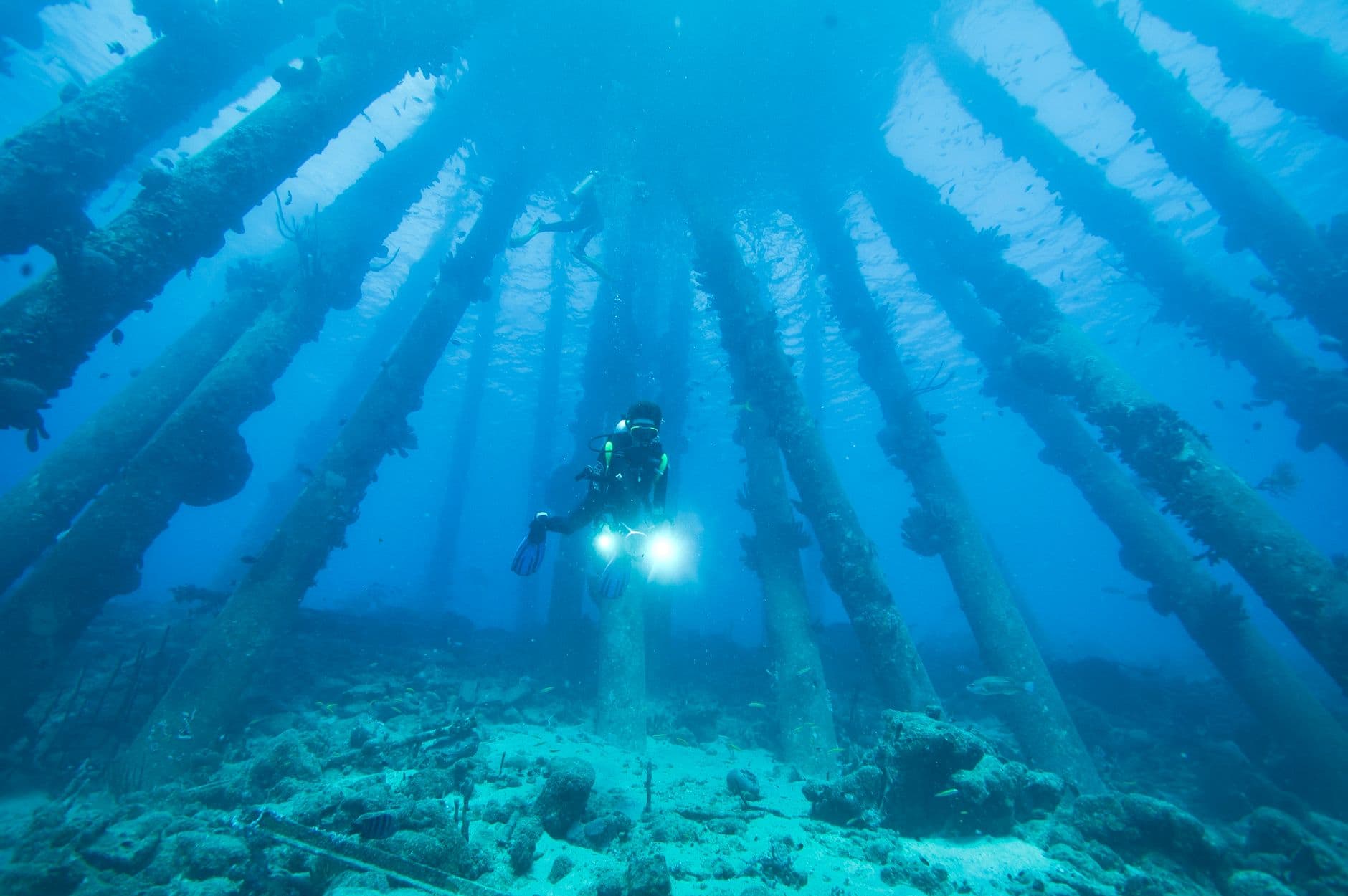
Sea turtles are the most charismatic residents. Green turtles are present year-round and can be seen on almost every dive — the Salt Pier site has a resident green turtle that divers encounter nearly daily. Hawksbill turtles are also common year-round, and loggerheads visit seasonally from April through December.
Eagle rays are a staple of Bonaire diving. Multiple cleaning stations around the island — at Tori's Reef, Joanne's Sunchi, and Invisibles — attract regular visits from spotted eagle rays. Manta rays make occasional appearances, particularly at Jeff Davis Memorial and deeper sites.
Macro life is world-class. Three species of seahorses (dwarf, lined, and longsnout) are regularly spotted at Cliff, Salt Pier, and Bari Reef. The frogfish at Something Special has become a local legend — it is found on nearly every dive. Nudibranchs, scorpionfish, and flounder round out an exceptional macro photography destination.
Reef fish diversity rivals the best of the Caribbean. Parrotfish, angelfish, butterflyfish, groupers, snappers, grunts, and barracuda are everywhere. Night dives at Bari Reef and White Hole add tarpon, octopus, and nocturnal crustaceans to the experience.
Seasonal highlights include whale sharks (occasional, October–January), manta rays (June–September), sea turtle nesting on Klein Bonaire (April–October), and the annual migration of large pelagics through the deeper channels.
Who Bonaire Is For
Bonaire is the best diving destination in the Caribbean for:
- Independent divers — If you have your own gear and can manage shore entries, Bonaire lets you dive on your own schedule without booking boats or guides
- Beginner divers — The shallow protected west coast sites are perfect for Open Water divers and those just certified. Sites like Karpata, Calabas Reef, and 18th Palm offer gentle entries, minimal current, and abundant marine life
- Macro photographers — The seahorses, frogfish, and nudibranchs of Bonaire make it one of the Caribbean's top macro destinations
- Conservation-minded travelers — The STINAPA fee system, SCTLD management, and marine park rules create a model for sustainable dive tourism
Bonaire is less suited for divers seeking luxury resorts with white-sand beaches, nightlife, or all-inclusive packages. The island's appeal is straightforward diving in a protected environment.
Practical Overview
Bonaire uses the US dollar as its official currency. Kralendijk, the capital, is a small town with dive shops, restaurants, and rental car agencies all within a 15-minute radius of Flamingo International Airport (BON). The island is south of the hurricane belt, so weather disruptions are rare. English works everywhere in the dive industry, but locals speak Papiamentu and Dutch as well.
The STINAPA Nature Fee ($40/year) and dive insurance (DAN recommended) are the two non-negotiable items. A rental truck is essential for accessing the shore dive sites — Kralendijk is walkable, but the dive sites stretch along the entire west coast. Most visitors rent a pickup truck from one of the airport agencies for approximately $65–90 per day.
Bottom Line
Bonaire is not just a dive destination — it is the dive destination for anyone who wants to experience world-class coral reefs without the complications of boat schedules, group diving, or surface intervals dictated by someone else's plan. The yellow stone markers guide you from site to site, the marine park keeps the reefs healthy, and the diving is world-class year-round. If you can walk into the ocean with your gear on, Bonaire has a dive site waiting for you.