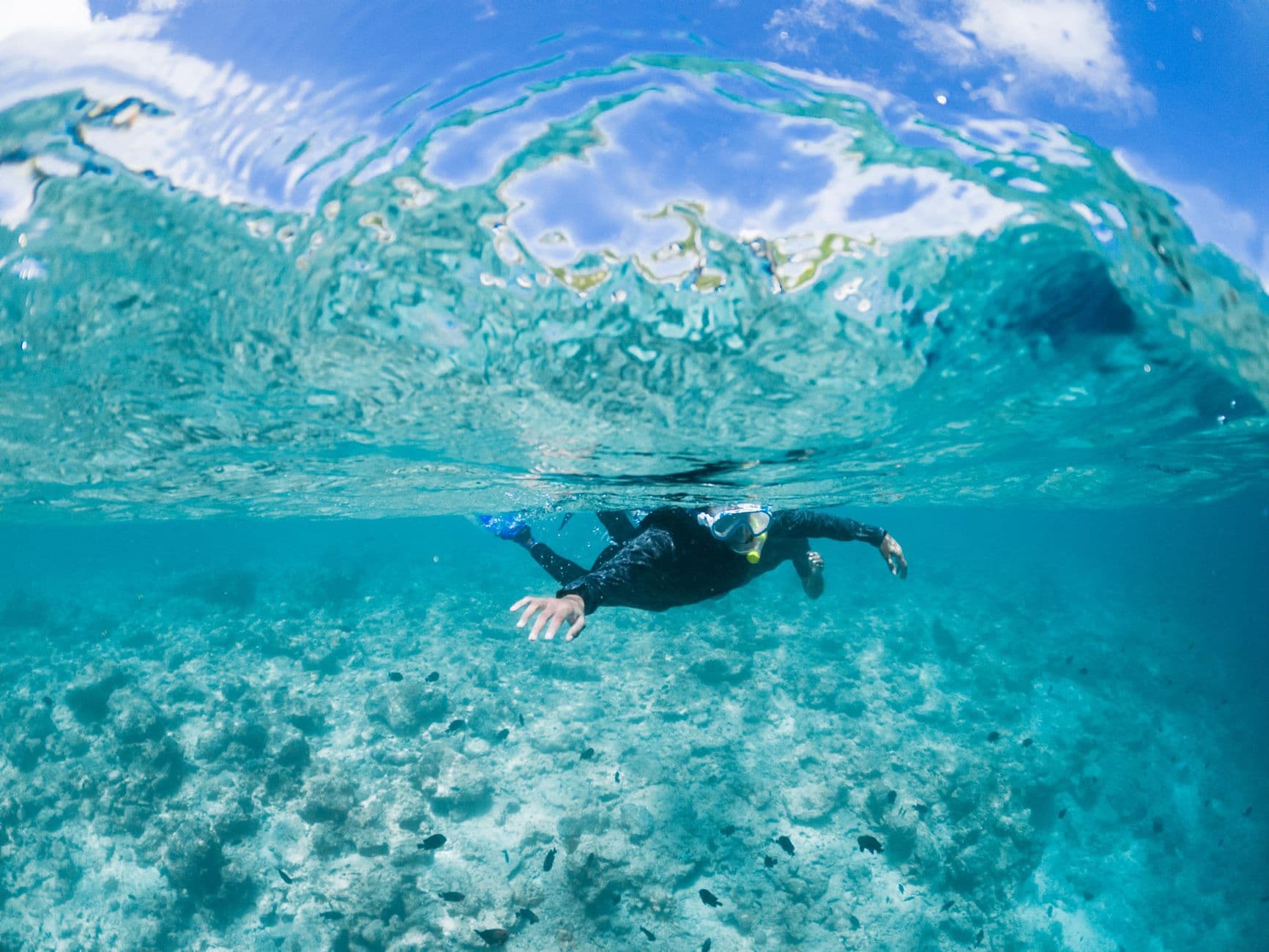
Diving the Banda Islands: Complete Guide to the Spice Islands
Before Manhattan was Manhattan, it was a small Dutch settlement traded for a tiny nutmeg island in the remote Banda Sea. The Banda Islands — the original Spice Islands — were the most valuable real estate on Earth, fought over by empires for their monopoly on nutmeg and mace. Today, fewer tourists visit in a year than arrive in Bali in an hour.
Beneath the surface, the rewards match the history: scalloped hammerhead schools of 50–100+ at Run Island, the fastest-growing table corals on Earth at Gunung Api's lava flow, walls dripping with gorgonian fans, and some of the most pristine reef systems in the Coral Triangle. This is frontier diving — remote, uncrowded, and unapologetically demanding.
Where the Banda Islands Are and Why It Matters
The Banda Islands sit at the heart of the Maluku province in eastern Indonesia, roughly 2,500 kilometers east of Jakarta and 200 kilometers south of Ambon. The archipelago consists of 10 volcanic islands (seven inhabited) with a total land area of just 172 km² — smaller than many single Caribbean islands. Banda Neira is so small you can walk across it in 30 minutes.
What makes Banda exceptional for diving is its geography. The islands formed from a drowned volcanic caldera ~7 kilometers across. Banda Neira, Gunung Api, and Banda Besar are the surviving rim, and the Banda Sea around them reaches depths of 4,000–6,000 meters. That deep water so close to shore creates the conditions for extraordinary pelagic encounters — scalloped hammerheads, oceanic mantas, dogtooth tuna, and giant trevally all patrol these walls.
Banda sits within the Coral Triangle — the global epicenter of marine biodiversity — and its deep Banda Sea upwelling brings nutrient-rich water from June through September, fueling plankton blooms that sustain the entire food chain. 40 marine species are documented in the catalog, including 6 shark species, 3 ray species, 2 turtle species, and the rare Lembeh sea dragon found at Batu Belanda.
Who the Banda Islands Are For
Banda is an intermediate-to-advanced destination. The core dive circuit includes strong-current sites at Run Island (2–3 knots, drift diving with blue-water ascents), exposed pinnacles at Batu Kapal, and open-water crossings to reach Manuk Island and Karang Hatta. Most operators require AOWD certification with 50+ logged dives to dive Run Island's pelagic wall.
That said, Banda does have accessible options. Lava Flow's sheltered crater lagoon and the Banda Neira harbour muck site are beginner-friendly in calm conditions. But this is not a certification destination. Divers comfortable with drift diving, moderate currents, and multi-level profiles will get the most out of the trip.
What You'll See
The marine life is what pulls experienced divers to Banda. The signature experience is Run Island during October–November, where scalloped hammerheads aggregate in schools visible from the surface. But the biodiversity runs much deeper:
Pelagic highlights: Scalloped hammerheads (peak Oct–Nov), pelagic thresher sharks (occasional, Sep–Nov), oceanic mantas (Jun–Nov), spotted eagle rays, dogtooth tuna, giant trevally, chevron barracuda schools of 200–400.
Reef life: Napoleon wrasse (one of the highest densities in Indonesia), bumphead parrotfish, titan triggerfish, clown triggerfish, moorish idols, regal angelfish, harlequin sweetlips. The mandarinfish mating dance at Lava Flow and Banda Neira Harbour is one of the most reliable displays in Indonesia — best at dusk during new moon.
Macro subjects: Pygmy seahorses on gorgonian fans at Batu Kapal, the rare Lembeh sea dragon at Batu Belanda, mimic octopus, harlequin shrimp, leaf scorpionfish, ornate ghost pipefish, ribbon eels in all three color phases.
Unique encounters: Manuk Island (a full-day liveaboard crossing) hosts hundreds of banded sea kraits that hunt cooperatively with giant trevally — a rare interspecies feeding strategy seen in only a few places on Earth. Nusa Laut, another distant site, offers "mini Raja Ampat" fringing reefs.
Your Dive Options: Land-Based vs. Liveaboard
Banda offers two distinct ways to dive, and which you choose dictates your experience.
Land-based means basing yourself on Banda Neira at one of three dive centers: Banda Ocean Divers (PADI, at Maulana Hotel), Dive Bluemotion (SSI, Green Fins certified, at Baba Lagoon Hotel), or Naira Dive Center (PADI, budget). All three operate day trips to the core circuit: Lava Flow, Batu Kapal, Batu Wali, Pulau Keraka, Pohon Miring, and Karnobol. Day trips to Run Island, Karang Hatta, and Pulau Ai are possible with longer boat rides. Land-based is best for divers who want colonial guesthouse charm, local culture, and a relaxed pace — you'll do 2–3 dives per day on comfortable day boats.
Liveaboard means booking a multi-day Banda Sea expedition. Banda Spice Voyages runs the premier luxury phinisi (8–12 guests, 12–15 dives in 8 days). Emperor Divers, Mikumba Diving, Coralia, Solitude World, Nayara Cruise, and Neptune Liveaboards all offer Banda Sea itineraries ranging from 7 to 14 days. Liveaboards reach the distant sites: Manuk Island, Nusa Laut, Karang Hatta's full wall system, and offshore seamounts that land-based trips cannot access. Most itineraries run Ambon → Banda → Raja Ampat or Ambon → Banda → Forgotten Islands.
A land-based trip of 7–10 days covers the core sites thoroughly. A liveaboard of 10–14 days is the only way to explore the full Banda Sea region. Book liveaboard berths 12–18 months in advance for peak season (September–December).
How to Get There
Banda is genuinely remote. The journey involves three flights and a boat transfer:
- International gateway: Fly to Jakarta (CGK) or Bali (DPS).
- Fly to Ambon: Pattimura International Airport (AMQ). Flights from Jakarta ~3.5 hours, from Makassar ~1.5 hours, from Bali ~2.5–4.5 hours (often via Makassar). ~$50–300 roundtrip.
- Ambon to Banda Neira: SAM Air 12-seater propeller plane (~45 min, ~$22, 10 kg luggage limit — the most reliable option), Bahtera Nusa fast ferry (~6 hours, 2× weekly Tue & Sat, ~$9–37), or PELNI ship (8–16 hours, irregular, ~$7 economy).
The plane is highly recommended — weather cancels ferries regularly. Always build flexible buffers into your schedule; no expiring visas or tight connections.
Getting around locally: Banda Neira is walkable. Inter-island boat charters: Hatta day trip ~$37, Pisang + Batu Kapal ~$22, Gunung Api half-day ~$7. No scheduled inter-island boats on Fridays.
Practical Essentials
Best season: March–April (spring calm, 28–30°C, vis 25–40m) for corals and macro. September–December (autumn calm, 27–29°C, vis 25–40m+) for hammerheads and pelagics — peak hammerhead viewing is October–November. Avoid January–February (NW monsoon, rain, reduced visibility).
Water temperature: 26–30°C surface. Thermoclines below 15–20m can drop 3–4°C. A 3mm wetsuit is adequate for most; 5mm recommended for cold-sensitive divers or June–August.
Visibility: 25–40m is typical. Drops to 10–20m July–August during peak upwelling (when pelagics are best — a genuine trade-off, not a problem).
Currents: Mild to moderate (0.5–1.5 knots) at most sites. Run Island and Batu Wali run strong (2–3 knots) — advanced only. SMB and reef hook are mandatory for drift dives.
Currency: Indonesian Rupiah (IDR). One ATM on Banda Neira (MasterCard/Visa) — bring sufficient cash from Ambon. No guarantee the ATM works.
Visa: Visa on Arrival at major Indonesian airports (~$35, 30 days, extendable once). Obtain at entry airport — not available at Ambon.
Critical diver safety: No hyperbaric chamber on Banda Islands or anywhere in Maluku Province. Nearest chambers are in Makassar (2–3 hour flight + ground) or Bali (4–6 hours). DAN insurance is mandatory and enforced by all operators.
Accommodation: Colonial guesthouses on Banda Neira — Maulana Hotel ($60–120), Baba Lagoon Hotel ($50–100), Delfika 1 Guesthouse (~$25–50). Book 4–6 months ahead for September–December peak.
Packing: 3mm wetsuit (5mm if cold-sensitive), dive computer (essential for multi-level drift profiles), SMB with reel, reef hook, reef-safe sunscreen, cash, Telkomsel SIM (available at Ambon airport), mosquito repellent, sturdy shoes for Gunung Api hike.