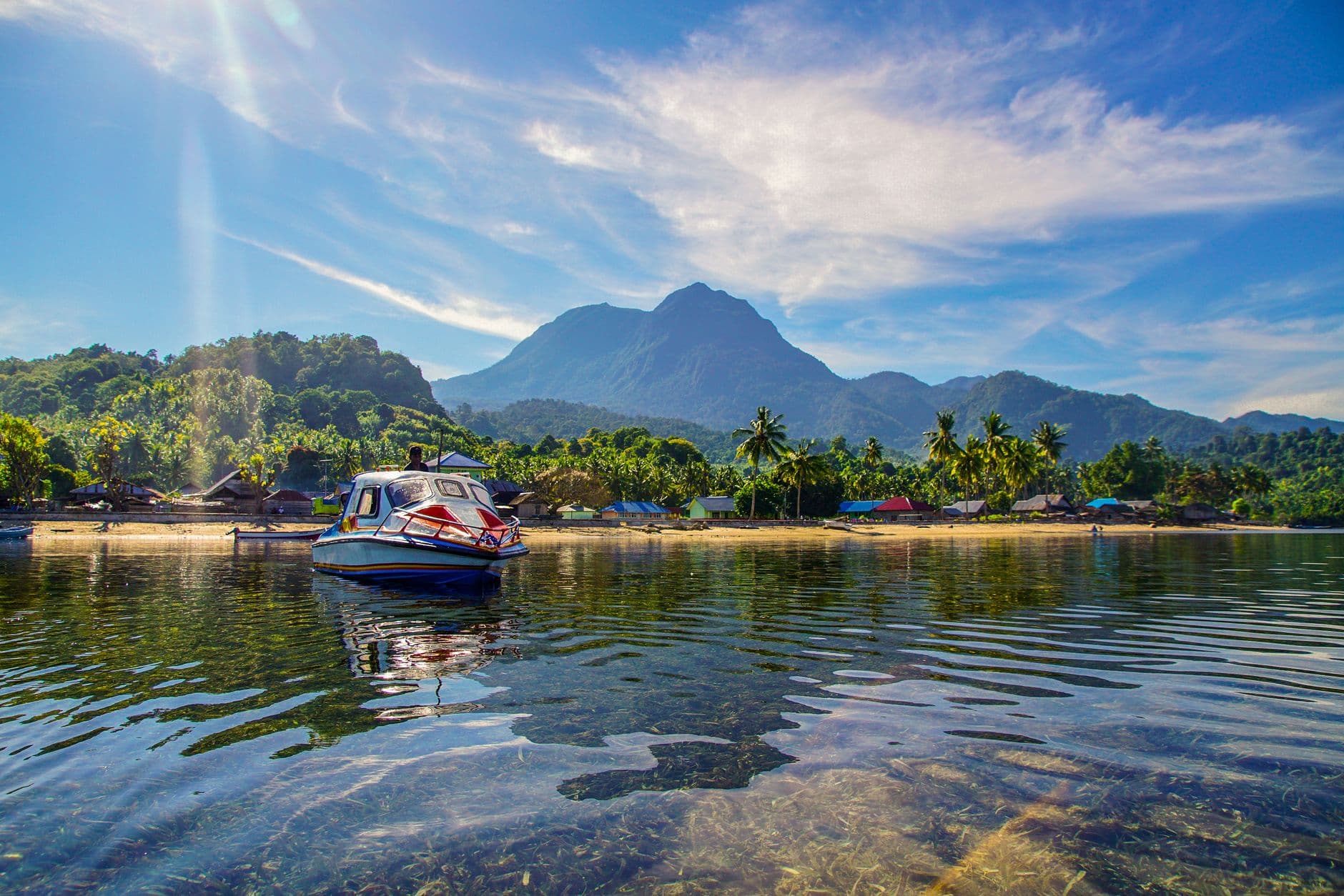
Banda Islands Diving Conditions: Seasons, Visibility, and Water Temperature
The Banda Islands sit in a unique oceanographic position. The islands form the rim of a submerged volcanic caldera, and the Banda Sea around them drops to depths exceeding 5,000 meters. That deep water, combined with seasonal upwelling of nutrient-rich currents from the Banda Sea and the warm surface layer of the Coral Triangle, creates a diving environment that shifts dramatically across the year — not in a bad way, but in a way that determines what you'll see and where you can dive.
If you're here for hammerheads, you need October–November at Run Island. If coral gardens and macro photography are your priority, March–April gives you the calmest seas and best light. If you want to see the rare cooperative hunting between banded sea kraits and giant trevally at Manuk Island, you come in August–October when upwelling peaks. The Banda season isn't one thing — it's three different experiences depending on when you go. This guide gives you the numbers for each.
The Numbers That Matter
Visibility: 25–40 m (80–130 ft) is typical across most of the year. The 40 m days happen in April and October–November when the water column is most stratified and surface chop is minimal. Visibility drops to 10–20 m during the peak upwelling months of July–August when plankton blooms reduce clarity — but those same blooms drive the pelagic food chain that brings hammerheads, mantas, and giant trevally into range.
Water temperature: 25°C (77°F) in August at its coolest; 30°C (86°F) in April at its warmest. The annual range is wider than most Indonesian destinations because of the deep-water upwelling cycle. Thermoclines below 15–20 m can drop 3–4°C abruptly, particularly on southern and western sites where upwelled water reaches shallow depths.
Current: 0.5–1.5 knots at most Banda Neira and Banda Besar sites. Run Island sees the strongest flows in the archipelago — 2–3 knots (3.5 mph) during peak tidal exchanges. Batu Wali and Karang Hatta run moderate to strong. Current direction is primarily tidal and is heavily influenced by the narrow Banda Neira–Gunung Api channel. Banda is a drift-diving destination at most outer-reef sites.
Depth range by site type: Shallow gardens and house reefs 1–15 m; lagoon crater 5–25 m; wall and pinnacle tops 5–15 m; wall faces 15–40 m; Run Island pelagic wall to 40+ m (wall drops to 600 m within 50 m of shore, but recreational limits apply); muck sites 2–15 m.
Season by Season
March – April: Spring Calm (The Macro and Coral Window)
March and April are the sweet spot for divers who want calm conditions and exceptional visibility. The northwest monsoon has ended but the southeast trade winds haven't fully set in, leaving a window of flat seas, 28–30°C water, and visibility ranging from 25–40 m with regular 40 m days.
What you dive: Lava Flow's mandarinfish display is at its most reliable during the new moon. Pohon Miring's swim-through, Karnobol's butterflyfish gardens, and Batu Belanda's Lembeh sea dragon are all comfortably accessible. Batu Kapal's pinnacles are manageable for intermediate divers with good buoyancy control.
The trade-off: Pelagic action is quieter in spring. Hammerheads are off Run Island in much smaller numbers, if at all. Manta and mobula ray sightings are down from the summer upwelling season. This is a reef-and-macro season — you come for the health of the coral, the light quality, and the nudibranchs, not for big pelagics.
Water conditions: 28–30°C surface, moderate thermoclines below 18 m. 3 mm full suit is comfortable. Visibility 25–40 m. Currents 0.5–1.5 knots at most sites, calm seas.
Marine life peak: Mandarinfish (new moon), Napoleon wrasse, bumphead parrotfish, clown triggerfish, harlequin sweetlips, pygmy seahorses, ornate ghost pipefish, giant clams, broadclub cuttlefish.
June – August: Upwelling Season (Pelagic Hunter's Window)
June through August is the Banda Sea's upwelling season. Deep, nutrient-rich water from the Banda Sea abyssal plain rises to the surface, triggering a massive plankton bloom. Visibility drops to 10–20 m — the lowest of the year — but the show above and below more than compensates.
What you dive: The currents get livelier, and the pelagics arrive. Oceanic mantas feed on the plankton blooms at cleaning stations near Run Island and Karang Hatta. Dogtooth tuna and giant trevally patrol the walls in numbers that make spring look quiet. Spinner dolphins appear in pods of 50–200 during the Ambon–Banda crossing. This is also the prime time for Manuk Island — the crossing is rough, but the reward is hundreds of banded sea kraits hunting with trevally right off the volcanic shoreline.
The trade-off: Visibility is genuinely reduced — 10–20 m on most days, with greenish tint from plankton. This isn't the season for wide-angle photography of reef structures. Seas on the Banda Neira side are usually manageable, but the open-water crossings to Manuk and Nusa Laut can be uncomfortable. This season is for experienced divers who want pelagic encounters more than they want clear water.
Water conditions: 25–27°C surface — the coolest of the year. Thermoclines can drop to 22–23°C below 15 m. A 5 mm wetsuit is recommended, especially for multiple dives or cold-sensitive divers. Currents are moderate to strong (1–2 knots), with stronger flows on the exposed sites.
Marine life peak: Oceanic mantas (Jun–Nov), dogtooth tuna, giant trevally, banded sea kraits (peak Aug–Oct, Manuk Island), scalloped hammerheads (beginning to arrive Sep), spinner dolphins, spotted eagle rays, chevron barracuda.
September – December: Autumn Peak (The Hammerhead Season)
September through December is Banda's prime season — and the reason experienced divers make the journey. The seas settle from the upwelling-driven roughness of July–August, visibility rebounds to 25–40 m, water temperature climbs back to 27–29°C, and the scalloped hammerheads arrive at Run Island and Karang Hatta.
What you dive: Nutmeg Drop and Run Pelagic Wall — Banda's iconic hammerhead sites. Schools of 50–100+ scalloped hammerheads aggregate just off the wall from September through mid-November, with the peak in October. The 600 m wall drop within 50 m of shore means blue-water diving with no visual bottom reference — a genuine advanced experience. Karang Hatta's reef is alive with thousands of neon fusiliers, with hammerheads occasionally cutting through the school. Batu Kapal sees its best visibility and most consistent shark activity.
What you should know: This is also the busiest season in Banda — which, for a destination that sees a dozen divers per month during low season, means moderate occupancy. Banda Spice Voyages and the liveaboard operators book out 12–18 months in advance for this window. Accommodation on Banda Neira fills 4–6 months ahead. The Banda Folks Festival in November adds extra demand.
Water conditions: 27–29°C surface. Visibility 25–40 m+. Currents are steady: 0.5–2 knots at most sites, stronger at Run (2–3 knots). SMB and reef hook mandatory for drift sites.
Marine life peak: Scalloped hammerheads (peak Oct–Nov), pelagic thresher sharks (occasional, Sep–Nov), oceanic mantas, mobula rays, chevron barracuda (200–400 schools), dogtooth tuna, giant trevally, Napoleon wrasse.
January – February: Northwest Monsoon (Low Season)
January and February are the rainiest months. The northwest monsoon brings overcast skies, intermittent heavy rain, and reduced visibility. Surface chop on the Banda Neira side can be significant enough to cancel boat operations. Most dive centers scale back or close during this period. Liveaboard itineraries rarely include the Banda Sea in these months.
Water conditions: 27–28°C surface. Visibility 15–25 m on good days, often less. Currents are less predictable but generally mild. Rough seas are the main constraint on diving.
Not recommended for a primary dive trip. If you arrive during this window, you'll be limited to Lava Flow's sheltered crater lagoon, the Banda Neira harbour muck site, and shore dives — fine for macro enthusiasts but far from Banda's best.
Reading the Current
Current in Banda is driven by tidal flow through the narrow channels between islands, not by open-ocean gyres. Three rules:
The Banda Neira channel effect. The strait between Banda Neira and Gunung Api funnels tidal flow through a narrow gap. Sites on either side of this channel experience 1–2 knot currents during standard tidal exchange and stronger flows during spring tides. Dive operators time their departures around the tide tables.
Site exposure. Run Island and Batu Wali face the open Banda Sea and catch the full force of tidal currents. Both sites require SMB, reef hook, and comfort with drift diving. Banda Neira Harbour, the Gunung Api crater lagoon, and sheltered bays on Banda Besar have minimal to no current.
Depth-correlated current. At Batu Kapal and Karang Hatta, current increases noticeably below 15–20 m where the water column accelerates around pinnacle bases. The best way to manage this is to stay at the reef crest (5–15 m) for the first part of the dive and drop deeper only if conditions allow.
Gear Notes for Banda Conditions
Wetsuit: 3 mm full suit is adequate March–December for most divers. 5 mm recommended for June–August, cold-sensitive divers, or anyone doing 4+ dives per day. Hoods are useful for June–August dives below 15 m.
Dive computer: Essential. Banda dives are multi-level drift profiles — hand tables or single-depth dive computers will give you inaccurate deco information. Every dive center rents computers, but bring your own if you're particular about your algorithm.
SMB and reel: Mandatory at any site with current. Run Island, Batu Wali, Batu Kapal, and Karang Hatta all require drift-ascents. A 6-foot SMB with a 30-meter reel is the standard.
Reef hook: Strongly recommended for Run Island, Batu Wali, and Karang Hatta during current periods. Standard aluminum or titanium hooks work; avoid plastic hooks that snap under load.
Light: For Lava Flow dusk dives and Banda Neira Harbour night dives. The mandarinfish display at Lava Flow is best viewed with a red light that doesn't spook the fish.
Camera gear: Wide-angle for the run pelagic wall and Karang Hatta fusilier tornadoes. Macro (60mm or 100mm) for pygmy seahorses, ribbon eels, ghost pipefish, and the Lembeh sea dragon at Batu Belanda. Split the difference with a 60mm macro if you can only bring one lens.
Putting It Together
If you have one shot at Banda, September–December is the obvious call — you maximize your chance at hammerheads, the visibility is excellent, and the water is warm. But the trade-off is real: accommodation and liveaboard berths require planning 12–18 months out, and the sites are at their busiest (relatively speaking).
March–April is the smarter choice for photographers and divers who prioritize reef health over pelagic encounters. The corals are at their peak, the macro life is reliable, and you'll have sites almost to yourself — but you'll likely miss the hammerheads.
June–August is for experienced divers who know what they're signing up for: reduced visibility, cooler water, rough crossings, and some of the best pelagic action in the Coral Triangle.
DivePass tracks real-time site conditions across the Banda Sea, consolidating operator reports so you have current data — not just seasonal averages — before every dive from your Banda Neira base.