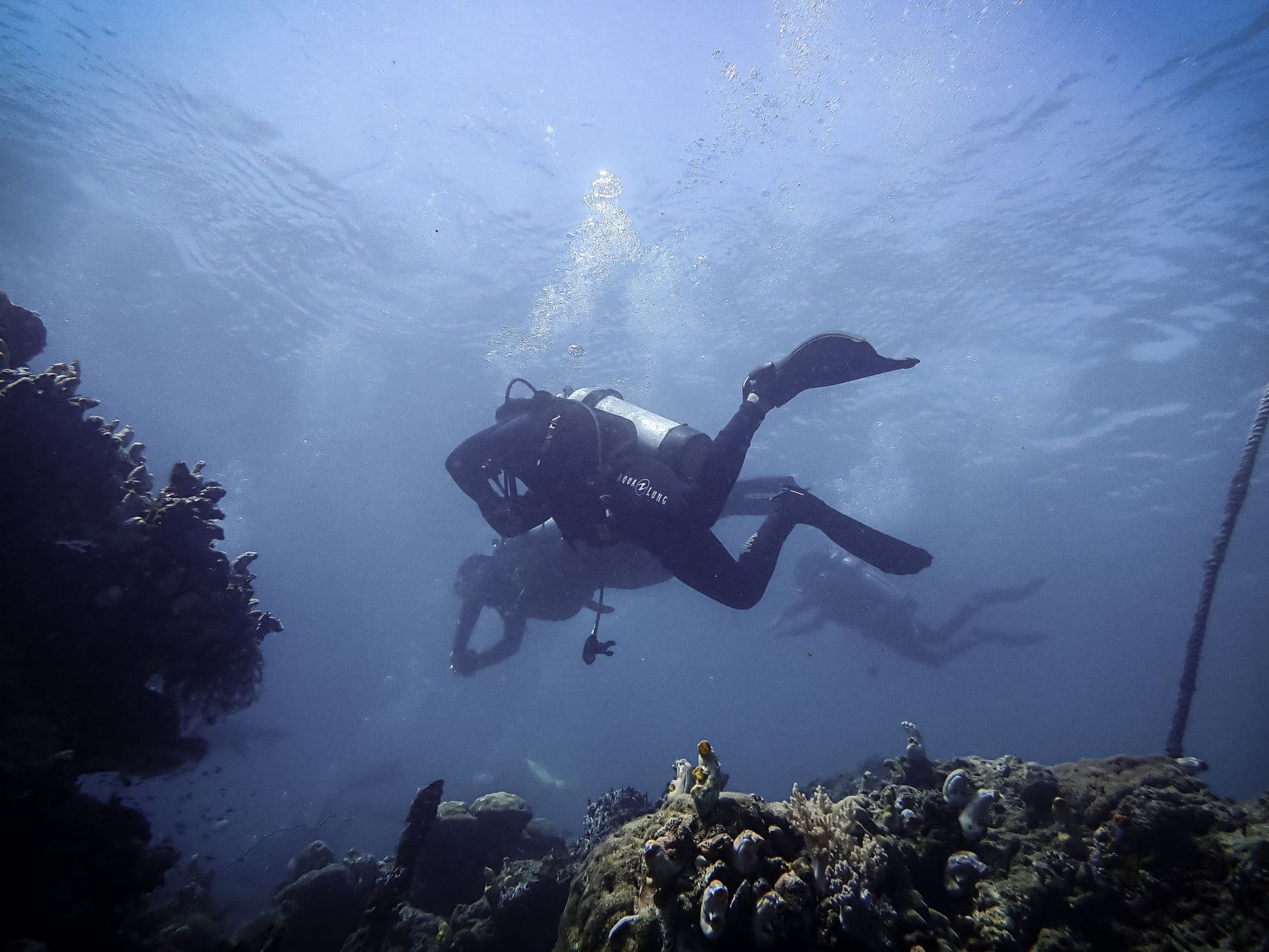
Diving Anilao: The Macro Capital of the Philippines
Anilao is where the Philippines learned to dive. In 1966, the first dive center opened on this volcanic peninsula in Batangas Province, and it has been the country's scuba diving capital ever since. Just 2.5 hours from Manila, the Calumpan Peninsula packs more named dive sites into 10 kilometers of coastline than almost any destination in Southeast Asia.
But Anilao's real claim to fame isn't the number of sites — it's what lives in them. The peninsula sits inside the Verde Island Passage, which the California Academy of Sciences declared in 2006 the "center of the center of marine biodiversity." The passage hosts 60% of the world's known reef fish species (1,736 documented) and 300+ coral species. Anilao alone is home to 600+ nudibranch species — rivaling Indonesia's Lembeh Strait — and guides here routinely find 100+ nudibranch species on a single week of diving.
This is a day-boat destination. No liveaboards, no waiting for a boat schedule, no multi-day commitment. You dive from resorts perched along the Mabini coastline, each with its own dive center, and head out for 10–25 minute boat rides to sites that range from shallow house reefs to deep seamounts.
Why Dive Anilao
Guaranteed critter hits. Anilao doesn't sell you whale sharks and oceanic mantas (though you might see them). It sells something harder to deliver: a reliable list of rare macro creatures on every single dive. Hairy frogfish in multiple color morphs — yellow, brown, black, orange — found at muck sites year-round. Mimic octopus on the black sand slopes of Secret Bay. Flamboyant cuttlefish in the shallows. Rhinopias scorpionfish, the holy grail for macro photographers, sighted regularly enough that guides know exactly where to look.
Blackwater diving, pioneered here. Anilao divers pioneered blackwater diving in the Philippines. On a specialized night boat trip, you descend a 30-meter LED-lit rig into deep open water between islands. At the bottom of the rig, deep-sea larval creatures from the mesopelagic zone cluster around the light — nautilus (January–March peak), larval crustaceans, larval fish, squid, octopus, and rare sub-adult forms of creatures science has barely described. Requires 50+ logged dives and prior night dive experience.
Muck diving that rewards patience. "Basura" means trash in Filipino, and the eponymous muck site is named for the debris and pipes on the bottom. But that debris is habitat. Giant frogfish on rocks, coral-banded pipefish, mantis shrimp, and a menagerie of nudibranchs make it one of the most productive muck dives in the world. At Secret Bay (Mainit Muck), visibility rarely exceeds 5 meters — but when every creature is centimeters away, you don't need 30-meter visibility. Divers queue up for it anyway.
Accessibility. Most of Anilao's dive sites are suitable for Open Water divers. The water is warm (24–30°C year-round), currents are generally mild, and the Philippines' English-speaking dive industry means you never need to worry about language barriers. It's the most accessible world-class diving on the planet.
Who It's For
- Underwater photographers. Anilao is the ultimate macro studio. Camera rooms at resorts like Casa Escondida and Blue Ribbon feature dedicated workstations, photo guides who know exactly where critters hide, and rental gear for every lens configuration.
- Macro beginners. You don't need to be a technical macro photographer to enjoy Anilao. The creatures are large enough (frogfish, cuttlefish, octopus) and abundant enough that even a point-and-shoot camera captures stunning images.
- Budget divers. Anilao offers some of the cheapest good diving in Southeast Asia. Dive packages from ₱2,500 per person for two dives. Accommodation from ₱1,500/night. The Philippines Dive Guide lists 70+ resorts along the Mabini coastline.
- Intermediate divers seeking variety. Beyond the macro, Anilao has wall dives (Sepoc Wall, Beatrice Rock), a submerged seamount (Kirby's Rock), swim-through caves (Mapating Cave), and drift sites with schooling jacks and giant trevally.
- Advanced divers. Blackwater diving, deep seamount sites, and the fierce currents at Beatrice Rock and Mainit Point demand advanced skills and excellent buoyancy.
Top Marine Life
Anilao's 40+ documented species span 8 categories, but a few stand out as destination signatures:
Mimic Octopus (Thaumoctopus mimicus) — Regularly observed at Secret Bay, one of the most reliable locations in the world for this species. It can impersonate up to 15 different marine species, including lionfish, sea snakes, and flatfish.
Flamboyant Cuttlefish (Ascarosepion pfefferi) — Found on muck and sand bottoms during the dry season. The only cuttlefish known to walk on the seafloor using its lower arms, and the only cephalopod considered unsafe to eat due to a unique toxin in its flesh.
Hairy Frogfish (Antennarius striatus) — Anilao is one of the best places in the world to reliably find this creature, often in multiple color morphs on the same dive. Found year-round at muck sites with highest density January to April.
Bargibant's Pygmy Seahorse (Hippocampus bargibanti) — Discovered by accident in 1969 on gorgonian corals. Camouflages so perfectly against the coral that it was invisible to divers for decades. Found on gorgonians at Ligopo Island and Sepoc Wall.
Rhinopias Scorpionfish — The holy grail of macro photography. Multiple species sighted regularly enough in Anilao that experienced guides know exactly where to look.
Top Dive Sites (Overview)
Anilao's 22 well-documented dive sites span 6 zones, each with a distinct character:
Inshore / Resort Zone (Bagalangit–Anilao) — Sites closest to the main resort strip. Cathedral Rock (the most famous, with a coral-encrusted cross planted by President Ramos in 1983), Eagle Point house reef, Koala, Arthur's Rock, Dead Point, Cokis Point, Ligaya's Garden, The Pier (premier night muck dive), and Basura (the eponymous muck site).
Caban Island & Vicinity — Kirby's Rock (seamount with black coral trees and strong currents), Daryl Laut (wreck/bommie), Bahura (swim-throughs and fierce currents), Sepoc Wall (true vertical wall dive), and Twin Rocks (two submerged pinnacles with the healthiest coral coverage in the area and a resident hawksbill turtle).
Sombrero Island / Tingloy — Sombrero Island (coral islet with shallow reefs), Ligopo Island (wall with gorgonian fans — often cited as the favorite site by guides), and Coconut Point (one of the Philippines' best muck diving spots).
Maricaban / North Coast — Beatrice Rock (strong tidal currents, swarming anthias), Mainit Point (boulders with soft corals, whitetip reef sharks in a cave at 7 m), and Mainit Muck / Secret Bay (the most productive muck site in Anilao).
Deep / Blue Water — Mapating Cave (deep wall with cavern formations and strong currents) and the blackwater dive zones (deep open water between islands, 30 m descent to LED rig).
Getting There
Fly into Ninoy Aquino International Airport (MNL) in Manila, then drive 2.5–3.5 hours south via the SLEX and STAR Tollway to Mabini. Private van transfers run ₱5,000–₱6,000 for up to 6 people. Buses from Buendia or Cubao to Batangas City cost ₱200–₱250, then jeepney to Mabini (₱40), then tricycle to your resort (₱60–₱80).
Critical note: Allow a buffer day around arrival and departure. Metro Manila traffic can double travel time. Avoid weekend departures from Manila — Friday afternoon and Saturday morning are the worst.
Diver Safety
There is no hyperbaric chamber in Anilao or anywhere in Batangas province. The nearest recompression facility is the Lung Center of the Philippines in Quezon City, Manila — 2.5–3.5 hours by road. DAN insurance with hyperbaric evacuation coverage is essential for diving here. For dive emergencies, call 911 or contact DAN at +1 (919) 684-9111.
When to Go
- Best conditions: November to May (dry season, NE monsoon). Visibility 10–20 m, calm seas, water 26–30°C.
- Peak critter activity: January to March. Coolest water (24–27°C) drives maximum critter activity and blackwater diving peaks during new moon.
- Warmest water: April to May (28–30°C), but also the most crowded and expensive.
- Budget season: June to October (wet season). Reduced visibility (5–15 m), afternoon rains, and typhoon risk in August, but lower resort rates and fewer divers.
Putting It Together
Anilao rewards divers who show up curious. The creatures here are small, slow-moving, and brilliantly camouflaged — they reward patience and a good guide. Book with a resort that invests in photo support and critter-spotting guides. Crystal Blue, Aiyanar, and Casa Escondida consistently produce guides who find 20+ nudibranch species on a single dive. And if you've got 50+ logged dives and want to chase nautilus on a blackwater night dive, that's an experience you won't find anywhere else in the Philippines.
DivePass tracks real-time site conditions and aggregates local operator briefing notes so you have current data, not just seasonal averages, before every dive. Check the app the morning of your dive day.